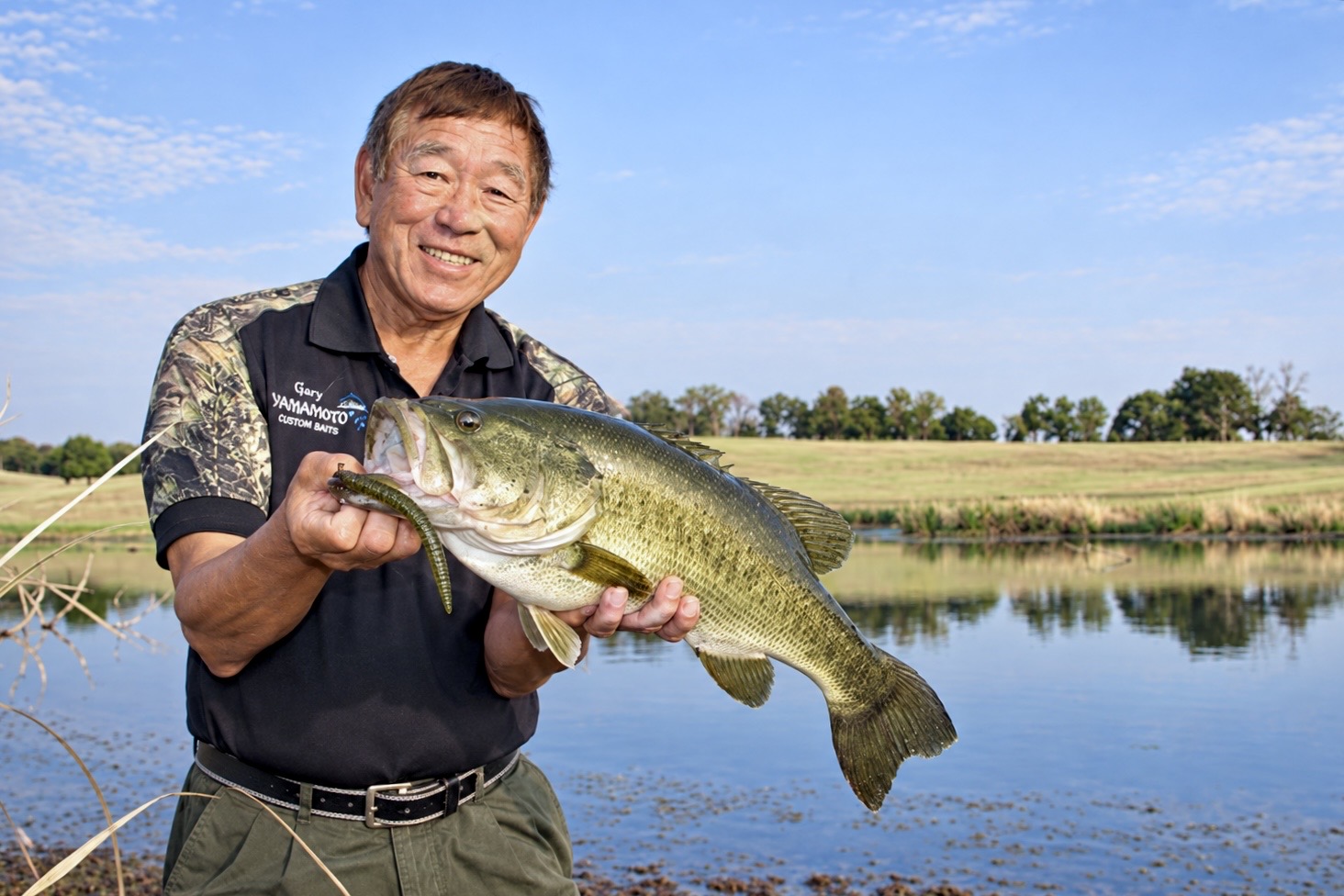
When Gary Yamamoto introduced the Senko 30 years ago, he knew it would catch fish. What he didn’t know was the impact its simple design would have on our industry and the sport of bass fishing.
The Senko is one of the best-selling soft plastic lures of all time, and there is no telling the amount of money it has won in bass competitions globally.
Gary’s lure wasn’t an overnight success, however. It required months of testing and mold modifications to become the product you know. Field-testing took place on Gary’s private lakes in Texas, and at the various tour stops where he competed. Through those efforts, he refined the Senko’s design to what was deemed “simple perfection.”
“Initially I was trying to develop a jerking-style soft plastic,” he stated in a previous interview. “But the more I played with the design, applying it to different types of water, I began to realize it was so much more versatile. It could be rigged and fished in so many ways.”
When the Senko finally reached dealers’ shelves in 1996, acceptance was slow. But as more fishermen tried the new, nearly featureless soft plastic, word began to spread on its effectiveness.
This year marks the 30th anniversary of the Senko and, judging by current demand, it’s likely it will enjoy another 30 years of stellar sales. It is undoubtedly one of the most productive bass lures of all time. The Senko can fool fish on any type of water — clear, stained or otherwise — and, depending on how it’s rigged, it can be fished innumerable ways. Those are the reasons for its success … that and the fact that fish bite it and won’t let go.
Knowing the man
I first met Gary in 1989, at a B.A.S.S. Invitational on Lake Mead in Nevada. We were paired together for the last day of the event. And because I knew almost nothing about the lake, I yielded to him on where to go and what to fish.
It was an enjoyable day — one in which I learned about finesse fishing on canyon reservoirs, and how to properly rig soft plastics to fool bass in deep, ultra-clear water. This was when hula grubs and reapers were the go-to soft plastics in the West, and long before the Senko showed up.
A year later, the tour went to Lake Powell where Gary’s campground and tackle shop were located. Powell was another eye-opening experience. It was so deep, vast and intimidating, but it was also home to good numbers of bass — both largemouth and smallmouth. Following Gary’s advice, I used his grubs to catch them.
Not long after, the FLW Tour was announced, and we crossed paths again. It was also when the Senko was being introduced. During a Bassmaster Classic Expo in Birmingham, Ala., Gary’s wife, Beverly, approached me and said they wanted to formalize a sponsorship agreement, and that Gary would call with the details. The next day my cellphone rang and a deal was struck.
It’s also when I started writing for Inside Line magazine — a Yamamoto publication. I was already serving as an illustrator and columnist for B.A.S.S. Publications, and Gary’s editor wanted me to contribute to their periodical. This and other interactions strengthened our relationship. And because Gary knew my passion for saltwater fishing, he invited me to Louisiana to chase redfish and tuna.
Not only was I working with a legend in the sport, he had become a good friend.
Back to the drawing board
Prior to the Senko’s introduction, soft plastics manufacturers were experimenting with a wide range of body styles — most of which were creature-like in appearance. The emphasis was on lure bodies with extremities that fluttered and vibrated when swam through the water column. With the exception of Herb Reed and his Slug-Go, none seemed to consider a simple, fat, straight body design, nor its material makeup. But Gary Yamamoto did.
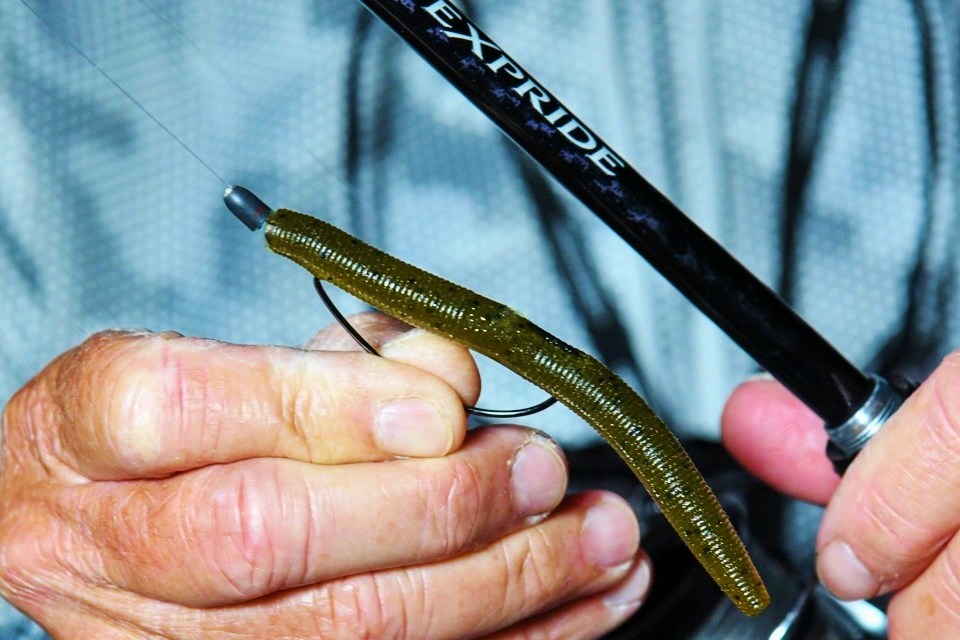
Starting with the basic profile of a Bic Custom Click pen, he experimented with various body lengths, thicknesses and textures. Equally important was the composition of the materials used in the molding process. Not just any formulation would do. He wanted the lure to fall weightless at a specific rate of speed, while creating just the right amount of action. The formulation also had to attract and fool bass — something they would bite and hold onto.
The answer was high-density salt impregnation, distributed evenly throughout the body of the lure. Gary insisted on the lure delivering just the right wiggle and sink rate, without added weight. Once those design aspects were incorporated, it was then a matter of color selection … and no one could do color like Yamamoto Custom Baits!
A new crew
Five years ago, Gary decided to sell and GSM Outdoors has owned the Yamamoto brand since. According to GSM’s head of fishing, Crispin Powley, it was one of their best acquisitions.
“Growing up following and participating in the sport of bass fishing, I’ve observed countless fads, trends, designs and techniques come and go,” states Powley. “Very few have withstood the test of time … and by that I mean remained every bit as effective and successful today as when they were first introduced.
“The Yamamoto Senko is one of those rare, once-in-a-lifetime baits that was right from day one, and still perfect decades later.”
I couldn’t agree more.
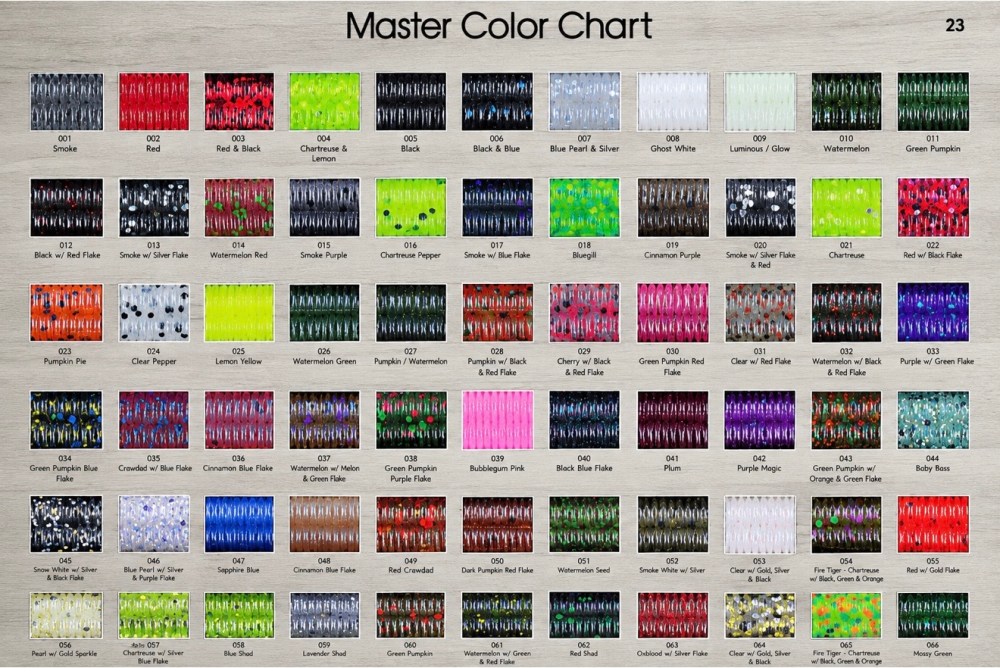
Today there are more than 150 colors available and five sizes — 3-, 4-, 5-, 6- and 7-inch. Also offered are variants like the Slim Senko, Fat Senko, Pro Senko, Ned Senko, Swim Senko and Speed Senko. Newly introduced is the Fuzzy Senko, which addresses the demand for newer soft plastics featuring spiny or hair-like appendages.
Offering so many sizes and variations is sure to maintain broad, continued use of the Senko, not only across North America, but worldwide. GSM ships to numerous foreign markets, including Asia, Europe and South Africa. Its distribution is truly a worldwide phenomenon.
Looking ahead
How long the Senko’s run will last is anybody’s guess. But with the molding machines running day and night, 24/7, it’s a safe bet the lure is here for a long time to come.
Powley sums it up this way: “In designing the Senko, Gary created the perfect combination of ease of use, simplicity in rigging and irresistible fish-catching action, and bass anglers around the world have validated its effectiveness ever since its introduction.
“I give tremendous credit to Gary Yamamoto, Danny Berndt and the many others who played a role in putting this bait in the hands of anglers everywhere. The Senko was truly revolutionary when it was introduced, and 30 years later, it remains No.1 in its class.”
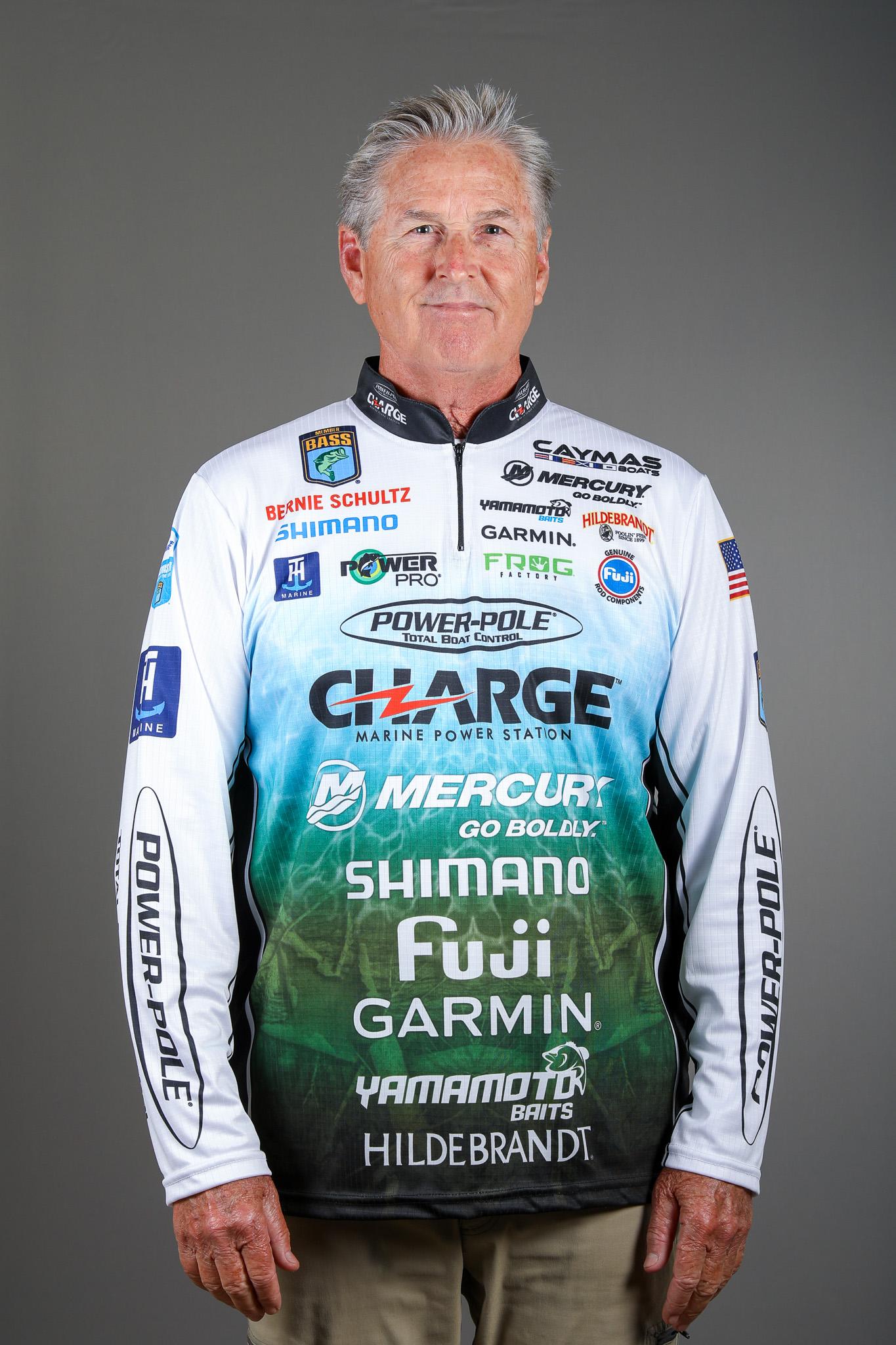
As for me, I’m still representing the brand and am proud to do so … hopefully for years to come.
Follow Bernie Schultz on Instagram, Facebook or through his website.