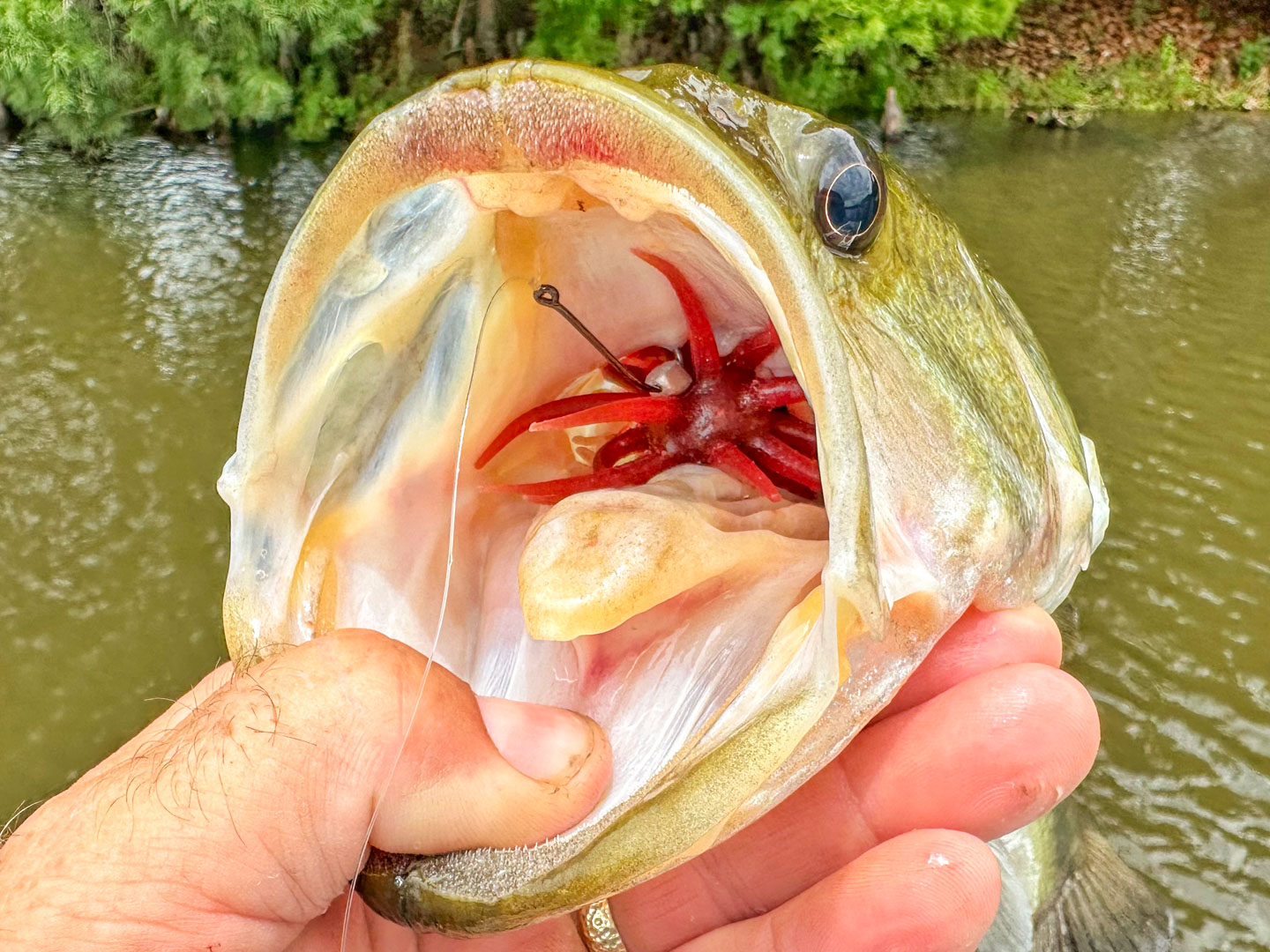
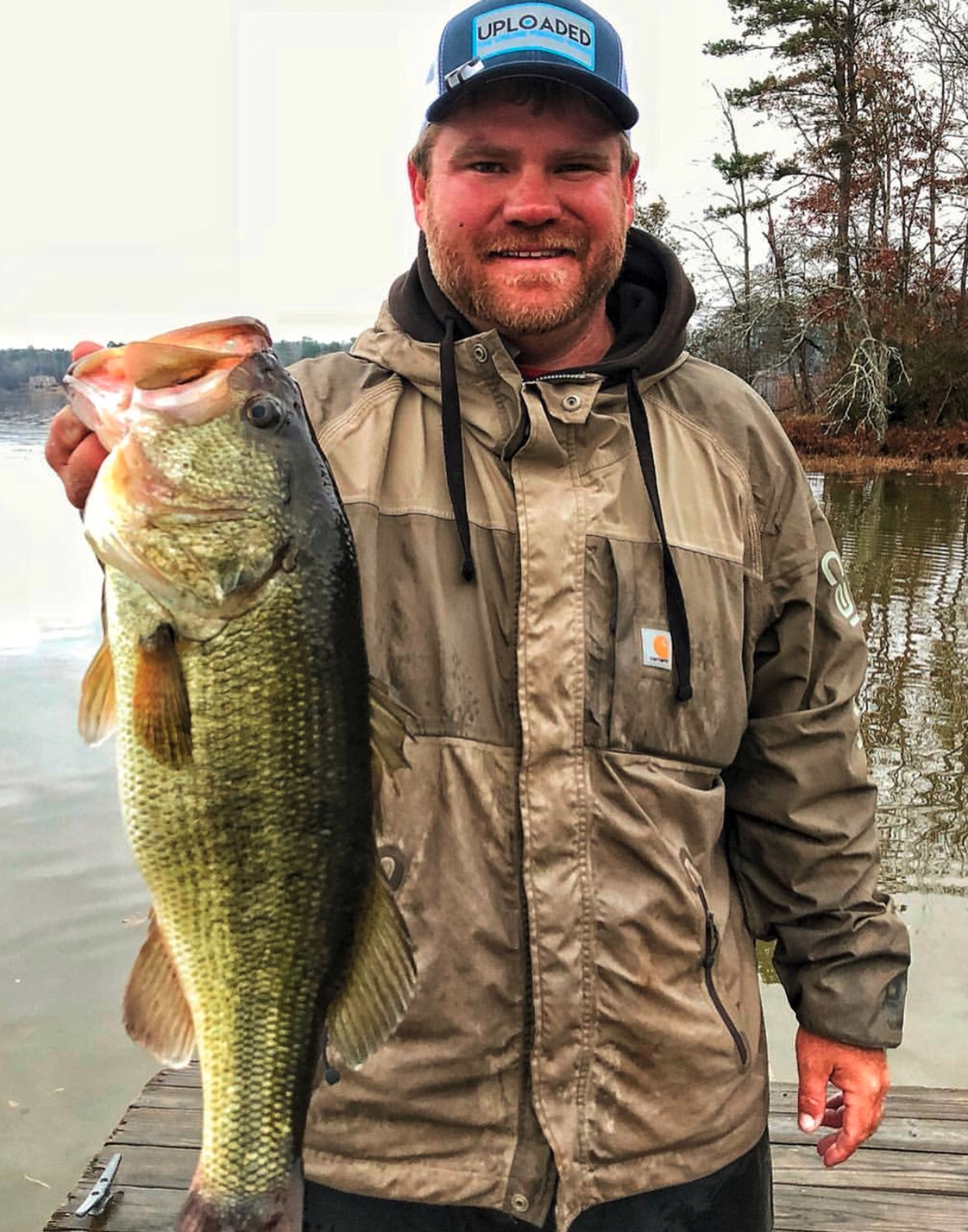
If you’re planning on Googling “do bass eat urchins,” let me save you the trouble — the answer is a surprising but resounding yes. The new era of urchin-style creature baits – like the Hideup Coike – has completely captivated the bass fishing world.
Almost every major tournament is being won on one of these baby porcupines, and the majority of the field is throwing them. This madness has led to a demand that vastly overwhelmed the supply.
With only a couple early manufacturers, all the urchin-style baits that were on the market were quickly snatched up when word got out. Shortly thereafter, there were rumors circulating that single Coikes were selling for upwards of $200, and that was only if you could find one. Now, there are dozens of knockoffs flooding the market and other quality iterations coming out from leading bait manufacturers, like the Berkley PowerBait Maxscent Moeba featured in these photos.
Rigging techniques for these baits are evolving by the day, as more and more advanced anglers start experimenting with the tactic. It’s important to take note and learn from their experiences, since these baits can easily be slung off the hook during the cast or the catch. As hard as they are to come by, you darn sure don’t want to lose one. So here are five ways to make sure you don’t lose your urchin.
Clamshell packaging
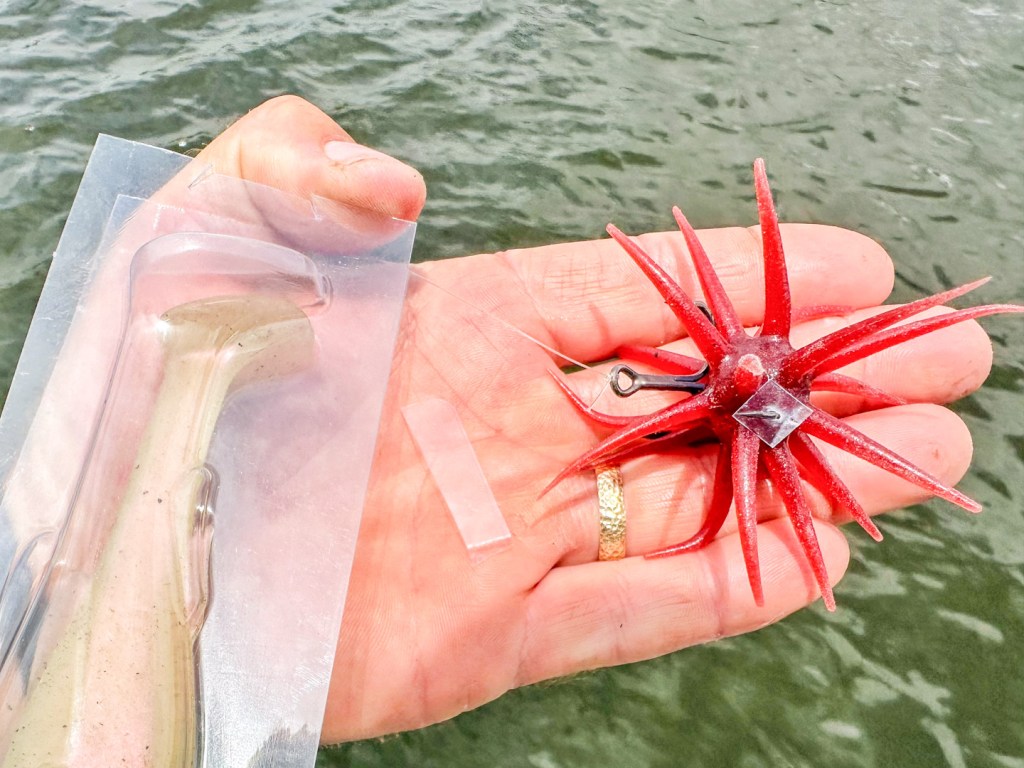
You can use a bobber stopper or silicone trailer keeper to secure your urchins, but there’s a much cheaper and more readily available fix too. Whether rigging the bait on a single hook, treble hook or quad hook, you can take a small clipping off any clamshell packaging and run it over the hook point that comes through the bait.
You must make sure the barb clears the plastic, and I recommend using pliers to do this because it takes a good bit of force to pop the hook through. But, once you get this makeshift keeper past the barb, you’ll break your line or the hook will rust away before a bass is able to sling your bait.
Small cable tie
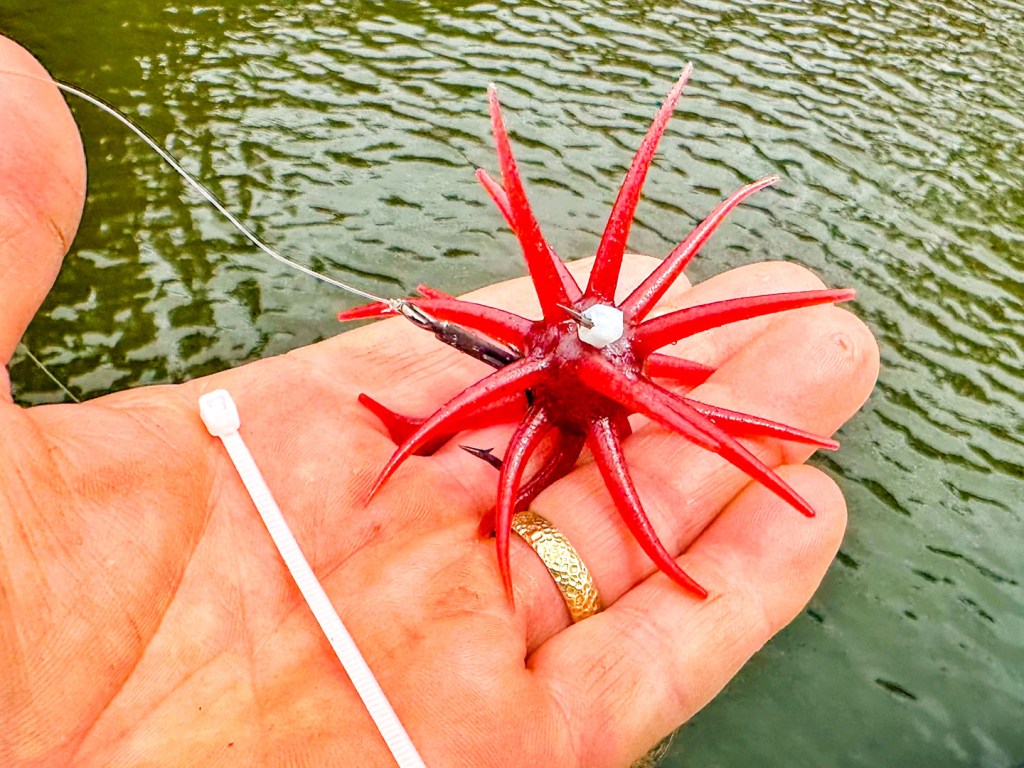
Similar to the piece of clamshell packaging, you can take a small cable tie and use the clicker end as a bait keeper. My dad started using a cable tie clicker like this several years ago as a trailer hook keeper on spinnerbaits and buzzbaits. Just poke the hook point through the bait, then slide the clicker end of the cable tie over the hook point and past the barb.
It’s easier to do this if you go through the cable tie end from the back, and rotate it sideways. Use the tag end to pull the clicker into place and then cut off the excess. I used white for illustration purposes, but there’s a colored cable tie to match nearly any bait, and black is a good fallback.
Core Tackle Dice Rig
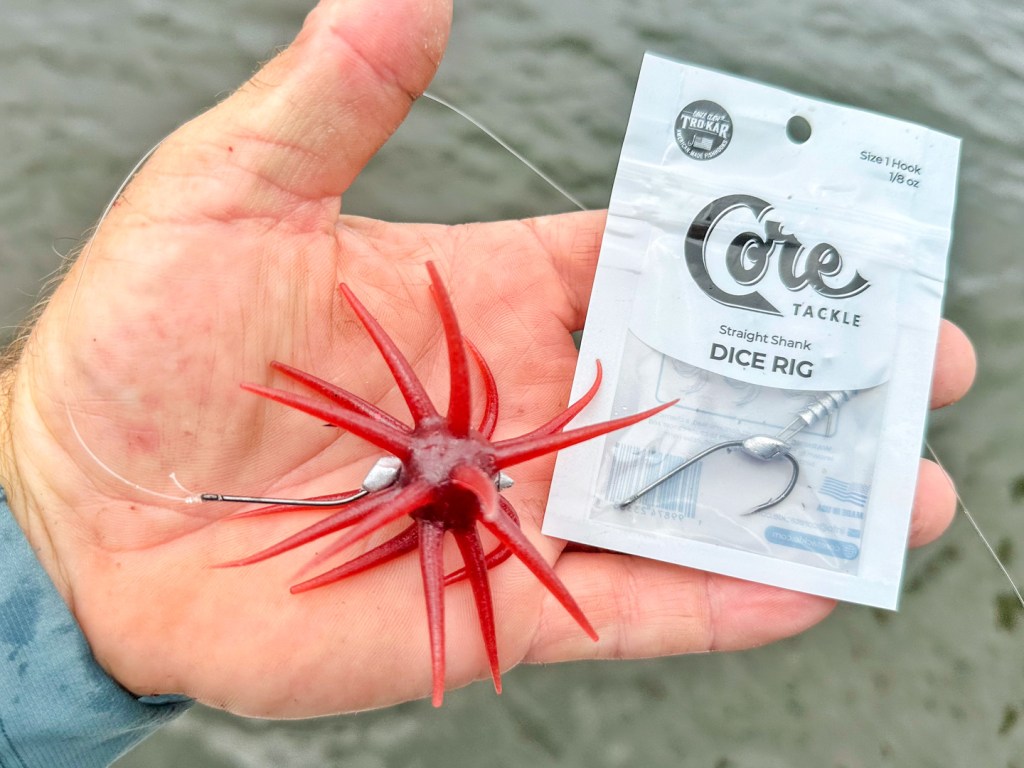
The Core Tackle Dice Rig consists of a hook with a molded lead weight attached to it via metal wires. Two wires protrude from the weight and act as barbs to lock into the bait.
To my knowledge, all urchin-style baits come with a cylindrical cavity running through them. This is used to store the baits on a metal wire so that the tentacles will stay intact in all directions. When rigging, this cavity is used to hold Neko weights.
Core Tackle decided to combine the weight with the hook. Now you just take the Dice Rig and stick the weight into the cavity until the hook bend is flush with the body of the bait and you have a secure presentation with a hook that sits well clear of any interference.
Jewel Baits product
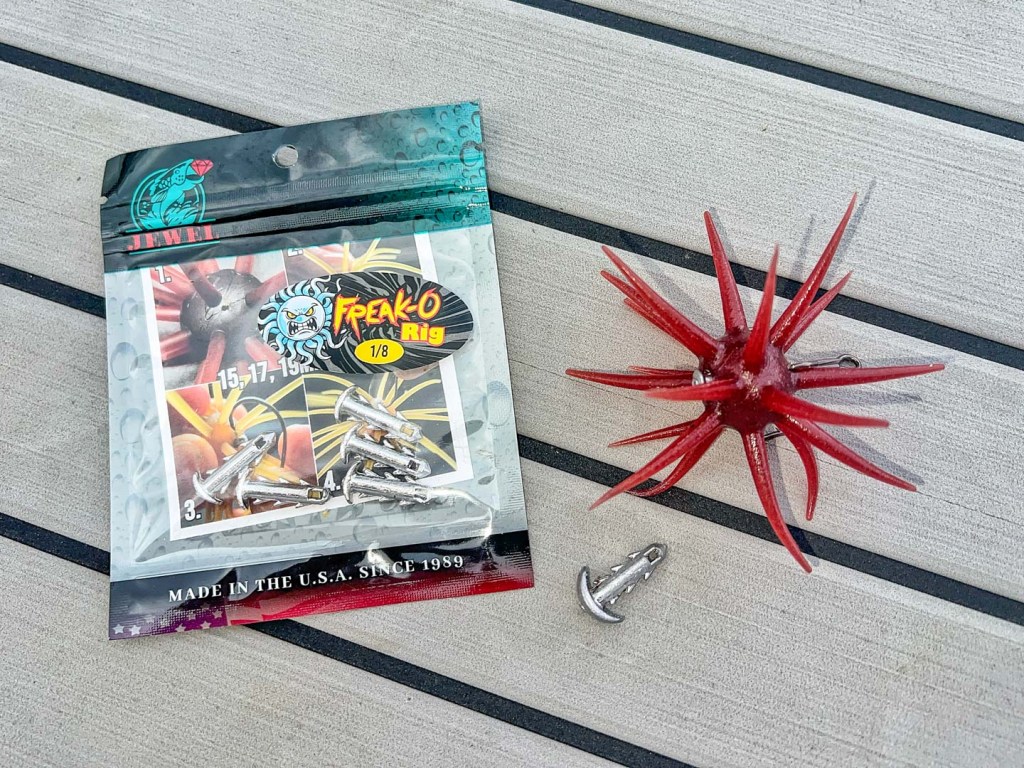
The Jewel Baits Freak-O rig was specifically designed to simultaneously weight and secure urchin-style baits. Simply push the Freak-O Rig up into the cavity of the bait, then run your hook point through the meat of the bait and the hole of the weight at the same time.
The three different weight options all have the same shaft but different-sized bottoms. This design is intentional – adding extra weight to the bottom helps orient the overall setup so that the hook is pointed up towards the roof of a fish’s mouth as the bait falls weight-first through the water column.
Double frog hook
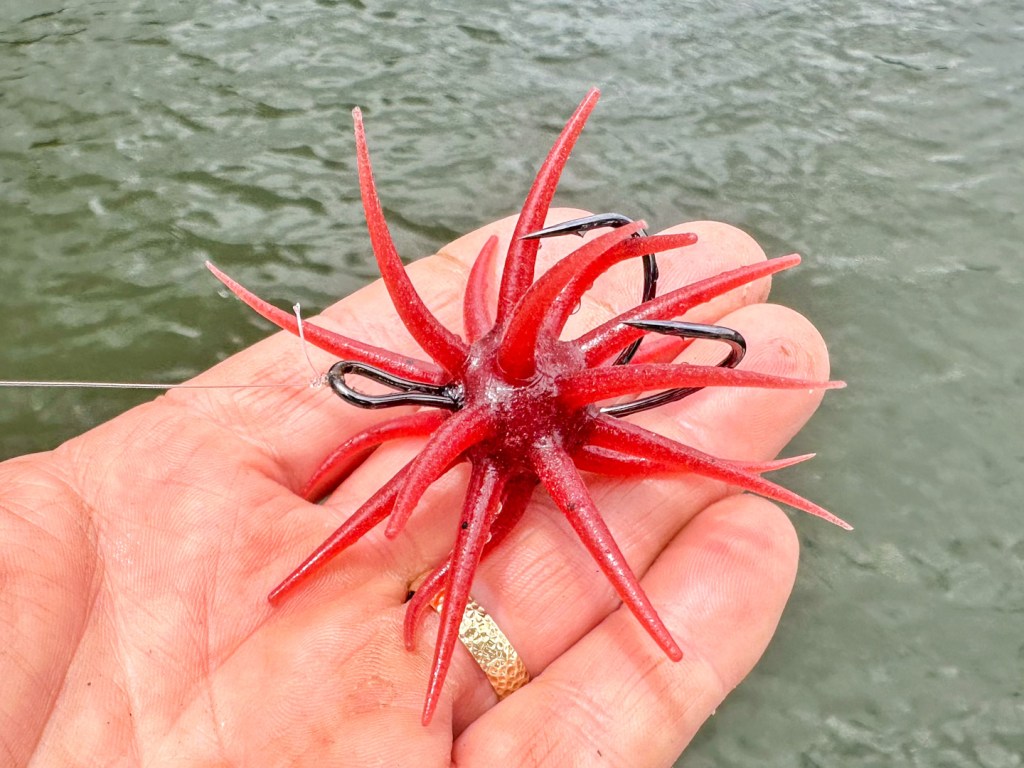
We recently watched Jason Christy pair a double frog hook with his urchin-style bait to earn his second blue trophy of 2026 on the Pasquotank River. In my research for this piece, this may be my favorite rigging technique for ensuring the urchin doesn’t come up missing. In this case, you run the eye of the double frog hook through the center cavity, and then tie the hook and bait onto your line.
On my first fish catch with the Moeba rigged this way, I was pleased to see the bait flew up my line as the bass fought, similarly to how a line-thru swimbait would. I also found in playing with these different setups, that quad and treble hooks were a bit overkill since the bass were sucking the bait all the way to the back of their throats on the initial strike. It is really easy to hurt or even kill a fish with a smaller treble, but the big bold double frog hook was literally harder to swallow, while still providing a great hook-up ratio.
Final thoughts
If you can stumble on an urchin-style bait in the store and want to try out this new fangled technique for yourself, you’re going to want to make sure you rig your bait in such a way as to not lose it. Simply putting the bait on a hook and flinging it out is a surefire way to never see it again. Using a frog hook, some sort of bait keeper or one of these new pieces of terminal tackle specifically designed for this technique is a good way to make sure you don’t lose your urchin … and your mind.