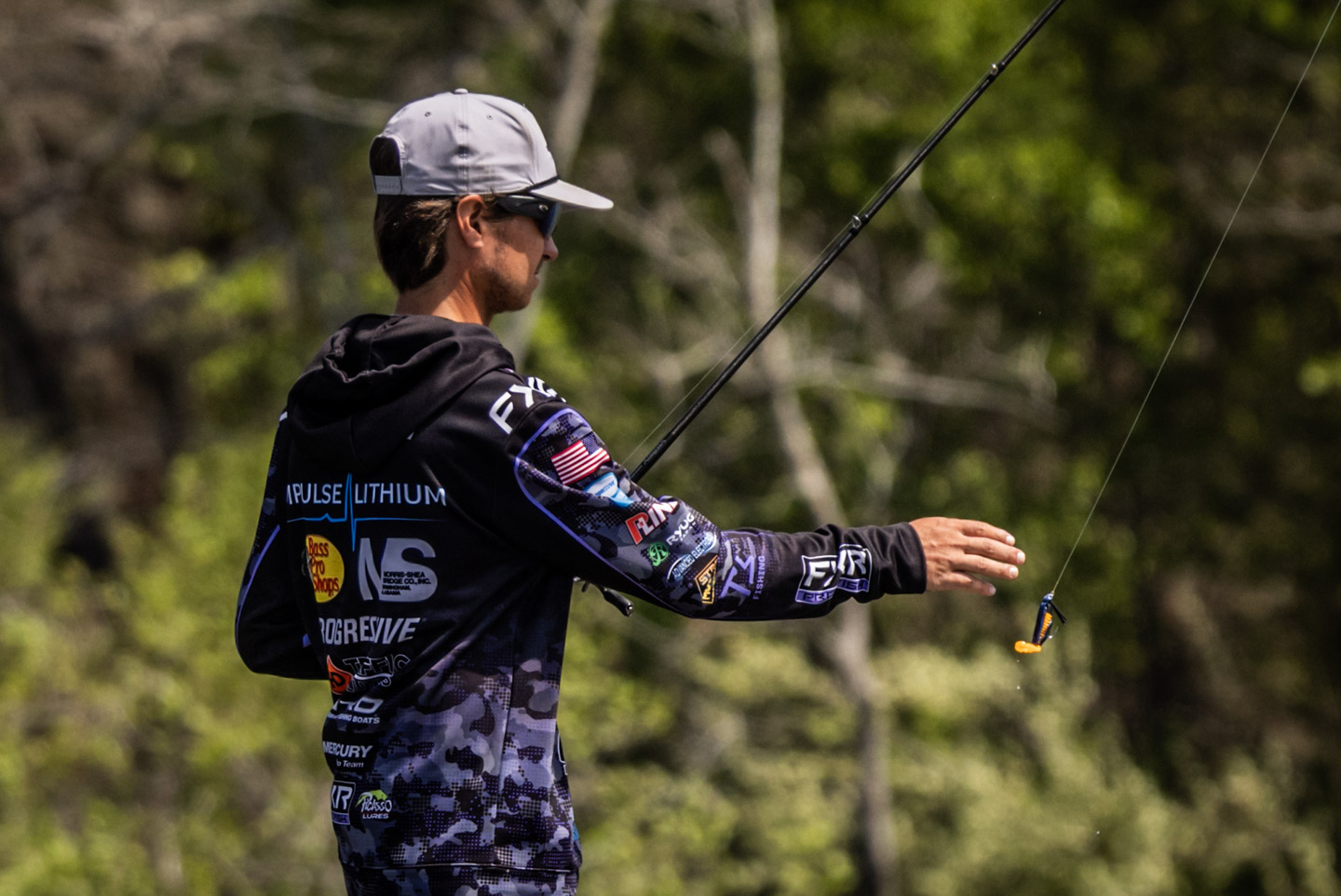
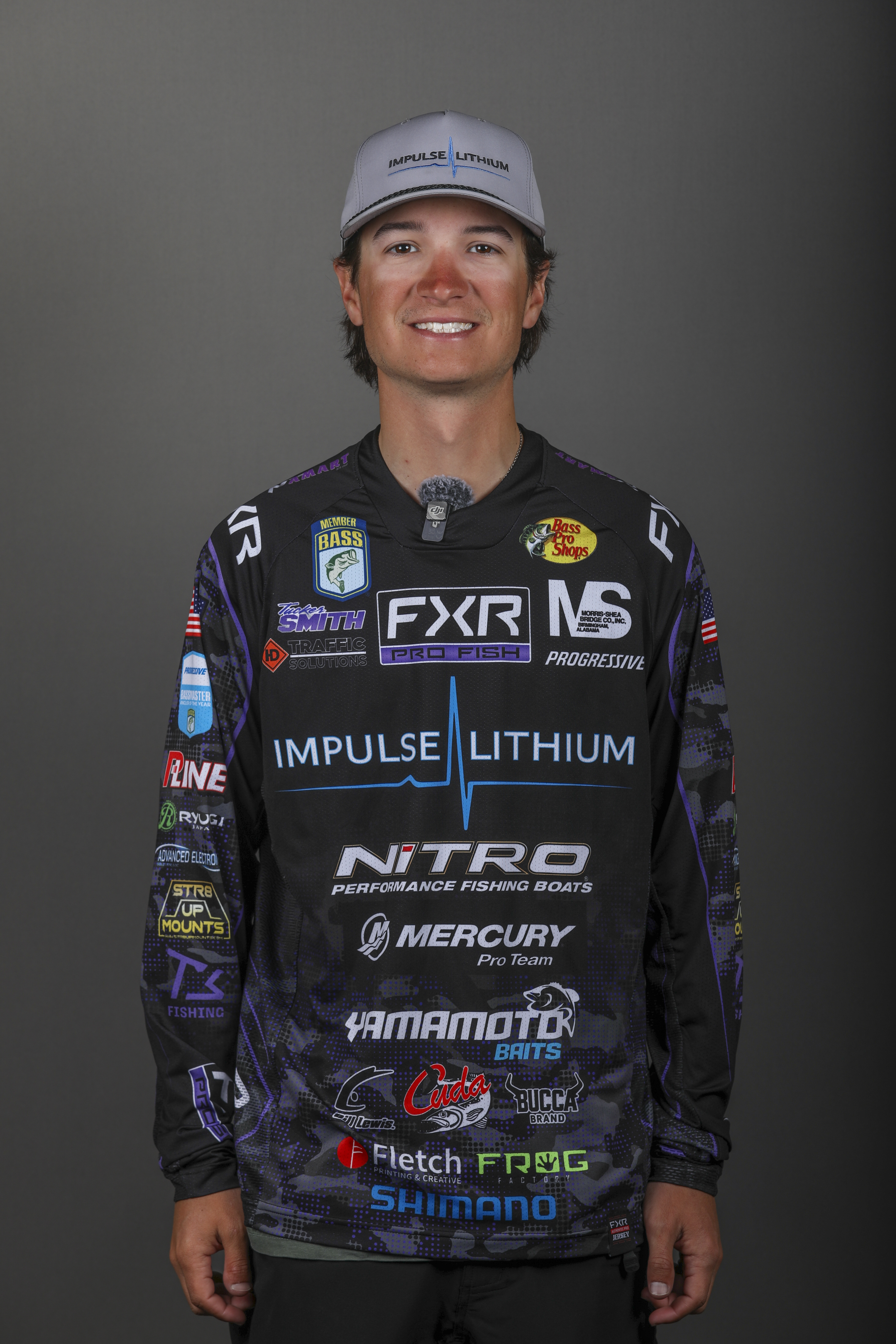
It’s still July, but I’m already preparing for the August Northern Swing into New York for the final two Bassmaster Elite Series events of the season on Lake Champlain and the St. Lawrence River. I am about 20 or 30 points off the Classic cutline, so I need to make up some ground in those final two events to make the Classic.
The good news is I love fishing those northern fisheries. They are such special places that are unique to that part of the country. They are massive, pristine waterways, and the fish are wild – it’s like they are free to roam an endless range.
I like the smallmouth and largemouth mix at Champlain and targeting those beastly smallmouth at St. Lawrence. It will be interesting because Champlain will be a no-scope tournament, and St. Lawrence will be a scope tournament. I like that order because Champlain is a great all-around fishing lake, and I have done well there in the past. There are plenty of vast grass flats, and the smallmouth/largemouth mix offers more options.
The real issue to deal with on those fisheries is the big water. I mean, giant water, as in huge waves. Just a regular 10-to-15 mph wind anywhere else is normal. But on those places, a “10 to 15” usually ends up being more like a 15 to 25! For that reason, I spent time up there in pre-practice learning to run that big water more efficiently.
Picking walkers
Since pre-practice, I have been putting my boxes together for the Northern Swing. The method to my madness for those big waterways is to have a couple of lures that cast super far and reel fast so I can cover large amounts of water quickly. Then, I also want to have a few “pinpoint lures” to precisely target individual pieces of cover or fish.
One of the best tools for covering water up north in the summertime is a spook-style walking bait. They are super-efficient fish finders. The main objective in winging a walker all day is to get fish to show themselves, especially in flats full of grass. By August, a lot of that grass should be pushing up towards the surface, creating that perfect zone for a topwater.
In practice, I’m not so much wanting to catch bass as just find them. In the past, I have found some nice schools in big grass flats with just a blow-up or two in practice. Both smallmouth and largemouth will take a shot at walking baits, so it finds both species equally well.
If the water is calm or dead slick, I like a regular walker in a 4- to 4-1/2-inch size – one that slices nicely through the water without too much commotion. But if it’s windier with a heavy ripple or even light chop, I’ll go with a little bit bigger walker that is built to really spit, slash and throw water.
In a stout ripple, having something a little rowdier gets their attention better. In both cases, I prefer walkers that have a single one-knock sound to them as opposed to the more swooshing or slushing rattle of BBs. Something about that deeper “thunk, thunk” seems to pull them from a long way.
I throw these topwater on braid in the 40- to 50-pound range. I know that sounds heavy, but lighter braids on long casts tend to cramp down in the spool more and cause more backlashes, especially in the wind. A heavier braid throws just as far, but with less backlashing. It’s an efficiency thing for me.
As for colors, I keep it simple. I’m usually only running three different colors with walkers up north: Something white, like bone, then something black, and then something more translucent if it’s slick and sunny.
Jerkbait selection
My next must-have lure for heading north is a selection of suspending jerkbaits. Much like topwaters, jerkbaits are excellent search tools up north. Jerkbaits cast far, have enormous drawing power and tend to closely imitate baitfish that are dying off from the fast-warming water of summer. I’ve been up there several times when it’s hot, and baitfish are twitching and dying off. They look like shad down south when it gets super cold, and they die, and a jerkbait works well.
The drawing power of jerkbaits to pull bass up so you can see them is amazing, especially in that clear water. The flash of a jerkbait will pull smallmouth from 30 feet away in the St. Lawrence. The deeper 10-foot suspenders are great for working ledges of deep flats, where they might pull bass up from 40 feet. The Bill Lewis Scope Stik 120 10-foot suspender is a great bait for this trick. Even without scope, I always look way out behind my bait in that clear water for bronze shadows lurking beneath. If they get competitive enough, one will race up there and smash it. It’s so cool to watch.
My go-to line for jerkbaits is 12-pound test P-Line fluorocarbon. As for colors, my favorites are Smallie Magic and Pro Perch.
Pinpoint drop shots
Topwaters and jerkbaits are great search lures up north, but when it comes to pinpoint-targeting of cover and fish, the drop shot is still king. There is a lot of water depth to cut through on those deep fisheries, and a drop shot takes a bait straight to the target, whether that’s grass clumps in 10 feet or boulders in 30 feet.
I’m pretty simple with my drop-shot setup. My go-to rig is a 1/4-ounce tungsten drop-shot weight with a Ryugi drop-shot hook tied to 10- or 12-pound test P-Line Tactical fluorocarbon leader. I use 15-pound test braid main line on a medium-action G. Loomis NRX 7-foot, 1-inch with a Shimano 3000 Vanguish reel.
As for the bait, northern fish are not too picky when compared to the intense fishing pressure in the South. I’ll switch bait profiles based on what I’m seeing. I’m always looking for what’s in smallmouth throats or what they are spitting up in the livewell. It might be gobies, crawfish, leeches or minnows, and once I get a clue of the bait profile and color they are feeding on, I do my best to match it.
If I feel like the fish are getting bombarded with too many drop shots, in a particular area or zone, I’ll switch up to a Ned rig for a different look. The Ned has been my go-to when I need an alternative to a drop shot, especially if they are eating it on the glide down or right off the bottom around rock. The Ned is a great crawfish or goby imitator. It’s easy to experiment with different colors because the plastic body can be swapped out so fast.
I use the same rod, reel, and line combination with a Ned as the drop shot. The only difference is that I always run a 12-pound test leader with the Ned since the line pulls over so many more rocks and muscles before the tie point of the hook. Sometimes I’ll downsize to a 10-pound test leader with a drop shot in ultra-clear water or high current conditions like the St. Lawrence.
With forward-facing sonar in play during the St. Lawrence, obviously, the minnow is going to be a go-to. So, I have to include that in my must-have lures for the North. I’ve designed a new minnow for Yamamoto Baits that’s coming out at ICAST, and I am excited to get to use it at the St. Lawrence and also at Champlain. Even though forward-facing sonar is out at Champlain, a minnow is still effective. I’ve learned to shake a minnow in certain places without scope. Places like hard weed lines, shade lines, rock ridges, bridge pilings and along dock lines. Even without scope, I’m pumped to use my new minnow at Champlain.
Most of all, I’m looking forward to catching multiple fish per day for two solid weeks in New York. On some tougher fisheries, I don’t learn as much during a week of fishing because I simply don’t get many bites per day. But Champlain and the St. Lawrence are such gold mines of learning about fish because you catch so many per day.
One thing is for sure: the Northern Swing is going to be fun!