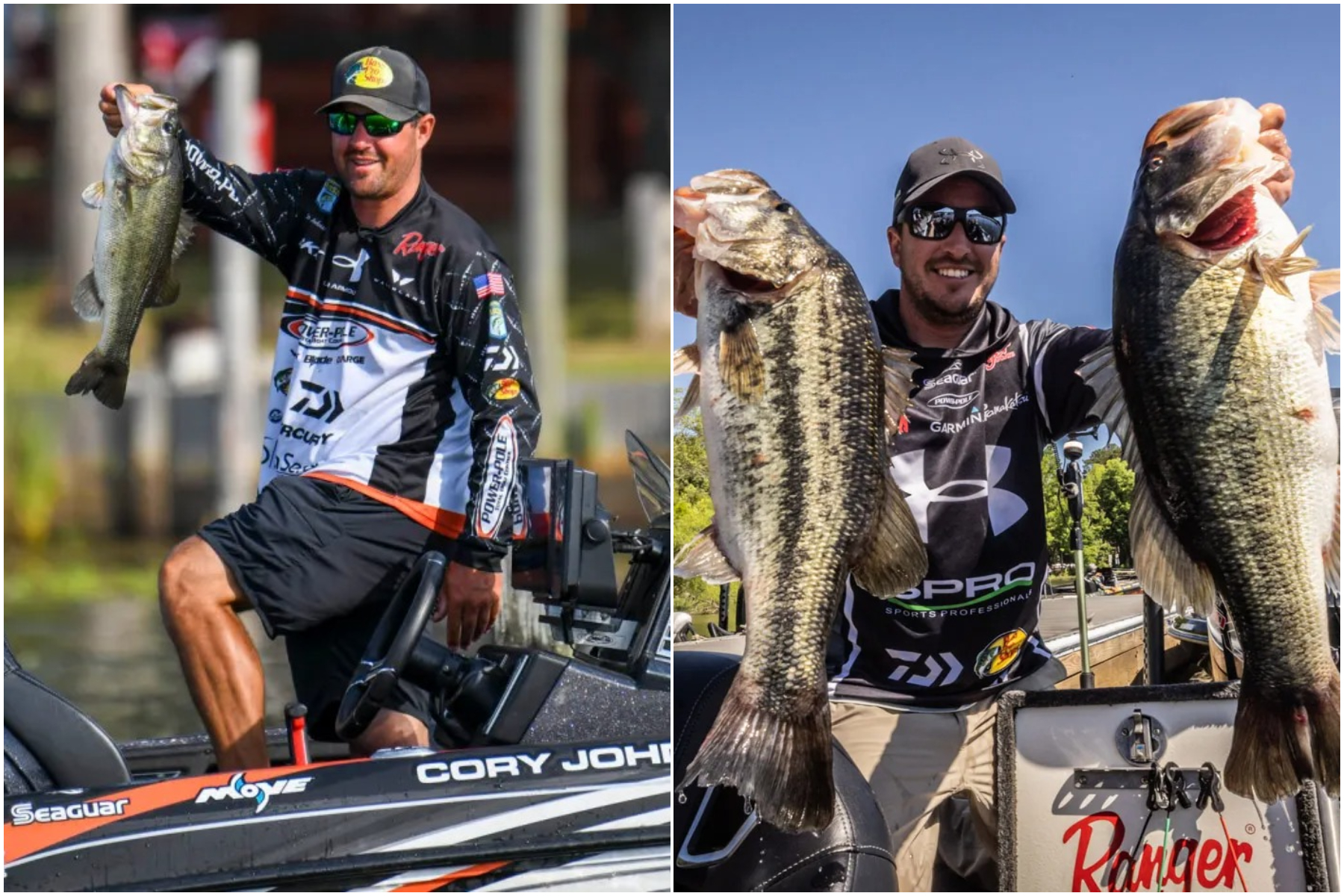
Whether it’s putting out brushpiles, breaking down big bodies of water, finding fish on beds or splitting expenses, everything in fishing is easier when you have a partner. But in team tournaments, everyone has a partner. So what exactly do you look for in a teammate to give you the added ‘oomph’ to rise to the top of the leaderboard? We sat down with Progressive Bassmaster Elite Series champions — and brothers — Chris and Cory Johnston to get their take on what makes a great partner.
You’d be hard-pressed to find a more qualified duo to speak on this subject. It’s not often that you are born into a household with a cooked-in team tourney partner as passionate about the pursuit as you are, but that was certainly the case for Chris and Cory. The Johnston brothers started fishing team tournaments together in their teenage years and have now competed in over 200 of them alongside one another, while also working closely together on the water in their more recent Elite Series careers. Here are a few of their team tourney tips.
Trust is huge
Trust is of paramount importance when selecting a team tournament partner. The closest relationship there is to a marriage, team partners need to be able to trust their counterparts to keep inforomation under wraps and to do what they say they are going to do. And, it’s best if the marriage is monogamous.
“Trust is a huge issue,” said Cory. “Pick one guy you get along with, that’s a good fisherman, that you can fish with for a long time.”
It’s also important to know your partner is working just as hard as you are. Being able to divide and conquer a body of water in two boats during practice puts the team at a huge advantage. But, you have to be able to trust in your partner’s abilities and that he went about things with the same intensity as you.
“I think that’s where Chris and I do so well together,” said Cory. “When you’re pre-fishing, and your partner goes to check a section of the lake, you want to know that everything he told you is accurate. That he’s checked everything thoroughly, and you know there’s no stone left unturned.”
Partner with similar strengths
It may seem counterintuitive, but the best teams are rarely comprised of one great power fisherman and one phenomenal finesse fisherman. While drastic changes of pace can pay off at times, clashing styles lead to more confrontation than catches. If one angler is more comfortable in 50 feet of clear water and the other in 2 feet of mud, you’re going to have a hard time fishing together.
“It works so well with Chris and I because we’re always on the same page,” said Cory. “We grew up fishing the same. I mean, we’re essentially the same person when it comes to fishing. We can feed off each other. We know what each other are thinking, and I think that’s a big part of two guys working together and doing well.”
It’s not just about picking a partner with a similar skillset, though. You’re going to want to find someone who is as good as you are — maybe even a touch better. But you’ve got to up your game, too, because you know the best candidates are looking for someone on their level or better as well. Once you find each other, you’ll naturally challenge each other to get even better all along.
All about efficiency
When you set sail with your team partner, you want to be as efficient as possible. Having confidence in the other angler’s abilities is a great first step. Step two is planting both anglers on the front deck of the boat.
“If you pull up to a dock and both of you are on the front of the boat, your partner can skip it up to the front of the dock, and you can skip it on the end of the dock. You’re being way more efficient that way, instead of having one guy at the back of the boat. If both guys are on the front you’re fishing it twice as quickly, and you’re going to fish almost twice as many docks in a day.”
Presenting two complementary presentations at the same time is a big boost to the team’s efficiency. If the Johnston brothers really hone in on a bait, they’ll both throw the same thing. But quite often, it’s better to throw two different baits in the same areas to figure out what the bass are reacting best to.
“Having two different presentations in a team tournament is key,” said Chris. “Say we’re fishing a milfoil bed, we’re not both going to typically fish with the same bait unless you got it dialed in 100%. I’m going to throw maybe a jig, and he’ll throw a Texas rig. If you find one is working better than the other, then maybe you both switch to that presentation. But right off the get-go, you’re trying to figure out what those fish want quickly.”
Ultimately, it comes down to a few main criteria when searching out a team tournament partner, or when trying to make yourself as appealing as possible for a potential partnership. Find someone you can trust, and be someone they can trust — the linchpin is keeping this relationship exclusive. Look for someone with similar skills and an eagerness to improve, and work to hone your technique as much as possible.
Finally, spend as much time on the water together as possible, preferably both on the front deck. The more time you spend fishing in close proximity to one another, the more you’ll get to know one another and the deeper that bond will go. From that, familiarity, trust, confidence and efficiency will grow naturally.