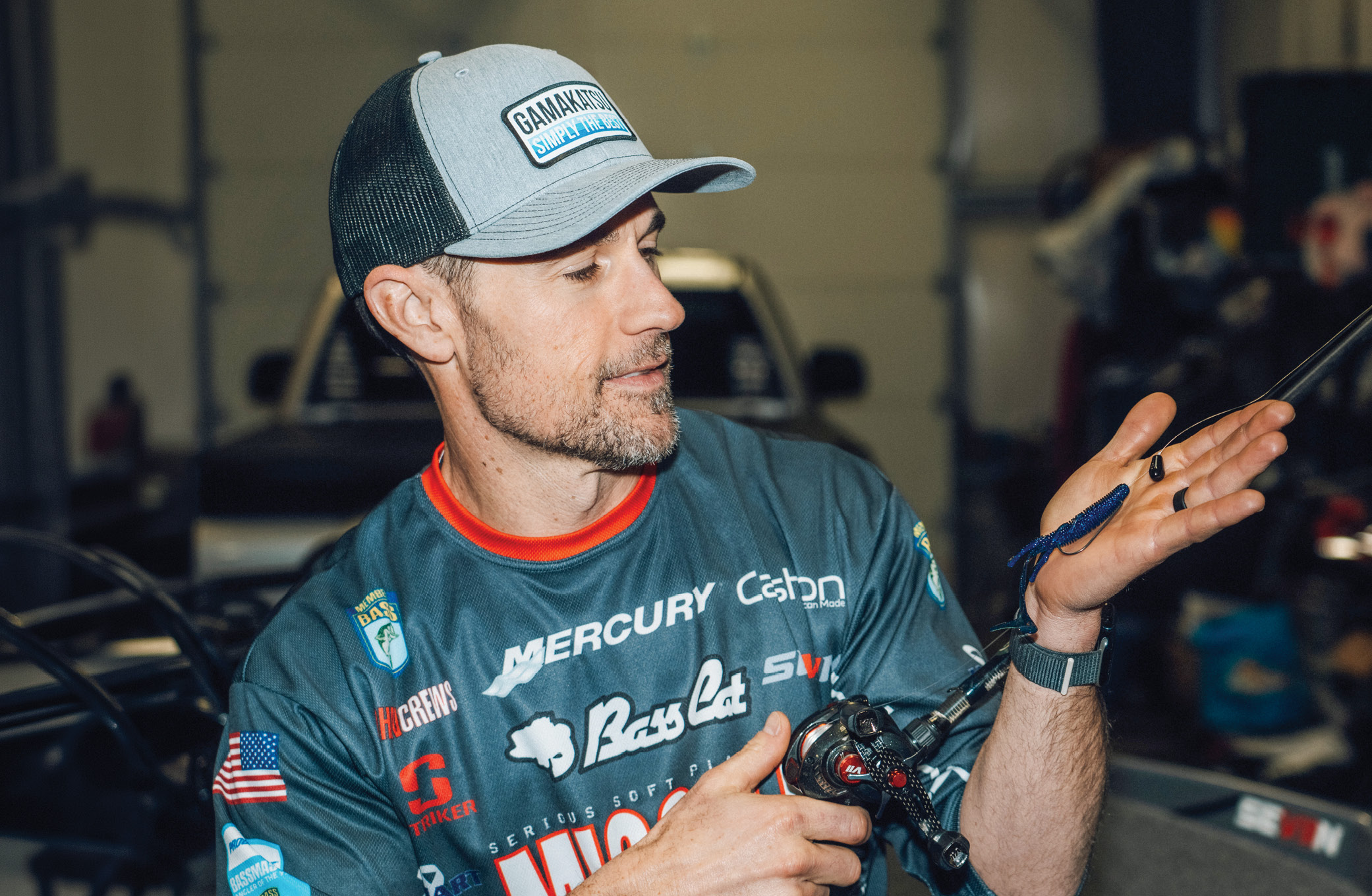

Although the free rig has been around for a while, many anglers have yet to adopt it. Veteran Progressive Bassmaster Elite Series angler Mike Iaconelli isn’t among that group. He never passes up an opportunity to experiment with a potentially effective bait or tactic.
“I started playing with the free rig three or four years ago,” he says. “It presents a soft-plastic bait in a unique way.”
The free rig is similar to an unpegged Texas rig in that it employs a weight that slides on the line. However, the free rig’s presentation couldn’t be more dissimilar.
Free rigging, in a nutshell, consists of allowing slack after the cast as the weight is sinking. This allows the weight, which plummets much faster than the bait, to slide up the line on its way down. Once the weight tags bottom, the bait descends slowly behind it, presenting an irresistible snack to a bass.
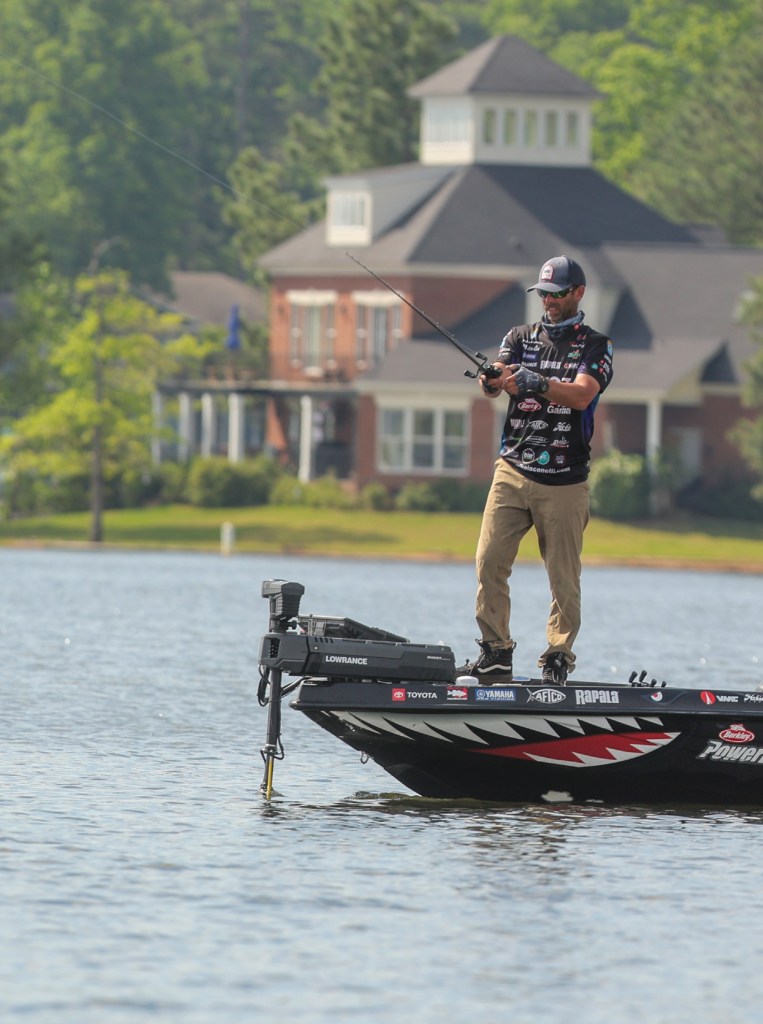
A weight that features a round metal eye, such as a bell sinker, slides more freely on the line. However, Iaconelli prefers a snag-resistant, cylindrically shaped weight.
He opts for a 1/8- to 1/4-ounce weight in water no deeper than 10 feet and a 5/16- or 3/8-ounce weight from 10 to 25 feet. He’ll go as heavy as 1/2 ounce in deeper water or when fishing in a heavy current.
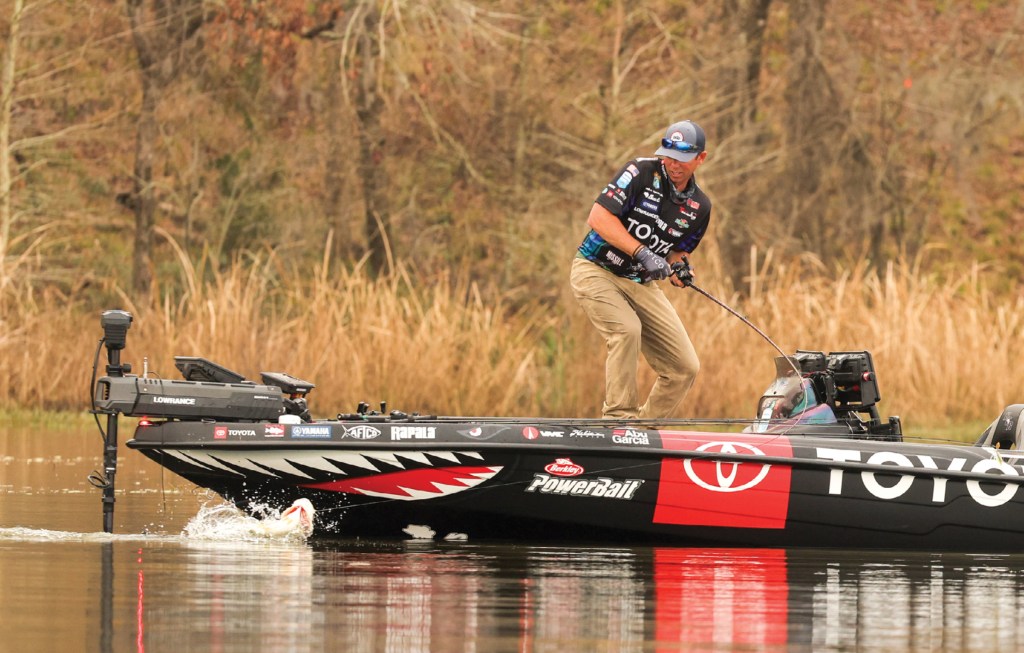
Iaconelli also affixes a bobber stop on the line before tying on a Berkley Fusion19 2/0 to 4/0 hook to match whatever size bait he is using.
“The bobber stop protects the knot from the weight,” Iaconelli adds. “Forget about heavy hooks for the free rig. You need a light- or medium-wire hook to allow the bait to fall naturally.”
Bulky baits that have more water resistance pull out more line during the initial drop and tempt bites with a slower descent after the sinker touches bottom. Iaconelli favors soft stickbaits like the Berkley PowerBaitMaxScent The General as well as the Berkley PowerBait MaxScent Creature Hawg and other beaver- and craw-style baits.
A 5-inch junebug-colored The General carried him to a Top 20 finish during a major tournament on the Potomac River a few years ago. In practice, he found bass feeding on the inside and outside edges of a hydrilla grassline. They eagerly pounced on bladed jigs, swim jigs and other power-fishing baits.
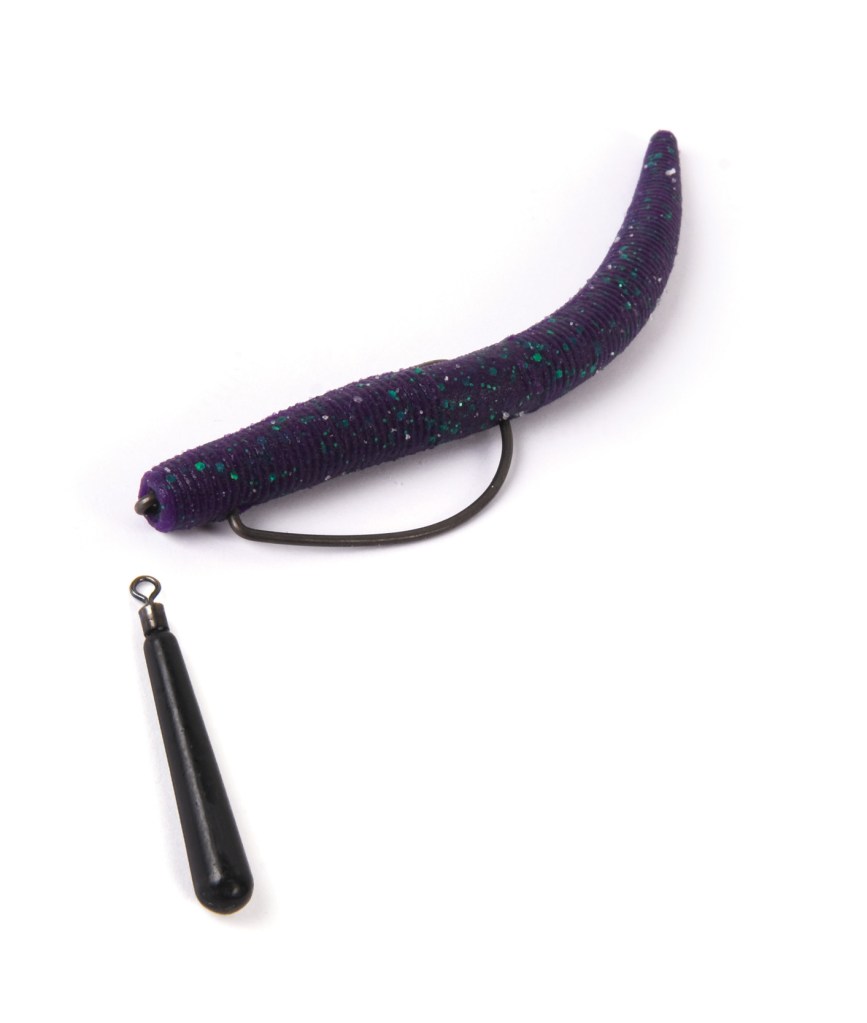
On the first morning of the three-day event, those lures produced for him and for a handful of other competitors who were fishing the same grassline. By midday, bites became scarce. Iaconelli figured this was due to the fishing pressure.
He switched to a free rig and began sacking bass again while the anglers around him continued to struggle. He stuck with the free rig throughout the remainder of the tournament and thoroughly outfished the anglers around him.
“Some of those guys came up to me after the tournament and asked me what the heck I was doing,” Iaconelli recalls.
Two key ‘bite moments’
Iaconelli claims that bites almost always happen at one of two points in the presentation. One is as the bait is fluttering down after the weight hits bottom. He gives the bait several seconds to meander down. If a bass doesn’t respond, he slowly pulls the bait over the bottom toward the sinker.
The other 50% of bites takes place the moment the bait contacts the sinker. This happened to Iaconelli so often that it piqued his curiosity. So he cast a free rig into a swimming pool to see exactly what the lure does at this crucial point.
“When the bait hit the sinker, it popped up like a crawfish in a defense stance or a baitfish pecking at the bottom,” Iaconelli says. “That tink on contact triggers any bass that’s following the bait along the bottom.”
Because nearly 100% of the bites occur during the fall or at the contact point, Iaconelli doesn’t waste time dragging the bait after it contacts the sinker. Instead, he snatches the free rig well off the bottom and lets it fall on a slack line so he can implement the one-two punch again. He repeats this process until the lure is out of the strike zone.
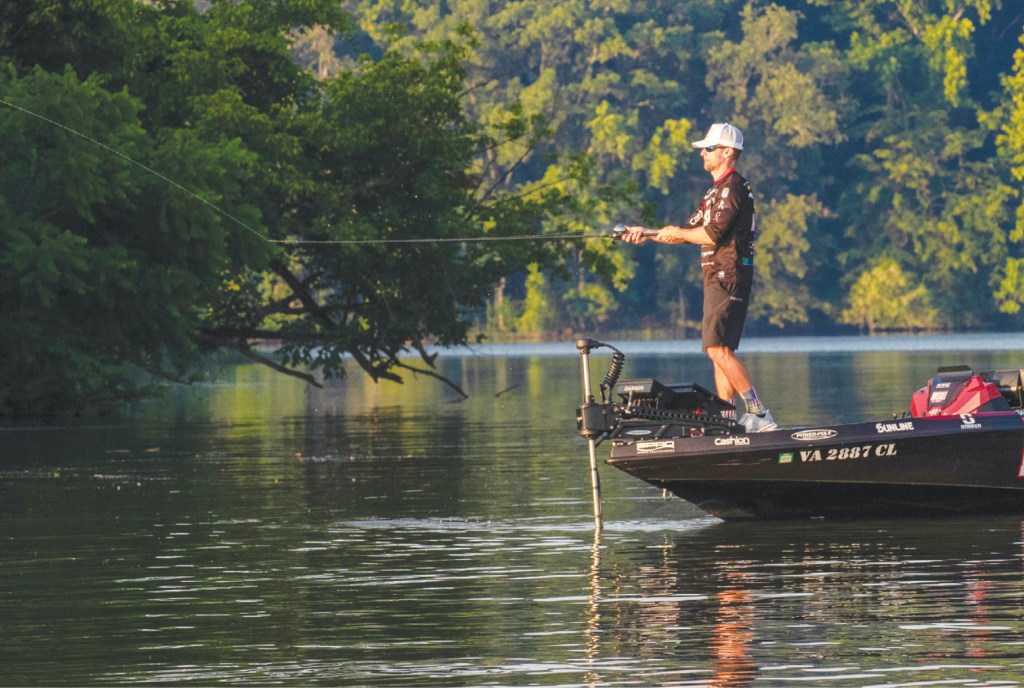
Elite Series angler John Crews has also found that the bait contacting the weight often triggers a bite. If that doesn’t happen, he drags the free rig over the bottom for a few feet as he would a swing head or shaky head. Then he jerks the rig off the bottom as Iaconelli does to repeat the slow-fall and contact triggers.
In water no deeper than 8 feet, Crews lets his rig free-fall on a slack line. In deeper water, he may pull a bit of line off the reel to ensure sufficient separation between the weight and the bait as the weight sinks.
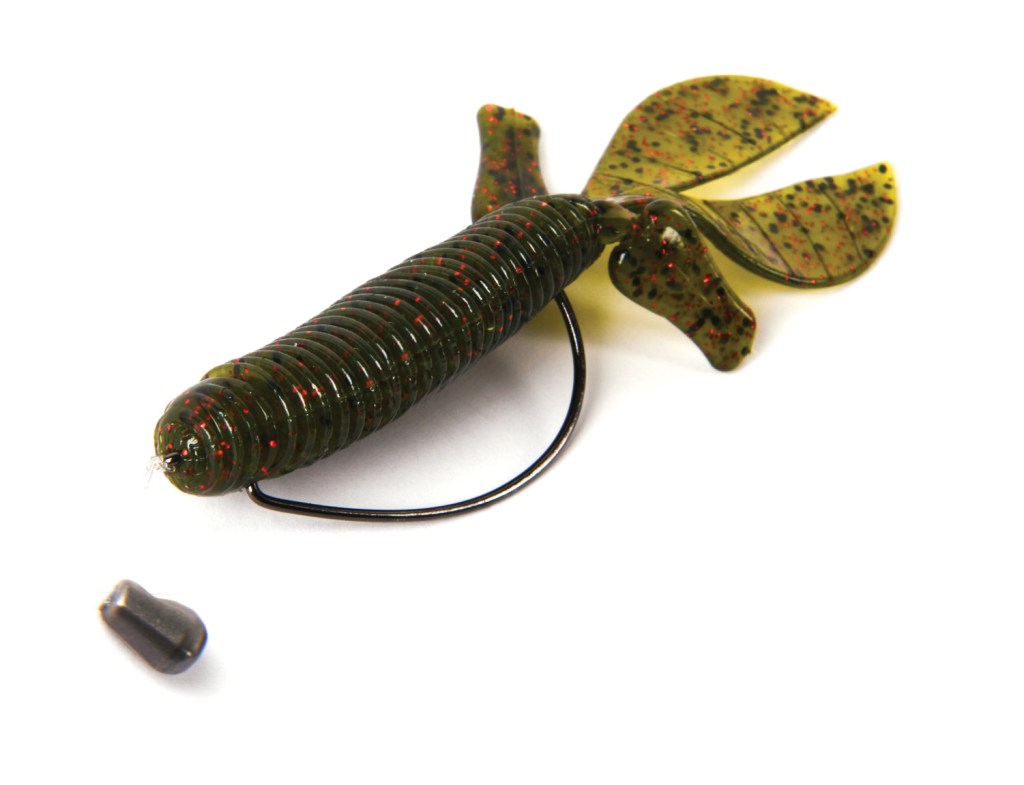
Crews relies on Spro’s snag-resistant Tungsten Pea Sinker, which was designed expressly for the free rig. The line slides through a tube within the weight, which helps protect the line from fray. A 1/4- or 3/8-ounce sinker handles most of his free-rig presentations.
“You want a bait that has good resistance so it can create more distance from the weight after the cast,” Crews adds. “My two favorites are the Missile Baits D Bomb and Baby D Stroyer creature bait.”
He’s had his best luck fishing the free rig around rocks, stumps and other wood targets at Virginia’s Smith Mountain Lake, his home fishery. It also produced bass for him during 2025 Progressive Bassmaster Elite Series tournaments at Lake Hartwell and Lake Fork.
“The free rig works better in clear water, but it also works in stained water, just as a drop shot does,” Crews says.
Yo-yoing the free rig
Maryland’s Bryan Schmitt likes to fish a free rig in a current that’s strong enough to pull the bait away from the weight on the bottom. This lets him repeatedly pull the lure to the weight, then let it drift away, effectively yo-yoing it in place. The two-time Elite Series champ opts for a 1/2-ounce or heavier weight to keep the sinker anchored to bottom.
He learned this tactic from a friend who competed in a smallmouth tournament on Lake Erie. His friend’s co-angler that day was a Japanese angler who kicked the boater’s butt fishing a free rig yo-yo style in a strong current.
“I took note of the free rig after that,” Schmitt says.
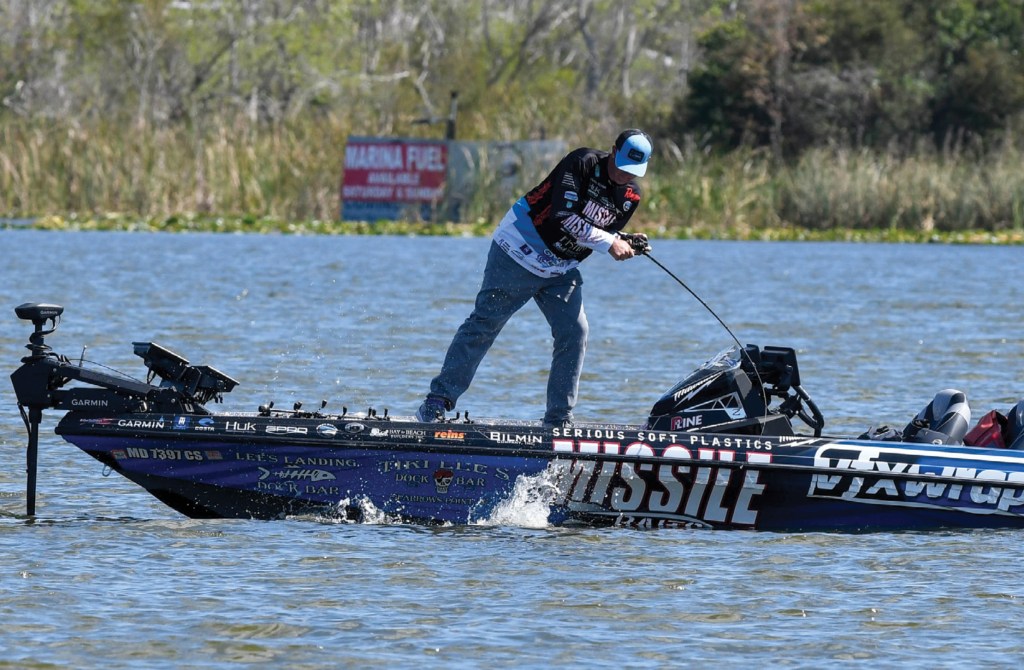
He says that yo-yoing works on other waters that have a forceful current, such as Lake St. Clair and the St. Lawrence River. It’s likely that this would also work on other free-flowing rivers and power-generating reservoirs.
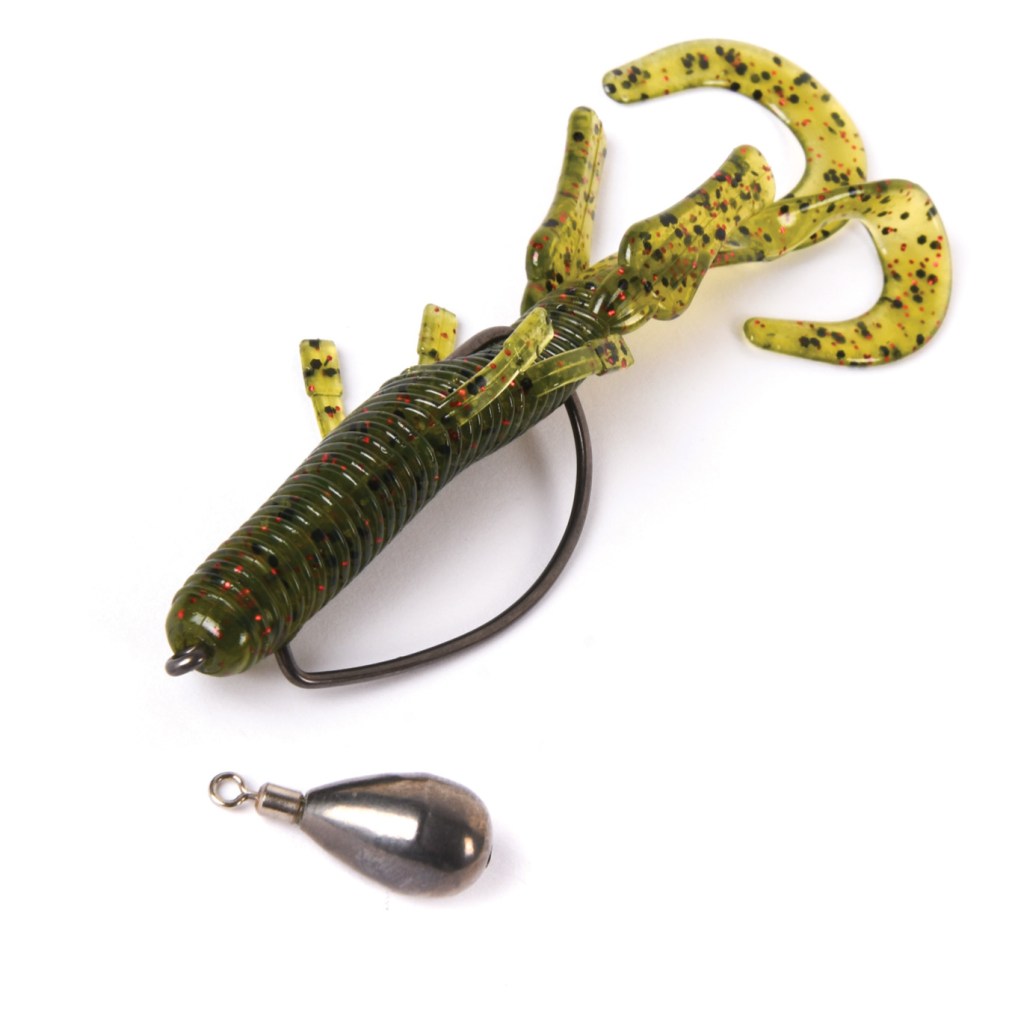
“I like the Missile Baits Baby D Stroyer for largemouth and smallmouth,” Schmitt says. “Its legs and tail create more action. When I pull it to the sinker and let it out again in a current situation, it looks like a creature trying to eat something on the bottom.”
He dotes on Reins Heavy Weight TG Down Shot Sinkers that feature a round metal eye that rotates on a swivel.
“You have to have a swivel in a heavy current,” Schmitt explains. “If the weight can’t spin, the line folds up around it.”
Schmitt also uses a free rig for bed fishing. By screwing a Floatzilla Fire Tail lure float into his bait, Schmitt can coax bites from spawners with the yo-yo tactic. After he pulls the bait down to the weight, he feeds line to let the bait float back up. The bait can also be twitched as it hovers over the bed.
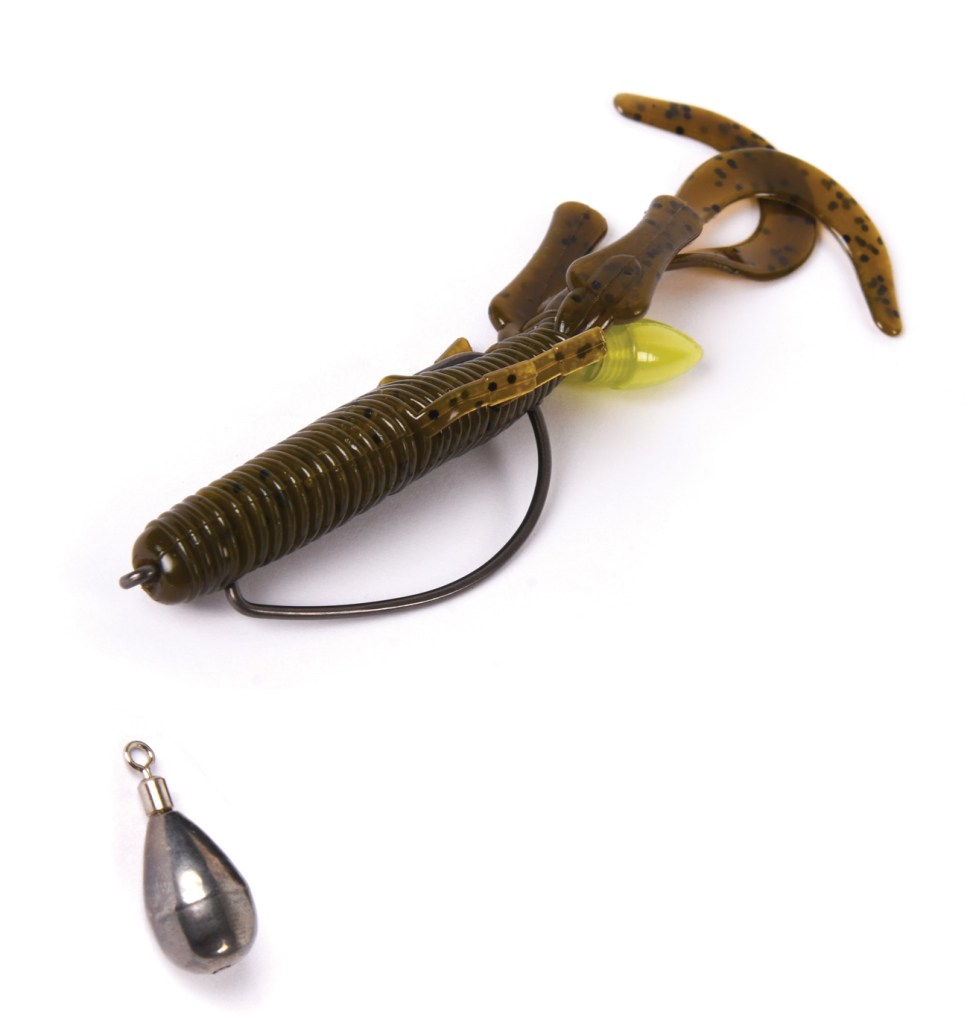
“I love the free rig for bed fishing,” Schmitt says. “I also like it when I’m casting to rocks, stumps or other structure I see with LiveScope. And it’s a good cleanup bait anytime.”
Perhaps the best part about the free rig isn’t just that it works, but that its potential is vast.
“There’s still a great deal to be unlocked about the free rig,” says Crews.
And that makes it worth experimenting with no matter where you fish.
Bobber stop strategies
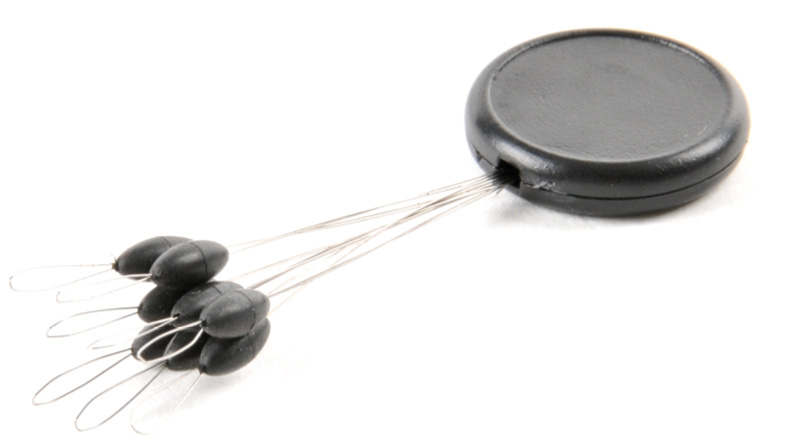
The main reason Mike Iaconelli places a bobber stop ahead of his hook is to protect the knot from the weight. The stopper also allows him to fish the rig more like a Carolina rig by sliding the bobber stop up the line. This prevents the weight from sliding clear down to the hook and lets the bait follow behind on whatever “leader” length he wants.
Experimenting with new baits
The free rig’s applications are continuously expanding, and Mike Iaconelli believes the new Berkley PowerBait MaxScent Flux-Gill will be a killer with the free rig. It features a flat, teardrop profile peppered with multiple holes to lighten the bait and allow for maximum scent dispersal. A solid band of plastic down the middle of the bait allows for Texas rigging.
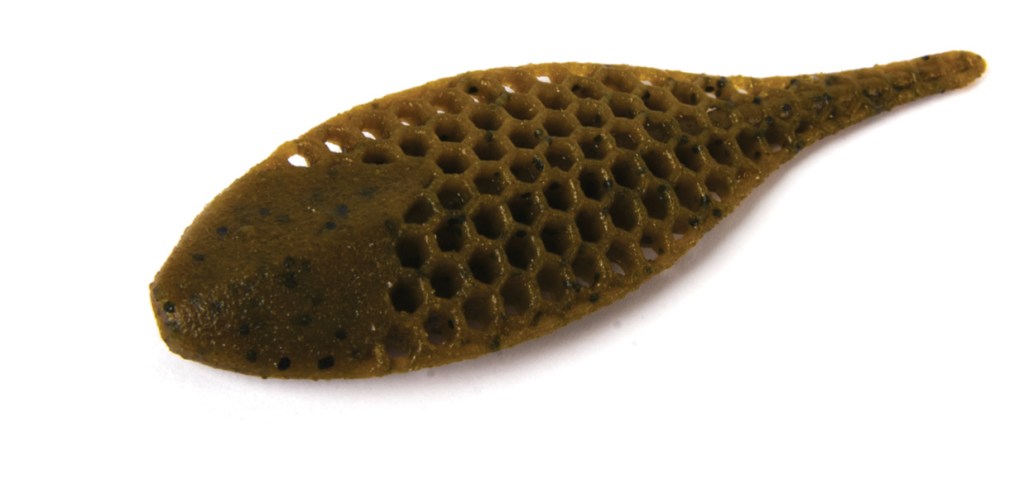
“One scenario when that bait would be awesome with a free rig is when bass feed on panfish,” Iaconelli adds. “Because of its flat panfish profile, the Flux-Gill has a super-slow gliding fall.”
Originally appeared in Bassmaster Magazine 2026.