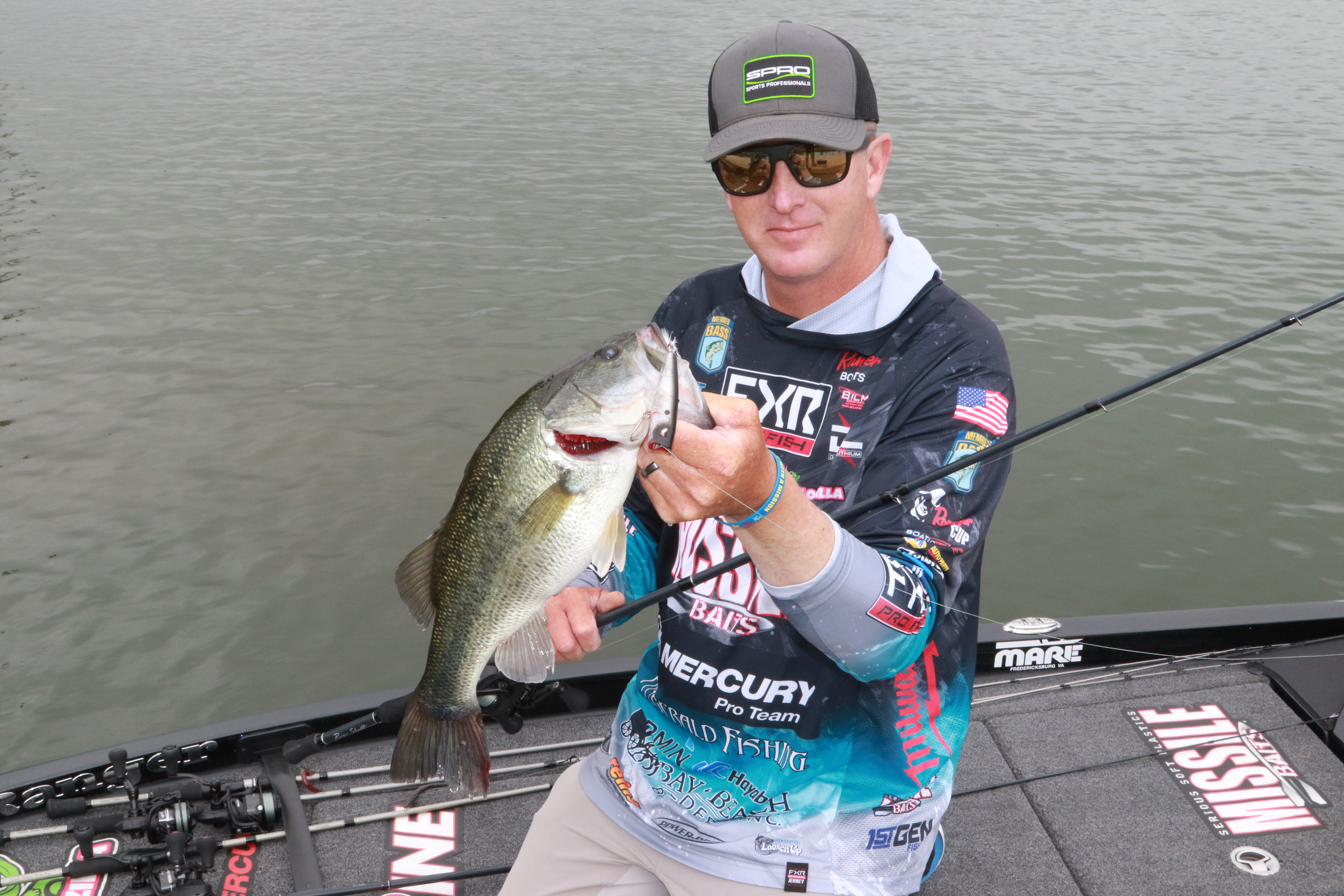
Listening to seasoned bass pros talk about the fall season, you’ll detect an overall tone of optimism, seasoned with subtle reservation. That’s because the year’s fourth quarter offers tremendous opportunity for those willing to work for it.
To that point, one important variable that comes into play this time of year is fishing pressure — specifically, the lack thereof. Popular fisheries are seldom barren of boats, but fall finds a lot of anglers trading their rods for rifles, their baits for bows.
No doubt, hunting season takes a lot of traffic off the lakes and that leaves plenty of room for anglers to spread out and find the fish. Capitalizing on this situation starts with understanding the seasonal motivation, taking into account the factors that determine fish positioning and then putting together an effective game plan.
The Food Mood
In all but the extreme southern regions of Florida and Texas, winter brings a period of diminishing food sources. Add to that the significantly colder water temperatures and it’s easy to see how lower metabolisms make bass much less likely to run around and chase baitfish and bream than they would be during warmer months.
Staying warm takes energy, so bass have to pack on the calories that will sustain them during winter’s leanness. The fish will continue eating during the coldest months, but their intake is minimal, so the fall feeding period is absolutely crucial.
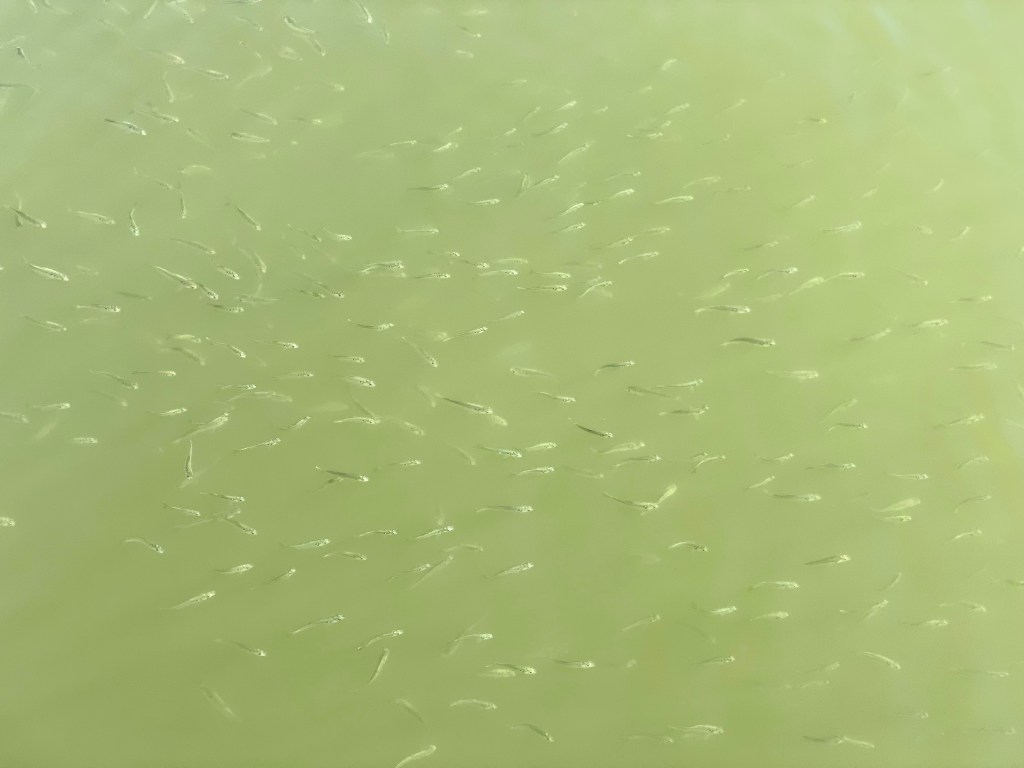
Good thing for bass, hordes of baitfish that spent the hot summer months in deeper, cooler water have risen to shallower areas where bass have an easier time rounding up a mouthful. The baitfish are usually moving toward the backs of creeks and pockets, where bass commonly seek to corral them on high spots from main lake and secondary points, to gravel bars and flat banks.
From a fishing standpoint, it probably sounds pretty easy — look for a flat area and cast ’til you catch ‘em. At times, it can be that simple, if you’re willing to wait it out. However, fall days often feel like a blend of hunting and fishing.
Scattering Factors
The biggest challenge for fall bass anglers is the fact that most days find the fish scattered. Summer’s Dog Days certainly had their challenges, but at least you could target specific spots on ledges, grass mats, deep stumps, etc. This time of year, the big schools have busted up and fish are roaming solo or in small packs.
One of the contributors is an annual occurrence that many lakes and reservoirs experience called turnover. Looking back to summer, when higher temperatures heat the upper part of the water column, the formation of a thermocline marks the separation of warmer surface water from deeper cooler water.
Generally, summer fish can only find sufficient oxygen above the thermocline, but lake turnover changes all that. Essentially, declining fall air temperatures cool the surface layer and as this denser water sinks, it breaks up the thermocline and the water levels mix.
Until things settle out, you’ll have intermingling temperature and oxygen levels, so bass are in an unsettled state. With thermocline restrictions gone, they can go wherever they wish.
Good for bass, challenging for anglers.
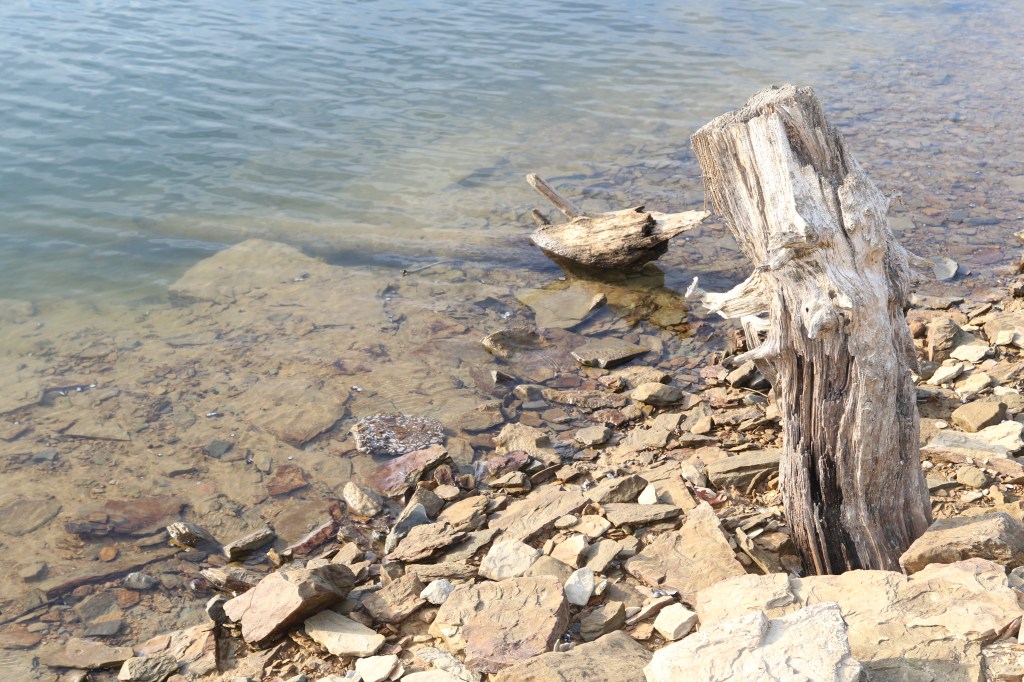
On top of this, the fall drawdown — lake managers lowering water levels to make room for spring rains and snowmelt — leaves a lot of shallow water habitat standing high and dry, or at least drained to unlivable levels.
From laydowns, to boulders, to culverts and stumps; drawdowns take a lot of fish-friendly cover out of play and that contributes to the scattering. On the upside, anything left standing in reasonable depth is a fish magnet.
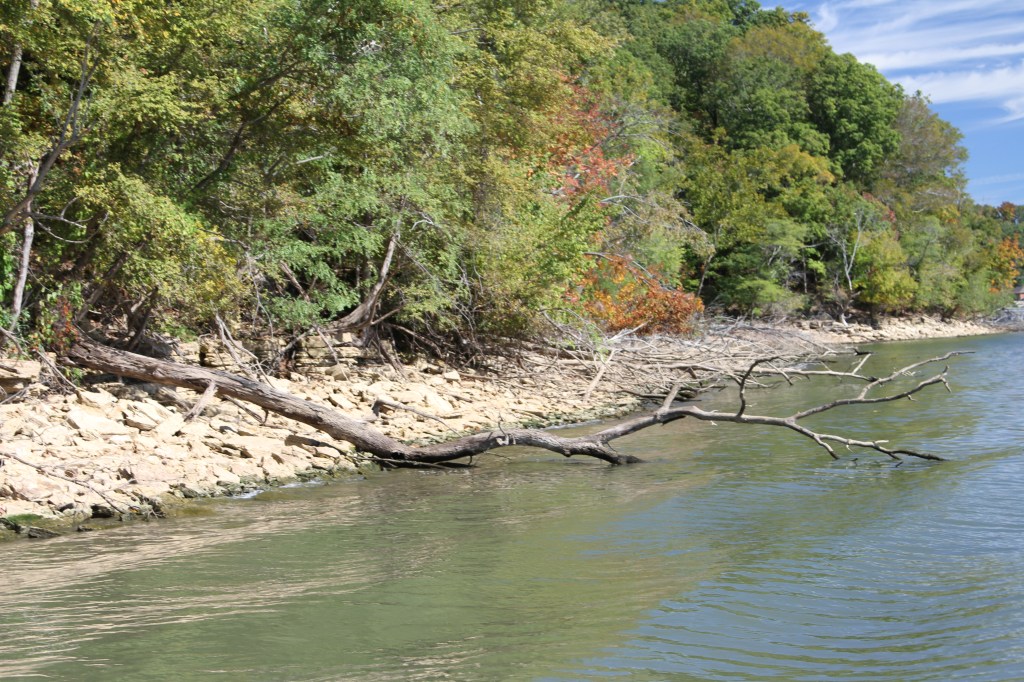
Say you’re looking at a drawdown-drained pocket littered with logs and fallen trees working on their tan, but then you spot a larger laydown with its canopy most submerged. You can bet that, at some point, those fall bass will make a pitstop there.
Important note here: Drawdowns impact long, flat banks much more than steep banks. With the latter, a lake can lose several feet, but the waterline remains relatively close to the shallow cover, whereas the water’s edge might retreat a boat length or more on a flat bank.
The Right Tools
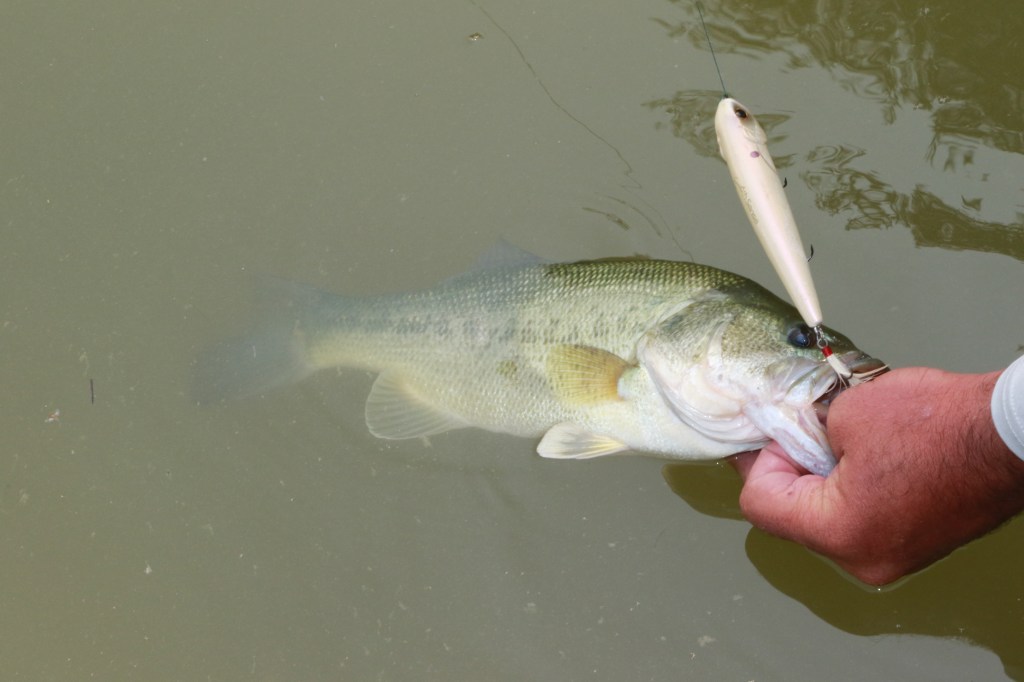
Diversity’s always a wise strategy, but particularly so in the fall. Sure, with baitfish commonly holding high in the water column — especially in shallow zones — the bass spend a lot of time looking up. Therefore, topwater baits are an autumn must.
Just don’t limit yourself with a single style. Topwater walking baits are a good bet for covering water with a steady side-to-side retrieve, but when you want to target a particular area, a popper brings lots of drawing power.
Also worth considering — a noisy buzzbait and a sputtering “plopper” style bait like the original River2Sea Whopper Plopper or a Strike King Clickin’ Chicken or a Heddon Spinnin’ Image.
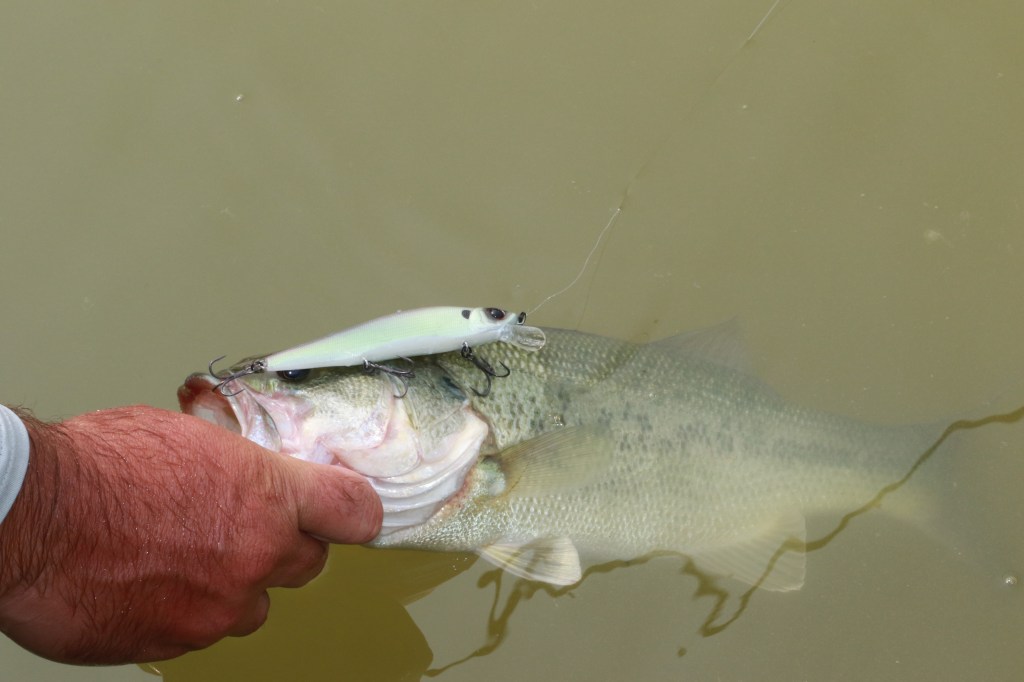
No doubt, topwater bites are pure adrenaline, but for maximum fall efficiency, make sure you’re ready to cover the entire water column. Sometimes, the bait schools hold deeper and bass are gonna go where the food goes. In such cases, reaching deeper with a jerkbait, a bladed jig or lipless crankbait can keep you in the game.
Also, don’t overlook the fact that some of the fish may hold near the bottom, especially near those isolated pieces of shallow cover. Keep a shaky head with a 6-inch finesse worm, a dropshot and a Texas-rigged creature bait handy and you’ll have your bases covered.
Stay Flexible
Everyone has their favorite baits and techniques, but be smart and keep an assortment of fall baits on deck. Things can change quickly this time of year and the ability of quickly transition from one technique to another is your super power.
That might mean transitioning from a subsurface moving bait to your flipping rig when you ease up to a laydown hanging into deeper water, a rock vein, or an isolated stump with enough water around it to park a bass. All good options, but the real fall thrill is finding schoolers.
When bass round up the baitfish and push them to the surface, the ensuing surface frenzy is purely savage aggression. This is prime time to throw your walking topwater or plopper style bait.
You might spot the action with your eyes, or hear it behind you while you’re fishing forward. Whatever the case, don’t waste any chances to target concentrated bass numbers during this scattered season.