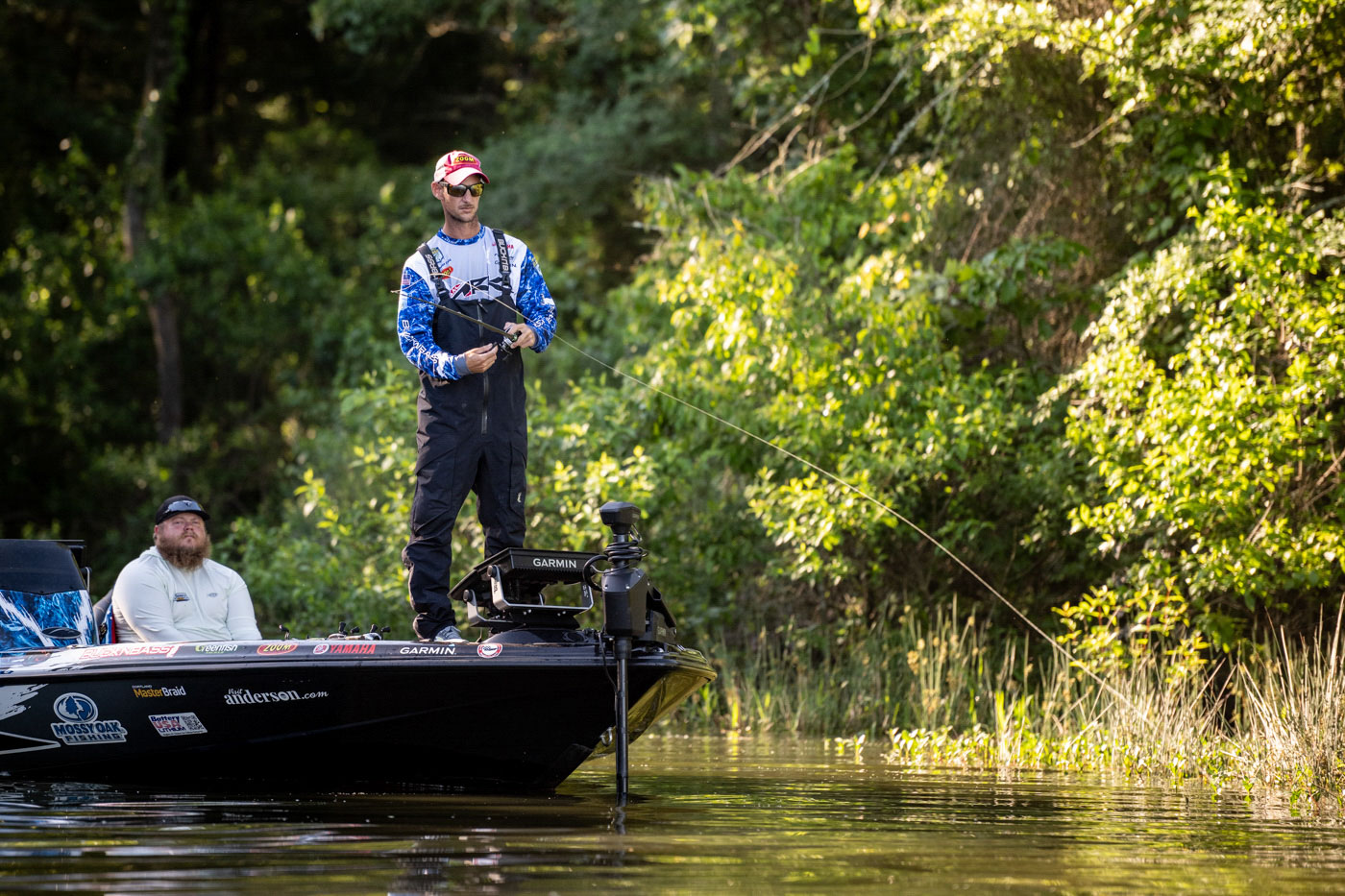
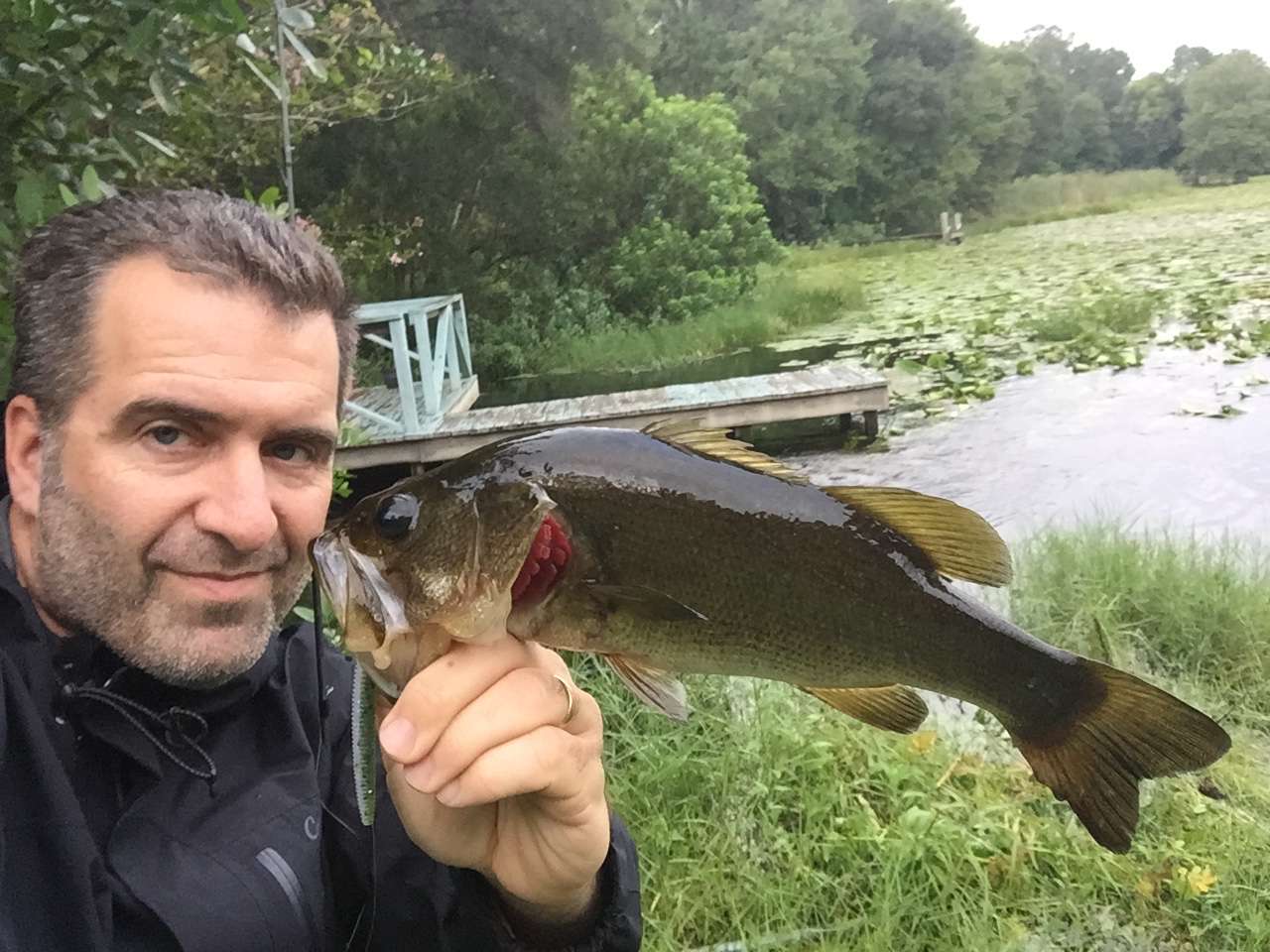
Any lake, any day, Brandon Cobb’s a serious contender, largely because the South Carolina pro always has a few tricks up his sleeve. Or, at least in his tacklebox.
Fact is, Cobb’s a diehard fan of the Zoom Trick worm, a fixture in the bass fishing arena with a relatively simple form belying its broad diversity. Measuring 6.5 inches, this segmented straight tail worm sports a slightly wider front end and a little bulge in the tail, but as worms go, this is pretty vanilla.
For Cobb, that’s the appeal.
“I think it’s the simplicity of it. It’s not a ribbon tail and it doesn’t have appendages, but it’s just so versatile you can rig it so many different ways,” Cobb said. “It’s simple, but that’s what makes it good in so many different scenarios.”
Moreover, time management demands decisive action. When the tournament clock’s ticking, Cobb would rather trust a utility player than rotate through a deep roster.
“Trick worms are one of the few baits that I carry throughout the year,” he said. “I have hundreds of baits, but the Trick Worm is one that never leaves my boat through 12 months of the year.”
From Florida to New York, Cobb knows a trick worm is a bite getter. He’s filled many limits with this bait, but we’re not only talking the gotta-have-five rule. Rather, with a Trick Worm tied on, Cobb’s also looking for kickers.
“I’ve caught several bass in the 7-pound range on trick worms, and the 9-13 I caught at the St. Johns River in 2022 came on a Junebug Trick Worm.”
Here’s a look at Cobb’s top Trick Worm presentations.
Unweighted: Spring through fall, Cobb’s most common Trick Worm use is the old school floating worm. Super subtle and ideal for shallow water scenarios, this taunting technique mimics a vulnerable baitfish wandering too close to danger.
“It’s a good way to cover water in a finesse (manner), in the same situation where you’d throw a topwater bait,” Cobb said. “I use this in really clear water or around really pressured fish.”
Describing his presentation, Cobb said: “It’s essentially just a twitching maneuver, kinda like the way I’d fish a fluke. It’s kind of a lost technique that’s not used much anymore.
“I skip docks with it, or throw it when I’m going down the bank. You can throw it basically anywhere.”
The key to this presentation, Cobb said is throwing the Trick Worm on spinning tackle. The only problem is that he’s had difficulty finding a rod with enough stiffness to handle his 15-pound braid and 4/0 round bend hook.
“I made a 7-2 medium-heavy spinning rod in my Ark Cobb Series Gen II called the Long Shot,” he said. “If the water is clear, like on Lake Hartwell, I’ll use a 16-pound fluorocarbon leader, but if it’s not clear, like Lake Fork, I’ll use straight braid.
“You have to be careful with braid, because it will slip out the eye of the hook so you have to get a good closed-eye hook. Not necessarily a welded eye, but a quality hook with no gap.”
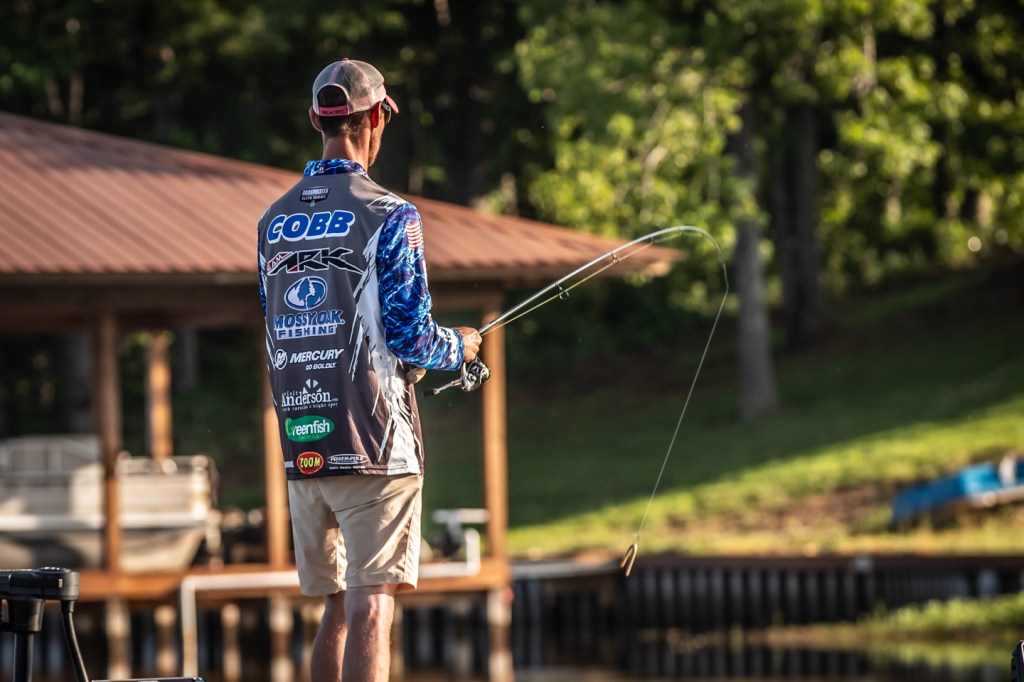
Shaky head: Rigging his Trick Worm on a 1/8-ounce head, Cobb said he likes the Greenfish Clean Up for its efficient design.
“The reason I used that one specifically is that I don’t like a shaky head with a spring keeper; I just want a keeper on the hook shank,” Cobb said. “With this (design), the worm is allowed to slide down when you get a bite, so your hook up is significantly better.
“With most spring keepers, if the head of the worm doesn’t rip from the spring keeper, the flat edge of the hook has to push through the worm, as opposed to the tip poking through the worm.”
Noting that he fishes a shaky head 12 months a year, Cobb calls this a particularly productive spawn bait. Need proof? He won the 2019 Bassmaster Elite at Lake Hartwell mostly by targeting spawning fish with the shaky head.
“It’s also good for docks and brushpiles in summer,” Cobb said. “In situations where you’d normally flip a Texas-rigged creature bait, I’ll flip a shaky head for a different look.
“If I’m shallow, I’ll usually fish my traditional power fishing techniques, but I have caught extra fish on the shaky head after fishing a heavier bait. I’ve pitched laydowns and then switched to dragging a shaky head and caught an extra fish.”
Texas rig: Straightforward and strategic, Cobb chooses this rig with a light bullet weight for scenarios where grass, pads or other snaggy stuff impedes shaky head efficiency. The St. Johns, the Harris Chain, Kissimmee Chain — all likely to see Cobb fishing a weighted Texas rig.
Atypical presentation: Cobb’s hard-pressed to think of any oddball uses for trick worms, but he does occasionally sneak one into bass feeding frenzies when they snub the starting lineup.
“I’ve done well with a shad colored trick worm on schooling fish when they wouldn’t bite traditional baits,” Cobb said. “It’s more of an open water use; not a different technique, just a different application of the technique. Colors like smoke or glimmer blue are best.”
Bulked up
Expanding Cobb’s repertoire, Zoom recently released the 5-inch Thick Trick. A shorter, chunkier version of the original with more width down the body and a short, narrow section before the tail bulge. The Thick Trick was made with Neko rigging in mind, but Cobb stresses the same versatility principle.
“You can Neko rig any worm, but to me, the Thick Trick is a better Neko worm than the thin one because it’s a little bit stiffer,” Cobb said. “With the Thick Trick, you can do every presentation you could with the (original Trick Worm), but it’s more of a power presentation for when I’m in big fish territory
“It’s meant to be used slightly differently. It’s the equivalent of switching from 3/8- to a 1/2-ounce ChatterBait.”
Good thing about a Trick Worm is that, unlike baits with shape variations, appendages and action oriented tails, a Trick Worm is a Trick Worm top to bottom. When the bite is “on” and he can’t spare the seconds it would take to replace a tattered worm, Cobb simply snips the torn top, re-rigs the hook and sends the obviously appealing bait back into action.
The other good thing about a trick worm — they generate the need to make such time-efficient decisions.