If you’ve been at the game as long as I have, then you’ve seen a lot of lures come and go. Some of them had lengthy runs, others short. Yet, no matter how popular or reliable they were at catching fish, they somehow lost favor.
That’s the nature of our sport. Lures, like fashion apparel, are trendy for only so long. Then they seem to fade into obscurity. And as quick as they disappear, something else takes their place.
Nonetheless, I still believe in the effectiveness of older lures and I carry some of them to this day … knowing they can produce when others won’t. And that gives me added confidence.
That said, here are some of the lures I feel fall into this category — some of which have saved me numerous times during competition.
An all-terrain spinner
One of the most productive lures ever introduced is the Snagless Sally by Hildebrandt. This inline spinner can travel seductively through virtually any type of cover without fouling, and that’s to its advantage.
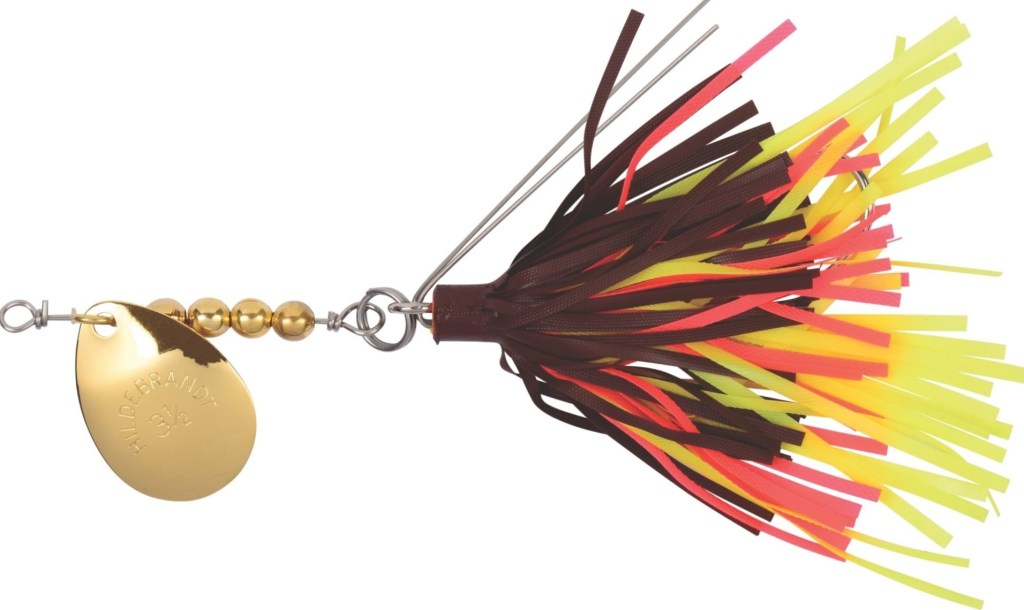
The brainchild of industry legend Lew Childre, the idea for the lure came while fishing the swampy waters of the Gulf Coast States — places thick with cypress trees and aquatic vegetation. Having a spinner that could traverse thick cover while maintaining steady vibration and flash was important, and the Snagless Sally delivered exactly that.
After developing a run of proven prototypes, Childre gave the design to the Hildebrandt family back in the 1960s. For it was their premium blades and wire forms that Childre used to fashion his inline baits. By adding a tandem weed guard and vinyl skirt to a single, jighead hook, the revolving blade would force the jig portion of the body to shake and the skirt to dance.
Childre didn’t stop there, though. He then dressed the lure with a trailing pork strip or chunk — a practice that became commonplace among anglers of the period. As its popularity grew, demand for the Snagless Sally expanded to other southern states, including Georgia and the Carolinas.
Now owned by Yakima Bait Company, they continue to produce and distribute the lure just as it was designed decades ago. Available sizes include 1/4, 3/8 and 1/2 ounce, all of which are offered in a wide range of color patterns. You even have the choice of silver-nickel or gold-plated blades.
If the body of water you fish is thick with submerged vegetation and/or wood cover, I recommend trying a Snagless Sally. The lure will come through just about any type of cover and bass love them.
A buzzing spoon
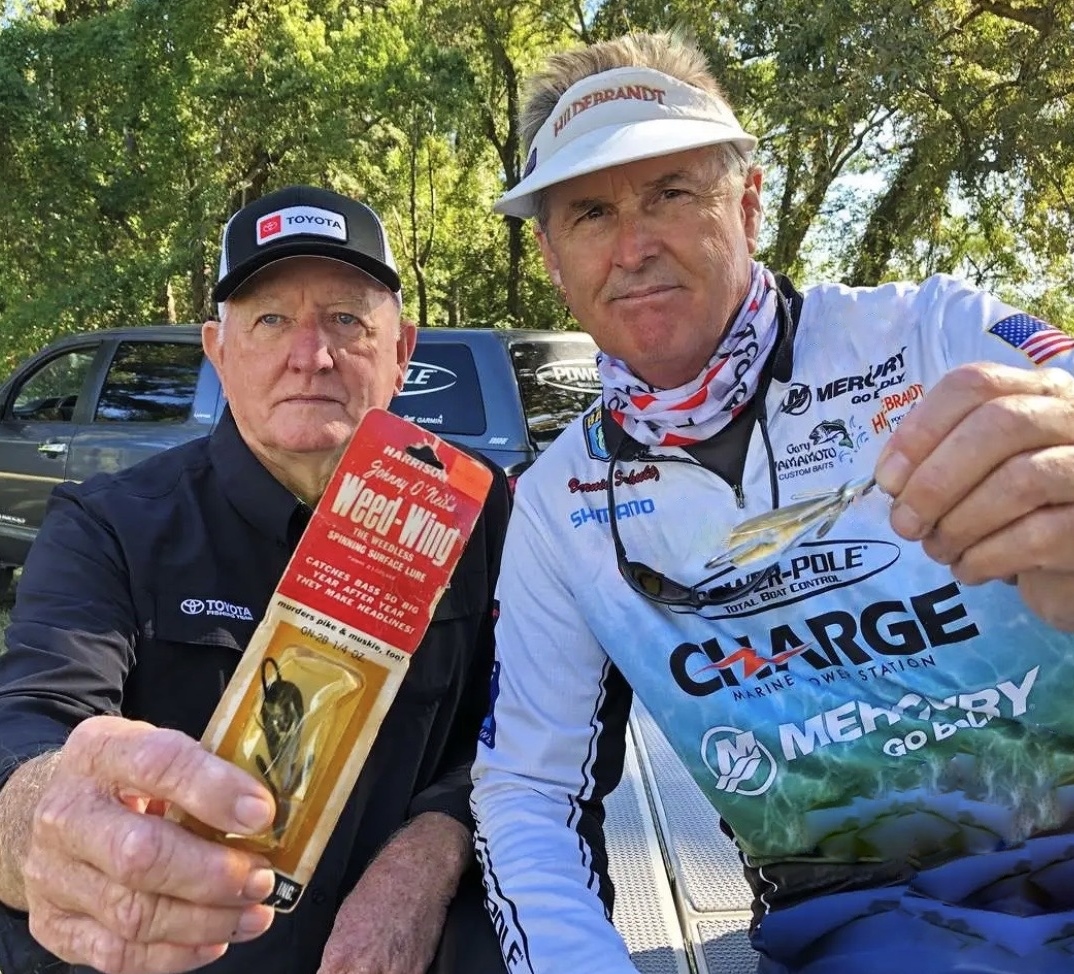
Another great bait for thick cover is the Johnny O’Neil Weed Wing. This unique lure pairs the subtle, sputtering sounds of a small buzzbait with the weedless aspects of a spoon.
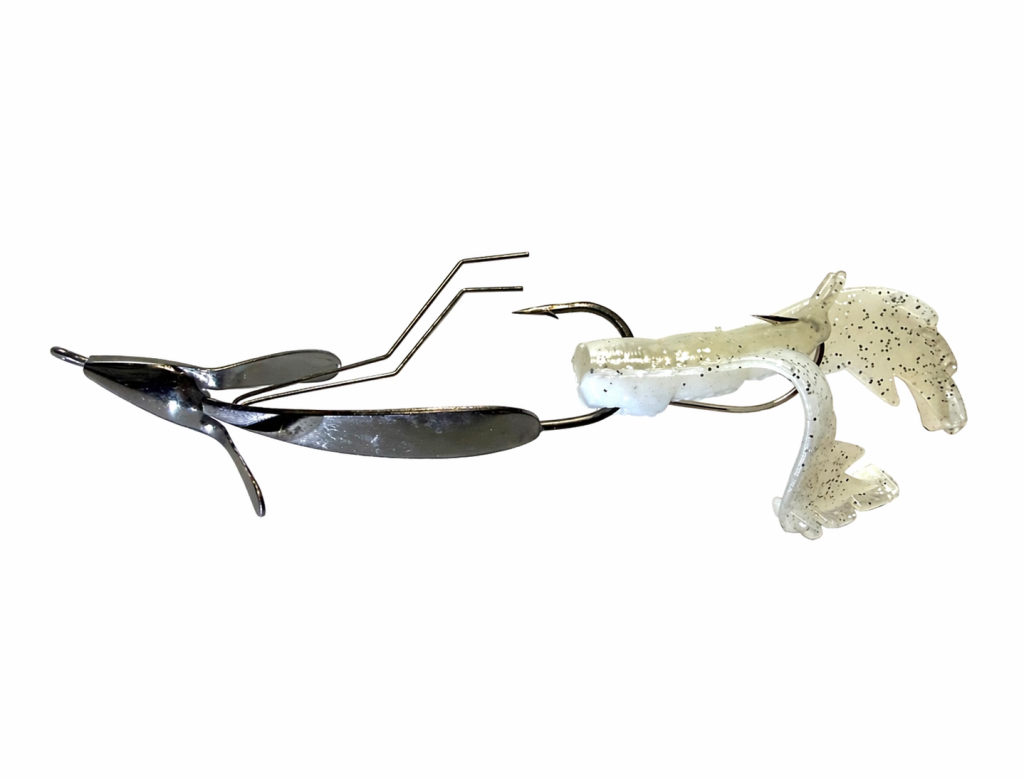
Introduced in the 1960s, they were popular among anglers fishing topped-out grass — like hydrilla, milfoil and eel grass. The lure’s buzzer not only emits a unique whirring sound, it also sheds grass as it spins — which, combined with the built-in weed guard, allows the spoon to remain on the surface, unobstructed.
I love the Weed Wing, as it’s made a huge difference for me on numerous occasions — the most recent of which was during the Bassmaster Open on Lake Eufaula, where it fooled a 5 3/4-pounder on the first morning of competition. Years ago, I caught a 9-pounder fishing over a topped out field of peppergrass, while practicing for a B.A.S.S. event on Lake Okeechobee. So the lure not only catches numbers, it also fools big fish.
To ensure a good hooking percentage, I dress the spoon with a tandem-tail grub or craw threaded over a stinger hook Texas-style. By burying the barb back into the soft-plastic body, the trailer hook remains snag resistant but effective at connecting with short-striking fish.
Weed Wings were produced in 1/4- and 1/2-ounce sizes, both with painted and electro-plated finishes. Good luck finding them, however, as they have been out of production for years.
The original speed worm
Among today’s more popular soft plastics are speed-style swimming worms, and for good reason. They catch fish!
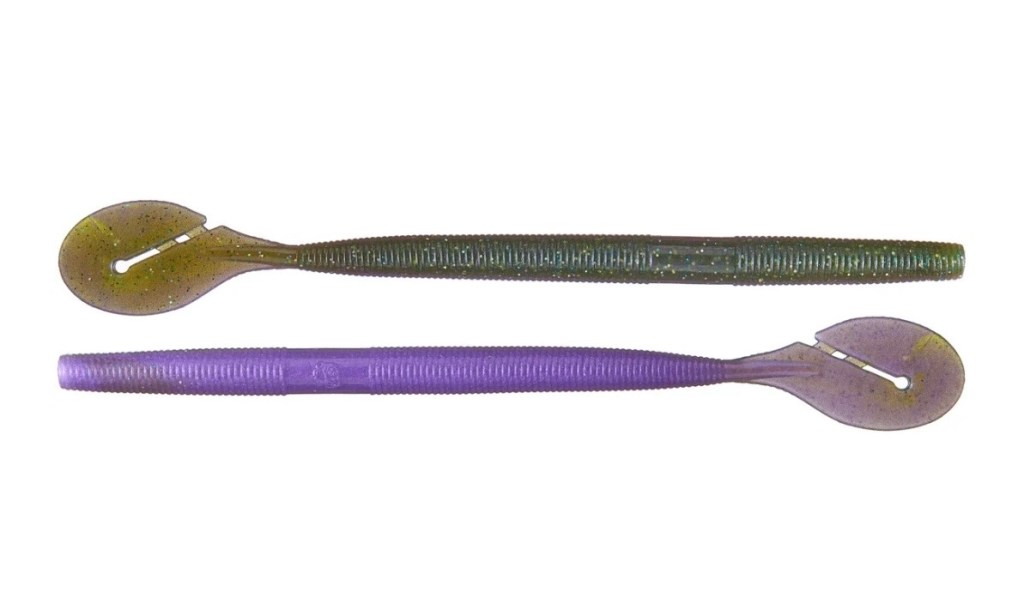
Speed worming has become so popular, numerous soft-plastics manufacturers now offer them — including Zoom, Bitter’s Baits and Yamamoto. The truth is, however, none of these companies were the originator of the swimming, speed-style worm. The true inventor was J.W. Lures of Jacksonville, Fla. The same company introduced the famed Hawg Hunter that once held the record for biggest bass caught in B.A.S.S. competition.
Introduced in the 1970s, theirs was a straight, paddletail design named the Ding-a-ling. Once word got out on the Ding-a-ling’s effectiveness at covering water in a speedy, lateral fashion, sales took off. Among the more prominent territories were the Carolinas, Georgia, Florida and the Gulf Coast States.
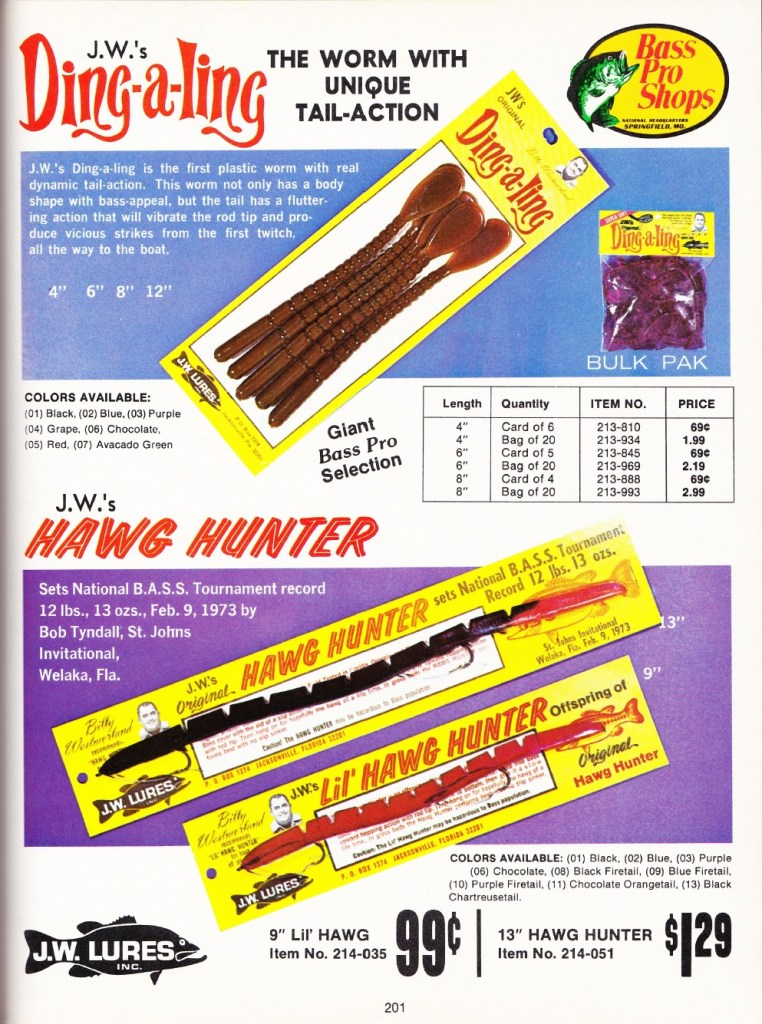
Probably because of its similar swimming characteristics to a saltwater needlefish, the Ding-a-ling became a prime tool for fooling tidewater bass. And though they were offered in three sizes and a multitude of colors, the 6-inch black grape seemed to be the dominant choice.
Like so many productive lures of the past, the Ding-a-ling eventually faded away. Fortunately, however, today’s tackle companies recognized the demand and have since kept the concept alive. Of those offered, my preference is for the Yamamoto Speed Senko, because it gives you the option to fish it as a standard paddle tail or as a fluttering flag tail, simply by separating a defined seam.
Regardless of brand preference, the fact remains that speed worms are among the best producers for bass holding in shallow water, particularly where you encounter tidal ditches or weedy flats.
New old stock
Finding dated lures can be a challenge — especially in unfished condition — but it can be done. Collectors refer to it as “new old stock” and to find them, you have to hunt.
eBay and various message boards are good places to begin your search. Flea markets and vintage tackle shows are also good sources. Wherever you find them, my advice is to buy. You never know when an older lure might pay off.
Follow Bernie Schultz on Instagram, Facebook or through his website.