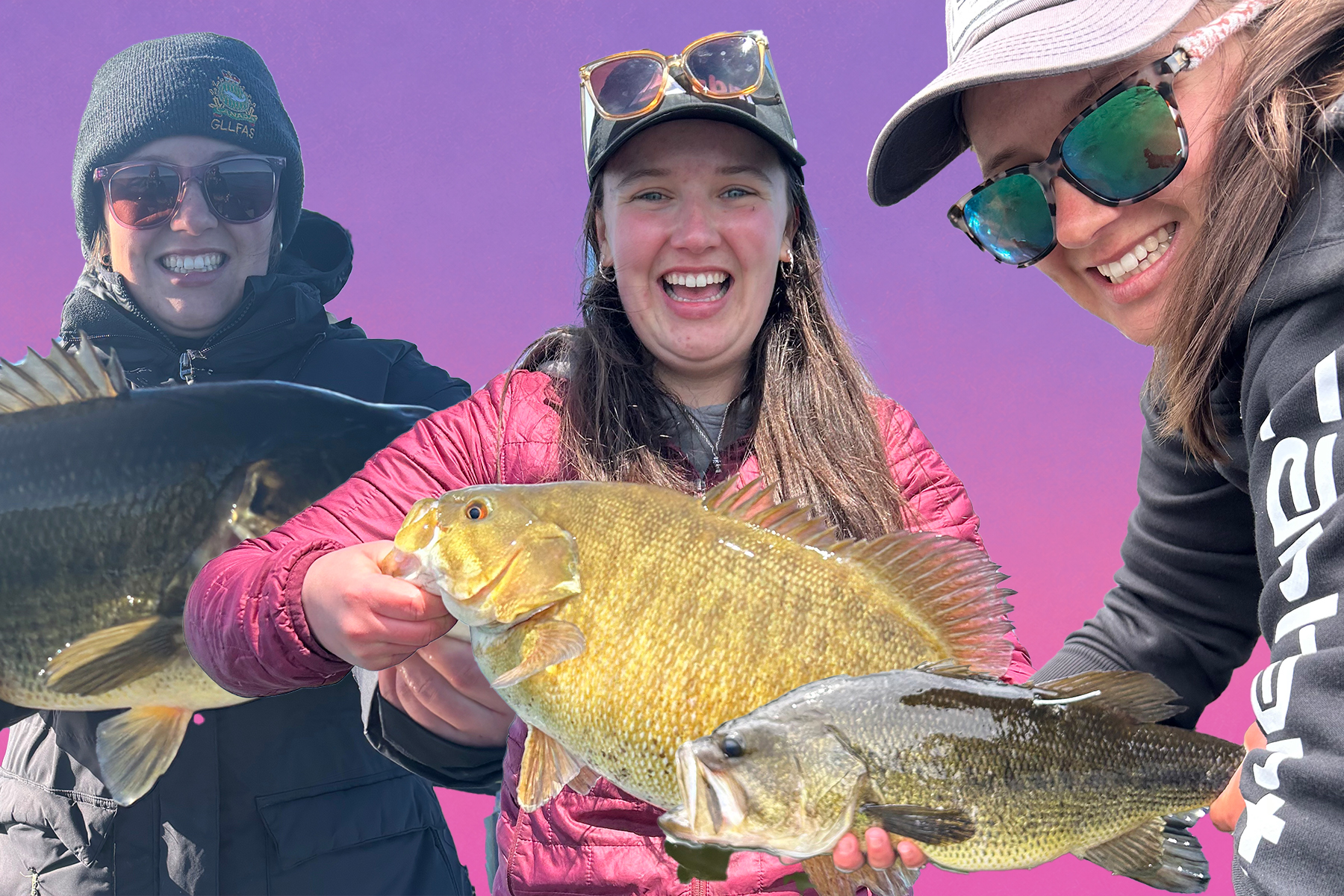
It’s one thing to have a voice in the conversation, but it’s how you use it that matters most.
For Raegan Davis, that truth is reflected in the criteria that lead to her receiving the 2026 Noreen Clough Memorial Scholarship for Females in Fisheries.
Currently pursuing a PhD in Biology, hers is a heartfelt message: Value, appreciate, and protect the natural resources that fuel our collective passion.
“I’m conservation driven and I enjoy working with communities,” Davis said. “In simple terms, I feel like I want to improve our fisheries and ensure that when I’m not here, other people have a fishery that they get to enjoy.
“A big part of that is making people fall in love with their local fishery. So, it’s important to improve conservation and management efforts, but also ensuring that there’s a fishery for other people.”
Authentic Attraction
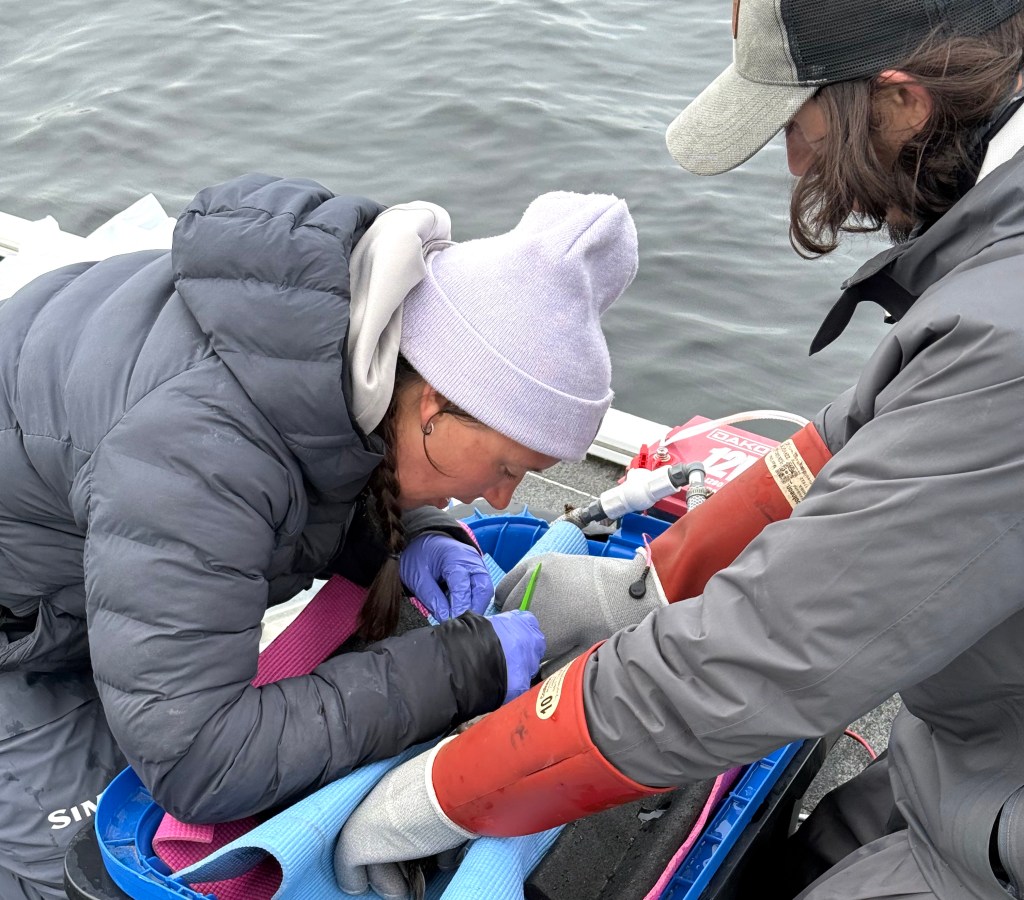
Born in Scarborough, Ontario and raised in Pickering Ontario, Davis has bass fished since age 3. She’s always been close to Lake Ontario, but in recent years, the St. Lawrence River has become her favorite fishery.
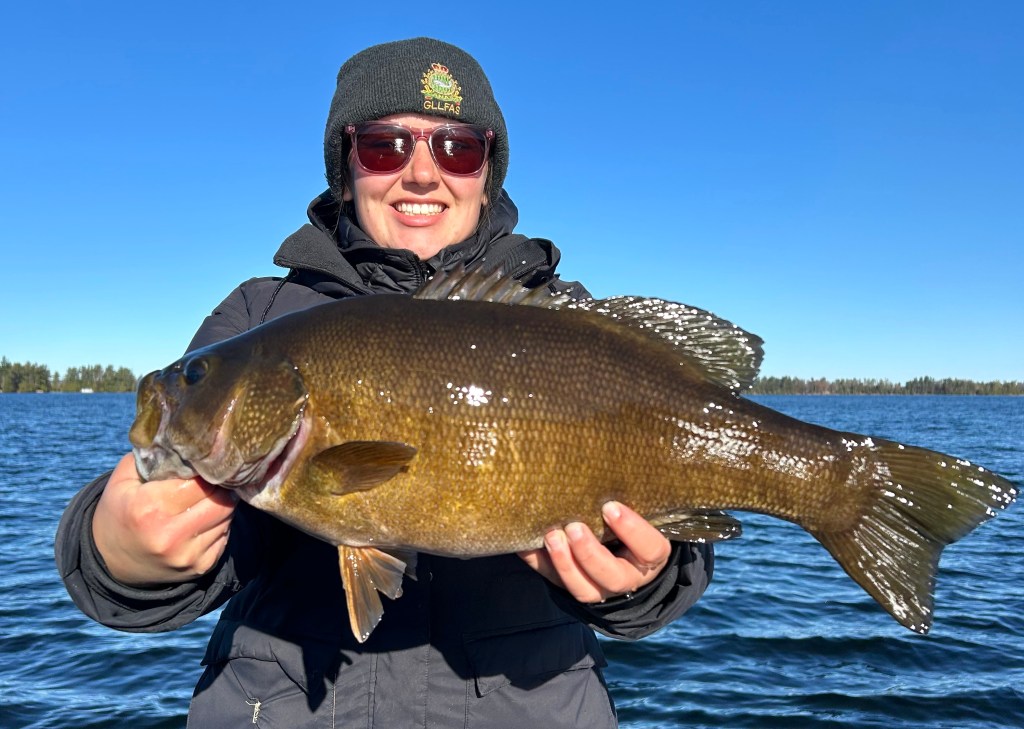
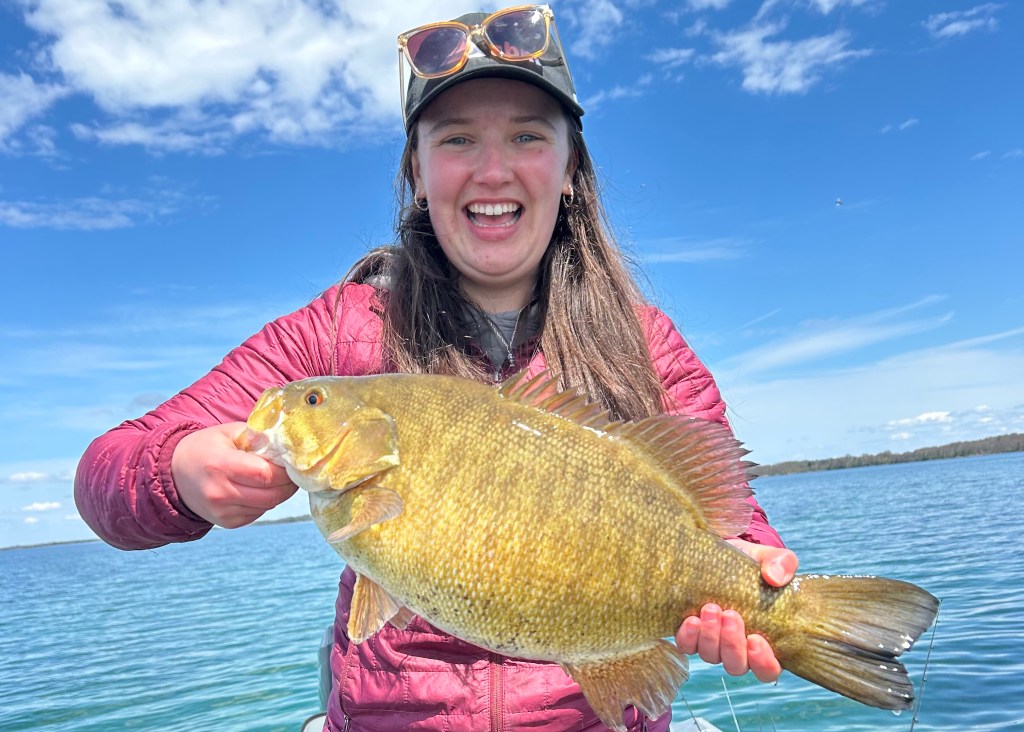
Davis said she loves throwing big swimbaits in the fall, while summer finds her fishing a Ned rig, flipping docks, or frogging for largemouth. She caught her personal best — a 7.34-pound smallmouth — on a Ned-rigged Berkley PowerBait MaxScent Lil’ Super Trooper.
A fan of the tournament fishing scene, Davis follows the Bassmaster Elite Series, especially fellow Canadian Evan Kung, a family friend, from whom she bought her first boat. Davis also keeps track of Chris and Cory Johnston, along with Cooper Gallant, who she watched progress through the local ranks and on to Bassmaster competition.
Her Path
So, how did Davis decide to channel a personal interest into a professional pursuit?
“I was a little bit late to the party,” Davis said. “Neither of my parents went to university, so I actually didn’t know you could be a fisheries scientist or work in the fisheries space.
“In high school I was good at science and when you’re good at science, guidance counselors are like, ‘You can be a teacher, a doctor, or a nurse. Those are the options they present to you.”
Davis chose the medical route, but during her undergrad years, a lecture by Western University Assistant Professor Dr. Timothy Hain changed everything.
“He talked about bluegill mating strategies and that’s when I made the change in my undergrad,” Davis said. “I was like, ‘I think I want to do fisheries research, so I switched into Environmental Science and then I did a certificate in Geographical Information Science.”
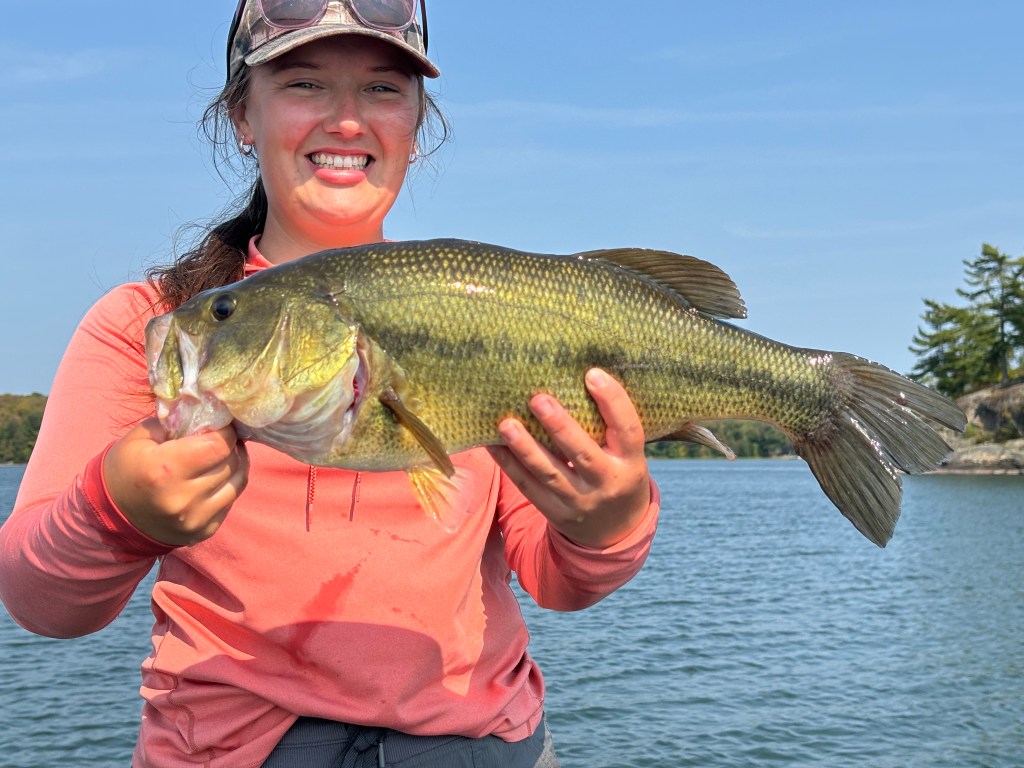
Earning her Bachelor of Science in Environmental Science from Western University (London, Ontario) in 2023, Davis went on to earn a Masters of Science in Biology from Carleton University (Ottawa, Ontario). While pursuing her Doctorate at Carleton, Davis works as a teaching assistant and a research assistant at Carleton.
Of her personal inspiration, Davis said: “I think for everyone who spends time on the water, you’re always making ideas about fish behavior. I did that from a very early age, so I think that was a big part of it.
“In high school I was always part of conservation groups, but you have these ideas when younger about what’s happening (in the water). From a young age, l was always asking a lot of questions.”
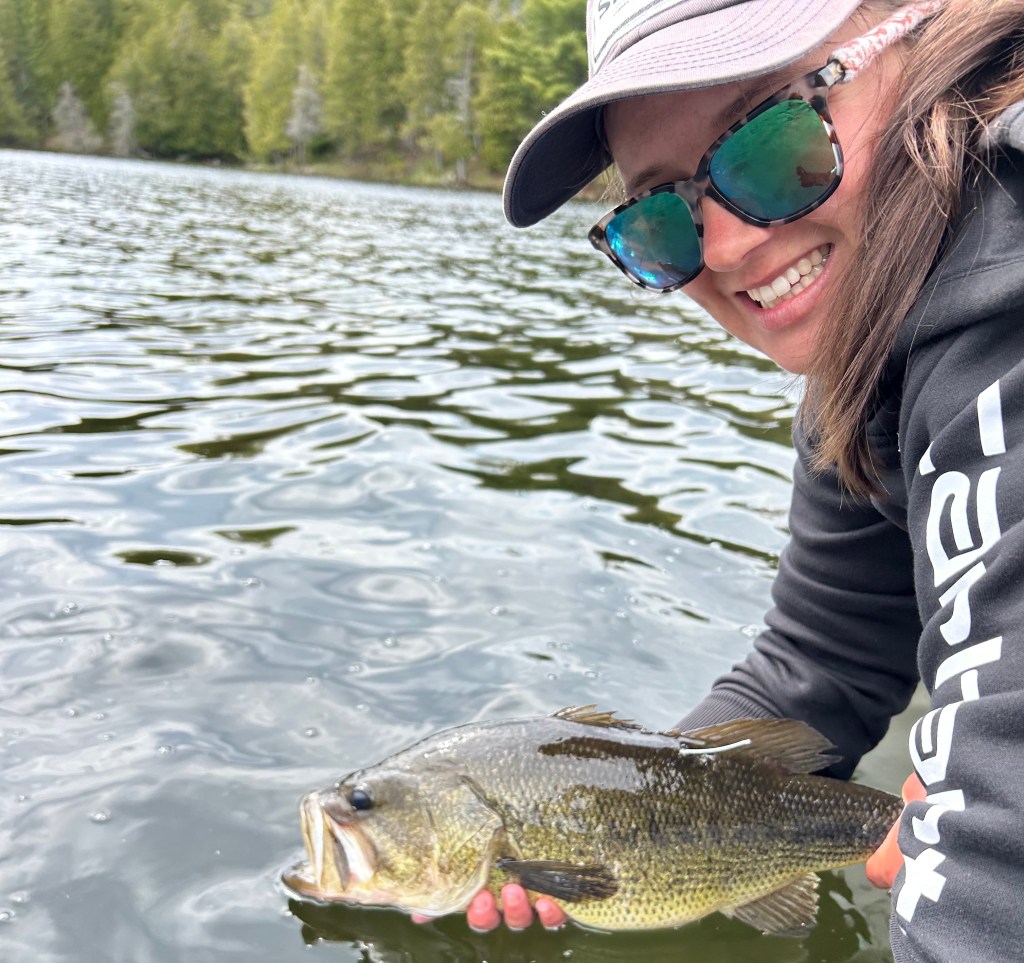
Today, Davis conducts academically relevant studies ranging from snorkeling to inspect smallmouth bass nests, to tagging lake trout and implanting acoustic transmitters (for tracking). Her self-directed “research” started much earlier.
“Sometimes, dead bluegill would show up at the dock and I’d do little dissections on them,” Davis said. “I was always very curious; I just didn’t know it was an option.”
Looking ahead, Davis described the course she sees following her doctoral program.
“I want to continue with research; I feel like every day I get to do stuff that I love doing,” she said. “This summer, I’m on the water every single day angling for fish, tagging fish, helping other people with their projects.
“I worked for DFO (Canada’s Department of Fisheries and Oceans) during my undergrad, so I’d like to become a research scientist with DFO, or maybe a professor.”
Following the Footsteps
With a CV listing several awards and scholarships, Davis regards her most recent honor as a top-3 moment. Not only was Clough a staunch conservationist, but she also advocated for diversity within fisheries science.
“I think the significance of Noreen’s work and other women who set the path for women to be in fisheries is that they created a space for women and they allowed us to be at the table and have a voice at the table,” Davis said. “For me, the important part of her work was bridging the gap between the angling community and the science community and trying to bring those two worlds together.
“In my PhD work, that’s a huge focus: How do these angling communities feel about these fish species, especially these non-gamefish species.”
Case in point, Davis calls the bowfin (aka “mudfish”) the star of her current project. Generally considered a “trash fish,” this common bass fishing bycatch brings a lot to the table, in terms of aggression, abundance and fighting ability.
“I’m looking at how can we create a recreational fishery for (the bowfin) and make people fall in love with this species,” Davis said of her objective. “On one of the lakes I’m working on, the lake association is heavily involved in the project and we have a photographer that’s going to help create a story that we’re going to target to different magazine outlets.”
Davis said this speaks to the impact of Clough’s work.
“One thing that is highlighted about her work is the importance of anglers,” she said. “I think it’s about bringing anglers and scientists together, because our work directly impacts their outcome.”
Inspiring the Masses
Extending that thought, Davis’ channels her hands-on experience to offer suggestions born of perspective.
“One of the big things is keep fish wet,” she said. “You’ll see in how we handle our fish when we’re doing research, if we’re taking a measurement, the scale board is wet, because it protects their slime coat, which is really important for a fish.
“Also, be aware of handling time and air time when you’re interacting with the fish. One of my big things now, after doing these snorkel surveys, is that once you see these fish sitting on their nest, guarding their fry, you realize how hard they’re working.”
Davis also stresses a point that should resonate with seasoned anglers and newcomers, alike — value every fish. They’re not all gonna be giants, but the big ones were once small and their course to impressive proportions merits respect.
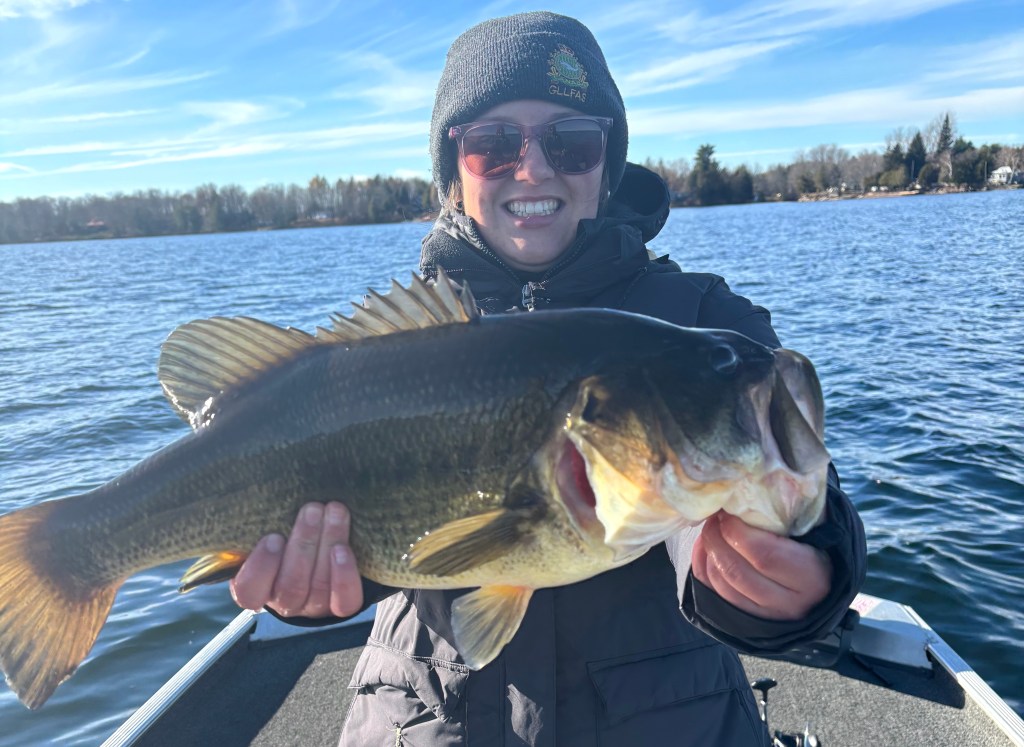
“Once you catch a 5-pounder, all you want to do is catch 5-pounders,” Davis said. “As an angler, that happened to me. Once you’ve caught big fish, when you catch a small one, you’re don’t get as excited about it.
“But when you consider how cool it is for a fish to get to adulthood, you recognize all that the fish has to overcome to get to 1 pound.”
It’s about appreciation for every fish.
Davis concludes: “When you appreciate something, you protect it.”