by Terry Madewell
Imagine a black bass fishery in harmony with man and nature, where anglers enjoy outstanding action on quality fish. Within this balanced ecosystem, the largemouth bass is the apex game-fish predator, as nature designed.
During the early 2000s, an elite bass fishery found at Lake Wylie lured the Bassmaster Classic to host leading tournament bass anglers to battle for the 16 South Carolina Wildlife title of Champion. The lake hosted a thrilling tournament in 2004, and all was well in this bass-fishing world.
Concurrently, during those years, a non- native species of bass was being illegally transported under the radar from Alabama waters into South Carolina river systems and lakes. Astounding disruptions within South Carolina’s native aquatic ecosystems would soon follow.
Upsetting the balance of a native ecosystem
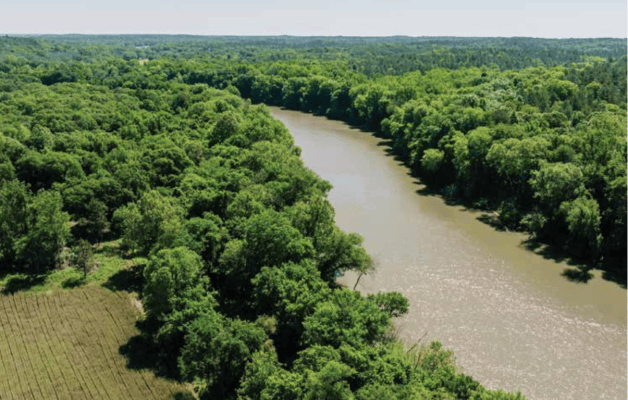
Lake Wylie is the uppermost lake in the Catawba River system in South Carolina. First created in 1904 by a dam near Fort Mill, Lake Wylie is one of the oldest reservoirs in South Carolina.
The SCDNR manages the lake for recreational fishing and maintains multiple fish attractors. Popular sport fish on Lake Wylie include largemouth bass, crappie and catfish. The SCDNR monitors these species on a regular basis to maintain a healthy population.
Healthy populations of largemouth bass once existed at Lake Wylie, producing an elite-level fishery for decades, until illegal transportation of fish occurred, sabotaging the native black bass fishery and the natural harmony of this ecosystem. Lake Wylie was invaded by an aggressive predator that now sits at the top of the chain: the Alabama bass.
Much has changed at Lake Wylie since this invasive fish was first documented in 2015, because this highly adaptable non-native black bass species has replaced native largemouth bass as the dominant black bass. The Alabama bass is an aggressive, highly effective predator, proven capable of outcompeting native largemouth in their own natural habitat. This is not their first foray into our state. Anglers need look no further than the Savannah River lakes along our western border for a prime example of the dominance invasive bass can inflict on native species.
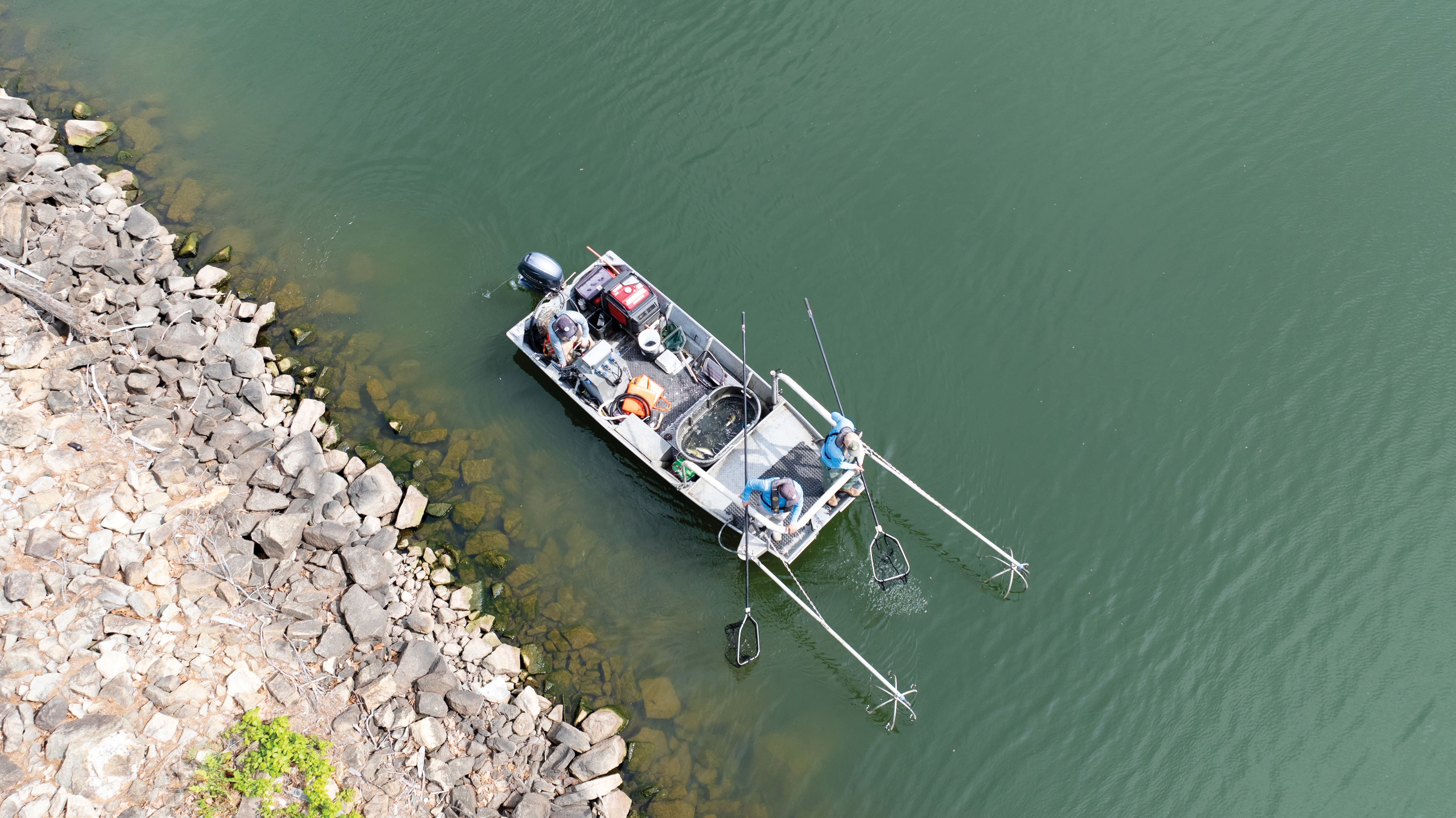
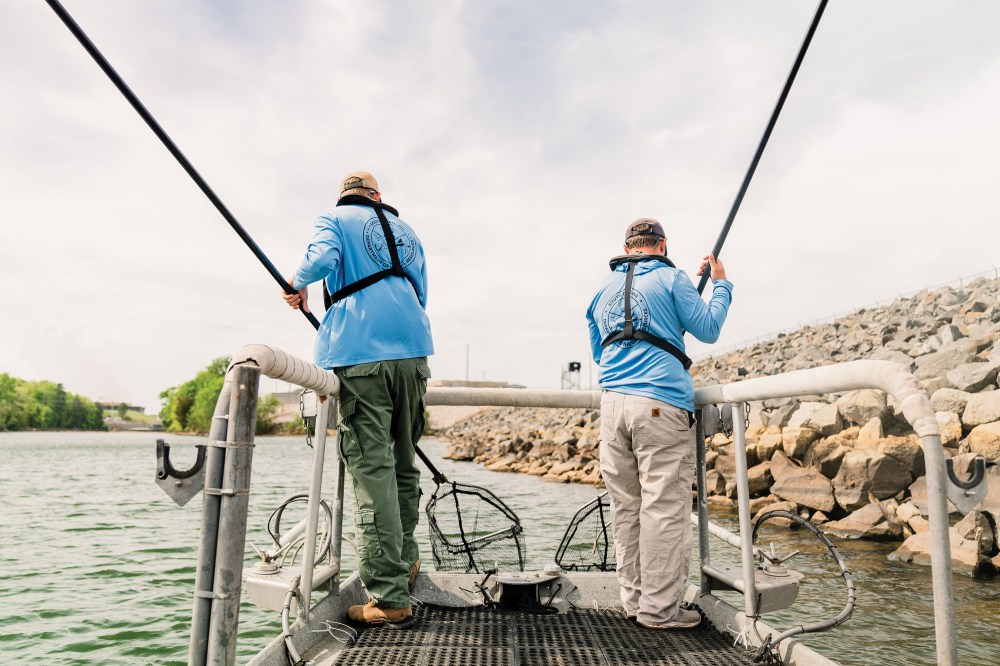
Preston Chrisman is the Freshwater Fisheries Coordinator for Region Two of the South Carolina Department of Natural Resources (SCDNR) and Chairman of the Black Bass Working Group. He and this SCDNR team are leading efforts to combat the unwelcome spread of this species into the Catawba River system.
“Often referred to by anglers as Spotted bass, the Alabama bass became a specific, named species of black bass in 2008,” Chrisman said. “When introduced into non-native fisheries, the invasive species rapidly overruns the native bass population to the point of dominance. At Lake Wylie, the native largemouth are losing the battle.”
“Alabama bass are typically smaller than the largemouth bass, seldom reaching trophy sizes,” Chrisman said. “Over time, their population explodes, and their growth rates decline when their numbers stabilize,” he said. “Eventually, competition and pressure on forage produce smaller versions of the invasive species, with most in the one-to-three-pound class.”
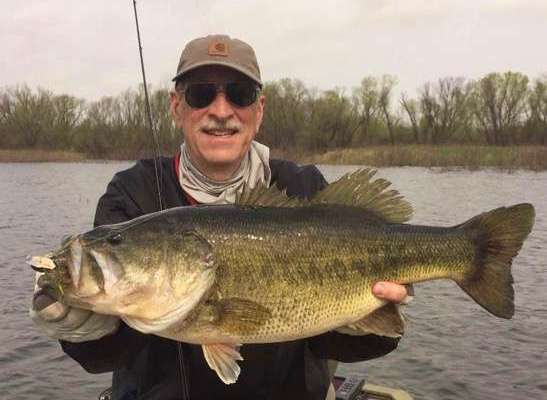
Chrisman said that while Lake Wylie was not a prolific trophy largemouth bass destination, the lake historically had high numbers of quality largemouth in the two-to-four-pound range, with some topping five or six pounds. As the 2004 Bassmaster Classic proved, it was a highly desirable black bass destination.
Chrisman knows it’s a battle the agency likely can’t win, but SCDNR’s goal is to gain some control over the situation through a strategic plan.
“I’m passionate because we have opportunities to protect the largemouth bass resource, but we must press forward now,” Chrisman said. “And to literally remove the Alabama bass from any large lake is totally unfeasible. They’re prolific reproducers and extremely effective foragers that we must learn to manage.”
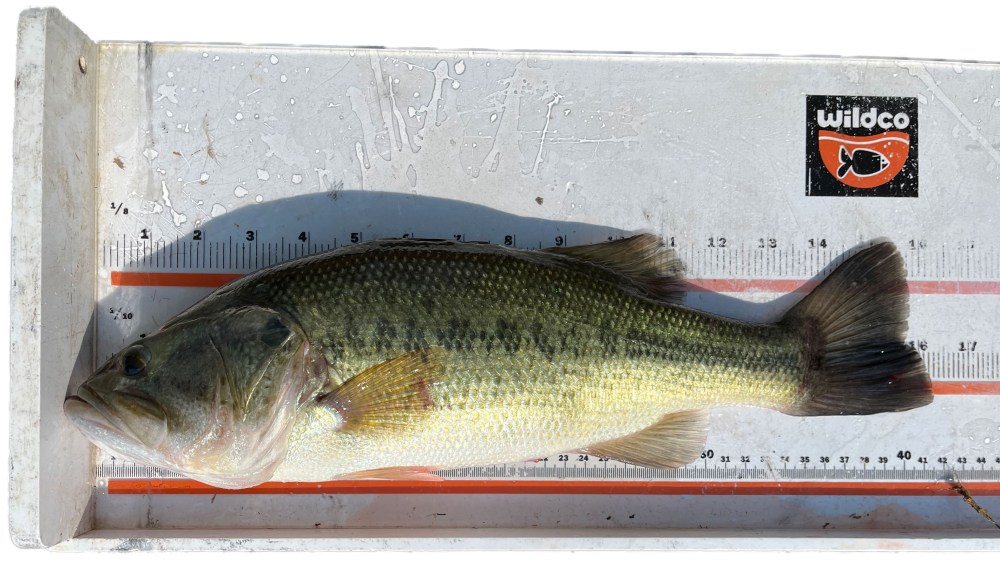
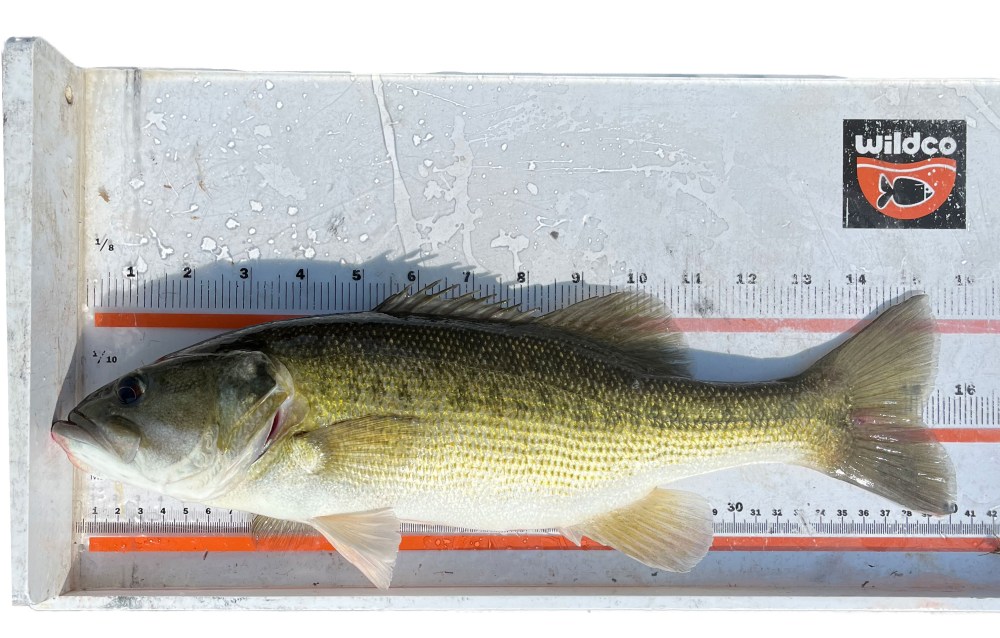
Lake Wylie extends into North Carolina, and their fishery biologists share this concern. Chrisman said neither the North Carolina nor the South Carolina state fisheries programs have stocked Alabama bass into any lakes. Fisheries teams from the two state agencies are sharing data to improve their collective understanding of the foe they both battle.
Alabama bass didn’t just naturally migrate into the Carolinas’ lake systems. In their native environment, the Mobile (Alabama) Basin, they thrive, blending with other native species. Their ecosystem is in harmony, just as the ecosystem was in Lake Wylie with native largemouth bass. But messing with Mother Nature can have ill consequences.
“The problem here, and in other lakes with this issue, is ‘bucket biologists’ illegally stocking these non-native species,” Chrisman said. “It’s illegal for private entities or individuals to introduce fish into public lakes or waterways anywhere. Even professional fisheries managers only consider stocking after extensive research of potential impacts on the entire receiving ecosystem, because it can be a recipe for disaster for the receiving species, as we’re documenting that now at Lake Wylie.”
Chrisman said the Alabama bass exhibits a two-prong path of destruction when introduced into new systems.
“The first ‘path of destruction’ is overrunning the historical native bass fishery, with the invasive species becoming dominant,” Chrisman said. “The second path of destruction is hybridization, and in some lakes, with other black bass species, that’s even more devastating.”
For Lake Wylie, the first path is the major concern so far, and Chrisman points to a study at Lake Norman in North Carolina, upstream from Lake Wylie, that’s indicative of what’s coming.
“Lake Norman was one of the first reservoirs where biologists fully documented the expansion of an introduced Alabama bass population, and the impacts on native black bass,” he said. “Their first Alabama bass was documented in 2001, and the invasive species quickly became dominant. The largemouth bass population dwindled and has not recovered. At Lake Norman, Alabama bass replaced native largemouth in many areas.”
And that’s precisely what Chrisman and staff are documenting at Lake Wylie.
“Alabama bass were first captured in Lake Wylie in December of 2015,” Chrisman said. “Until then, the Lake Wylie largemouth bass catch rates were robust; much higher catch rates of bass than similar reservoirs in our area, and the catch rate trend was increasing.”
Now, largemouth bass catch rates have declined significantly, while Alabama bass catch rates have increased annually. Data from 2025 confirms that the Alabama bass are now the dominant species, and are still expanding at an exponential rate.
“Alabama bass are replacing largemouth here, too,” Chrisman said. “We don’t have more bass; we just have significantly fewer native largemouth. But history documents that the invasive’s numbers will stabilize at a dominant level, and their average size will drop noticeably.”
Because of rapid changes in black bass populations at lakes and rivers with Alabama bass, SCDNR began a statewide black bass genetics inventory in 2022.
“Zooming in on Lake Wylie, the genetics lab found the genetic code for three different black bass,” Chrisman said. “They documented the native species of black bass as a Florida-largemouth hybrid, noted one strain of pure Alabama bass, and one fish was a largemouth-Alabama hybrid.”
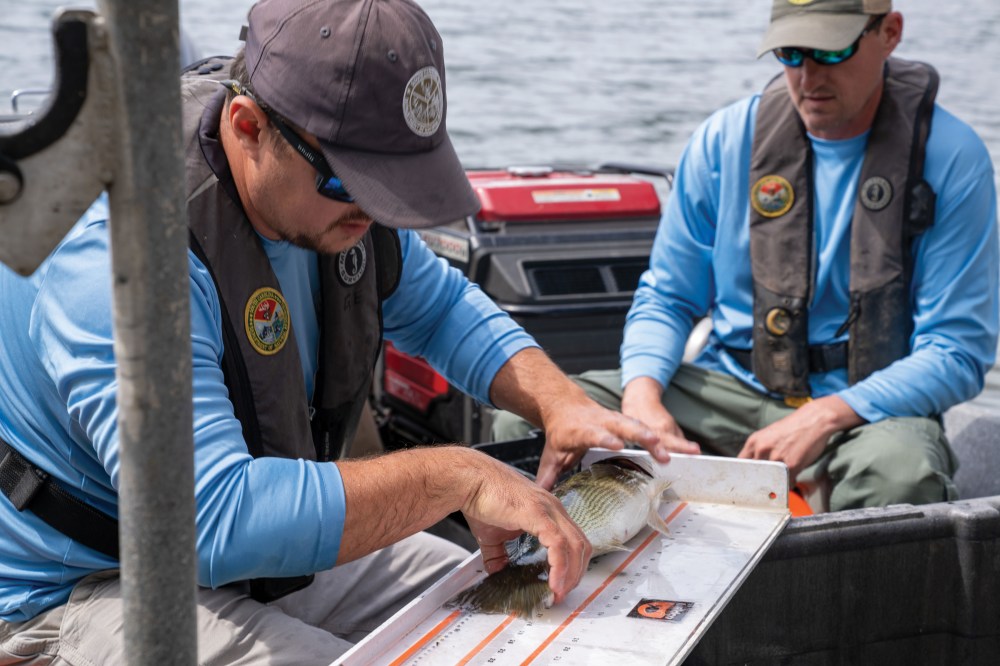
Chrisman said the Florida bass genetic makeup (alleles) present in Lake Wylie’s largemouth bass population is important to the Working Group’s plans. In the right climate, the Florida bass genetic strain reaches trophy sizes more frequently than the pure largemouth strain. Chrisman said this information is a key to ongoing research projects.
“We’re initiating an experimental black bass stocking program on Lake Wylie in 2027,” he said. “The goal is to stock 150,000 fingerling largemouth bass into Lake Wylie, and to repeat the stockings for at least three consecutive years.”
SCDNR plans to use brood stock from the Santee Cooper system for stocking because they possess extremely high proportions of the Florida bass allele.
“We have two objectives,” Chrisman said. “Number one is to push back against the Alabama bass population by boosting the numbers of the largemouth in the lake. Objective number two is to stock the lake with high Florida bass genetics, hopefully boosting the trophy potential of the lake’s largemouth.”
He explained, “Our goal is that anglers will catch more five-pound largemouth rather than three-pounders, certainly a positive outcome. We’ll evaluate a few years into the project.”
Alabama bass are problematic because they possess traits that, at first, may appear attractive to anglers. They are aggressive, abundant, fight hard, are easier to pattern for tournament fishing, and are excellent table fare. So, what’s the problem?
“The loss of our native species and the historical legacy of the largemouth bass at Lake Wylie is significant, as is the dilution of the quality and quantity of trophy-fish potential,” Chrisman said. “Recreational and tournament fishermen who enjoy hooking trophy largemouth are significantly impacted by the decline of Lake Wylie’s historical bass fishery.”
And the problem is spreading. Lake Wylie’s issues are flowing downstream, potentially triggering black bass problems in additional waters of the Catawba River Basin. Invasive Alabama bass were recently documented for the first time in Fishing Creek Lake, which is around thirty miles below the Lake Wylie dam.
“These fish will inevitably continue to spread downstream, invading Stumpy Pond and Lake Wateree next, both of which have excellent populations of native largemouth,” Chrisman said.
Alabama bass could be the invasive incarnation of the Grim Reaper for the native black bass fisheries in the remaining Catawba River and lake systems, and beyond.
Chrisman said the agency won’t allow the native black bass fisheries to slip quietly into the night without a fight, but it’s an ongoing, long-term battle, with Lake Wylie the latest casualty.
The Lake Wylie issue is typical of systems overrun with Alabama bass, and this issue is spreading statewide. So far, in their path of destruction, they’ve overrun every native black bass fishery they’ve encountered.
And the second path of destruction, hybridization, maybe worse, capable of destroying entire native species rather than merely overrunning them.
Terry Madewell is a retired wildlife biologist and freelance writer who frequently fishes Lake Wylie and Wateree waters.
SCDNR Fisheries Biologist Preston Chrisman and his team are heading up groundbreaking black bass research in the region, and sharing findings with the public to demonstrate changing dynamics of South Carolina aquatic ecosystems following the introduction of Alabama bass.
Originally appeared in South Carolina Wildlife July/August 2026.