Weston Henkel had a choice: Where do you want to go for your 10th birthday?
He chose Dry Run Creek and after spending a few hours observing this trout-laden ribbon of chilly water — along with the facility from which those rainbow, brown and cutthroats originate — the appeal of this Northern Arkansas gem was as clear as the water it carries.
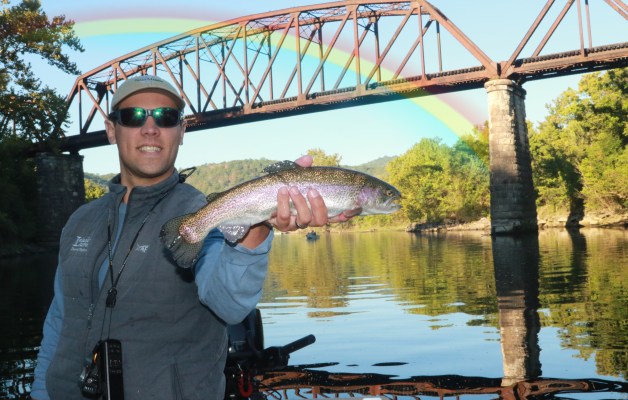
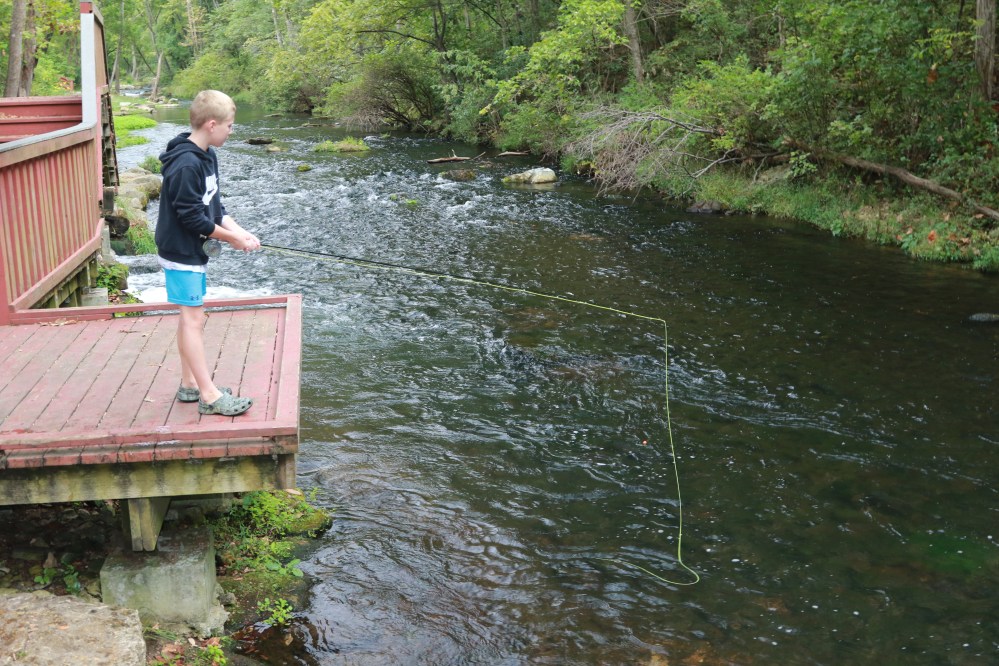
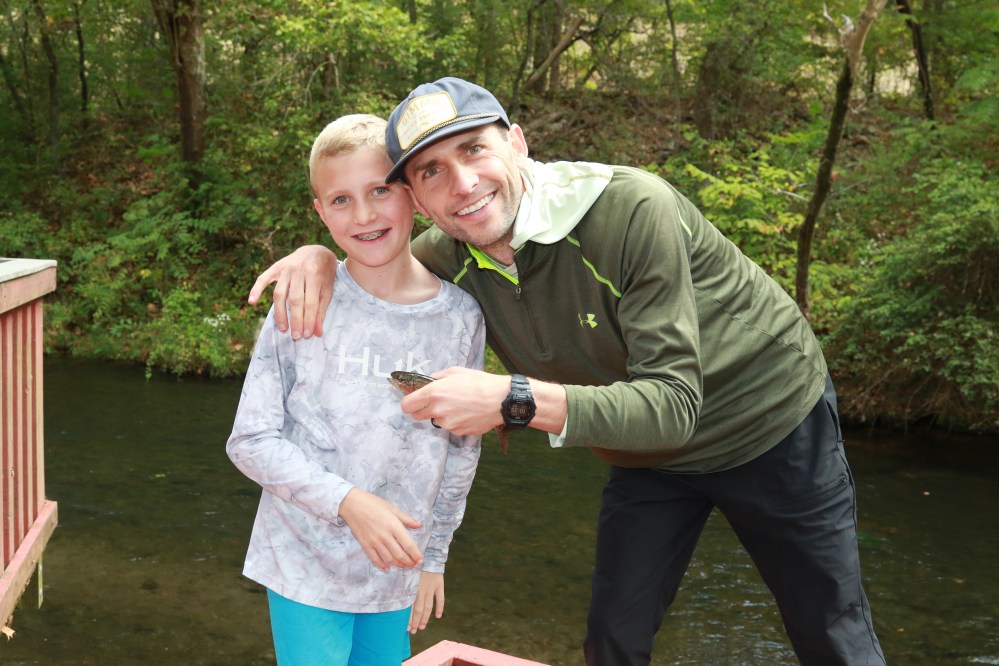
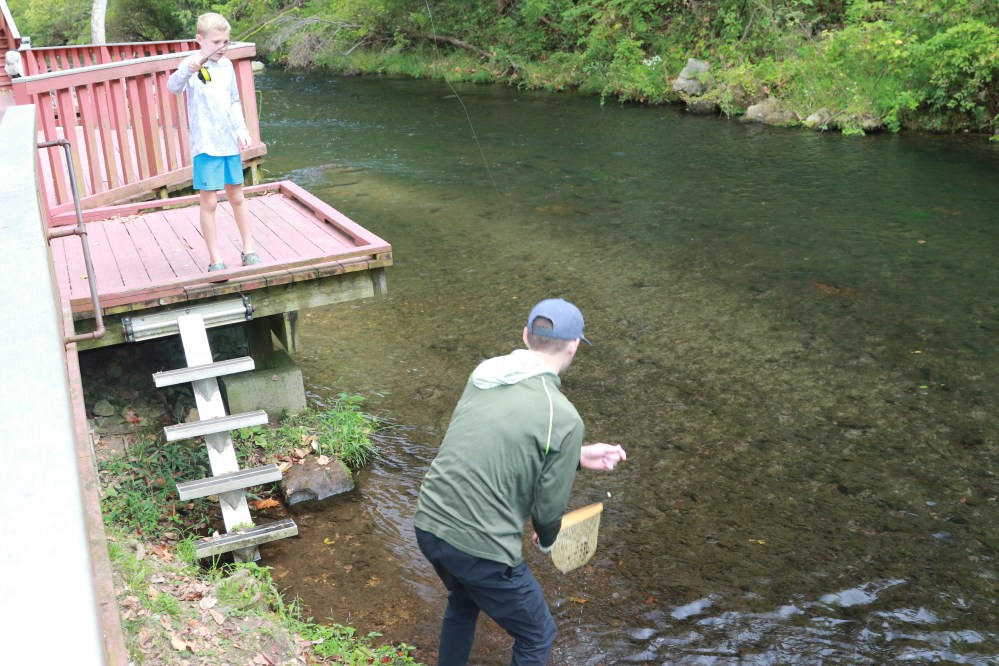
While Weston’s mom Kelby relaxed in a folding chair, the birthday boy and his dad, Jeff, fished tiny midge flies under strike indicators and brought several rainbows to the net.
The sun played through the tree canopy as the creek’s aquatic voice sang an entrancing lullaby. Nature extended a comfortable embrace, and if you listened closely, you could hear the slurps of trout sucking insects from the surface.
It’s hard to leave such places, but I left thoroughly impressed with the totality of a broad-reaching impact I found in a relatively modest chunk of this world.
The Fishery
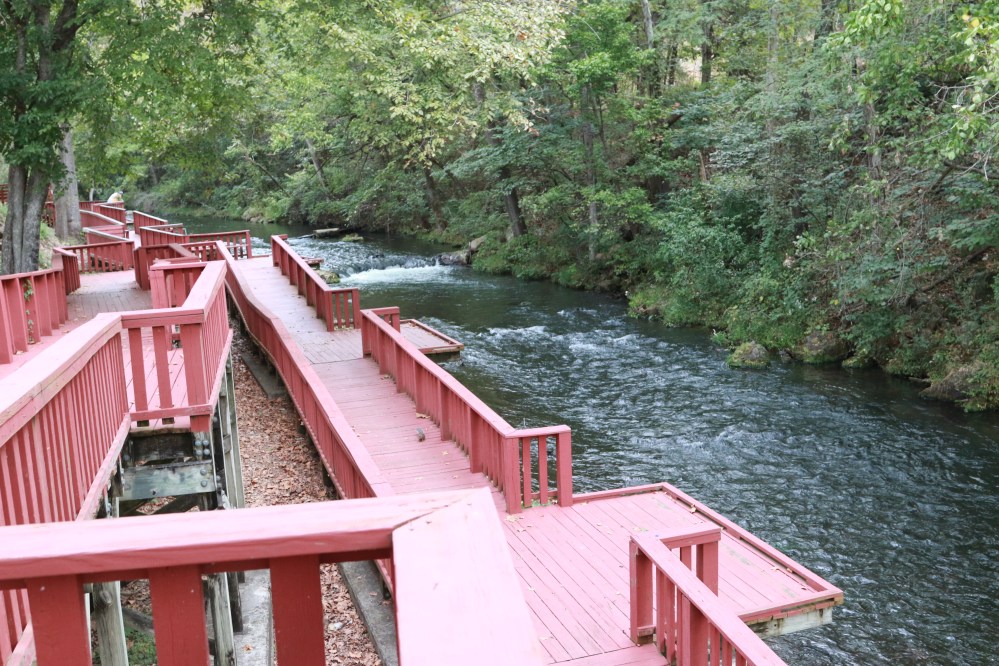
A naturally flowing waterway, the 3/4-mile section of Dry Run Creek adjacent to the U.S. Fish and Wildlife Service’s Norfork National Fish Hatchery, in Salesville, Ark. flows past a sturdy boardwalk that includes fishing platforms and wheelchair accessibility. You’ll also find step-downs for netting fish and wading, while an open stretch north of the boardwalk allows direct creek access.
Note: For walking the creek’s rocky and uneven bank, sturdy, waterproof footwear will help keep you upright.
Established in 1988 for youths under 16 and anglers with disabilities, Dry Run Creek is open from sunrise to sunset. Recognized as one of the nation’s top trout fisheries, these waters allow only artificial lures with barbless hooks and the fishing’s all catch-and-release.
Dry Run Creek flows out to the Norfork Dam’s tail waters, so trout can come and go as they please. Many stick around and you’ll find ‘em from a little under a foot long, to hulking giants that take two hands to hold.
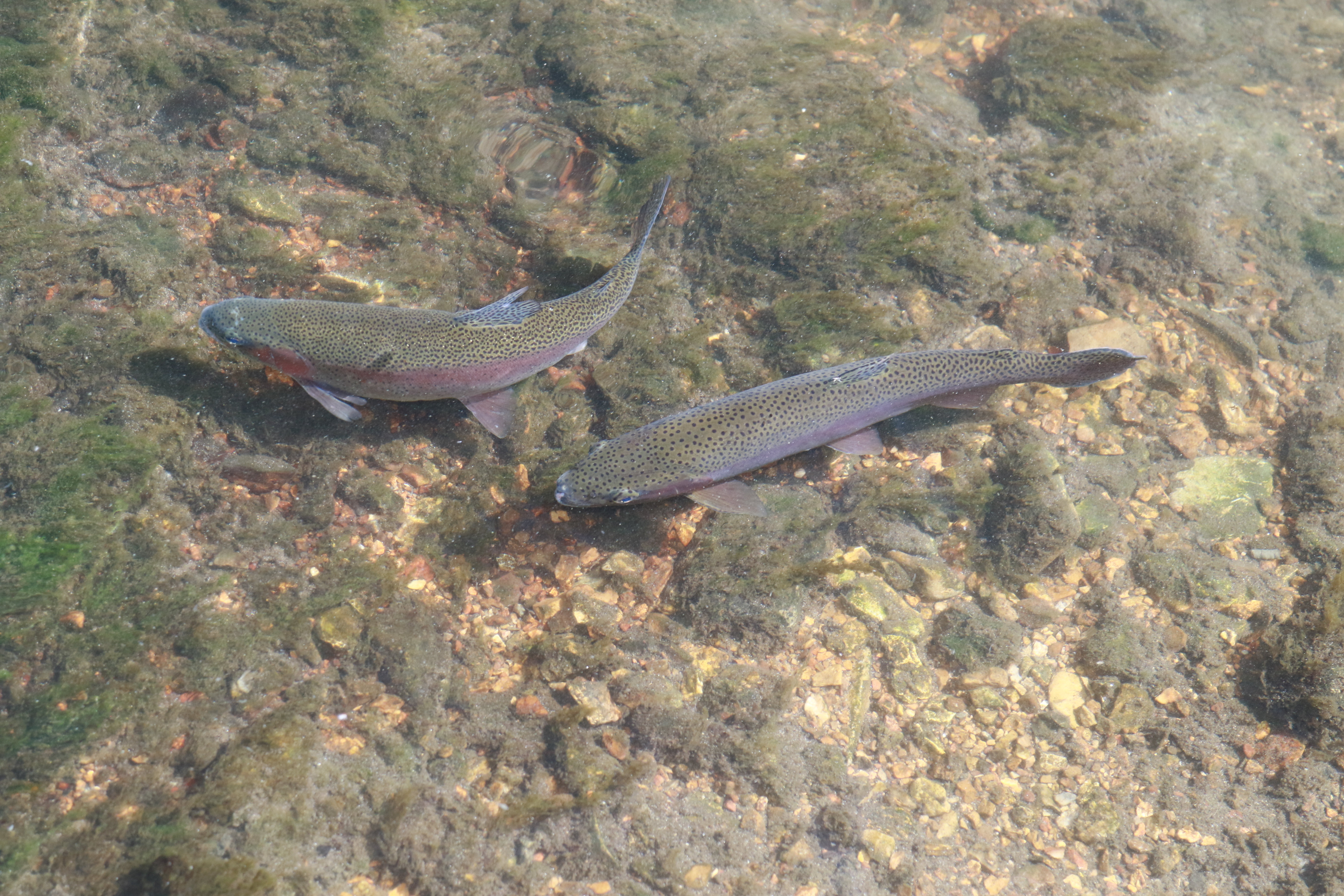
In typical trout behavior, the fish use rocks for current breaks and tend to congregate in the deeper gullies and pools. It’s hard to miss the big ones in shallow areas, but look closely and you’ll learn to spot the sneaky fish sitting deeper.
The trout also like the inflow points from the hatchery’s expelled water. (More on that in a moment.) During my visit, I found a dozen chunky rainbows and a couple of bold brown trout taking turns picking off various meal items flushing through an inflow.
The Hatchery
Operational since 1957, the Norfork National Fish Hatchery — along with the Greers Ferry National Fish Hatchery in Heber Springs, Ark., and the state-run Jim Hinkle Spring River State Fish Hatchery in Mammoth Spring, Ark. — plays a vital role in supporting the state’s recreational sport-fishing opportunities. As Deputy Project Leader Trey Anderson explains, trout are not native to Arkansas, but they have helped counteract the negative impacts of river damming.
Before the U.S. Army Corps of Engineers built dams for hydro-electric power generation and flood control on the White River (including the North Fork, aka “Norfork”), this used to be a warm-water fishery where smallmouth bass and other sport fish thrived. The dams’ cold-water discharge eliminated most of that smallmouth fishery, so the federal government mitigated the damage by stocking cold-tolerant trout.
“Trout are not native to Arkansas, but man, they have flourished,” Anderson said. “These tail waters are just awesome fisheries. The Norfork River is 5 miles long and we also stock about 90 miles of the White River.”
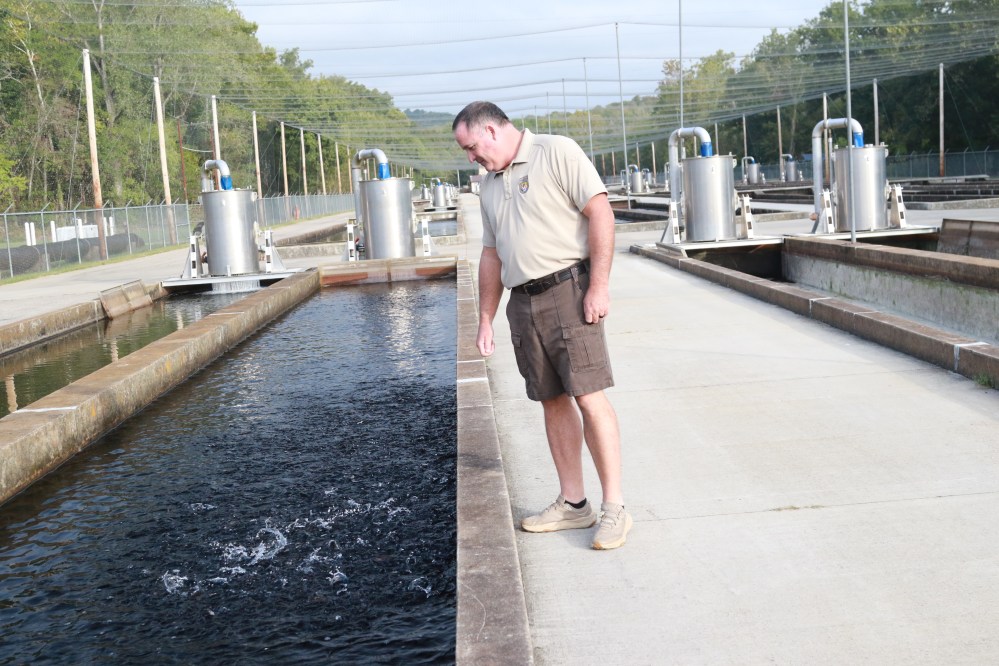
Anderson said the hatchery receives about 3.5 million trout eggs a year from Montana, Wyoming, Tennessee, and West Virginia. Once hatched, the young trout grow to about 3-inches in the facility’s interior raceways, and then they’re moved to the outside raceways where they’ll reach stocking size in about 24 months.
This effort yields about 1.5 million trout, which are stocked in tail waters throughout Arkansas and parts of Oklahoma. When it’s time to go, hatchery staff use a loading machine with a suction intake that safely transfers the fish into a transport truck with its tank prefilled with water.
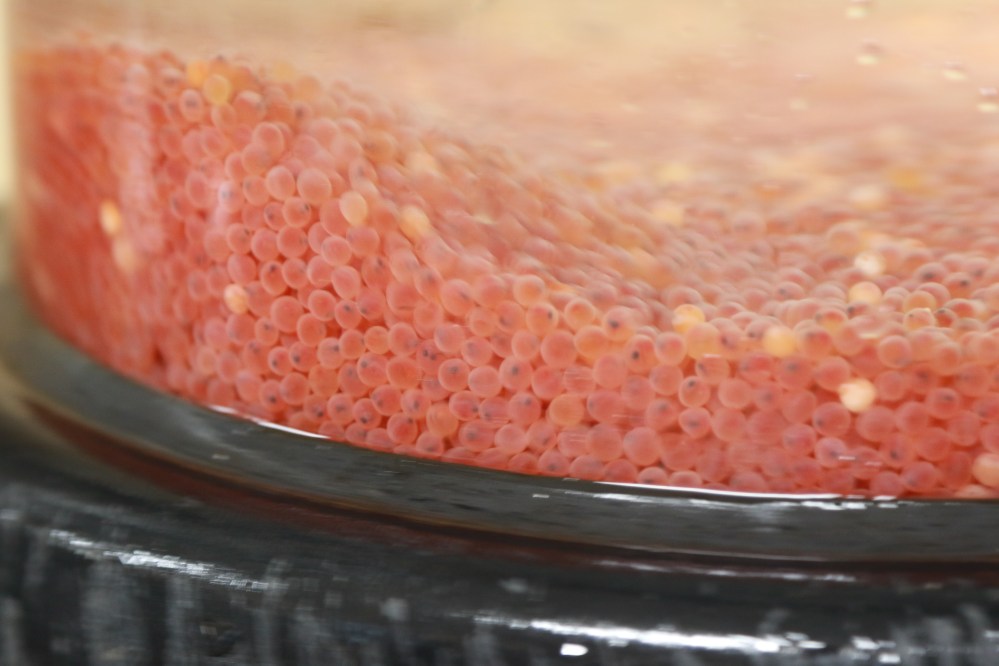
Anderson said rainbow trout are loaded for stocking at 11 inches, while browns and cutthroats go at 9 inches. The loading process employs a water displacement system where so many inches equals so many pounds of fish.
“The water is strained out by (the loader) so we’re only dropping fish into the transport truck,” Anderson said. “A truck will usually hold about 2,000 to 2,400 fish per load.”
Hatchery trout are fed with floating and slow sinking feed pellets that are high in proteins and fats. The most interesting part of the process is the economical and environmentally sound way the facility gets and expels its water.
“We have a multi-level intake system that pulls water from Norfork Lake,” Anderson said. “We have two pipes on the dam that brings about 24,000 gallons a minute through this hatchery. That water goes through the hatch house, the 96 raceways and into Dry Run Creek. It’s one big cycle.
“That’s what makes this so neat, we don’t have to reuse any water, there’s no power involved here. It’s all gravity fed.”
The Norfork National Fish Hatchery welcomes visitors to view the facility, the young trout and a raceway full of whopper rainbows. There’s even fish feed dispensers if you want to toss the fish a little snack. For hatchery information, visit https://www.fws.gov/fish-hatchery/norfork.
Young Bug Slingers
For aspiring youth anglers, the Norfork National Fish Hatchery offers the Dry Run Creek Academy. Designed to introduce kids 9-15 the sport and science of fly fishing, this free program teaches the basics with traditional fly tackle and tenkara (a Japanese method that uses only a rod, line and fly, with no reel).
Combining classroom lessons with fishing instruction on the creek, the DRCA covers fly casting, mending, fly tying, knots, trout food sources, water chemistry, and proper fish handling/release. The academy provides all equipment and supplies and includes beginner, intermediate, advanced, and experienced levels.
For kids ages 6-8, the DRCA introduces them and their parents to the basics of fly fishing.
For information, visit norforkhatcheryfriends.org/dry-run-creek-academy.
Opportunity Extended
Right across the street from the Norfork Hatchery, the U.S. Army Corps of Engineers operates Dam Quarry Park, which offers convenient access to the Norfork tail waters, either by boat or wading. The park offers picnic pavilions, reserved camping sites and a boat launch. Daily visitors just pay a modest parking fee.
A lot of the fish stocked in Dry Run Creek make their way out to the Norfork tail waters and during a brief visit to the water’s edge, I spotted several rainbows, a few browns and a beautiful brook trout that struck a pose like it was fashion week in Milan. If you keep your distance, you can definitely reach catchable fish from a walk-up position, but serious types work the swift water moving around a large rock/gravel bar parallel to the park.
During low water periods, you can reach the rock bar by wading across a shallow pool, but when the water’s higher, or if you plan on going much deeper on the bar’s far side, you’ll need waders. Even in the summer months, that chilly water’s no joke, so prepare accordingly.
Fly fishing’s the main deal on these waters, but if you’re not comfortable with the skinny sticks, you can also catch trout on small plastic jigs, hair jigs and spinners.
Trout are an edible species and the Arkansas Game and Fish Commission outlines the regulations here (INSERT LINK: https://www.agfc.com/fishing/trout/). In Dry Run Creek and anywhere you intend to release trout, handle with care and get the fish back into the water quickly. The Norfork National Fish Hatchery cranks out a lot of trout, but each one represents a lot of time and effort.
And maybe an opportunity for another kid’s birthday trip.