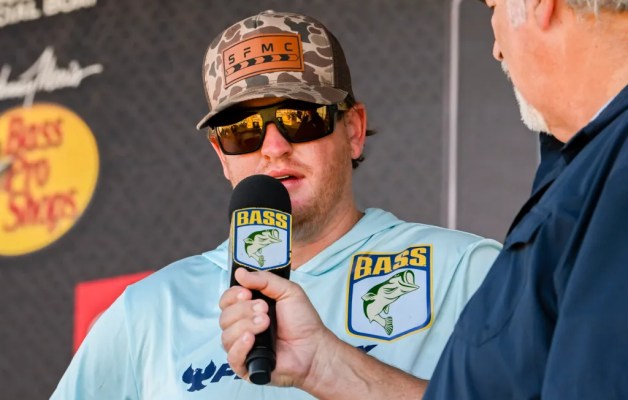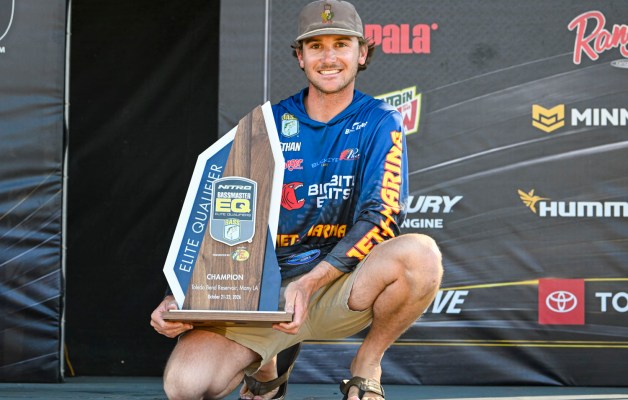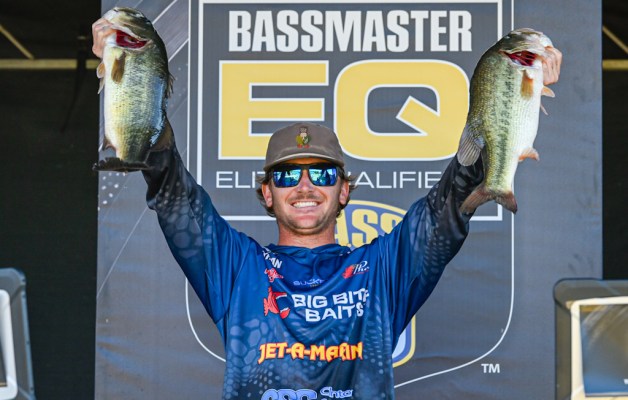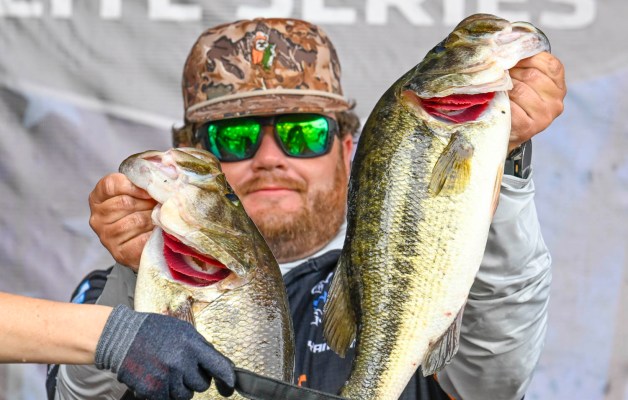
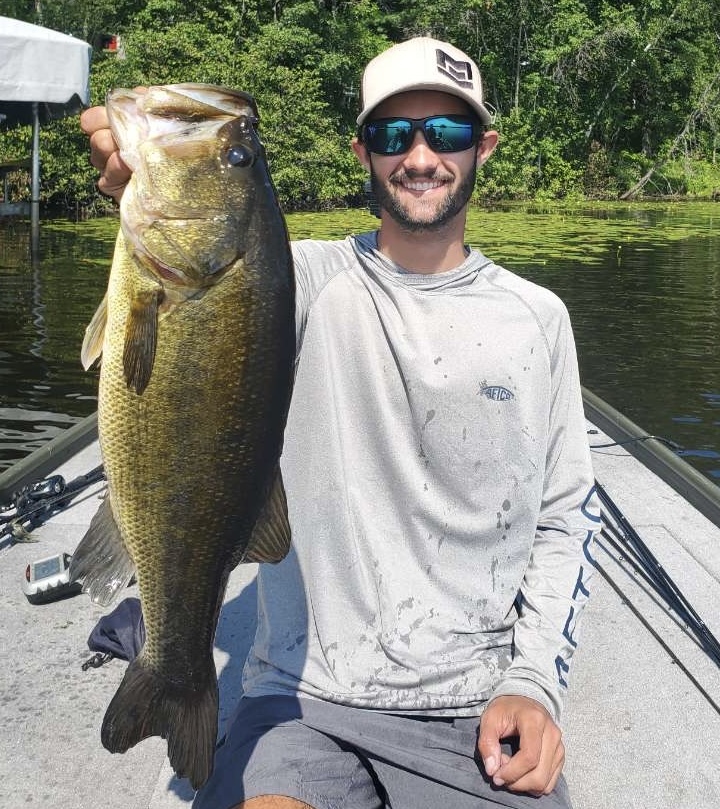
With a head full of blonde hair topping a 6-foot-5 frame, Laker Howell’s instantly recognizable on the water, but sometimes the Alabama pro just wants to reach somewhere no one else is fishing.
“Let’s say you go to a scoping tournament, you can finish in the mix with the scopers, or you can go and get away from everybody and do your own thing and actually try to win,” Howell said. “Typically, it’s a luck thing if you’re around a bunch of other people and beat them at their own game, unless you’re just really good at it.
“When you get away and find fresh fish, that opens you up to a different playing field.”
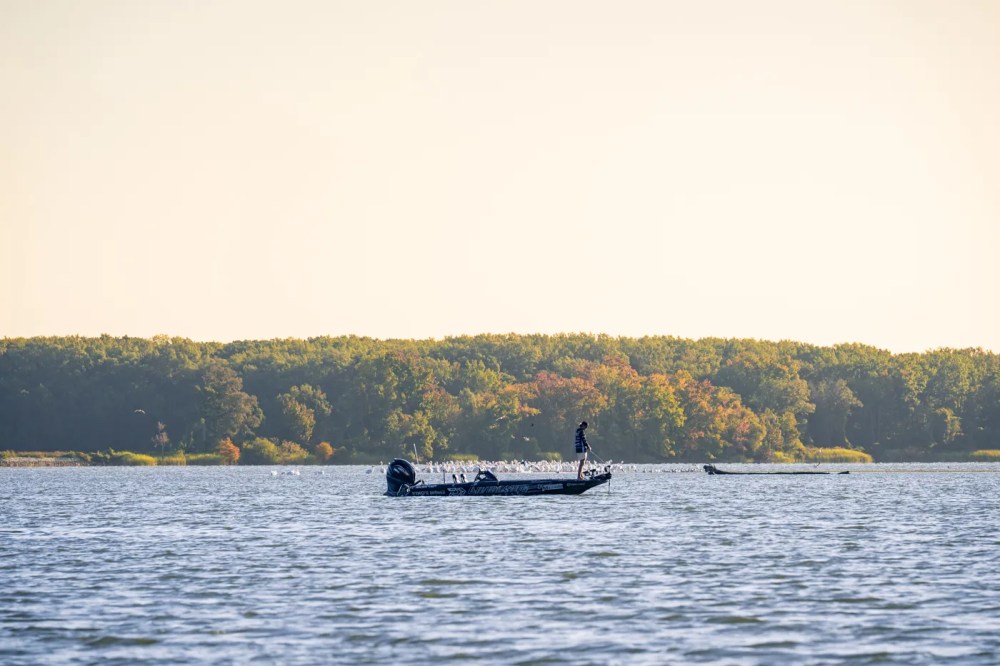
No doubt, reaching far-away fishing holes certainly has its merits, but let’s reel in the focus and look at why Howell also values a long-distance strategy within the area he’s fishing.
“The more distance you put between you and that bait, the more aggressively you can make that bait walk, because the fish doesn’t know you’re there,” he said. “If a fish knows you’re there, you have a lot harder time tricking him, so you have to change your cadence a lot.”
That’s a principle Howell follows in every tournament, but in 2025, he rode that horse to a pair of first-place finishes.
Double dip case studies
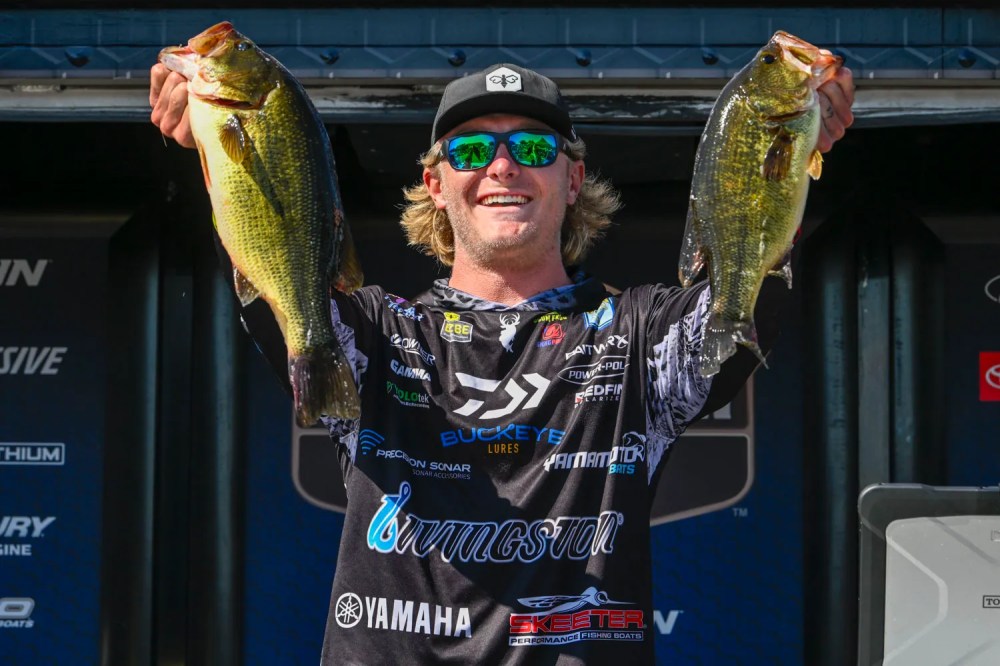
Mid-August 2025 saw Howell win the Bassmaster Open at Leech Lake by making lengthy casts into the wild rice fields where Native American cultural considerations prohibit boat entry. While much of the field was focused on the offshore smallmouth game, Howell bombed a Snagproof Bobby’s Perfect Frog toward stands of rice interspersed with milfoil and pads and claimed his first Bassmaster victory.
“The majority of the field was (scoping smallmouth), so the way I saw it, I just fished my strength and went frogging, because that’s what I love to do,” Howell said. “I made a check doing it (at Leech Lake in 2024), so I went there (in 2025) just to make a check, and I made a pretty good one.”
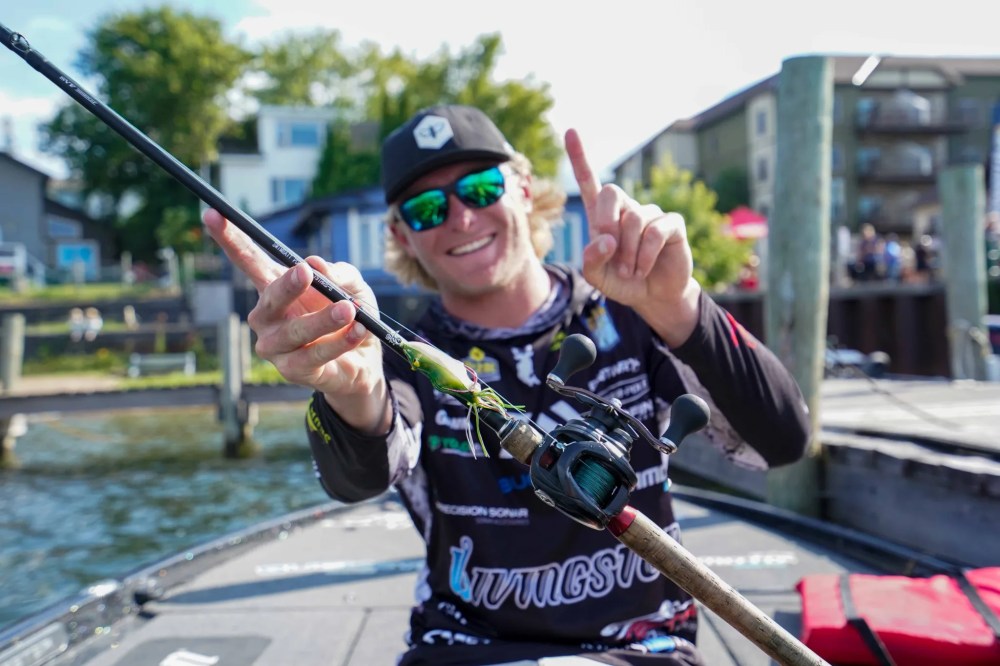
Apparently, Howell enjoyed winning so much that a month and a half later, he did it again. This time, he’d prevail in a very different scenario, but with the exact same mentality.
During the Bassmaster Elite Qualifier at Wheeler Lake, Howell committed to a Livingston Lures Walking Boss for three days and earned his second trophy by a 2-ounce margin. He’d end up spending all of his time on the Decatur Flats, where he focused on a saddle with shell bottom between two bars near the river channel.
Here again, distance was his ally.
“Topwater is a technique I feel people don’t focus on enough,” Howell said. “It used to be talked about a lot, but today, most people focus on subsurface presentations. But it’s such a niche deal that, if you’re not getting that long cast, you’re not (likely to) catch ‘em.
“Sometimes, you can get them really close to the boat, but if you really want to be dominant with topwater, you have to be throwing a long way away from the boat. You have to get it out there and hit places people aren’t hitting and trick the fish.”
Purpose-driven
Now, airing out a spool definitely makes for good TV, as the final day’s Bassmaster LIVE coverage at Wheeler showed. However, it’s more go than show.
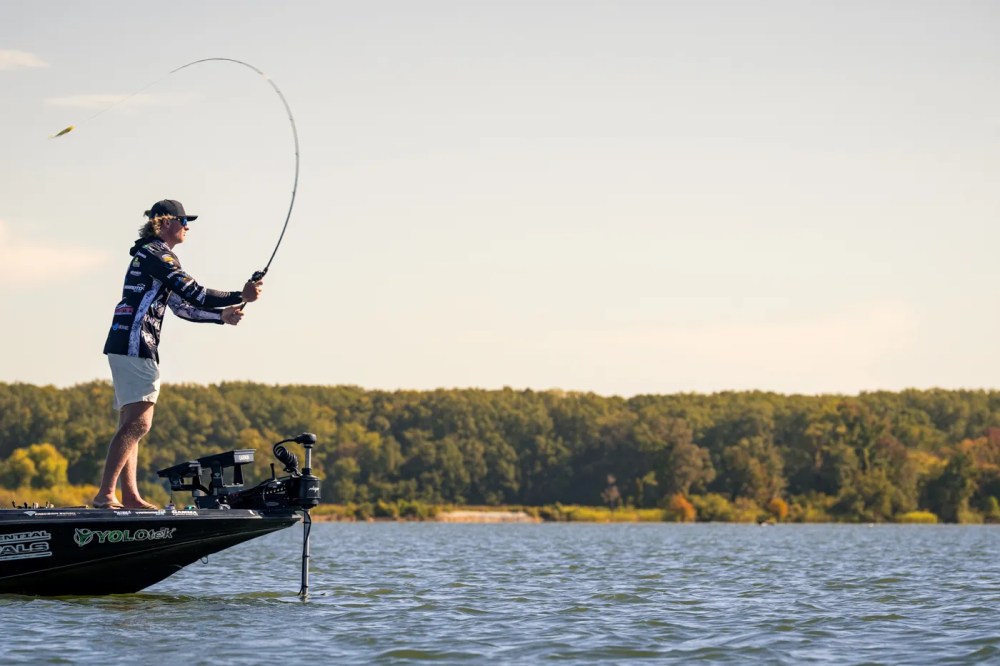
“You’re literally talking that fish into coming up to the surface and taking a bait that you’re working erratically, and it takes so much more effort for the fish to do that. In order to talk them into it, you have to make sure all the variables are perfect and the farther away from the boat your bait is, the less that fish knows you’re there.”
That’s particularly true in a heavily pressured community hole like the Decatur Flats.
“If you weren’t throwing that far away, those fish weren’t biting,” Howell said.
While watching the Bassmaster LIVE coverage after the event, Howell saw a thrilling sequence that clearly proved his premise.
“I caught a 4 1/2-pounder on the final day of the Wheeler tournament after making an absolute missile of a cast,” he said. “I never knew the fish was there, but the drone captured it coming up and flaring on my topwater four times before finally committing to it.
“It followed the bait almost the whole cast. If I hadn’t made that long of a cast, I probably wouldn’t have had the opportunity to catch that fish.”
Tactical tips
Specific habitat and bait details vary, but Howell shared a few of his tips for maximizing his long reach.
Tackle: Howell throws his frog on a 7-9 Daiwa Kage Heavy Swimbait rod, but he modifies a Daiwa Tatula 100 reel with a 150-size spool that holds more 80-pound Daiwa Samurai braid. He likes an 8:1 gear ratio for burning his bait back to the boat so he can make another long cast, so he also uses a larger handle with big knobs for optimal grip.
Howell’s win at Wheeler carried a nostalgic tone, as he used a 7-4 Daiwa Tatula Elite Randy Howell big topwater rod that his father (Elite pro and 2014 Bassmaster Classic champion, Randy Howell) gave him several years prior. He paired that rod with a Daiwa Tatula 100 carrying 50-pound Daiwa Samurai braid.
“That’s an eight-strand braid, so it’s super thin, and I can load more on the reel,” Howell said. “I barely have any brakes on my reels, so that helps me make those super long casts.”
Boat position: Boat positioning is also important here, and Howell generally wants to Power-Pole down and quarter his target area. This angles the trolling motor away from his casting lane so he has more open deck for the proper stance and body work.
Send it!: Long casts should come easy for a guy of Howell’s stature, right? He definitely agrees, but Howell also notes that anyone can learn this technique. It just takes an all-in commitment.
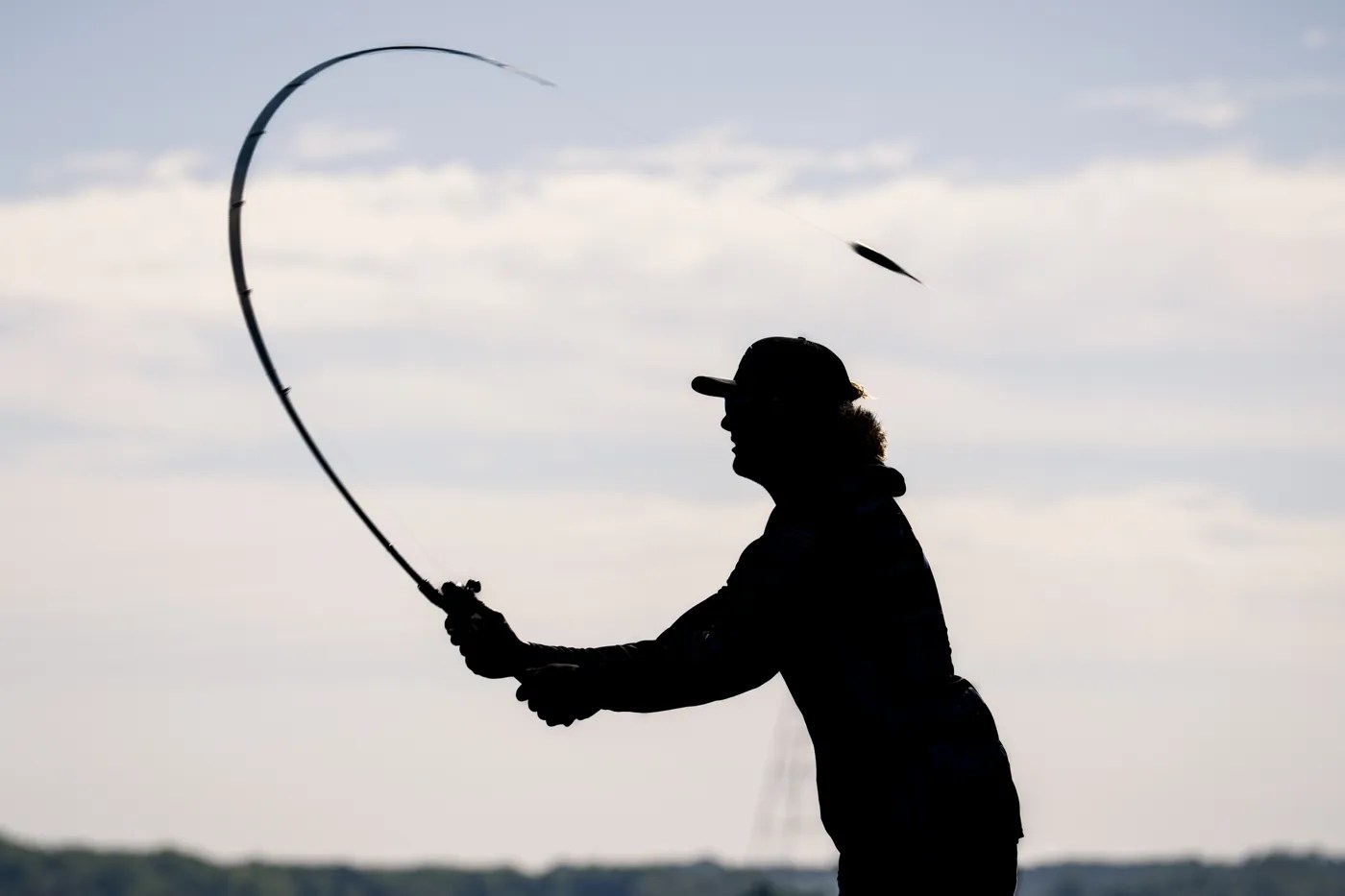
“The number one thing is putting your whole body into it,” Howell said. “It looks super dramatic, but that’s how I do it.”
For a simple image, Howell said his casting form contrasts a single-handed effort, or the common method of placing both hands close to the reel.
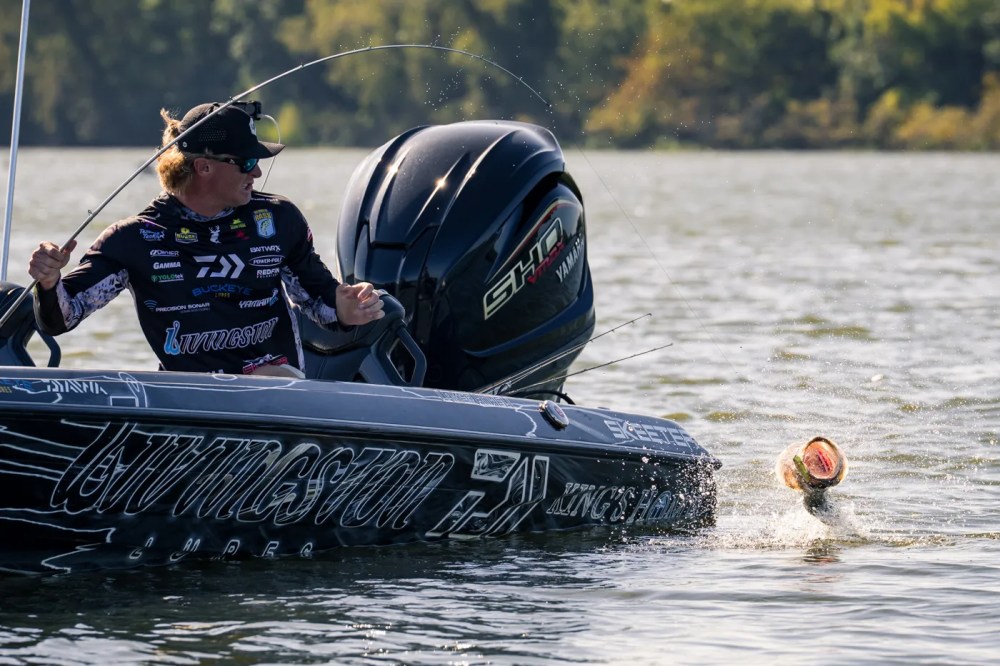
“I’m using like a lever, or a catapult action where my left hand is on the very end of the rod butt,” he said. “When I go to sling it, I’m using every bit of my momentum to just launch that bait to the moon.
“If you have your hands too close, you don’t get as much leverage. You’re trying to almost get a running start on the cast.”
Throw in the blow: Howell calls wind a constant player that can hurt or help your long cast. Too much wind challenges accuracy, but it also minimizes competition.
As Virgil wrote, fortune favors the bold.
“At Leech Lake, for instance, my casting accuracy that last day was very bad because the wind was so crazy,” Howell said. “A lot of times, if the wind is bad, it will discourage guys from making long casts like I was making.
“That gives me more reason to just sit there and try to make the cast land right. I know I’m gonna get bit whenever I do it, because nobody’s putting it where I’m trying to put it. It’s too much effort, and I feel like that annoys people sometimes.”
It takes patience, but as Howell proved, the percentages work in his favor.