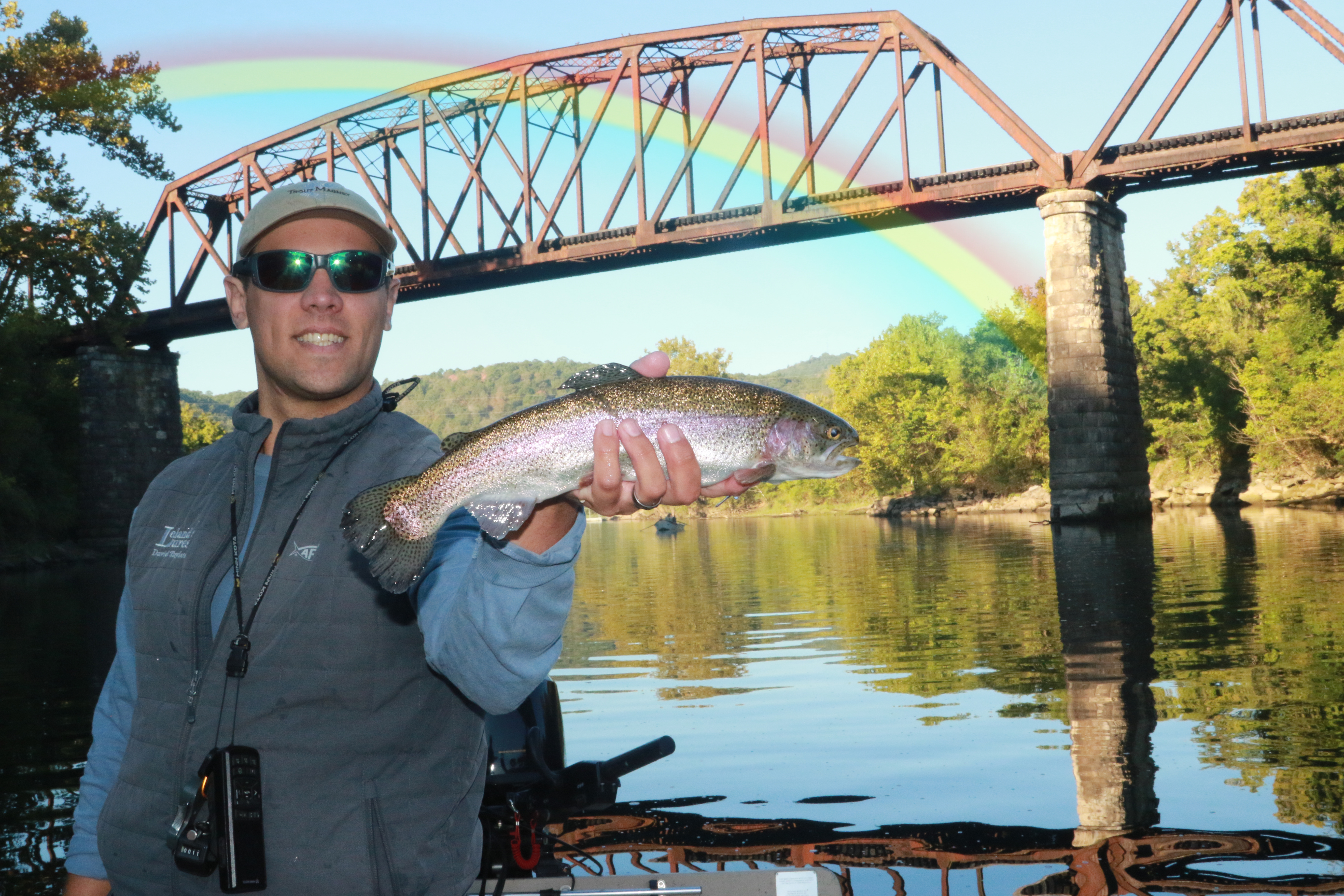
Every fish species brings something to the table; its own unique mix of traits, temperament and table fare. But if you’re looking for a real box-checker with ‘gram-worthy aesthetics, get to know the rainbow trout.
Occurring in much of the nation’s cold-water rivers and streams, these photogenic fish with the blunt, rounded heads, tight dot patterns and the unmistakable pink lateral band, present an aggressive and generally cooperative target that’ll please the palate , where harvest is allowed.
You’ll often find a strong catch-and-release preference among diehard types seeking only the ambiance of trout habitat, the bend of a rod and the satisfaction of watching that eye candy swim back to its home. In regions where wild trout sustainability tops the management priorities, local regulations require single barbless hooks and 100% live release.
However, state and federal fish hatcheries nationwide stock various trout species to create what’s known as a put-and-take fishery. That means, anglers are encouraged to enjoy the sport-fishing opportunities with the option of keeping daily limits, as detailed by each state’s fisheries management agency.
I recently had an opportunity to observe a couple of trout experts on a stocked fishery where plenty of beautiful rainbows — and a couple of cameos — showcased a beginner-friendly fish that also thrills more seasoned anglers. My hosts opted to release their fish, but their methods easily apply to similar trout waters nationwide.
Near the Source
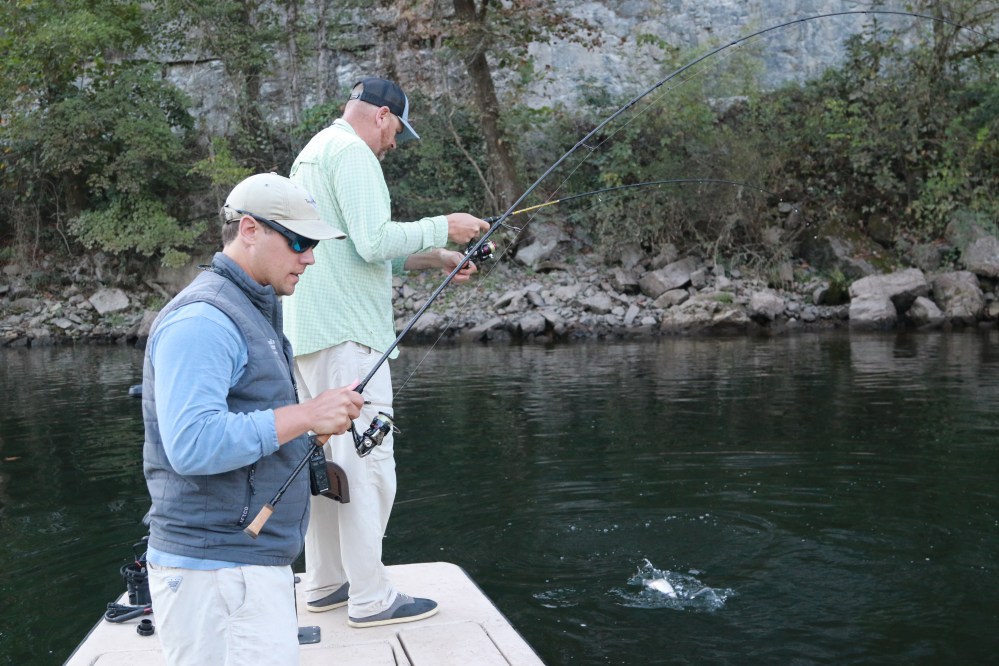
Jeff Smith, owner of Trout Magnet and trout guide/Trout Magnet Marketing Director David Taylor met me at a small ramp at the confluence of the White and Norfork rivers. The latter stretches 5 miles up to its namesake dam and provided an ideal theater for a textbook rainbow trout performance.
Trout are not native to Arkansas, so every one of the 30-plus fish that Smith and Taylor brought to the boat came from the Norfork National Fish Hatchery located just below the dam. Prior to release, hatchery fish receive regular meals of feed pellets, but once established, trout readily bite a variety of natural and artificial baits.
Starting with the easy stuff, I saw a local guide slicing chunks of food quality shrimp while awaiting a party of novice anglers. Fished on a size 8 bait keeper style hook, shrimp makes an effective bait for beginners and anyone that just wants to watch a float descend.
Canned corn fished on a short-shank, wide-gap “salmon egg” hook, offers another low-impact option. In fact, Taylor chuckled when he noticed corn kernels on his deck — obviously regurgitated by one of his fish that had recently encountered a different fishing technique.
Earthworms, crickets, minnows, small crawfish (whole or parts), and salmon eggs also tempt rainbows. This is not a picky fish and that indiscriminate appetite bolsters its diverse appeal.
Like many of the nation’s trout-laden cold-water rivers, the White and Norfok see a lot of fly fishing effort. No question, this can be an engaging and rewarding pursuit, but we’ll save the skinny sticks for another discussion.
For anglers eager to try their hand at tempting trout on artificials, Smith and Taylor used light spinning tackle to demonstrate a trio of rainbow trout techniques that’ll equip anyone for the task.
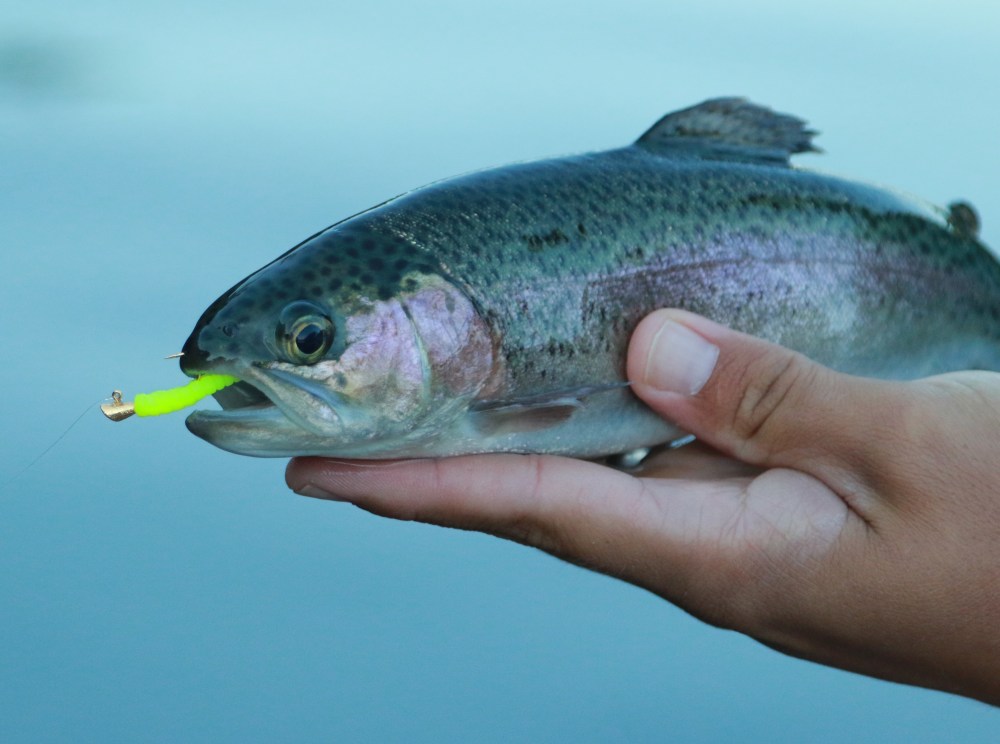
Feeling Twitchy: Working along the Norfork’s drop-offs and deeper holes, both anglers started with their company’s flagship lure — the Trout Magnet — which features a shad dart style head and a subtle twin tail plastic body. Built for subtle action and color changing options, the bait’s angled head design maintains a horizontal posture with a slow fall rate, which is ideal for shallow areas where you want slow presentations through the water column.
Describing the proper presentation, Smith said: “If someone can see you moving your rod from 10-15 feet away, that’s too much action. It should just look like you’re nervous.”
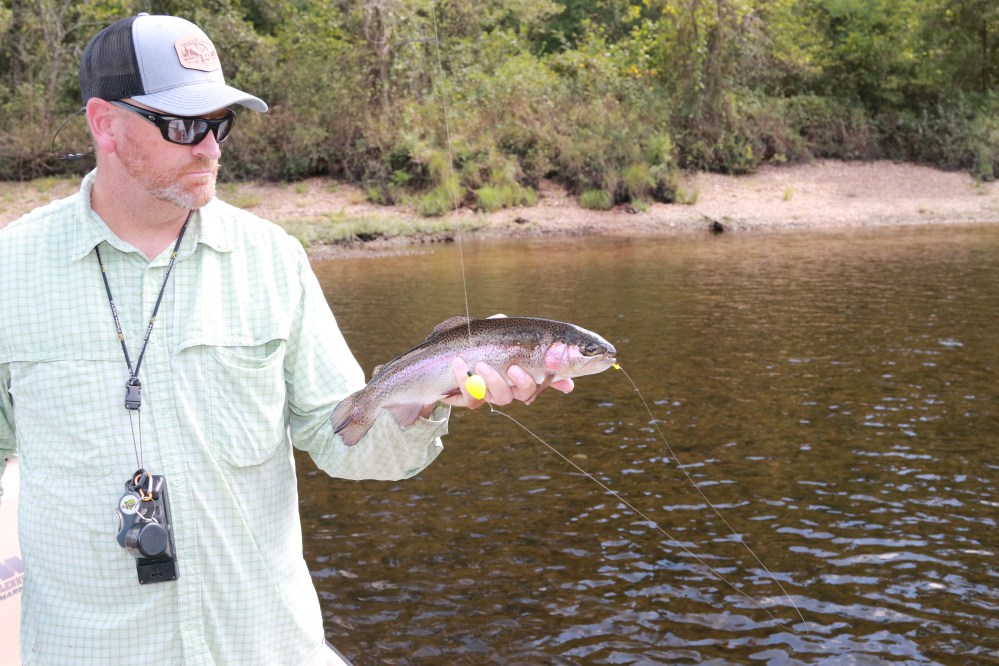
Flotation Factor: Offering the trout a different look, Smith added a peg style E-Z Trout float above his Trout Magnet and drifted his bait across the target area. Trout can be pretty particular about their comfort zone, so float adjustment is key.
“If I don’t get a bite, the first thing I’ll do is go about 6 inches deeper (moving the float up the line) and make the same exact drift,” Smith said. “I’ll continue adjusting ’til I hit bottom, or I start catching fish.”
Whether he’s twitching or floating, Smith said he’ll typically start with bright colors like white, chartreuse, or pink and move to more natural options if the fish snub the loud stuff. With the float setup, nothing matters more than the bait’s position.
“Bait color is important, but depth is far more important than color,” he said. “If the depth is wrong, color is not gonna matter.
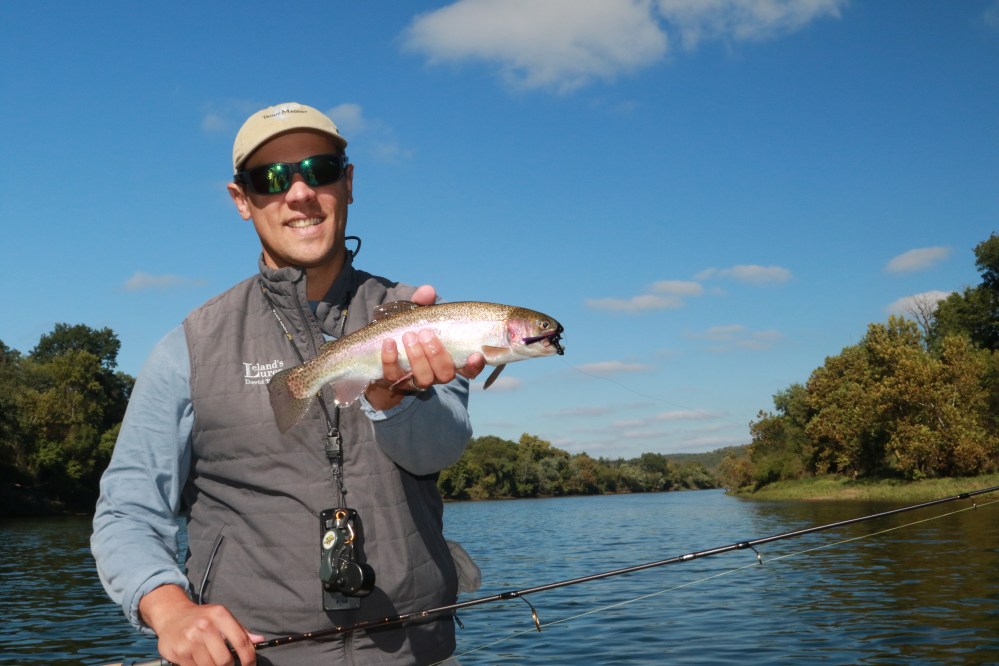
Good Hair Day: In deeper areas of the Norfork, and along the White’s main river breaks, where the current ran swifter, Taylor fooled several trout, and a couple of spunky smallmouth bass, on the Trout Magnet D2 marabou jig. This “hair” jig sports a round head, so it falls faster and punches through current to reach deeper fish.
“This jig more naturally mimics leeches, sculpin, or baitfish with the (marabou),” Taylor said. “It moves very well in the water.
“You can jig the D2 a little more aggressively than the twitching action of the Trout Magnet.”
Notably, Taylor actually got a couple of trout to rise and “wake” behind his hair jig as he reeled it near the surface. This, he said, is characteristic of hatchery fish accustomed to eating feed pellets at or near the surface.
While Smith believes in gearing up for multiple options, he stands firm on this point: Don’t overpower your lure.
“These fish have amazing eyesight, so you’ll get better presentation with lighter line,” Smith said. “Two- to 4-pound SOS copolymer line with a 2-pound Phantom fluorocarbon leader is normal.
“You can handle big trout on light line if you take your time. I’ve caught giant fish — over 10 pounds — on 2-pound line.”
A Bonus Bite
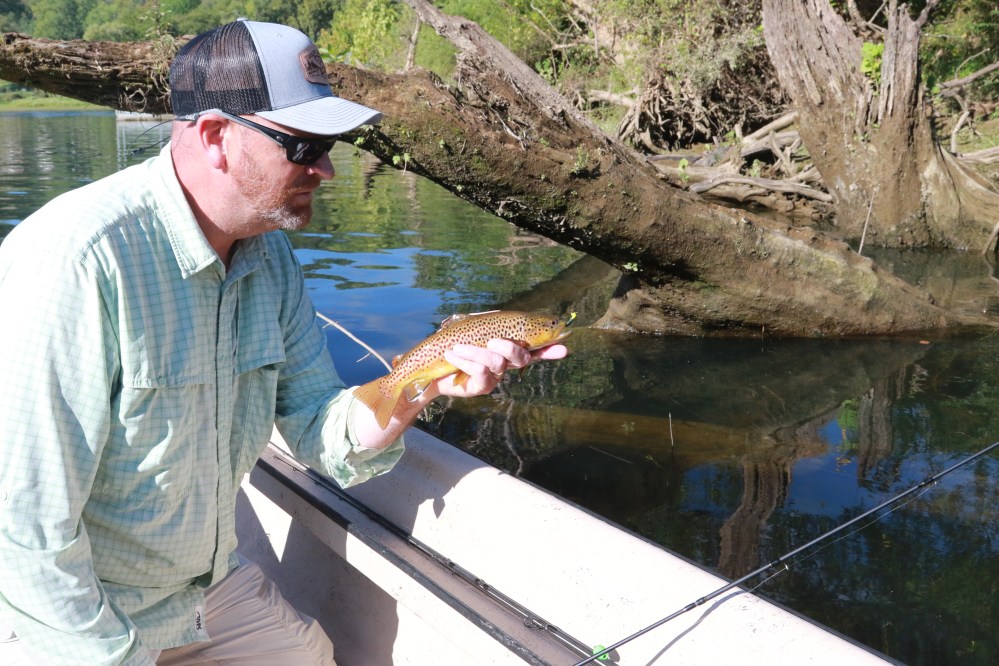
The Norfork hatchery also stocks brown trout in Arkansas waters, but as Smith explained, these aptly-named fish with fewer dark spots mixing with red/orange dots, tend to act more like a bass than a trout. A more cagey and calculating fish, browns often use fallen trees as ambush cover, so when we passed a cluster of laydowns, I asked Smith if that looked like brown trout habitat.
Two minutes later, we had our answer.
Smith cast his Trout Magnet toward the back of the nearest tree and, as he worked the bait over the submerged section of a prominent branch, a brown blasted forth to grab the bait.
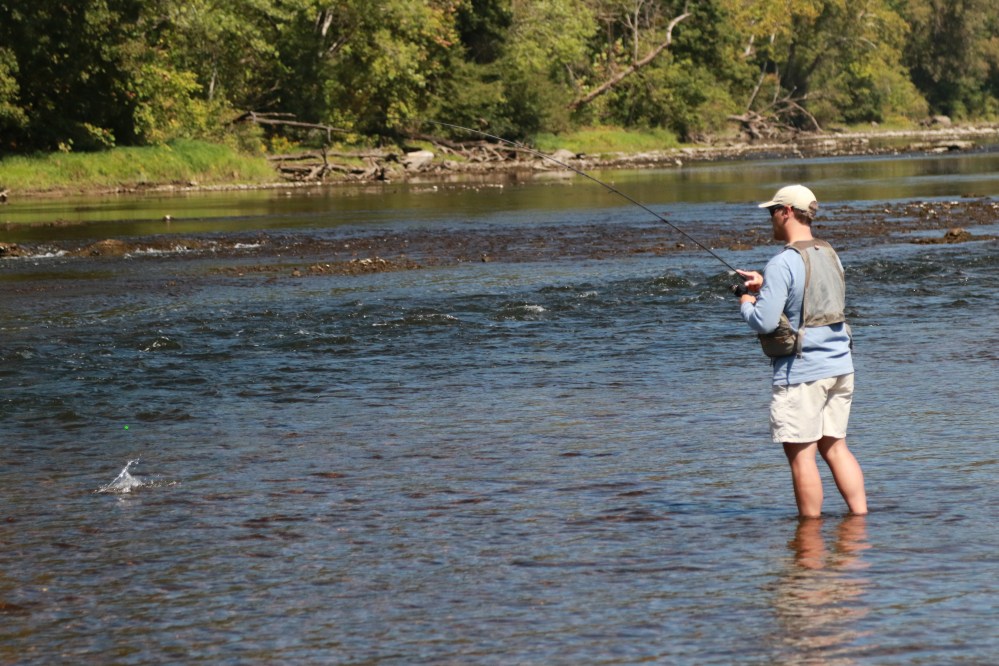
Notably, Smith would later hook a little bigger brown in a textbook current seam scenario. While Taylor waded the juncture of a small inflow where the Norfork broke around a forested island, Smith stayed with the boat and worked the drifting foam.
This second brown displayed more traditional trout behavior by grabbing a Trout Magnet under a float. In both cases, such guest appearances are common to rainbow trout missions.
Handle With Care
However you catch your trout, consider this resource’s immense value. Whether you’re enjoying a strictly catch-and-release fishery, or opting to send ‘em back, handle with care.
When dehooking and posing for photos, hold your fish securely to prevent potential drop injury, avoid touching the eyes and gills and pay attention to water temperature. For example, we found the Norfork’s water measuring in the low 50s, while the White was in the upper 50s.
Trout are pretty durable in cold water, but in warmer areas, Taylor stresss a quicker release. “It’s not a crappie, it’s not a bass. You have to be more careful with them in warmer water.”
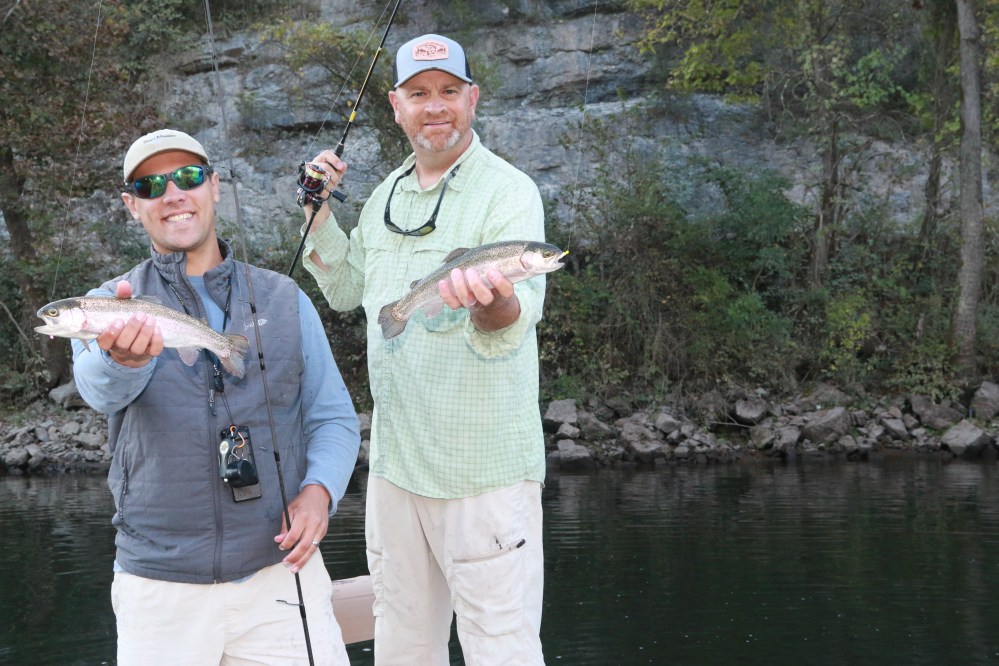
In a standard year, the Norfork hatchery releases about 1.5 million trout into Arkansas and Oklahoma waters. Other states see similar introductions. But whether they grew up in concrete raceways with daily feedings, or they hatched in a free flowing stream where they had to quickly fend for themselves, each trout is a treasure deserving our care and consideration.