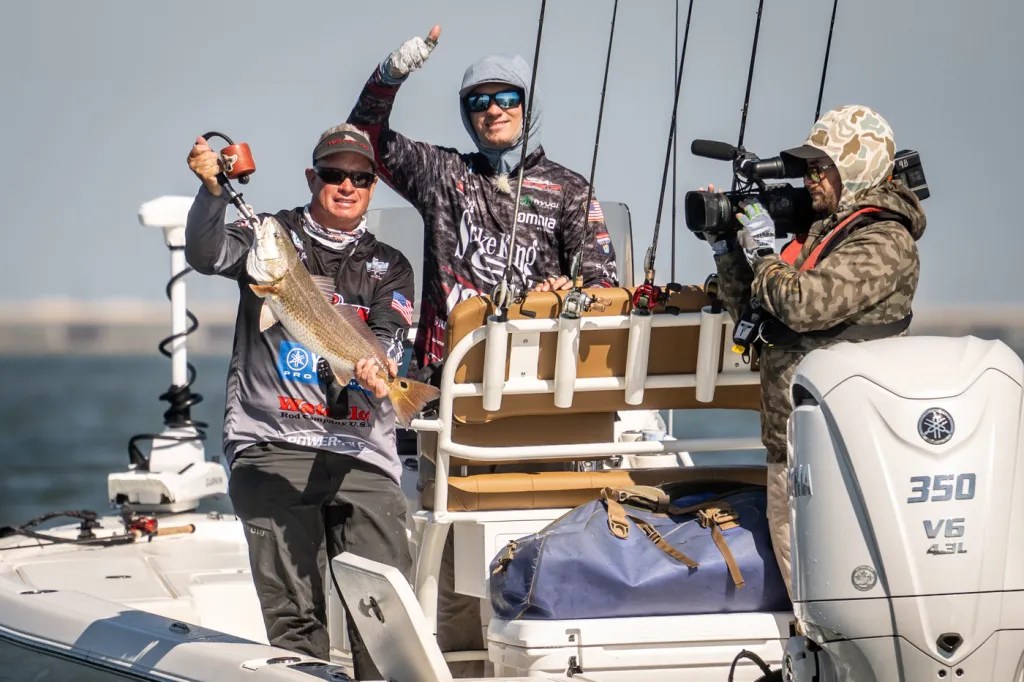
One of the most interesting aspects of the Yamaha Bassmaster Redfish Cup Championship presented by Skeeter at Port Aransas, was the blended field. The 10-boat format comprised six teams of two redfish tournament pros and four teams combining a Bassmaster Elite angler with a redfish pro.
Reining Bassmaster Classic Champion Easton Fothergill joined Carl Jocumsen, Bryant Smith and Tyler Campbell in representing the professional bass side. Lessons came quickly, but each of the Elites quickly embraced the redfish style points and integrated their freshwater skills.
In his first week of redfishing, Fothergill said his biggest challenge was figuring out the right retrieve speed for his paddletail jig. He ultimately settled on a faster cadence that stayed above the grass and prompted reds to make a quick decision.

Make ‘Em Move: While sight fishing — casting to visible fish — defines the most common flats strategy, Fothergill’s partner Clark Jordan Jr. said he likes to “push” redfish by trolling through areas to make them raise up from the grassy bottom and show themselves. Blending this method with long, blind casts, he and Fothergill would make targeted presentations to any fish they saw and then focus on active areas.
This strategy parallels a common tactic bass anglers use to find unseen spawning fish. When light levels and/or scattered vegetation/cover impedes an angler’s ability to sight fish bass at the beginning stages of the spawn, anglers often throw swimbaits, swim jigs or other search baits in an effort to make a territorial fish boil or wake behind the bait. Once a fish reveals its position, you can stealthily move in for targeted presentations.

Wind Wisdom: When Day 3 dawned with whipping winds and white caps inside Port Aransas Municipal Boat Harbor, several competitors stated the truth upon which all recreation decisions should hinge: navigational safety trumps any potential angling goals. No fish is worth risking injury, or worse.
If you can reach your target area, use shoreline features, trees, bridges, etc. as wind breaks. If open water is your only option, keep the wind at your back, turn the boat perpendicular to the wind and use a drift sock to slow your progression so you’re not blowing onto your cast too quickly.
The other option involves identifying a promising area, dropping the Power-Poles or Minn Kota Raptors and fan casting the target zone. On a lengthy area, thoroughly fish a section, lift the shallow water anchors, slide forward a cast length and fish the new water. Continue the process until you find the fish.
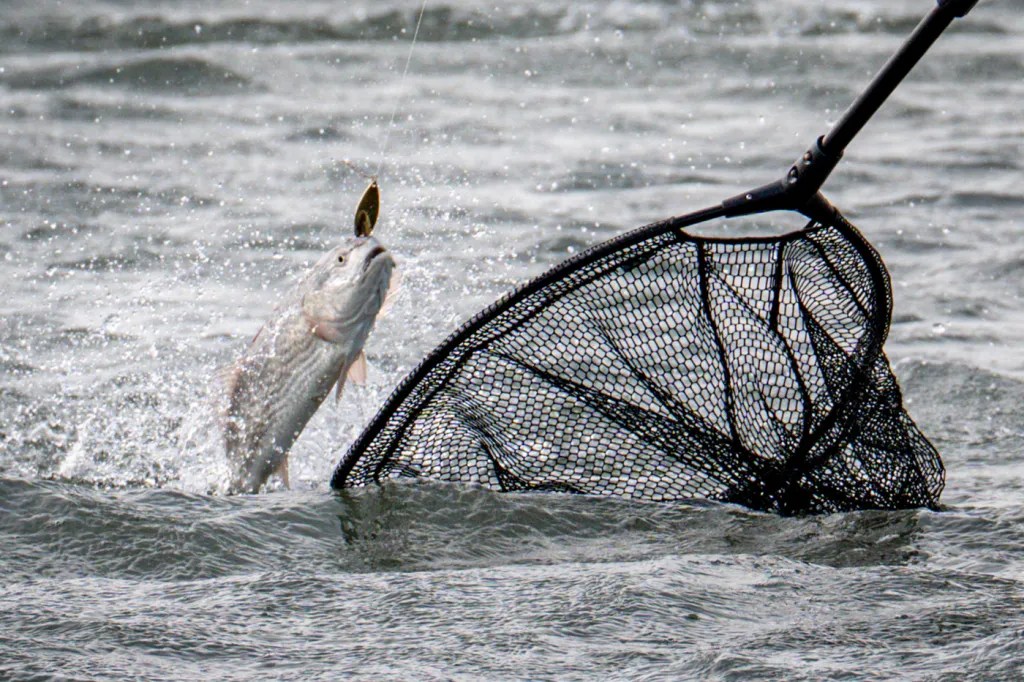
As far as bait choice, it’s hard to beat a weedless spoon for windy day castability. If you prefer jigs with paddle tails or artificial shrimp, maybe upsize the weight a little and keep the plastic tails to a small, compact form. Larger plastic bodies will catch too much wind and blow off target.
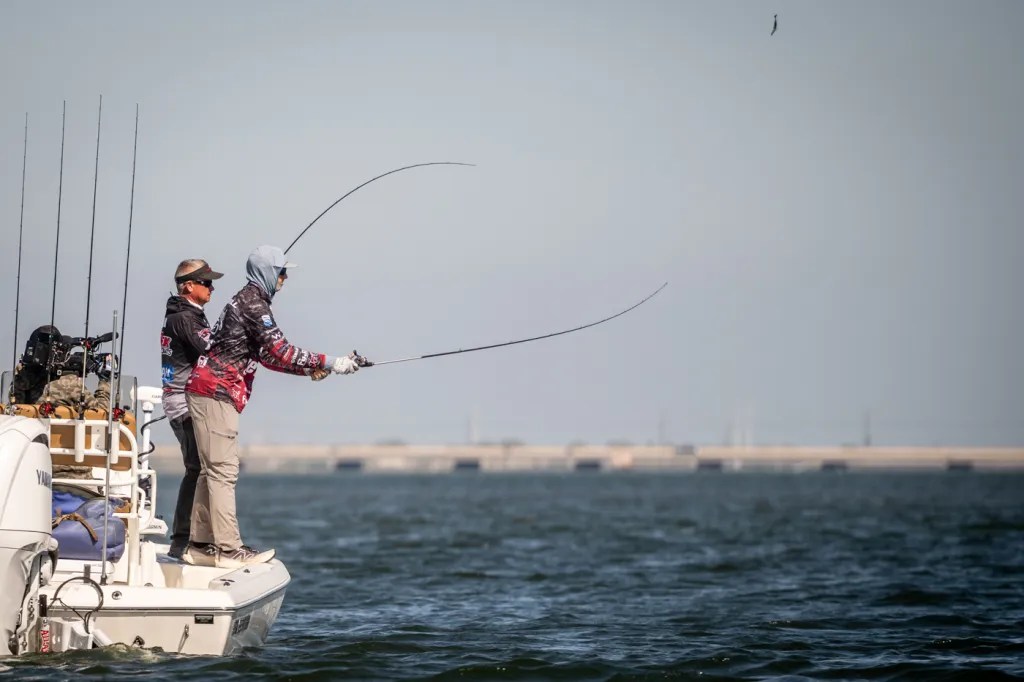
Pro tip: Windy days will blow a bow in your line and your bait will follow that curve on the retrieve. Say you make a 100-foot cast and instantly develop a bow in your line. That means only the fist few feet of your retrieve actually crosses your intended zone. Not to say you won’t get bit on a curving retrieve, but working straight lines is essential to efficient coverage.
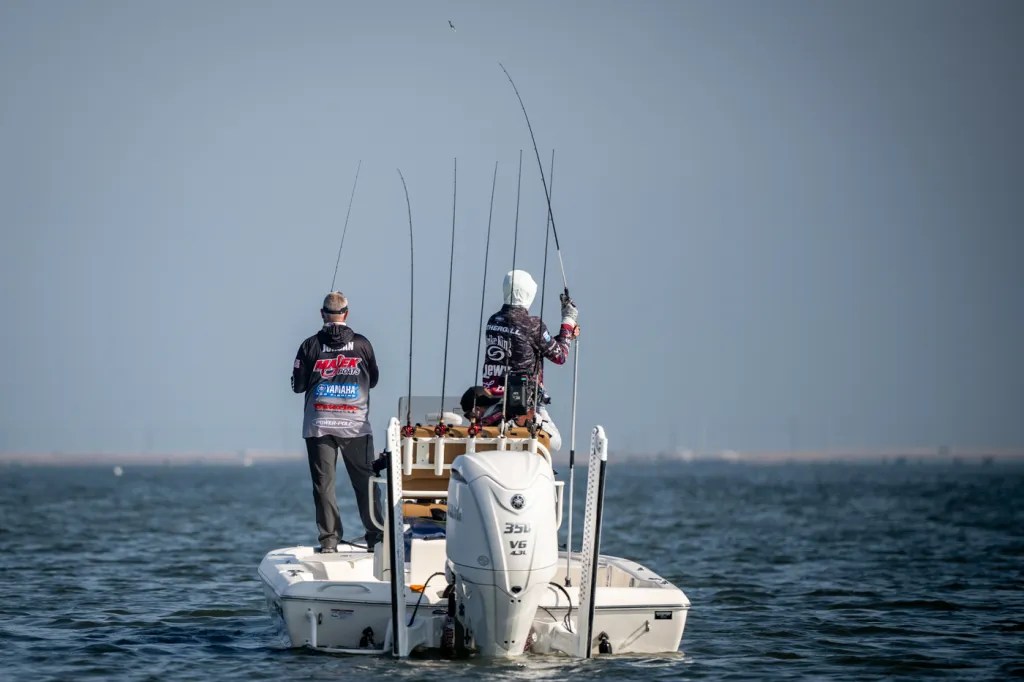
Fix this by quickly lowering your rod tip after your bait falls and reeling up any slack line before starting the action of your retrieve.
Be Ready: Reds are schooling fish, so feeding competition runs high. It’s not uncommon for one or more fish to follow a hooked schoolmate to the boat, so savvy tournament anglers are quick to capitalize by casting near the spot of the hook up to sight cast at following reds.
When one angler hooks a redfish, it’s wise for boatmates to reel up and avoid entanglements. But don’t put the rods down; keep watch for those targets of opportunity and redfish gluttony often yields double-headers.

Maintenance and Preparation: Redfish like their hard structure and when anglers fish around those rocks and oyster bars, the risk to equipment looms constant. Knowing this, experienced anglers carry spare props for outboards and trolling motors and the tools necessary for impromptu repair/replacement.
Case in point: When 2024 Redfish Cup Championship winners Michael Frenette and Mark Robinson knocked the tip off one of their prop blades, they pulled up to an oyster bar, raised the motor, replaced the prop and continued fishing.
The morning of Day 2 saw Patrick Marsonek fight a solid redfish to the boat, but as his partner Ryan Rickard, stood ready with the net, the ornery fish dashed under the boat. Marsonek did his best to lean forward and extend his arms to keep his line off the trolling motor, but the redfish managed to run the braid across the prop and break free.
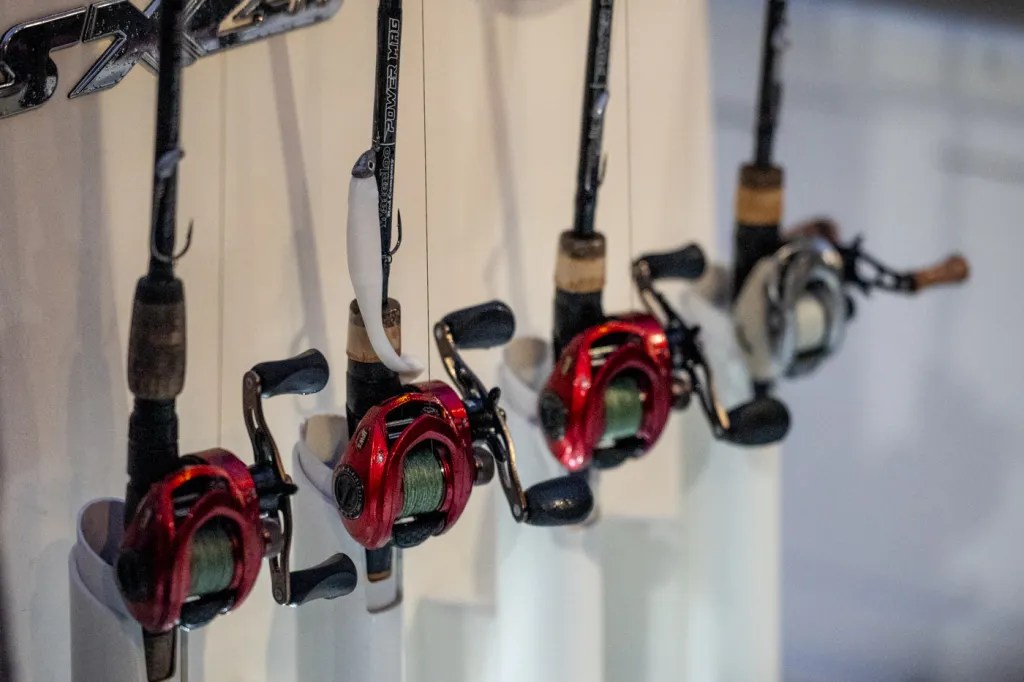
Good example of how you have to stay limber and responsive when a powerful fish approaches the boat. Reds are notorious for rubbing their faces against the bottom to dislodge a hook, but they also know that running under and around solid objects — oyster mounts, dock posts, rocks, boat hulls — will serve their cause.
The takeaway: Even if you successfully fight your redfish to the net, always check your line/knot for frays, nicks and signs of wear. Williams demonstrated this on-camera during the morning of Day 2, as he fought a 7-pounder to his partner Chris Cenci’s waiting net and immediately stated that he would retie his line.
Redfish present one of the most enjoyable of inshore targets, but they will not make the game easy on you. Do whatever you can to tilt the odds in your favor and you’ll be holding one of those copper beauties for a bragging rights photo.