



How to fish the “ball of fuzz” dice bait

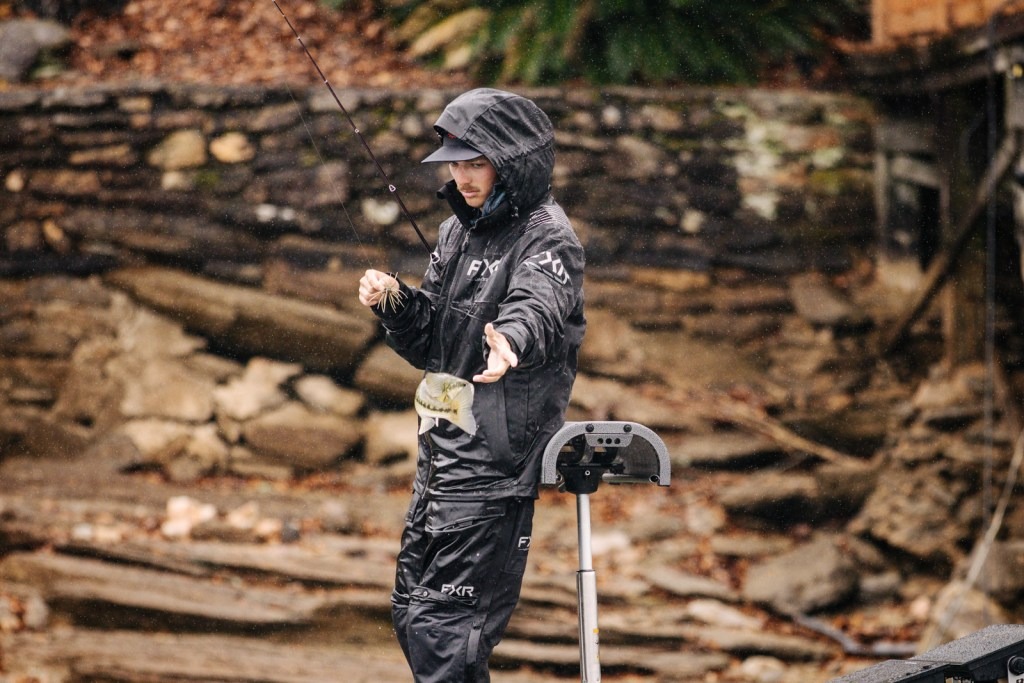
Find out more about the "ball of fuzz" craze that took over the recent Lippert Bassmaster Elite at Lake Martin.


Over the last year or so, it hasn’t been uncommon to see the dice bait play big time in the Bassmaster Elite Series.
In response to this craze taking off, ICAST 2025 was all about the fuzzy-style bait, as several companies began to release their own versions of the bait.
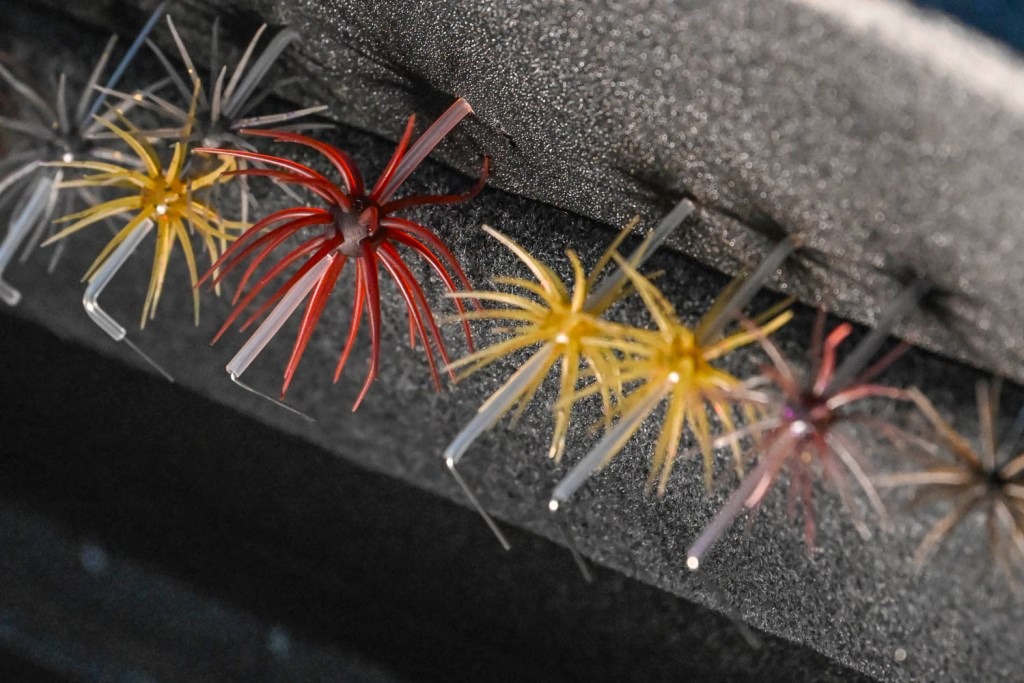
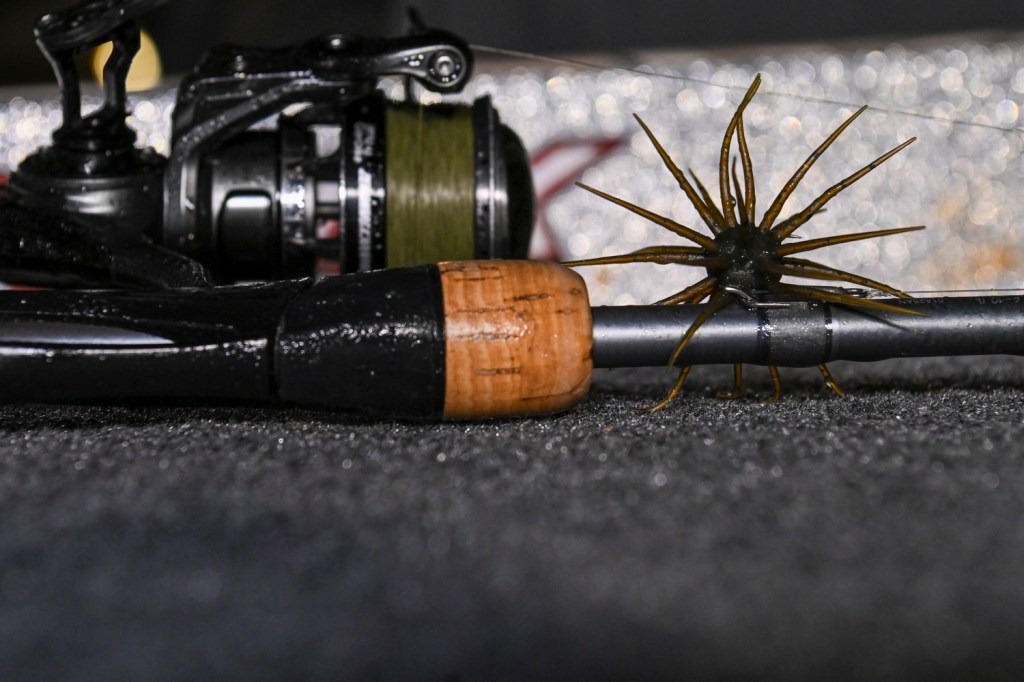
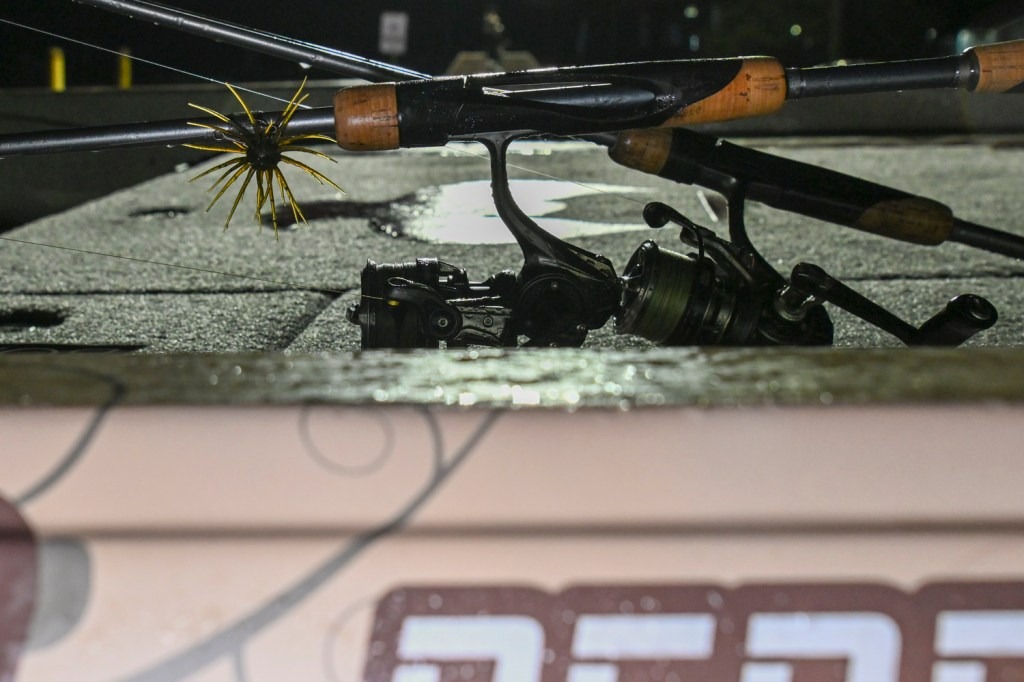
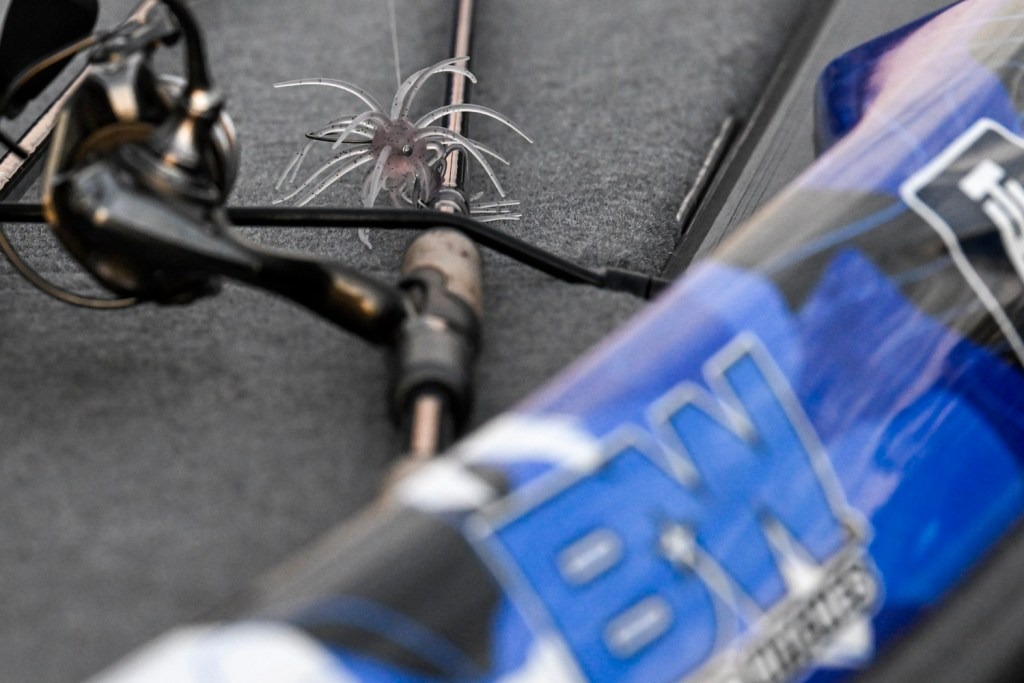
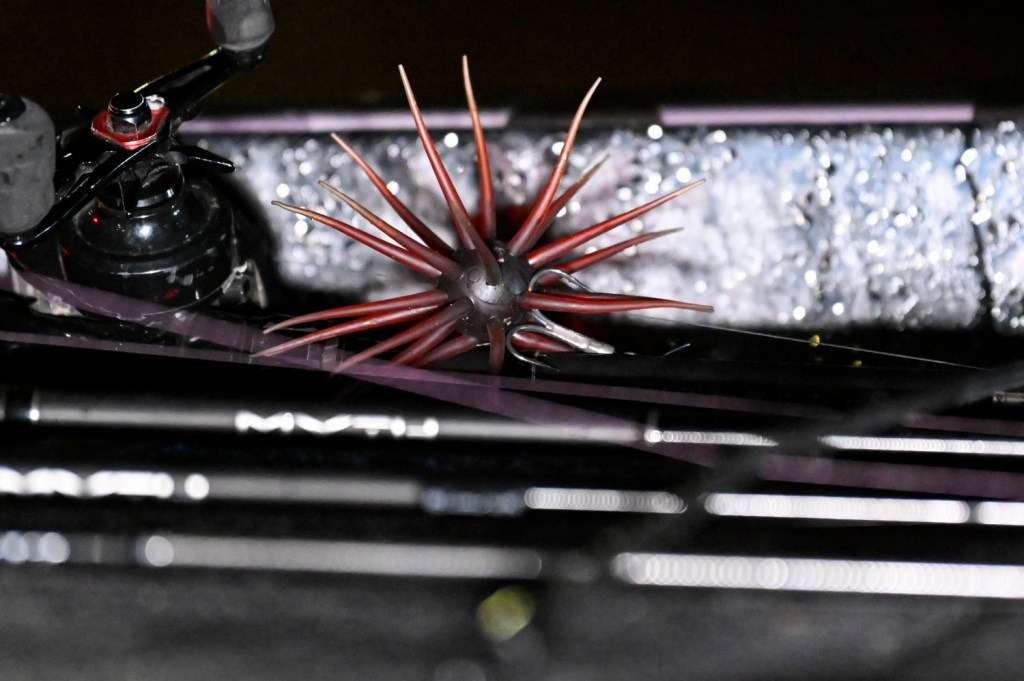
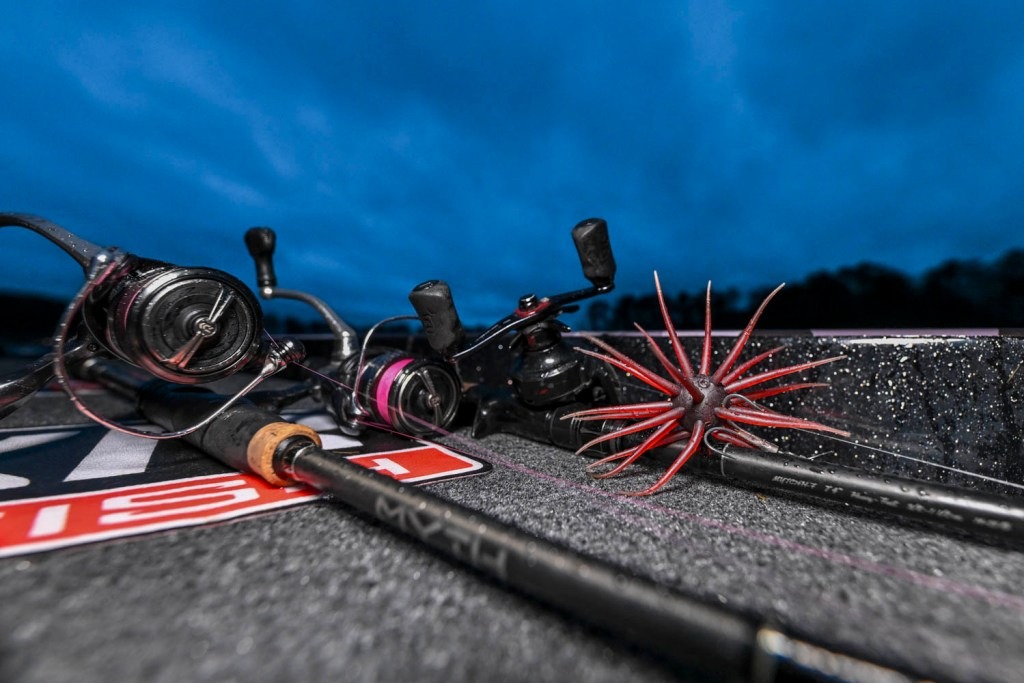
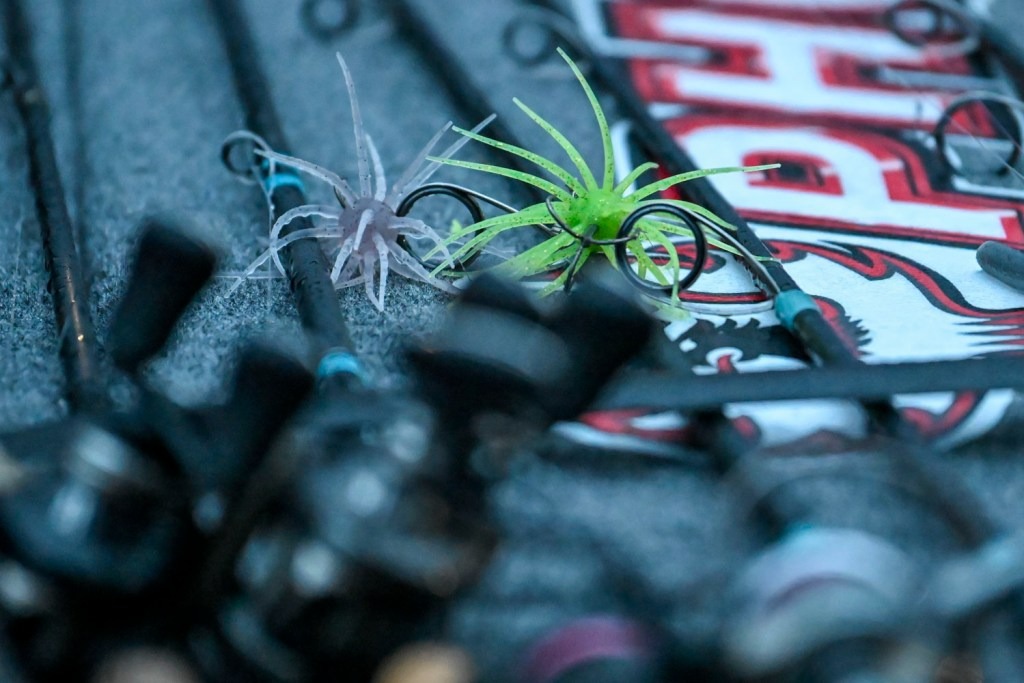
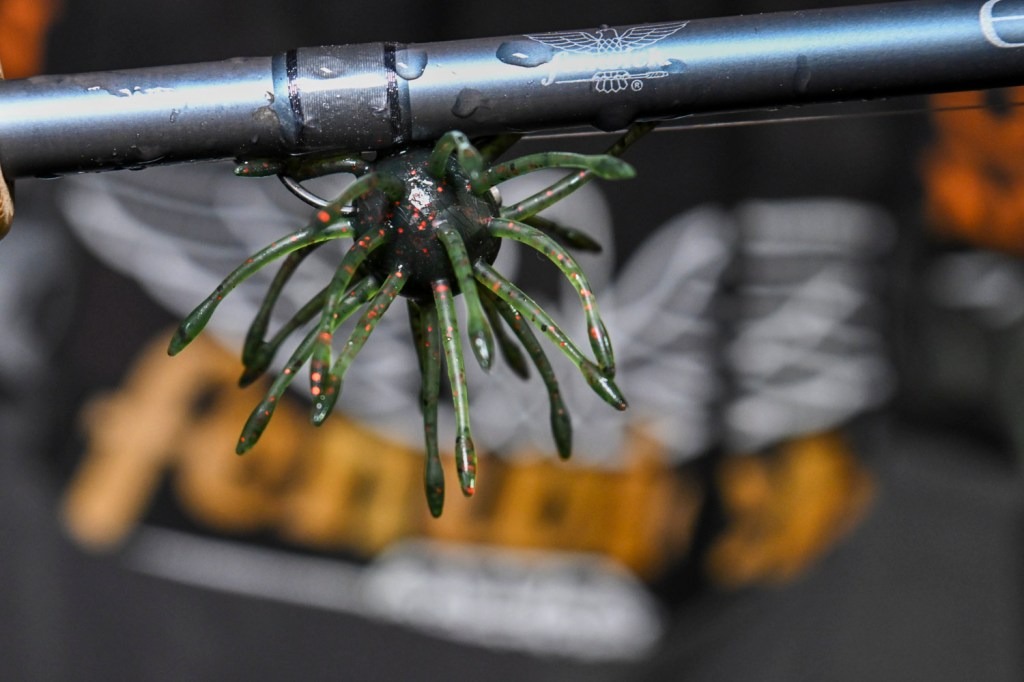
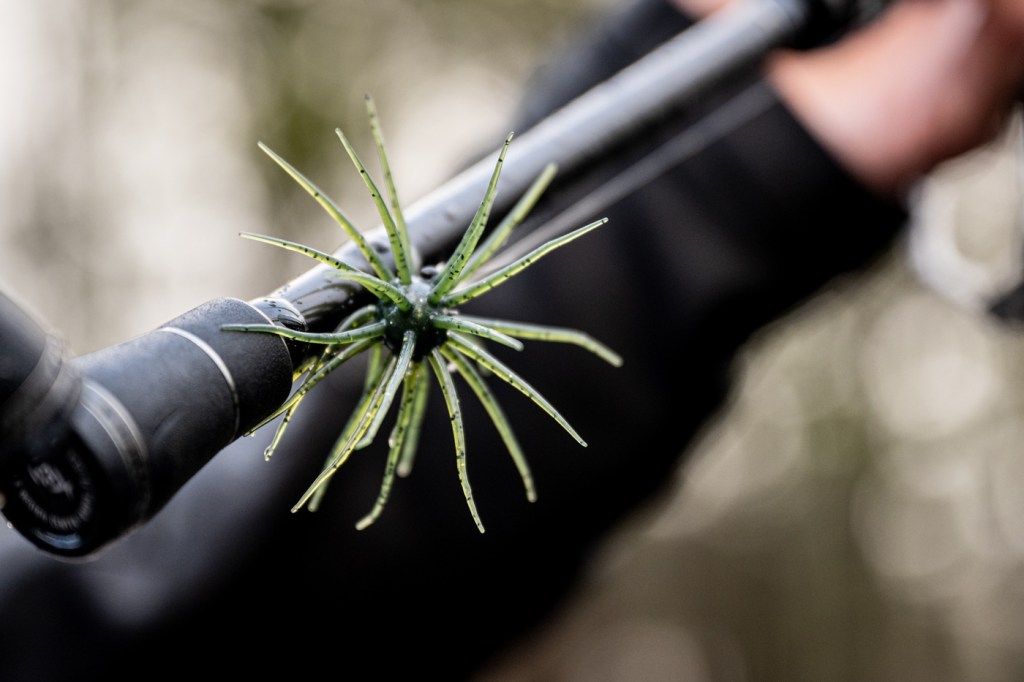
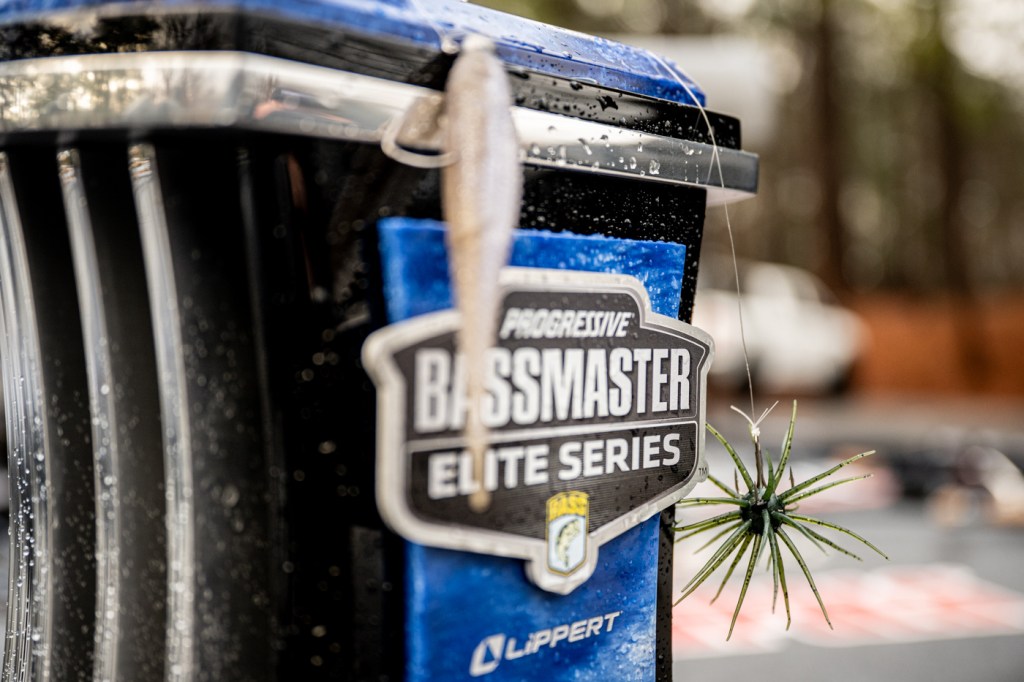
Two main categories have emerged. The first is the soft plastic dice style, which has jig skirt material running through it, while the other is the round “urchin” or “spiky ball”, which is shown here.
The urchin-style bait is manufactured by several companies and is made from high-density, durable plastic, more similar to silicone rubber than soft plastic. It’s a buoyant one-piece design with multiple tentacles sprouting from a center core.
This bait floats, allowing for endless rigging options for reaching any depth. Some of the most popular models are the Hideup Coike, Hag’s Prickly Pear, and the Yamamoto Uni.
They also come in a variety of sizes from 10mm to 23mm.
With such a unique look, many debate what it most resembles for a bass. Many think it most mimics spiders, bugs, or sea urchins. In a recent Bassmaster Magazine article by David A. Brown, he found that Hideup founder Hideo Yoshida has a different opinion. “Everyone thinks of the Coike as a weird shape, a spider of a sea urchin, but I believe the bass think it is many small fish biting the center ball. It’s like a bait ball, so I’m always shaking it because a bait ball is always moving.”
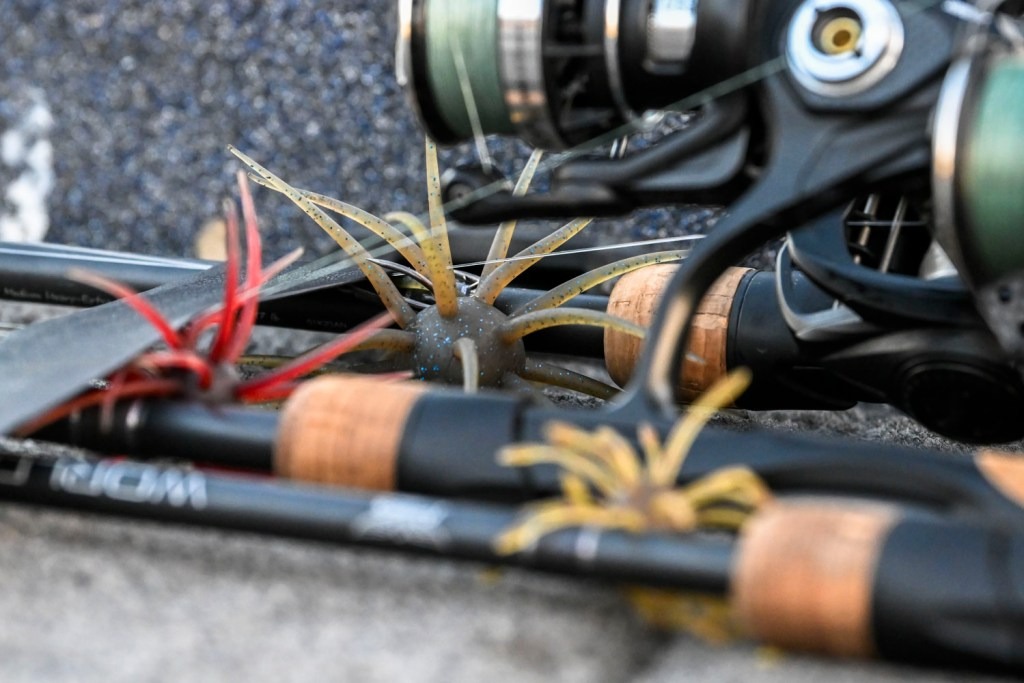
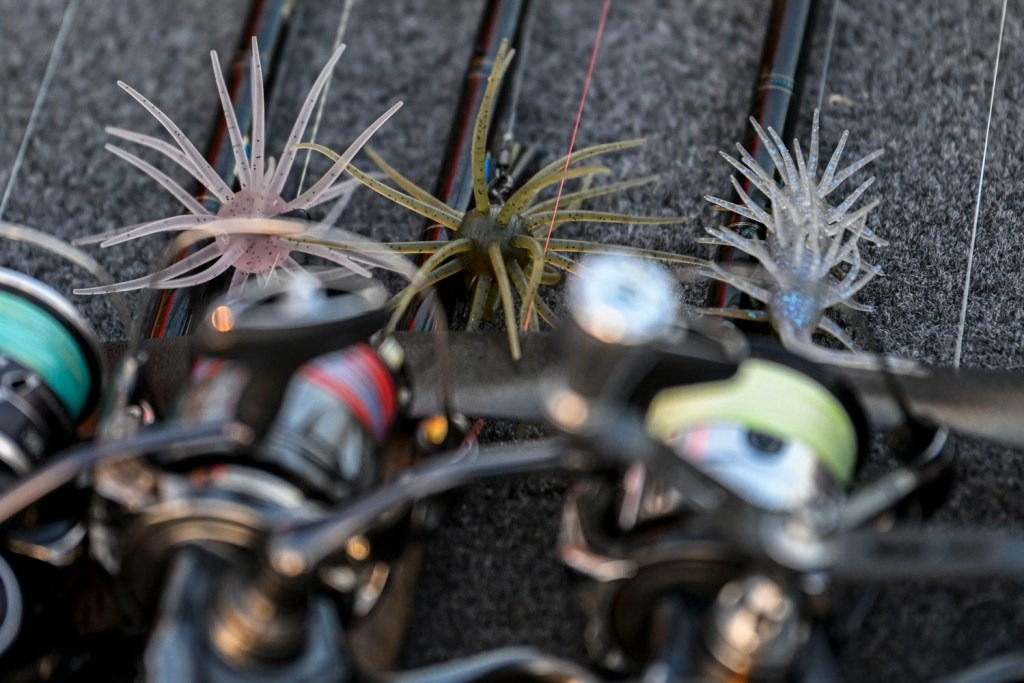
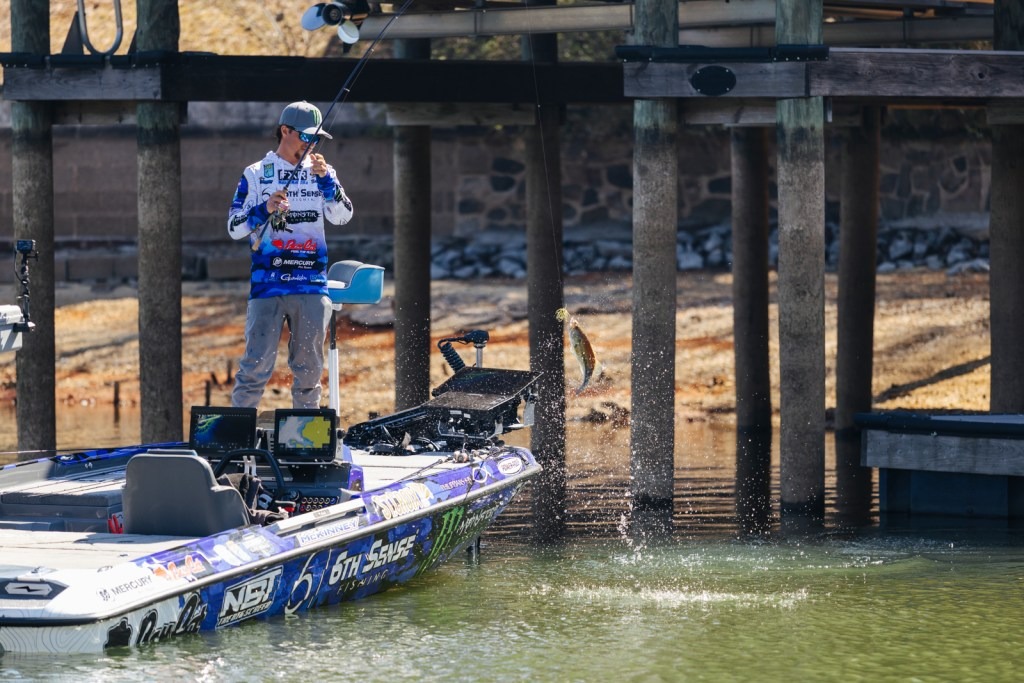
At the recent Lippert Bassmaster Elite at Lake Martin, spiky ball baits were seen on front decks with regularity.
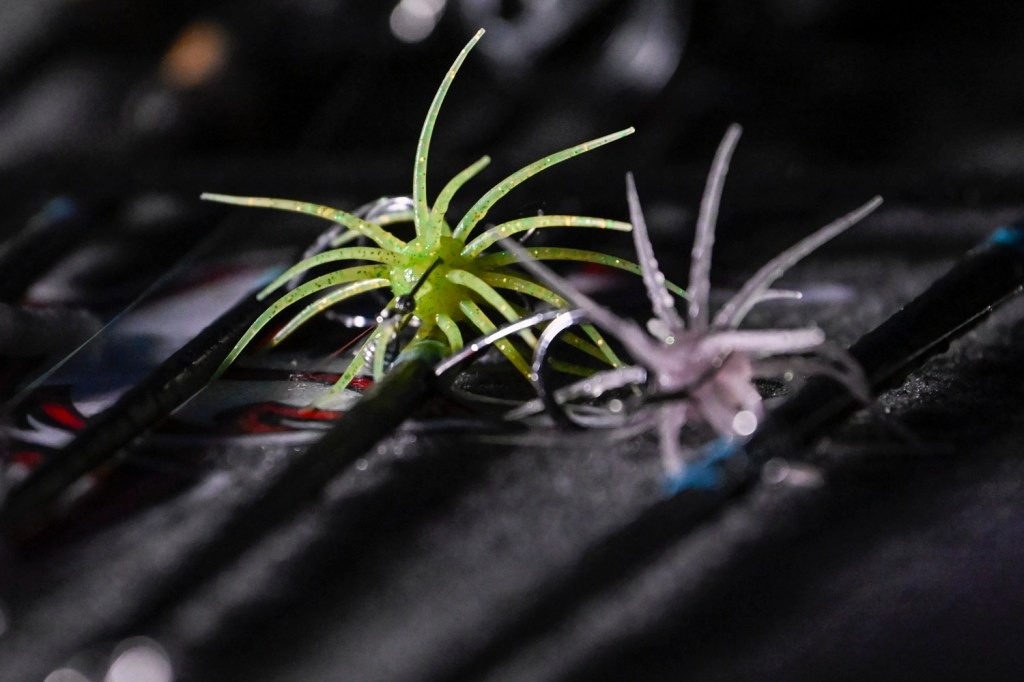
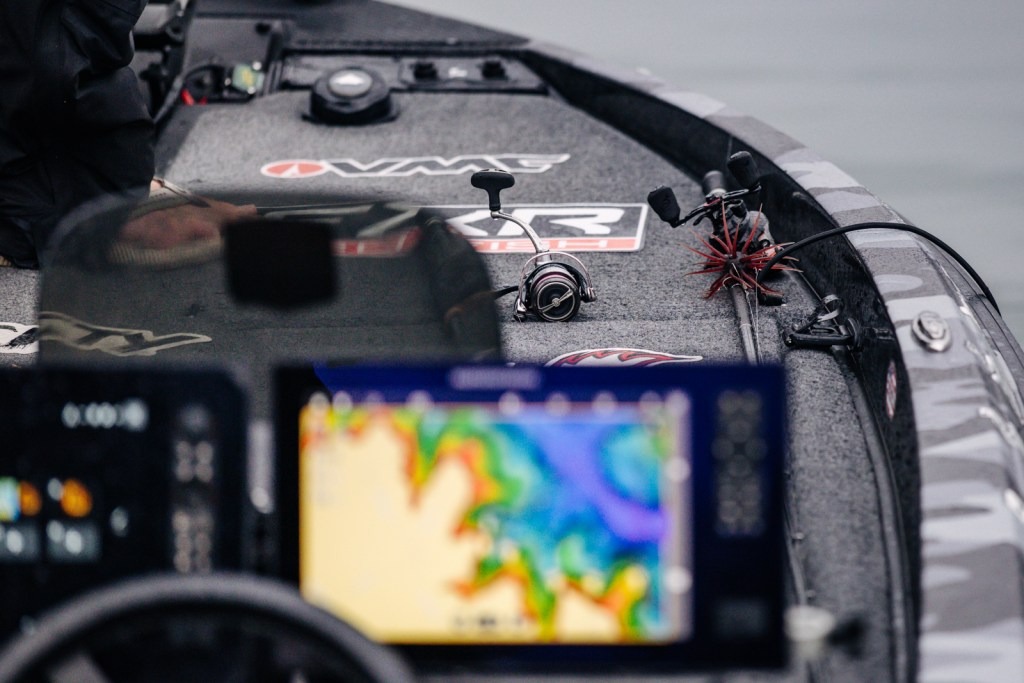
Even the Hideup Coike Shrimp (pictured on the right) made an appearance on the spotted bass-dominated fishery.
The spiky ball has been a Japanese staple over the last 20 years, but has really only made a presence in the US over the last couple of years.
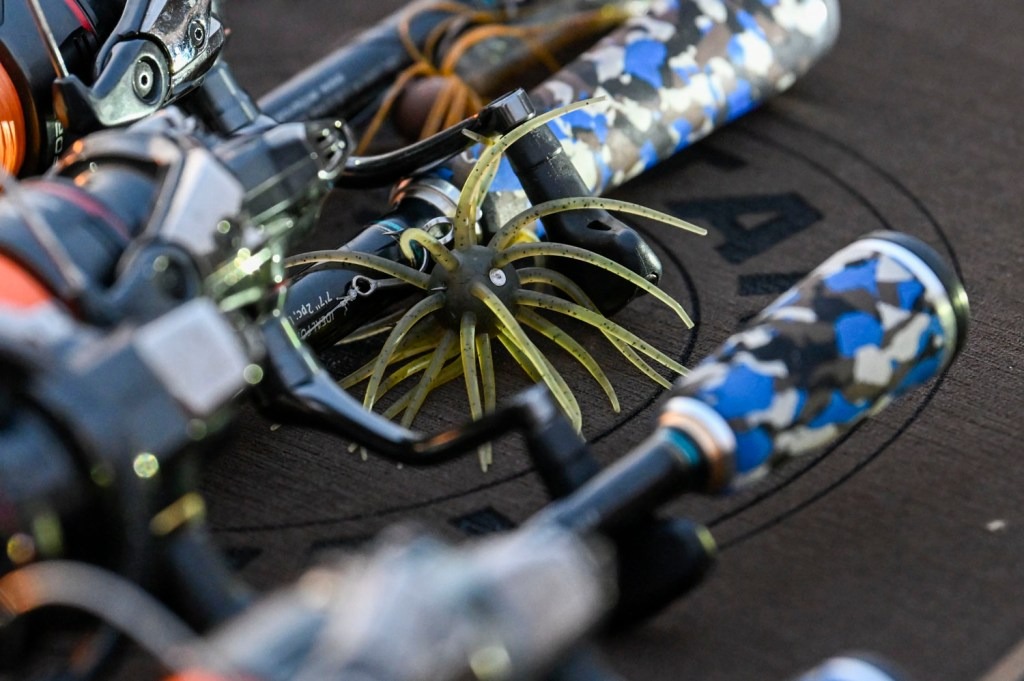
Rigging options are endless, and anglers are still trying new ideas.
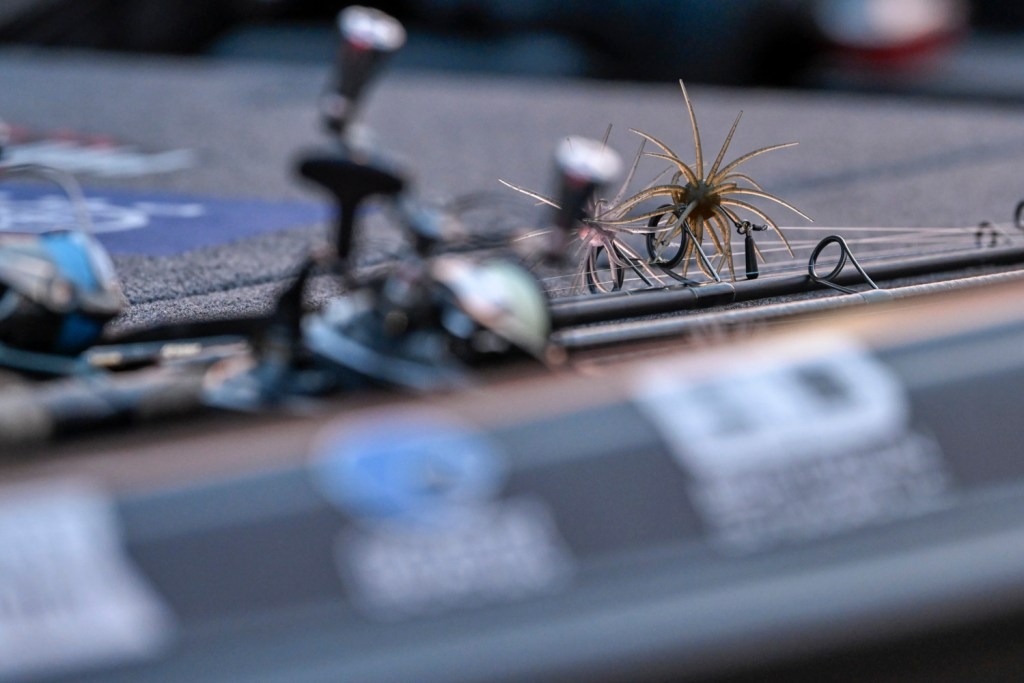
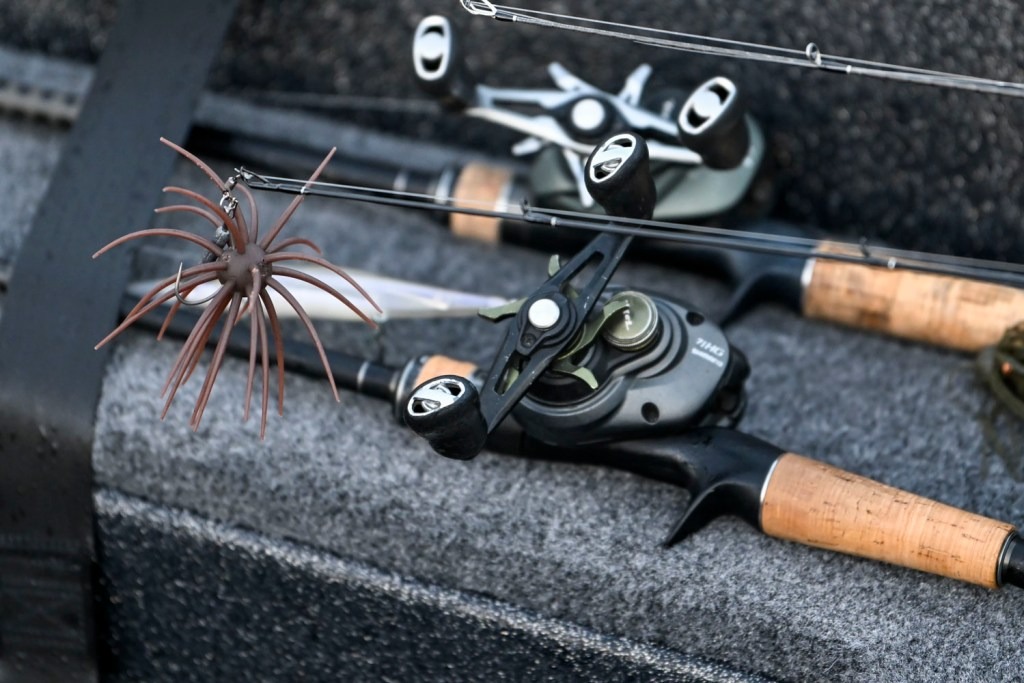
Weightless, neko, drop shot, and Tokyo Rig are just a few of the ways anglers rigged it. There was also a variety of hooks used, including treble hooks.
Here it is rigged on a version of the Tokyo Rig.
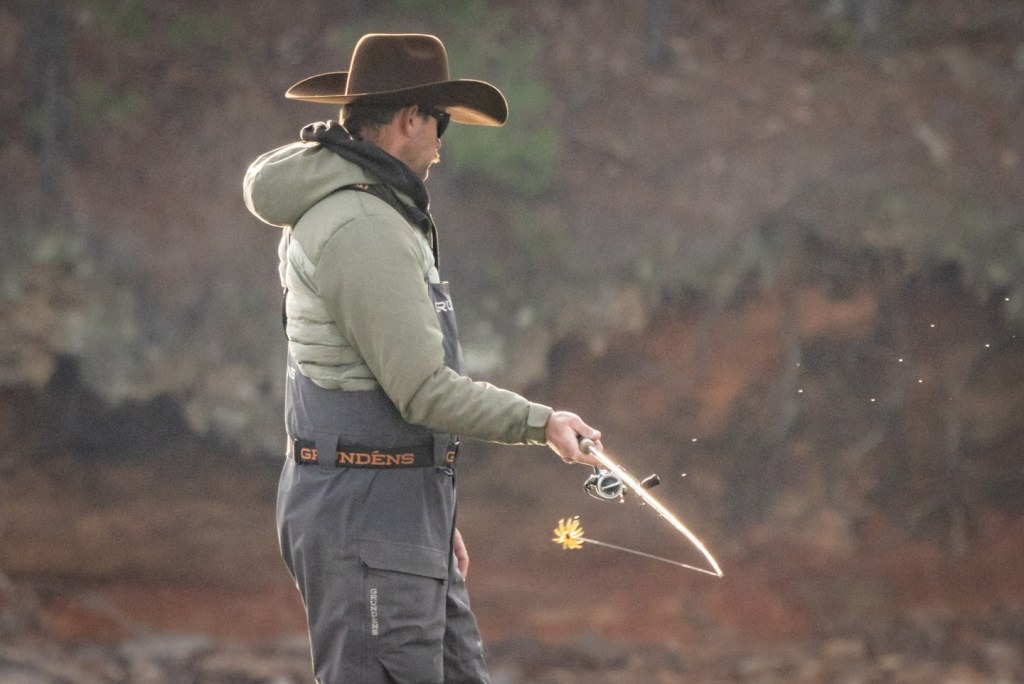
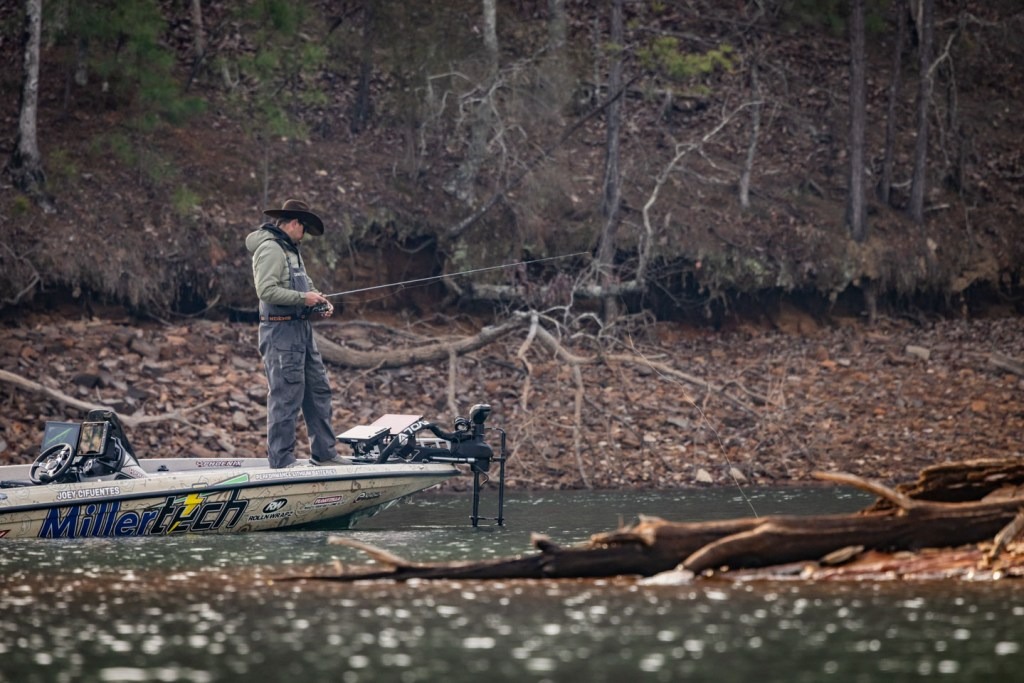
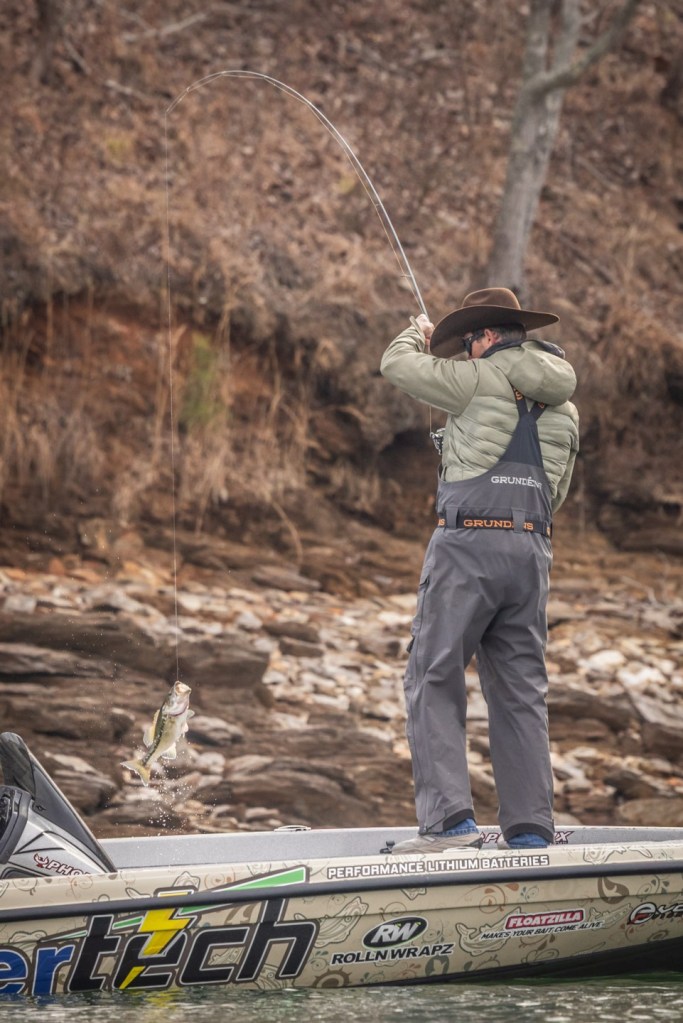
The cowboy himself, Joey Cifeuntes, implemented a spiky ball for the majority of his fish on Lake Martin.
All the different ways to catch fish on the erchin are still being explored here in the US.
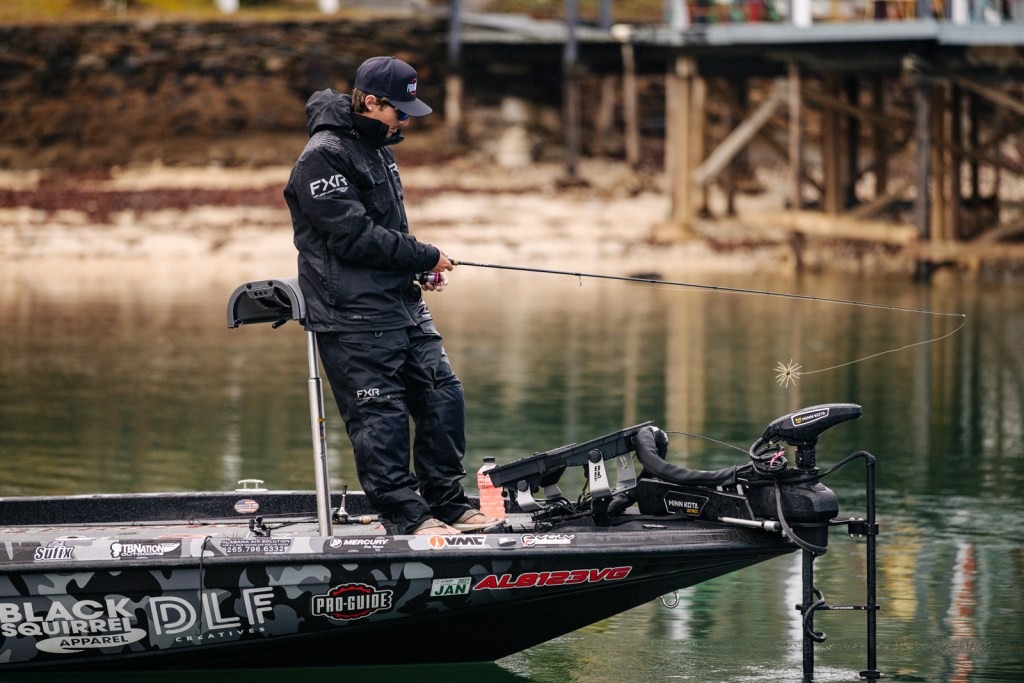
At Martin, the most common strategy was targeting suspended bass both over deep water and in shallower drains and banks.
In a broad sense, the spiky ball is almost like a new version of the senko, where it’s suttle action is tantalizing both on the fall and while shaken.
All the tentacles quiver constantly, and when pulled through the water, they suck in toward the center and then pop back out when stopped.
Trey McKinney found success with the erchin in and around docks; he still used his forward-facing sonar to target the fish hanging in the pockets.
With its subtle action and fall, the spiky ball could be deadly even without FFS, as it can be pitched around the structure and banks.
Neko rigging this bait allows anglers to target both fish suspended and on the bottom as they start to pull up and get ready to spawn.
While it’s been used in a few tournaments lately, it often takes a large tournament win for the trend to really take off with anglers of all levels. I expect all of these baits to be sold out for quite some time.
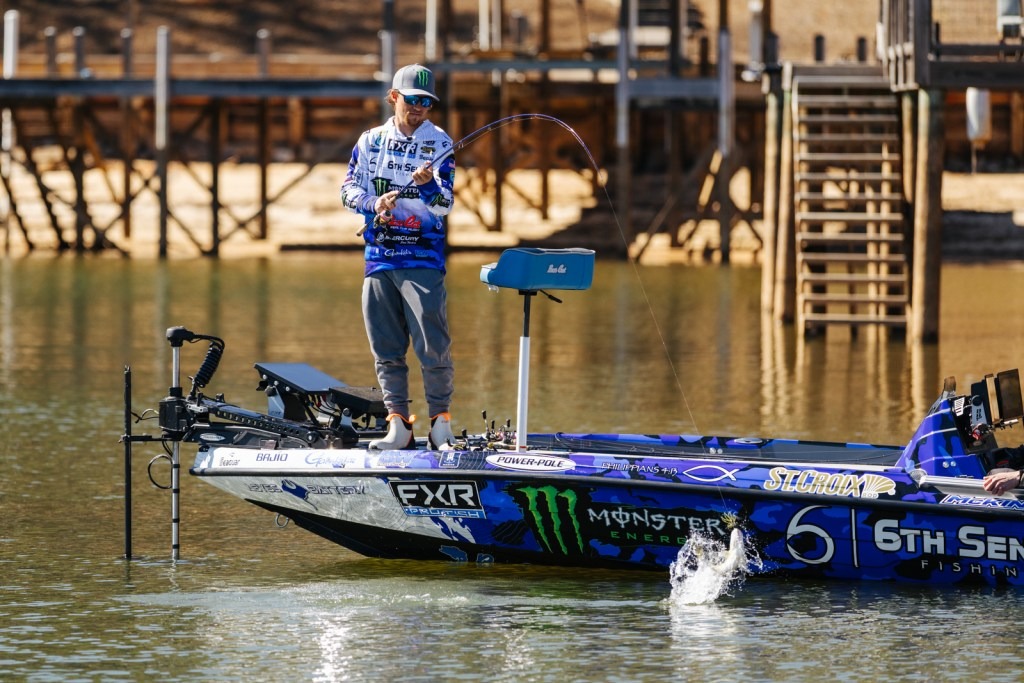
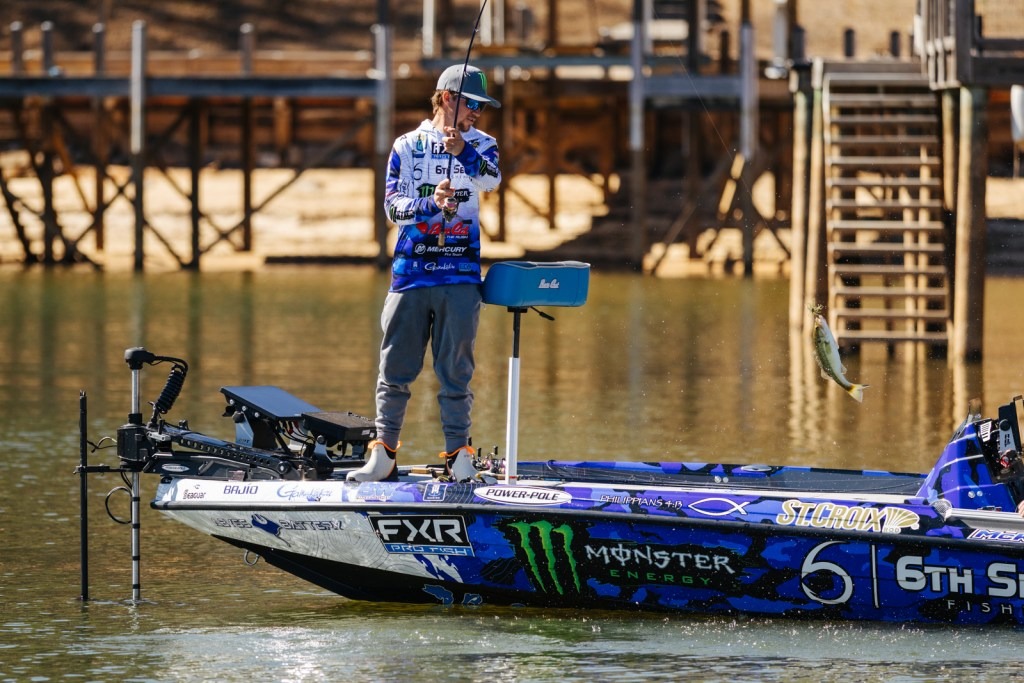
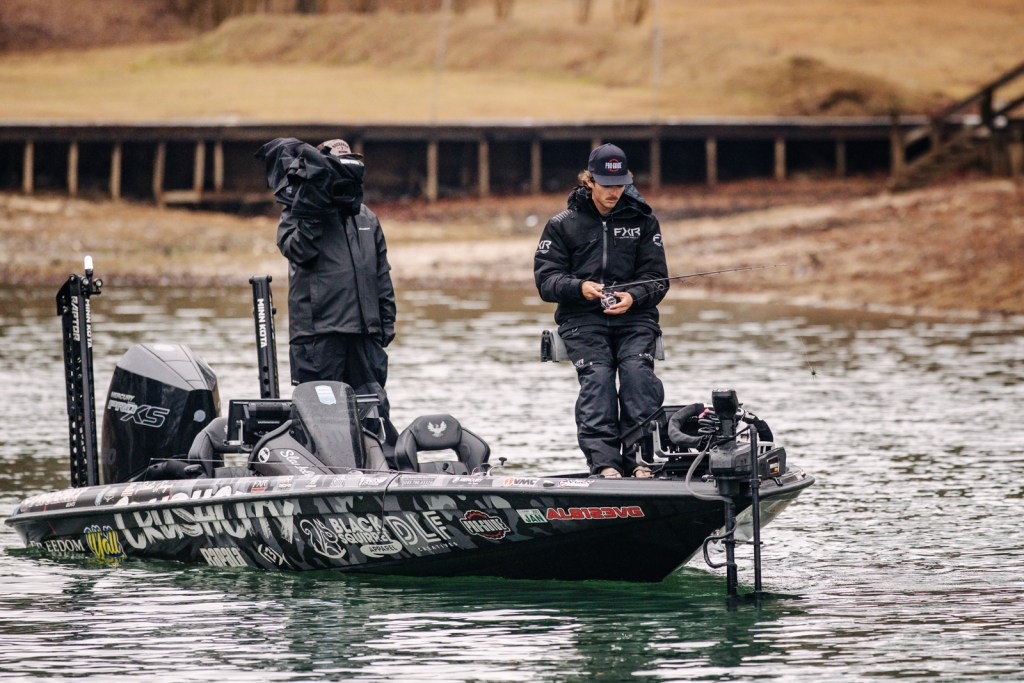
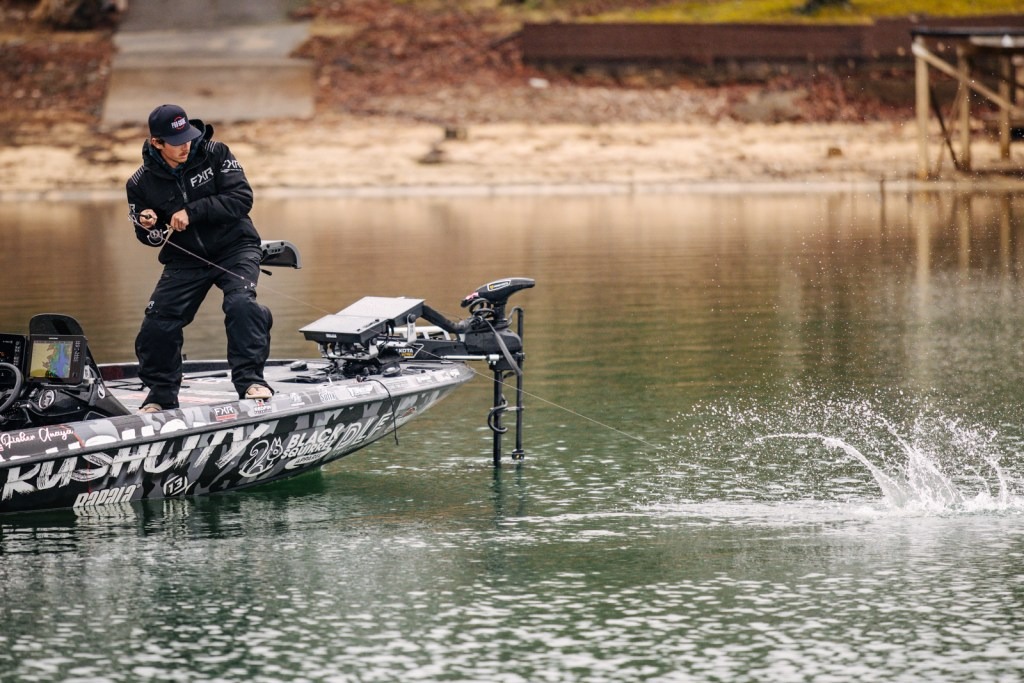
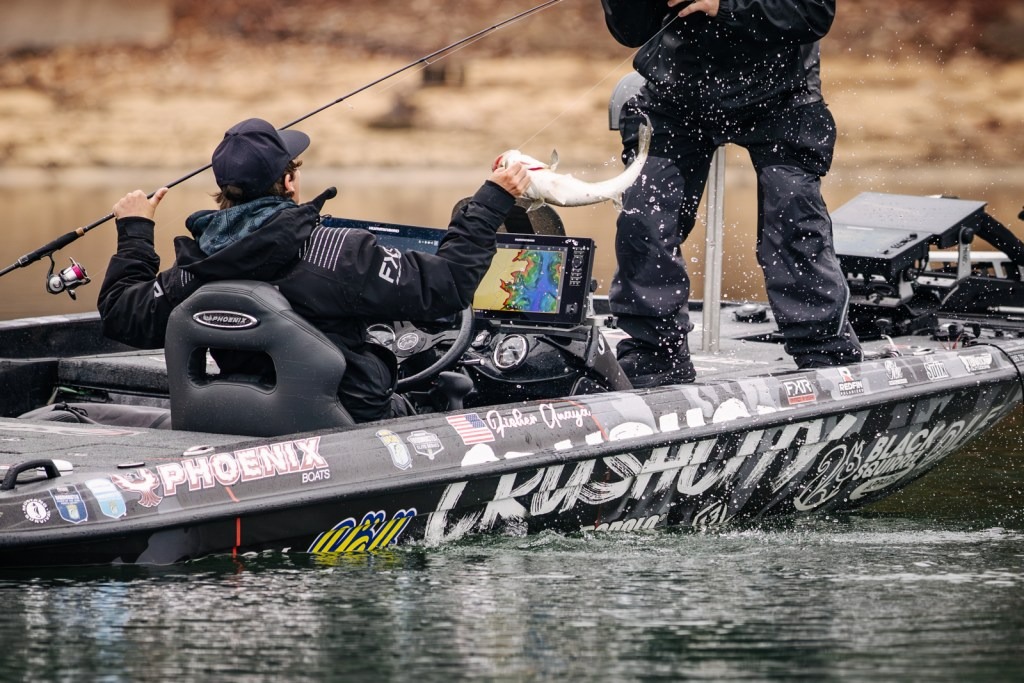
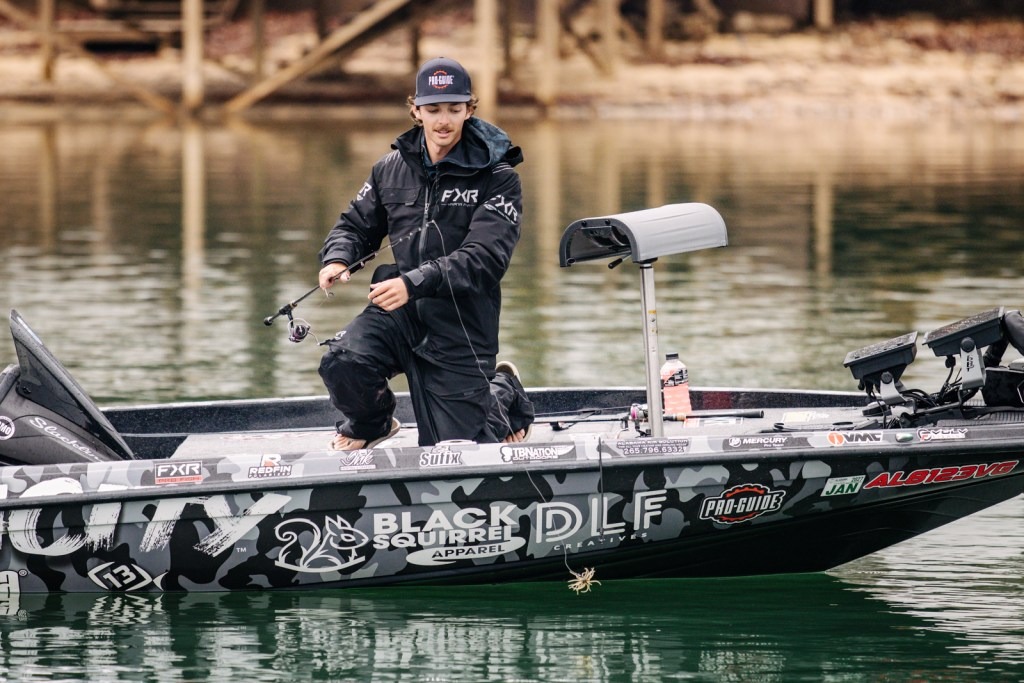
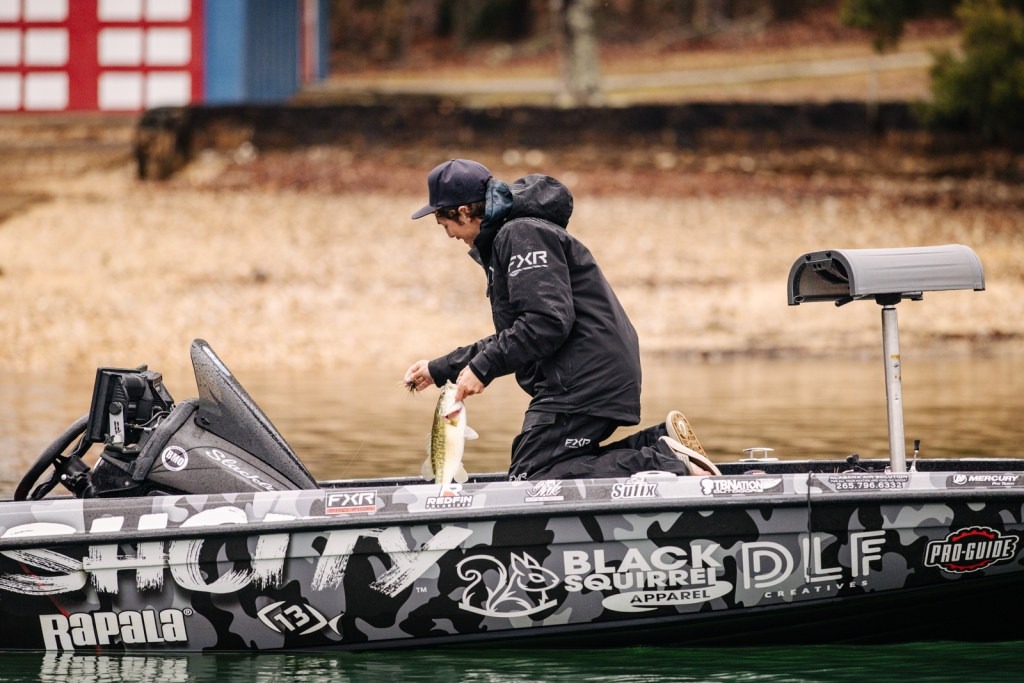
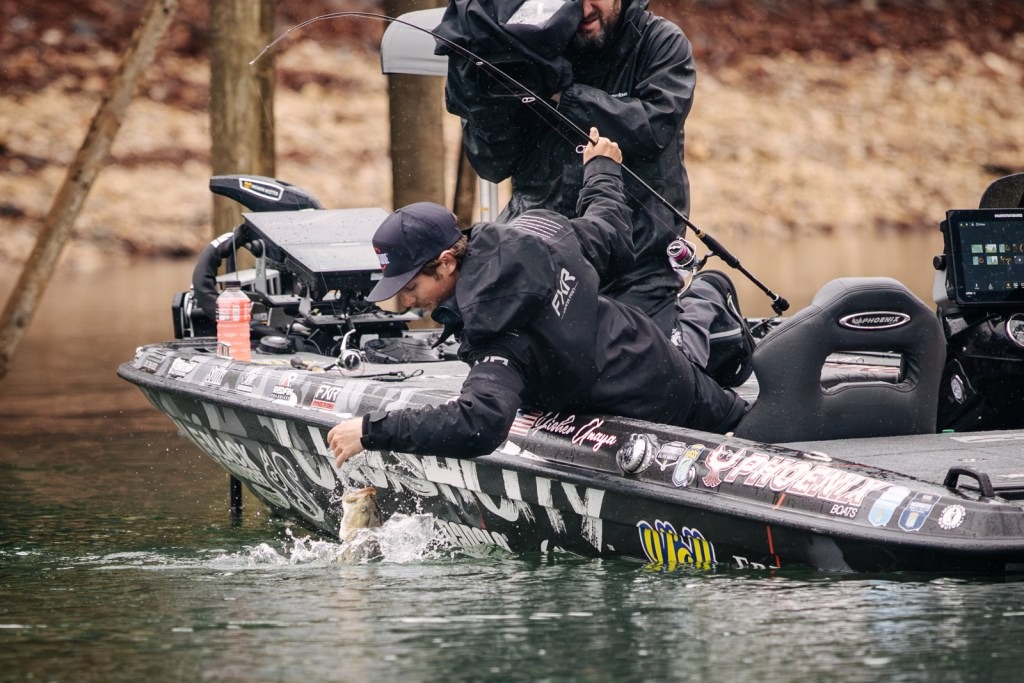
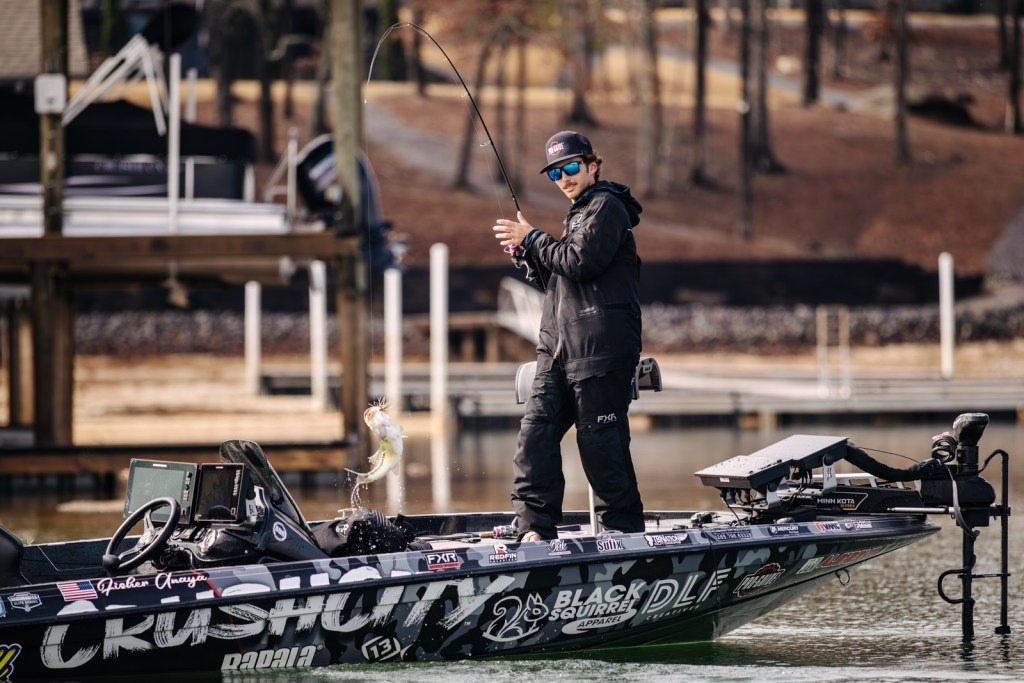
Fisher Anaya put on a clinic with the spiky ball and was able to get in an area with above-average spotted bas size.
Much like a minnow, Anaya would target fish on FFS and give the spiky ball light shakes while keeping it above the fish.
Anaya also rigged his with a neko rig using a treble hook, a small 1/16oz tungsten nail weight, and a rubber keeper to ensure the bait remains secured.
Flatter pockets in a main creek arm were the key to Anaya intercepting fish making their way toward spawning areas.
These fish cruise the shallows looking for easy meals.
Anaya also got some key bites from fish hanging around docks and other hard structure.
Along with better size, Anaya still tempted plenty of numbers at Martin.
Using foward-facing sonar allows the anglers to be much more efficient by keeping the bait in front of fish and understanding the mood of each fish.
Like the jighead minnow, this technique will be a player for years to come and guys will find new ways to implement it,
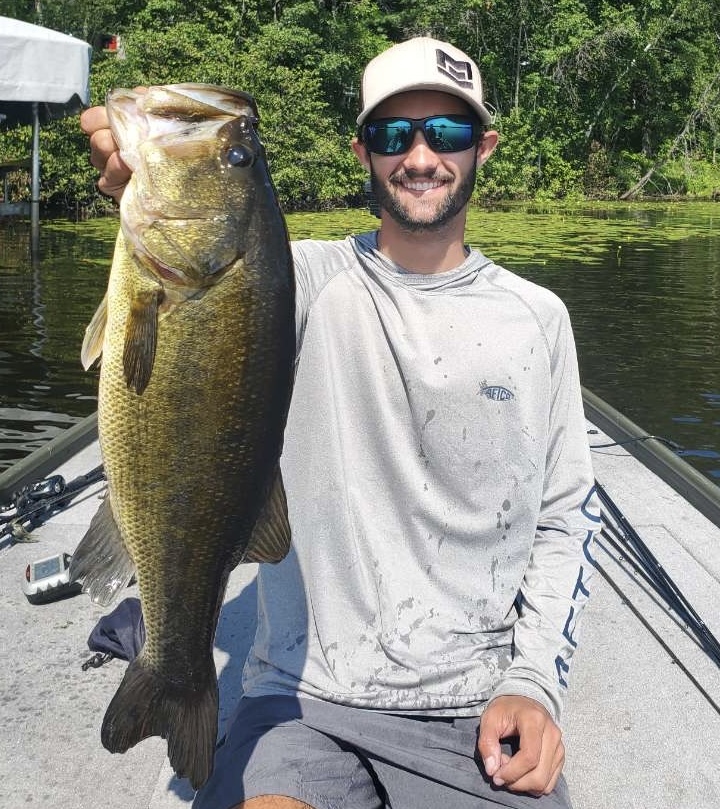
Along with a minnow in deeper drains, the spiky ball got the win for Fisher Anaya in just his second Elite Series tournament.
Only time will tell if this crazy bait will claim more blue trophies this season!