“Look, they’re blowing up on shad!”
Wow. Pretty exciting, right? But when you hear that exclamation, what do you envision?
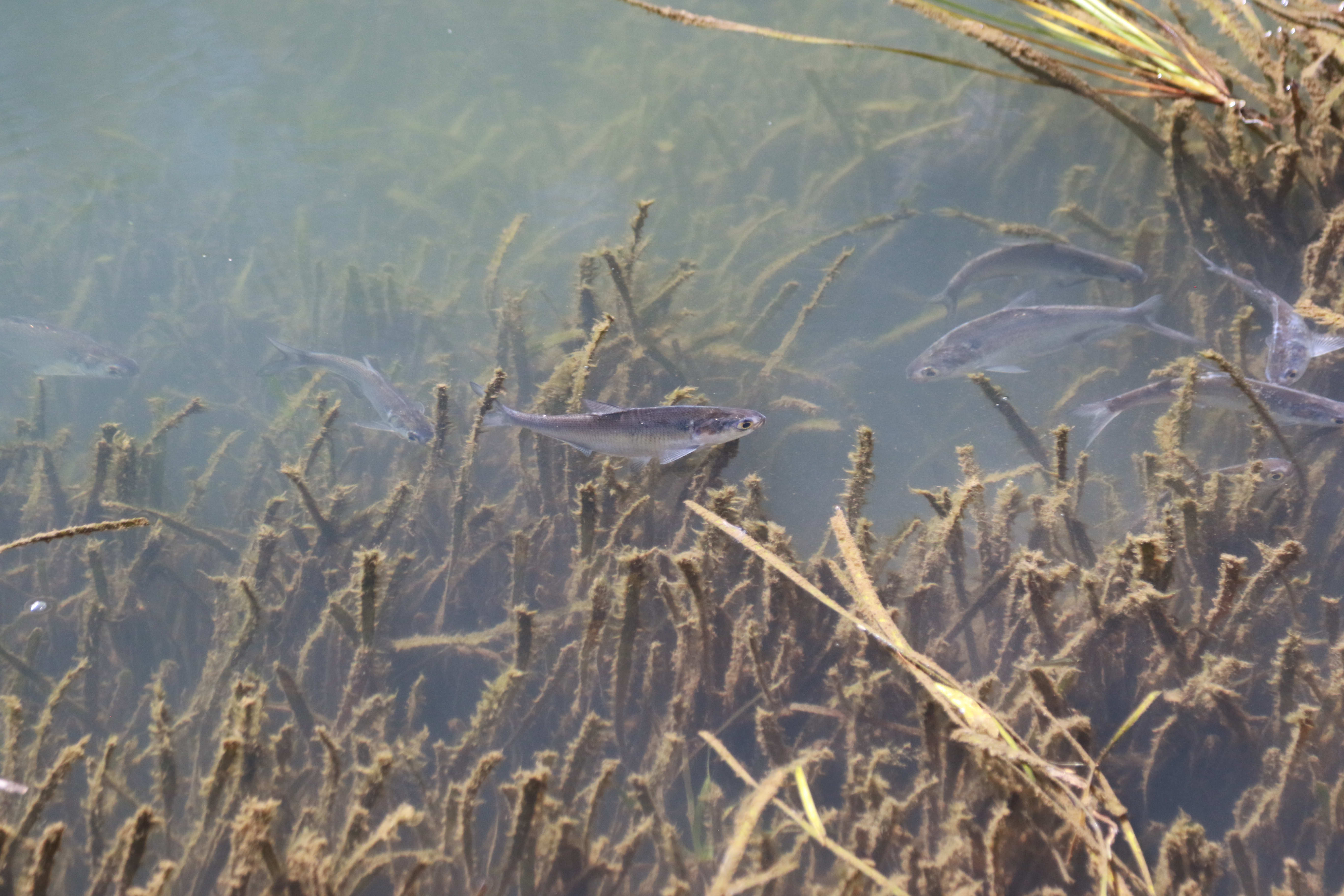
From tournaments to fun fishing, such exhilarating moments typically refer to bass blasting threadfin shad. Boils, busts, surface eruptions and scattering silver shards of 3 to 4 inches.
No doubt, a rational conclusion, because threadfin shad absolutely comprise the visible majority of southern bass feeding action.
Majority. Not totality.
Fact is, some of the sport’s most jaw-dropping moments occur when bass target hefty gizzard shad in the 6-plus-inch range.
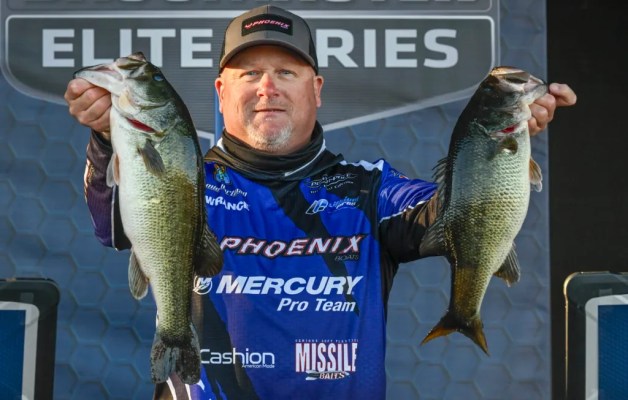
Case in point: The 2021 Guaranteed Rate Bassmaster Elite at Lake Fork saw local pro Lee Livesay win by a 10-pound margin, thanks in large part to his massive Day 4 limit of 42 pounds, 3 ounces. Of his best five, the smallest went 7-6.
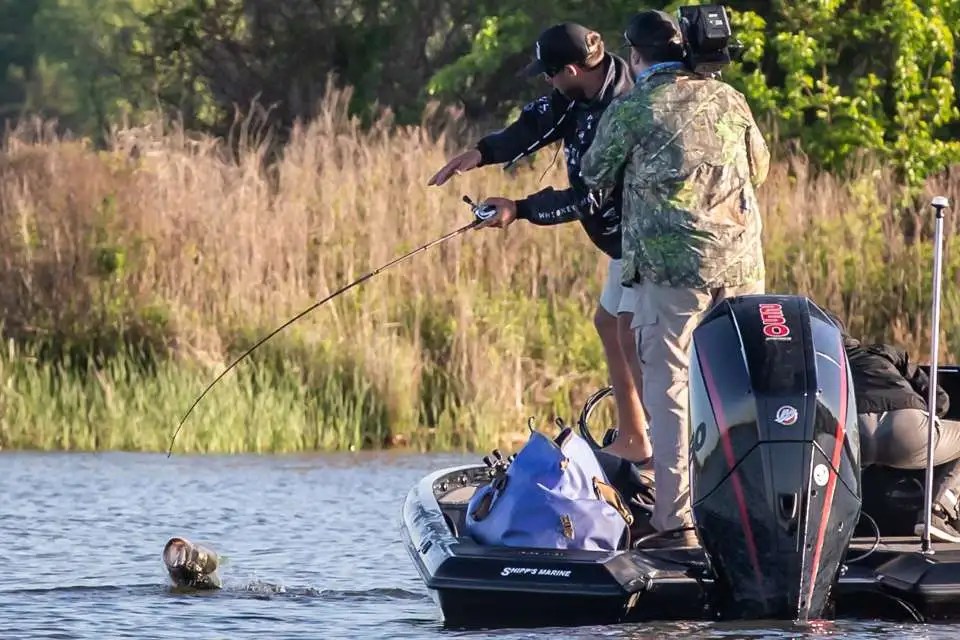
“When you’re targeting the ones eating gizzard shad, you’re targeting a better-than-average quality fish,” Livesay said.
Species snapshot
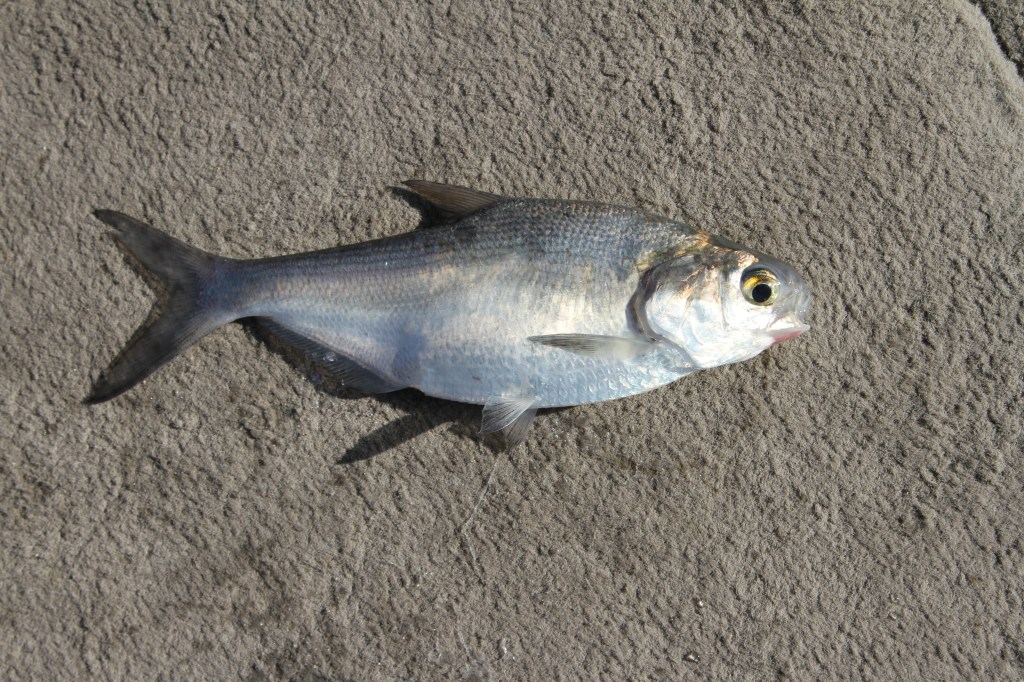
Known to biologists as Dorosoma cepedianum, gizzard shad belong to the herring family, which also includes other common bass forage like the alewife and blueback herring. Gizzards are distinguished by their steep profile, long dorsal fin trailer, often a single dark spot behind the gill covers and a round, blunt snout that overhangs the mouth.
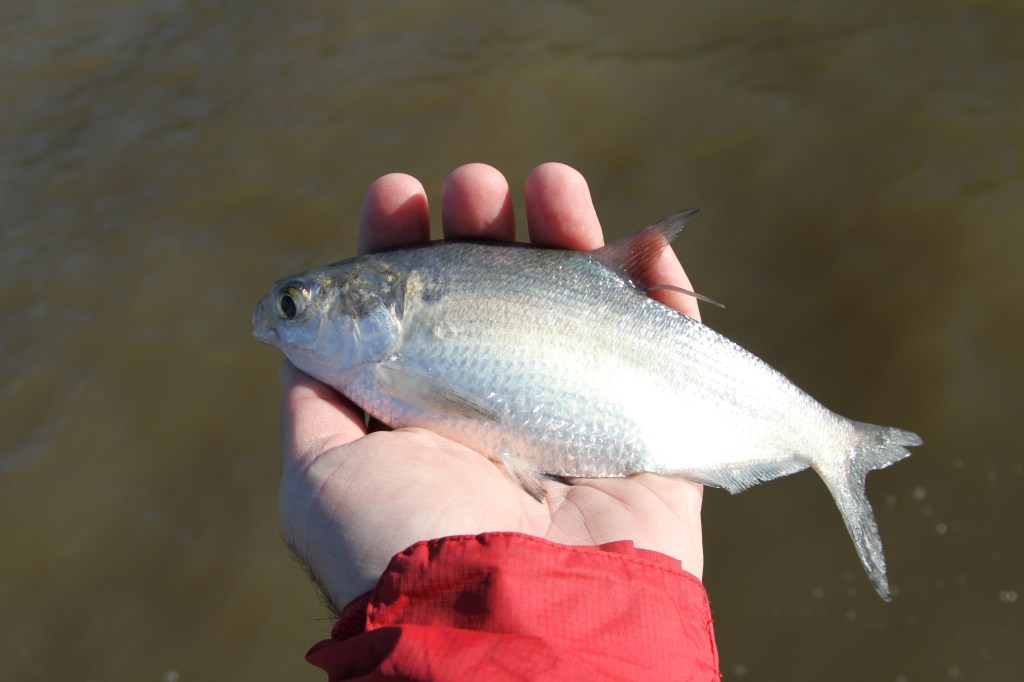
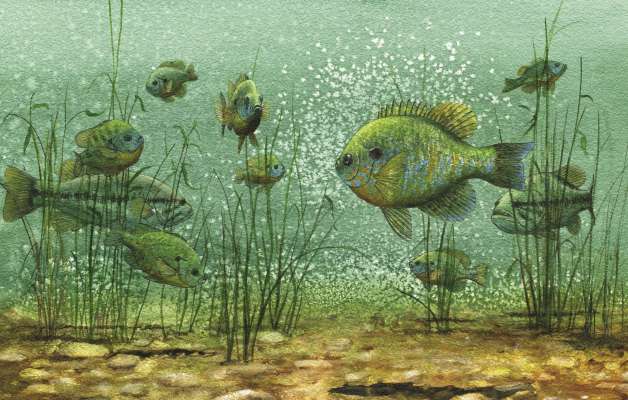
The name refers to a muscular gizzard-like stomach that allows this toothless fish to grind its algae and zooplankton meals. Speaking of meals, gizzards have soft fin rays, so they go down easier than bluegill and other panfish with the stiff fin rays.
While bass typically consume gizzard shad weighing less than a pound, castnet, gigging and rod-and-reel catches can easily double that. In 2022, a South Dakota bow fisherman harvested a massive 5-pound, 4-ounce gizzard from Lake Sharpe.
The U.S. Geological Survey states the gizzard shad range as: Native in the Mississippi, Atlantic and Gulf Slope drainages from Quebec to central North Dakota and New Mexico, and south to central Florida and Mexico. It is unclear whether gizzard shad are native to the southern Great Lakes or gained access through canals and rivers.
According to the USGS, gizzard shad are found in large rivers, reservoirs, lakes, swamps and other freshwater environments with turbidity ranging from clear to silty. These large forage fish prefer quieter open waters, but they’re often found in the strong current of the upper Mississippi River. Adults can survive in brackish and saline waters of estuaries and bays, but their ideal habitat comprises warm, fertile, shallow waters with soft mud bottoms, and high turbidity.
Quality vs. quantity
Livesay has caught plenty of big bass that were chowing on gizzards doing the deed on warm clay points, but he’s quick to note a dependable cold-season strategy.
“Gizzard shad play year-round when you’re looking for the caliber of fish that’s eating them, but around here you’re gonna see your biggest gizzard concentrations from the middle of March until the end of April, because that’s when they’re spawning,” Livesay said. “Wintertime, when the fish are out there deep, you’ll see the threadfin in massive groups, while the gizzards will be in smaller groups.
“They might be in groups of 12 to 15, compared to 12,000 threadfin. You see a lot of them in the wintertime scurrying right on the bottom. If you can ever determine where those gizzard shad want to be routinely, that’s when you can catch those giant bags.”
Unlike the clouds of threadfin that are more easily spotted, the cold-season gizzard gangs can be hit-or-miss, but when he connects, Livesay expects home run potential.
“I see this a lot at Toledo Bend and Sam Rayburn; you’ll say, ‘I pulled up and caught 40 pounds off this (deep) point in 45 minutes, but I’ve been back six more times and I’ve never seen them again,” Livesay said. “That’s those small groups of gizzard shad going up on that point or that hard spot. Those big bass know they’ve been getting there at that same time every day. That’s when you can really catch some big bags of fish off one exact spot.”
Go big or go home
When he’s looking for those isolated wintertime gizzard groupings, Livesay’s all about the cranking; specifically, a 6th Sense Crush 500DD, 400DD or 300DD.
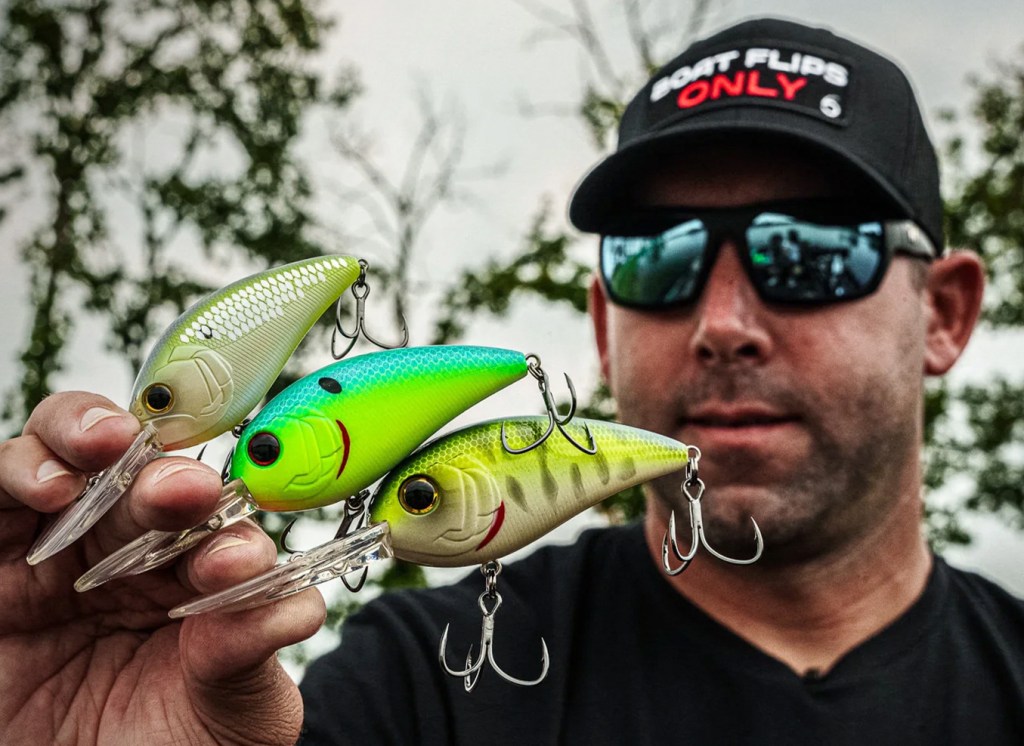
“This time of year, I always have three or four big crankbaits tied on,” he said. “That’s a very good way to intercept the fish looking for those groups of gizzard shad on those hard spots.”
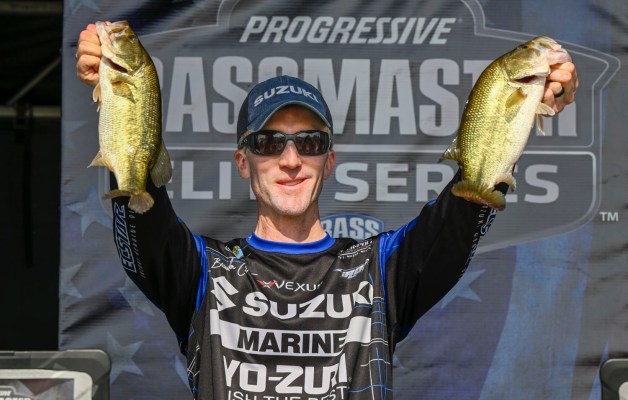
As spring unfolds, and gizzards start moving shallower, working big baits through the mid to upper water column can earn you that arm-stretching bite. Brandon Palaniuk demonstrated this during his win at the 2025 Bassmaster Elite at Lake Okeechobee, where he offered those big Florida bass a sizable menu including a Clutch The Boss glidebait, a SPRO KGB glidebait, a 6 1/3-inch Megabass Kanata jerkbait and a hulking Megabass Big M 4.0.
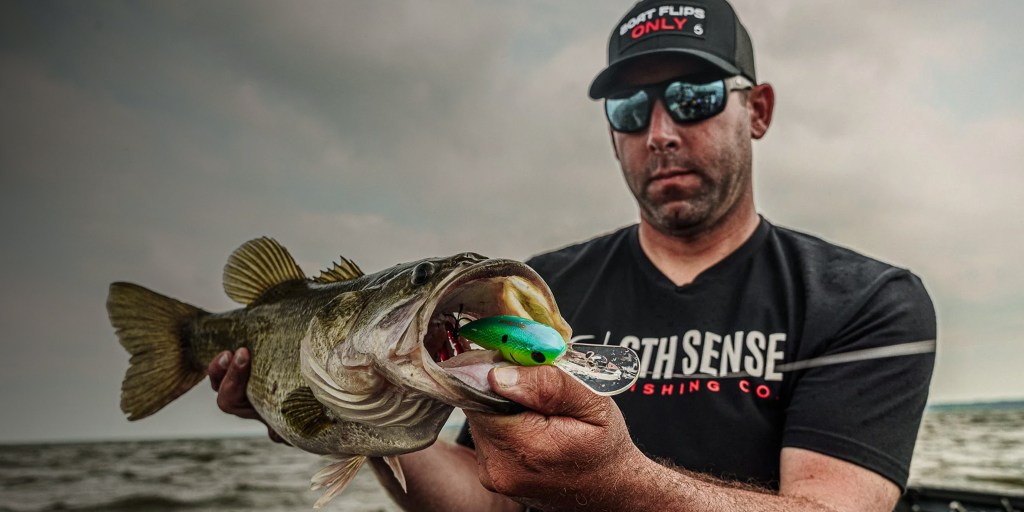
During his first of back-to-back Lake Fork wins (also 2022), Livesay camped in Little Caney Creek and fished secondary points where bass were chasing big gizzards. For that astounding Championship Sunday performance (the third heaviest single-day weight in Bassmaster history), Livesay used a bar extending off a small island to sneak into range of fish schooling on giant shad.
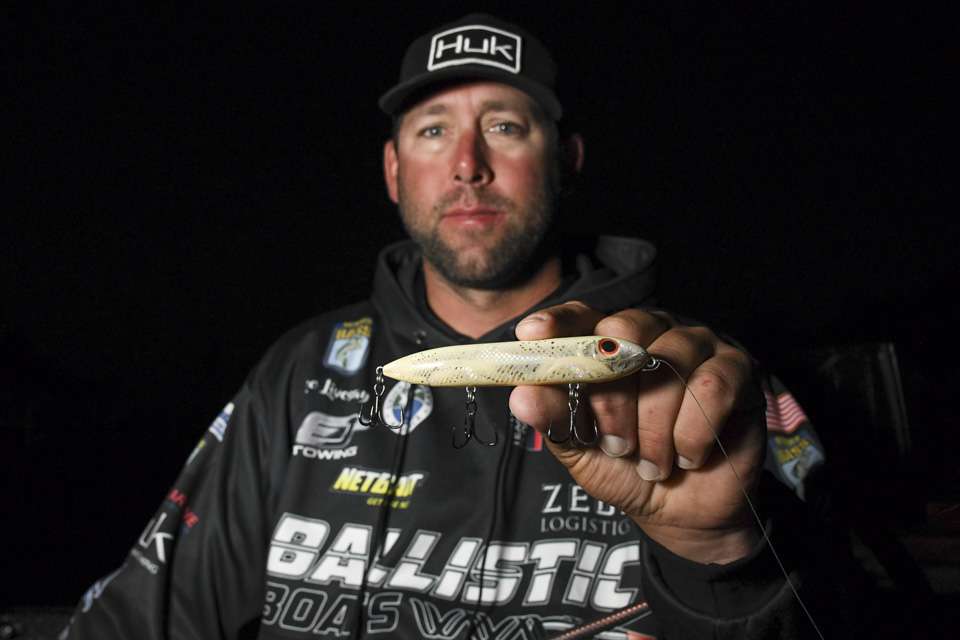
A bone colored 5-inch Heddon Saltwater Spook fooled several fish looking for a belly-filling meal. Having guided Fork for many years, Livesay has caught ‘em on a diverse array of baits, but when he’s looking for the ones looking for the pork chops, modesty stays in the rod locker.
That might mean the 9-inch 6th Sense Draw that Livesay trusts from Lake Fork to Lake Champlain, or it could be a 5.2-inch 6th Sense Flush soft jerkbait he used during his third-place performance at the Bass Pro Shops Bassmaster Classic presented by Under Armour on Lake Ray Roberts. Late in the day, fitting a 3/8-ounce ChatterBait with the big trailer allowed Livesay to rip across dense milfoil to tempt big bass targeting gizzards.
Elsewhere, when summer’s swelter finds big fish holding off the deep drops of long points, Chris Zaldain’s keen on sending a big gizzard-imitating flutter spoon across their radar. Heat-weary gizzards often dash across these areas, so a big, shimmering profile rings the dinner bell.
Step up
Understandably, ego often drives us to seek the biggest bite a fishery offers, but for competitive anglers, time management demands strategic selection. There are limit fish and there are kicker fish and both can play a role in the ultimate objective.
Nevertheless, for the fun fishermen, or the tournament angler with a solid limit, there comes a time when you set your sights on finding that day-maker.
For trophies, for bragging rights, for personal fulfillment, a small minnow bait might tempt a legit giant that’s looking for a light snack. An easy meal that requires minimal effort — just the thing for a lethargic bass toughing out the winter or summer extremes.
Nothing wrong with that, but a more aggressive presentation designed to tempt something that can shove half a pound of bulky baitfish in their mouth might get you there faster.