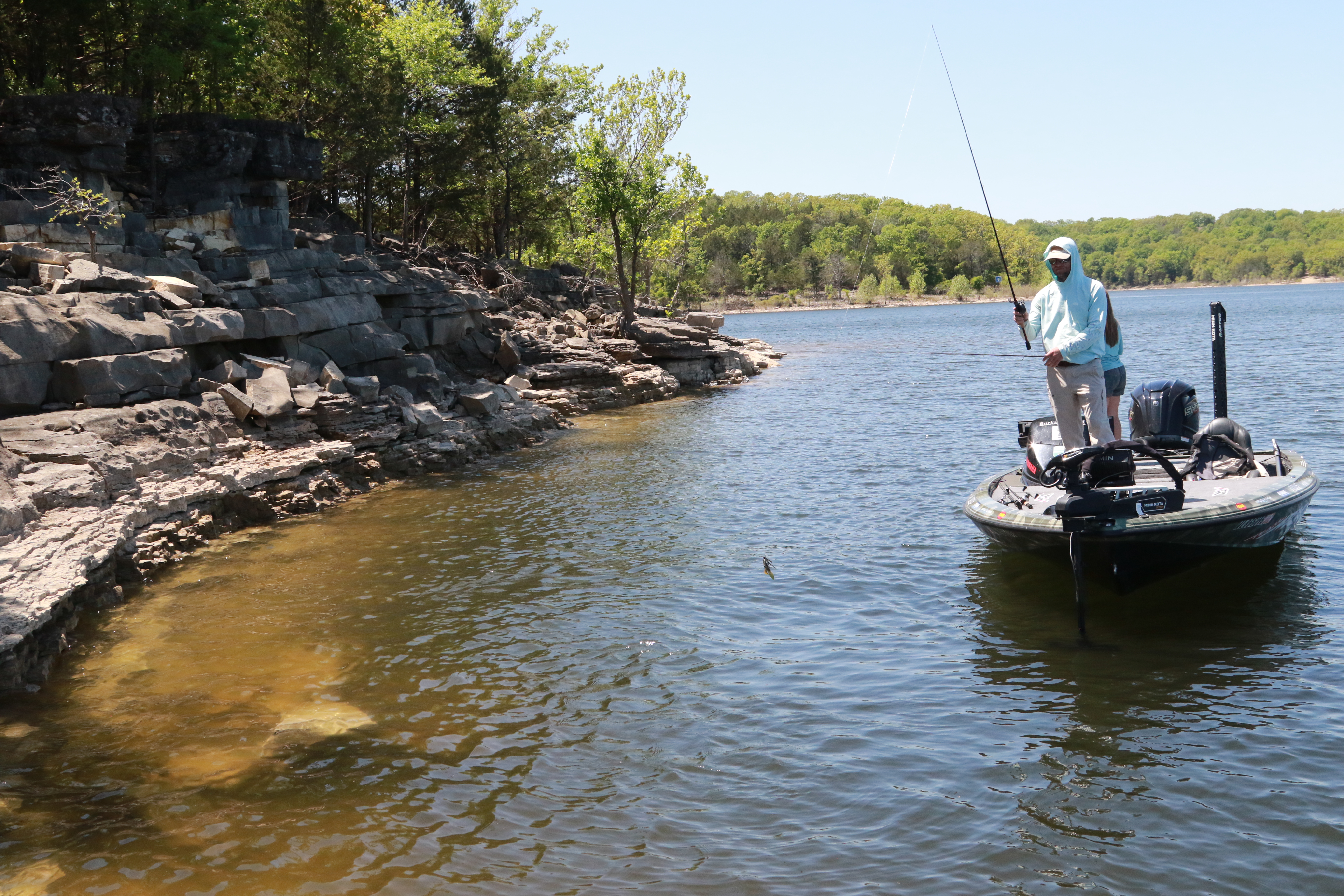
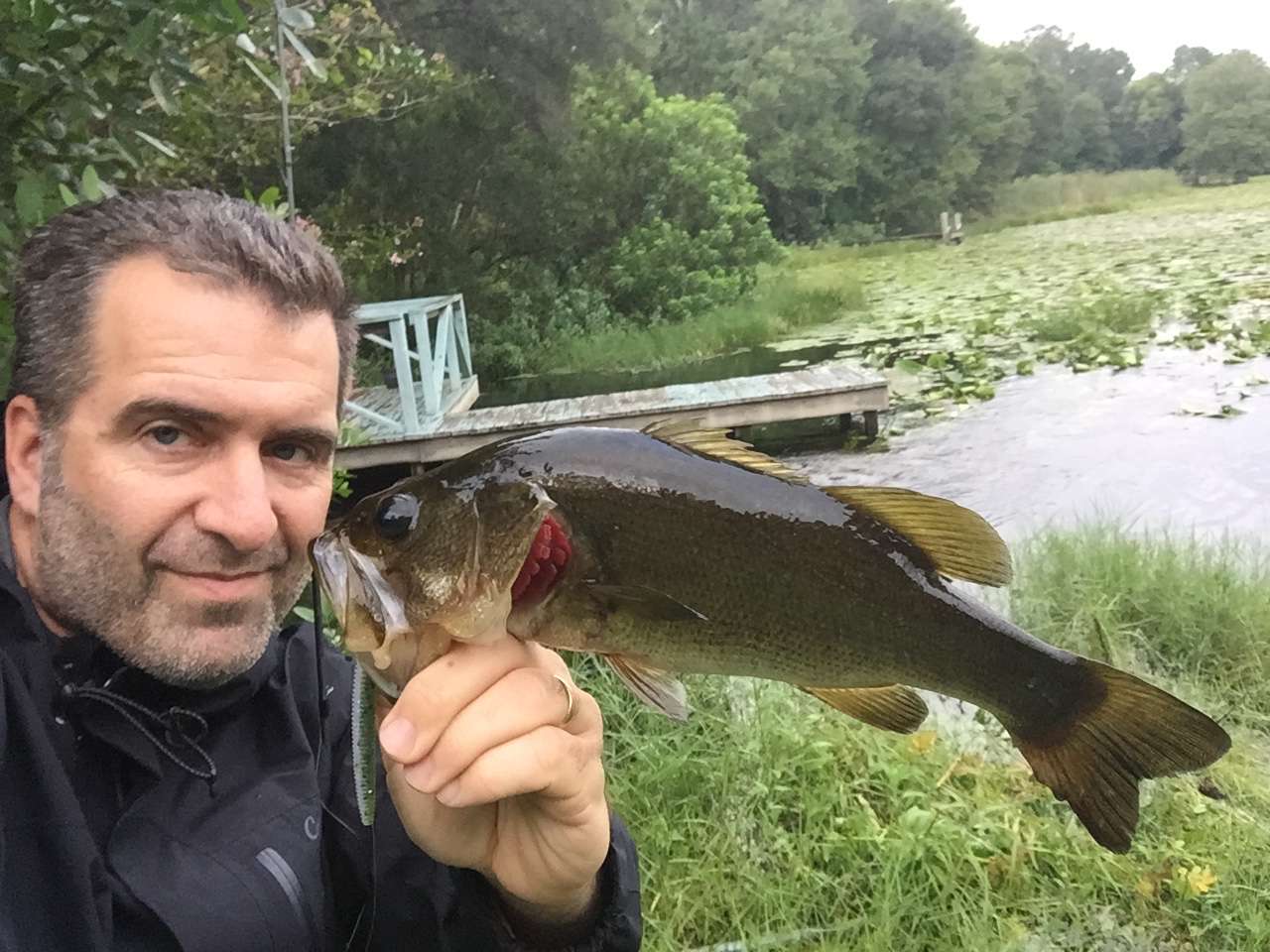
When Wes Logan says he can catch bass on a southern river system every month of the year, he’s not bluffing.
Actually, he is bluffing, but let’s not become mired in wordplay. The fact is, bluffs offer the year-round opportunity to which Logan refers.
As the Progressive Bassmaster Elite Series pro from Springville, Ala., notes, these mostly vertical rock walls that taper toward creeks and pockets play a natural migration role during the spawning season. But even before and after that deal is done, bluffs present a dependable habitat feature that serves the fish’s seasonal needs.
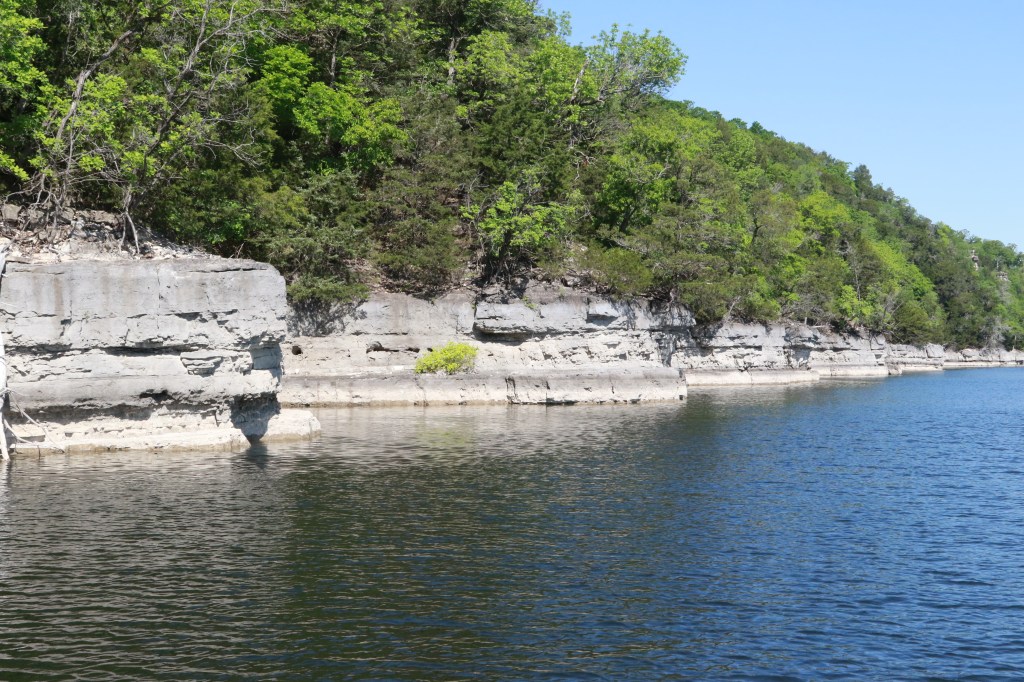
As Logan explained, bluffs offer feeding opportunities by congregating baitfish, bream and crawfish at different levels, while also addressing the creature comforts of shade in the summer months and warmth during the cold season. Dialing in the right scenarios, he said, typically starts with seasonality.
“Your bluff ends are gonna be the main deal during the spring, because you have fish coming and going for the spawn,” Logan said. “A bluff that’s positioned on a main river stretch with no backwaters around will come into play a lot more in the fall, going into winter on a lake with a drawdown.
“Generally speaking, you want to see where a bluff sets up. Depending on what time of year it is to determine how good it could be.”
Adding a clarifying point, Logan notes that proximity to a river channel bend and its deeper water amplifies a bluff’s appeal during drought scenarios.
The variables
Now, if you think a bluff is a bluff, Logan suggests a closer inspection. Formed by thousands of years of river erosion, and in some cases, more recent manmade impacts for navigational, flood control and hydroelectric objectives, bluffs are as unique as your fingerprints.
Generally distinguished as sheer and stacked rock forms, even the blandest of bluffs offer little uniformity. From current-breaking indentions, to points and protrusions, to fallen trees and blown-in wood, character and fish-friendly features await those willing to invest a thorough examination.
“It’s hard to tell what you’re dealing with just looking above water level,” Logan said. “You have to get up close and put your eyes on the bluff and fish it some to see how it lies out. It may look super deep, and then you get up there, and it’s only shelf rock in 10-12 feet of water.
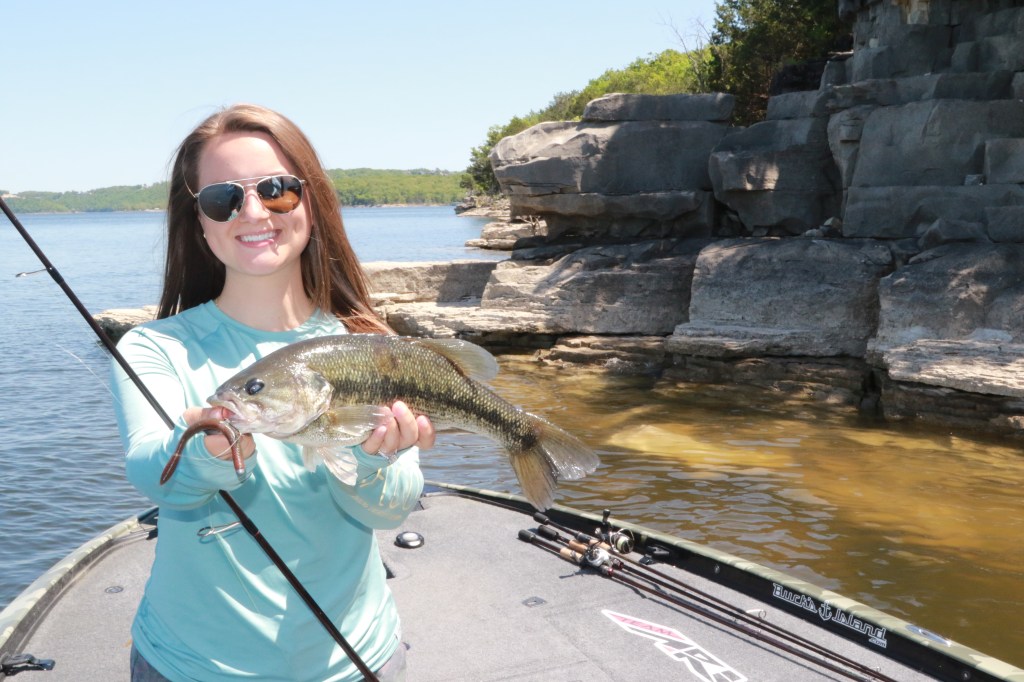
“It’s scenario based, but I normally like the stair-step type or a broken-type bluff. Maybe there’s some cracks in it, or if some rocks have fallen off from years of erosion, just something to make it a little different.”
Even on what he’d call a sheer bluff, Logan’s alert for the irregularities that are all but guaranteed. Unlike the occasional uniformity found on a bedrock cliff, Logan said a bluff’s not gonna have a perfect “concrete wall” kinda finish.
“The more detail a bluff has, the more areas you have to fish,” he said. “It just gives the fish more options for where they set up. If there’s current present, a stair step bluff gives them more stuff they can get behind; if there’s less current, they can move around and suspend on stuff. More ambush points, basically.”
Noting that the more detailed bluffs tend to attract greater numbers of fish, Logan said he’s seen sheer bluffs excel in a winter prespawn scenario. In this deal, the fish appreciate the ability to quickly move shallower or deeper without venturing far from the heat-holding bluff.
“If it’s a highland reservoir with a lot of smallmouth and spotted bass present, a lot of fish can get caught on those straight up and down bluffs,” Logan said. “What I’ve seen is that big balls of bait will use those deeper places on those sheer bluffs and the fish will suspend under them.
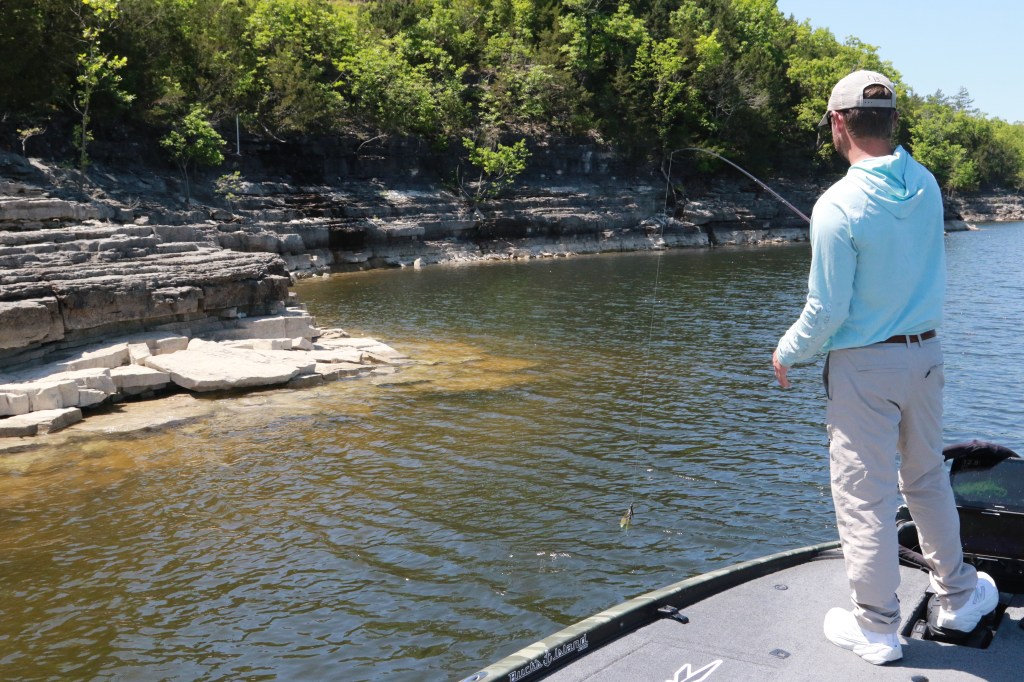
“It’s kinda like what the fish do in the middle of the lake, but instead of having to be way off the bank, they can be on something. That’s what happens in cold water situations when the fish want to stay close to that warmer rock.”
Seasonal setup
Looking at a year’s worth of bluff potential, Logan breaks down his top techniques, starting with the hotter months.
Summer: A 5/8-ounce Ark flipping jig with a Zoom Big Salty chunk is ideal.
“If you get on a bluff with a shelf where you have a really hard shade line, a lot of bluegill and baitfish get in that cooler water and the fish will set up beneath them,” Logan said. “That jig will fall down through them and get you some reaction bites.
“With that big profile in the summertime with the water being so hot, you have a better chance, in my opinion, to get a bigger bite just because that fish doesn’t want to exert a lot of energy.”
Fall: Even though opportunistic bass will still eat any crawfish or bream they can catch, autumn shifts more of their attention to shad. Here, Logan reaches for a jerkbait, spinnerbait or an Alabama rig.
“If they’re suspending, and I get dialed in on the exact depth, I’ll parallel those places with a crankbait (of the appropriate running depth).”
Winter: A jerkbait or a small swimbait on a 1/4-ounce ball head jig does most of Logan’s cold-season bluff work, but he’ll keep that heft jig handy if the opportunity for a big bite arises.
Spring: When prespawners start staging on those bluff ends, Logan sticks with the same basic tools he used for winter fishing, but he’ll swap his shad colors for the reds and oranges that mimic crawfish. On the jig trailer, dying the tips orange can be a deal closer.
Bluff bits
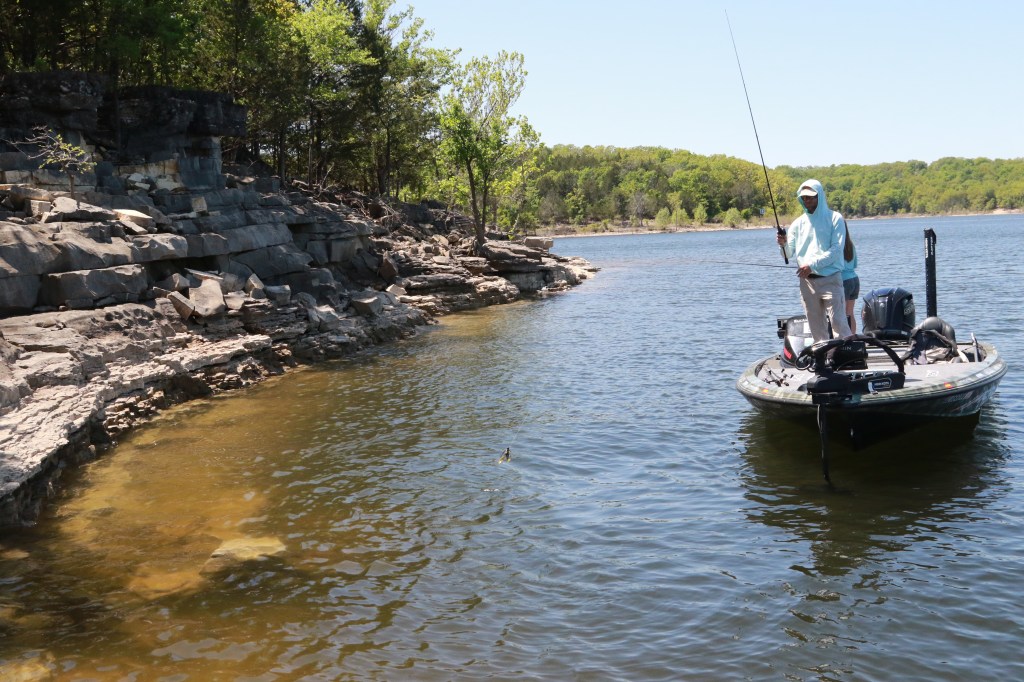
When Logan’s fishing his way down a bluff, he’ll pay a little more attention to any of the random sweet spots he may encounter. Bluff ends, he said, typically represent the highest percentage areas, as they comprise the type of transition zone that fish favor.
“A sneaky, less obvious spot is where the bluff has slid off, or the actual bottom comes up higher,” Logan said. “You’ll have a depth change that you can’t really see, or your mapping doesn’t really show. Really, the only way to find those is to actually fish down the bluff.
“You’ll have a lot of anglers that will run the bluff’s beginning, run to the end and go on to the next one, but if you can find an irregularity halfway down a bluff bank, normally, that can be really special.”
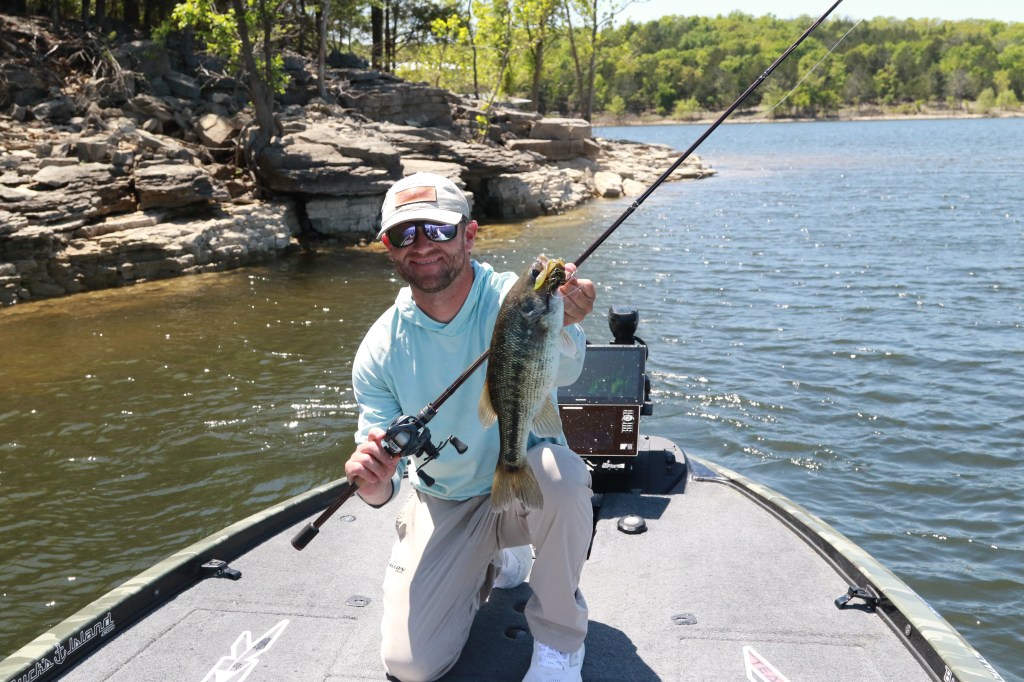
Logan said he finds a lot of his bluff sweet spots on 2D sonar. Forward-facing sonar can also prove helpful, but as he points out, fish holding close to the structure often hide amid the bluff’s bright return.
In any case, Logan offers this encouragement: “Don’t judge a whole body of water just by fishing one or two bluffs. They’re not all created the same. Some may be good at different times, so if you find a good looking bluff, try it at different times, because fish always use them.”