
I was watching the first day of competition in the Bassmaster Elite at the St. Lawrence River, and it made me realize how far we’ve come with boating equipment.
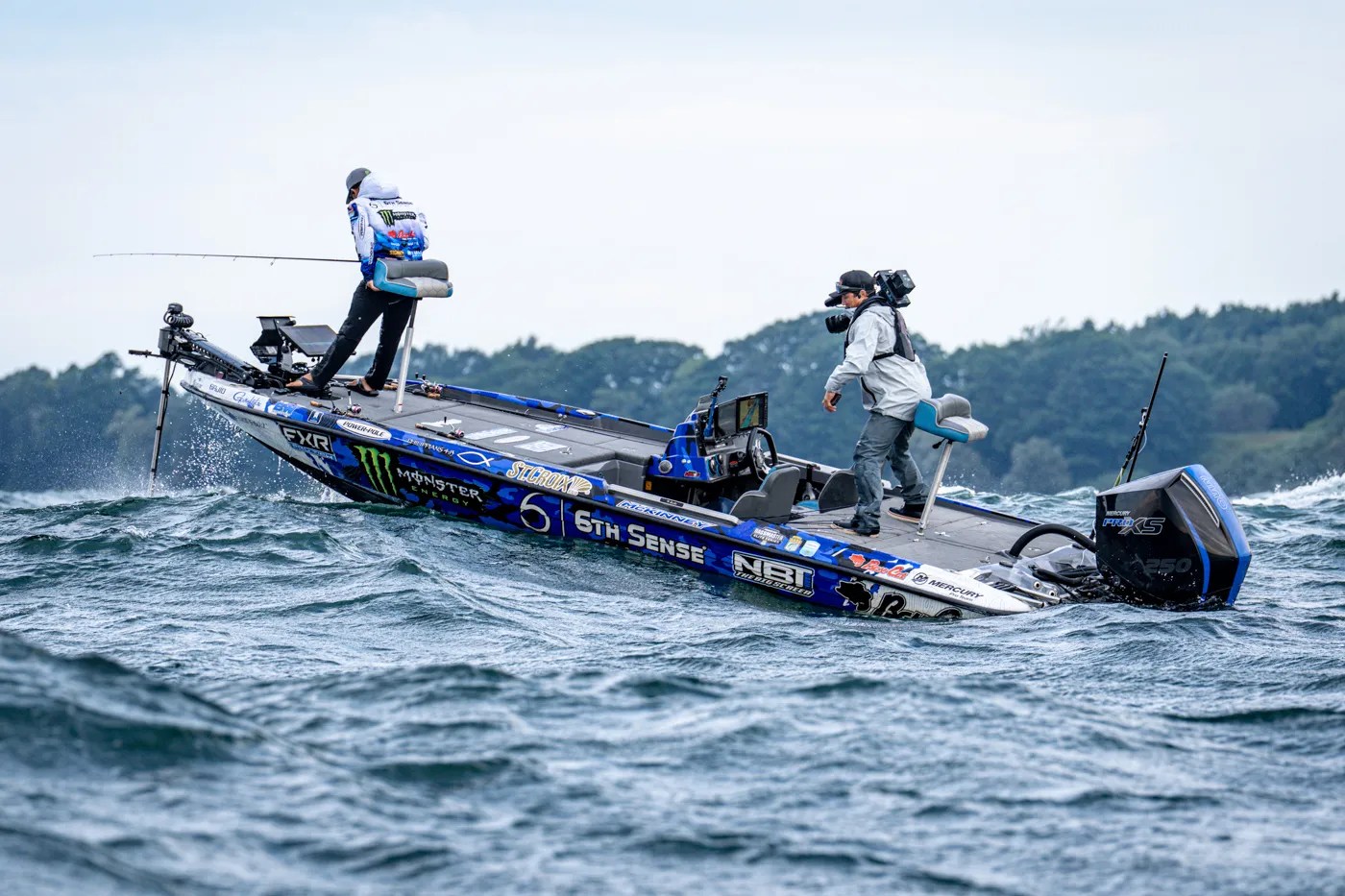
Several anglers ran as far as 15 to 20 miles out into Lake Ontario in some brutal conditions. Waves, according to Bassmaster LIVE, were 6 to 8 feet.
Make no mistake about it; those guys are pros. That’s no place for a novice, regardless of how big and good your equipment is, when conditions are that bad.
Watching this reminds me of my first time on the St. Lawrence River in a B.A.S.S. tournament in 1985. I was in a 19-foot Stratos Boat with a 150 Mariner. During practice, I ran out to the Duck Islands on Lake Ontario. I had no business going out there, but I was young and dumb, as they say, and was bound to go. Keep in mind that we didn’t have mapping or GPS on our boats. I had a paper map and compass, so I was a bit uncertain about how to get there.
As I recall, it was OK going out. Coming back was a different story. It was bad, rough and, to be honest, scary for a farm kid from Missouri who didn’t have a lot of experience in big water. Good friend and veteran pro Chet Douthit had gone out there as well and helped guide me back.
I drew Paul Elias for the first day of the tournament, and back then, you had to decide whose boat you would take. I was a rookie, so I naturally deferred to Paul, the established pro.
We headed to Chaumont Bay, but Paul had not made the run in practice. Paul had a compass on the console, and my job was to hold the map. When we got into the lake, Paul lined up on what he thought was Stoney Point. Turned out it was Big Gallo Island. It cost us about an hour of fishing time. We still laugh about that!
That wouldn’t happen today. The GPS and mapping feature on our electronics, coupled with sonar, not only keeps us on the right route but helps prevent anglers from running aground.
The second day of competition, it got even rougher on the lake, so my partner and I stayed in the river. Several guys ran to Chaumont Bay and some cut Stoney Point too close on the way back. They hit bottom in the big 4- to 6-foot waves and didn’t make it back.
Davy Hite told me about one of those tournaments in 1995 when he was in contention to win with Kevin VanDam and Clark Wendlandt. Davy ran to Chaumont Bay knowing it was going to be rough. On the way back, waves broke his windshield, destroyed his electronics, knocked the rub rail partially off the boat and nearly snapped his trolling motor off. But he made it back and finished second to Kevin.
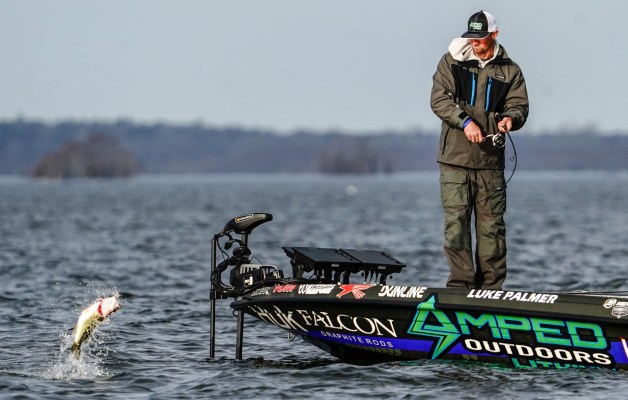
Fast-forward to the boats Elite pros now use at Lake Ontario. Trolling motors are 36 volts, way more powerful than the 24-volt we had. Spot Lock makes it easier to fish a spot, whereas back then, we had to drift and drag a tube bait.
Our batteries are stronger and run all day, our boats and motors are bigger. Fuel tanks are bigger, and fuel consumption is much better. Livewells are bigger, and we’ve added more pumps to protect the bass.
And without question, construction of boats is far superior, and motors are far more reliable. Hull designs are much better, and the composite materials we all use have been much improved over the past 30 to 40 years.
Many of these equipment improvements were born from what we have learned from those early Bassmaster tournament experiences. The updates enabled us to help anglers get out there and back safely.