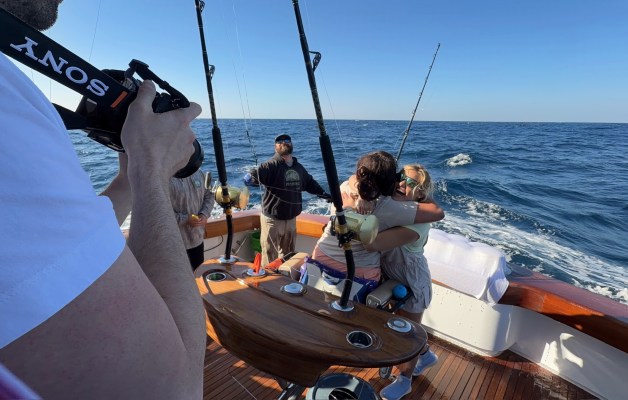
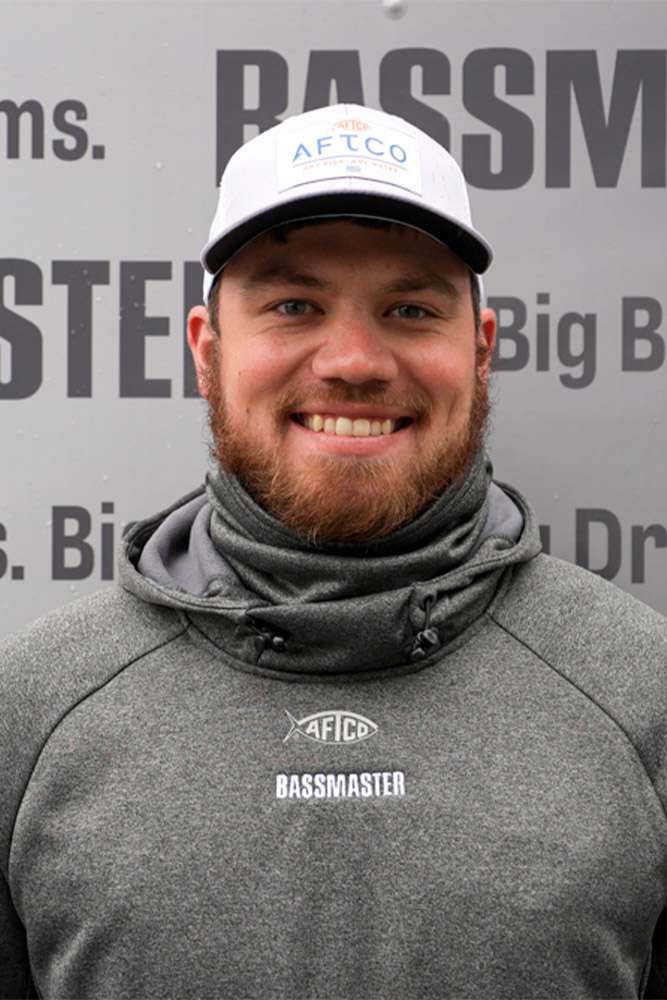
When she was 11 years old, Briana Tucker went bass fishing for the first time. Her grandpa took her to a Fishers of Men tournament, and in her first taste of the tournament world, Tucker landed a 7-pound bucketmouth that anchored a winning bag.
That $500 prize was enough to spark Tucker’s passion for tournament fishing. Her resume quickly ballooned as she and partner Mitchell Gowan won Bassmaster’s first-ever High School Series event in 2013 on her home lake in Alabama, Wheeler Lake.
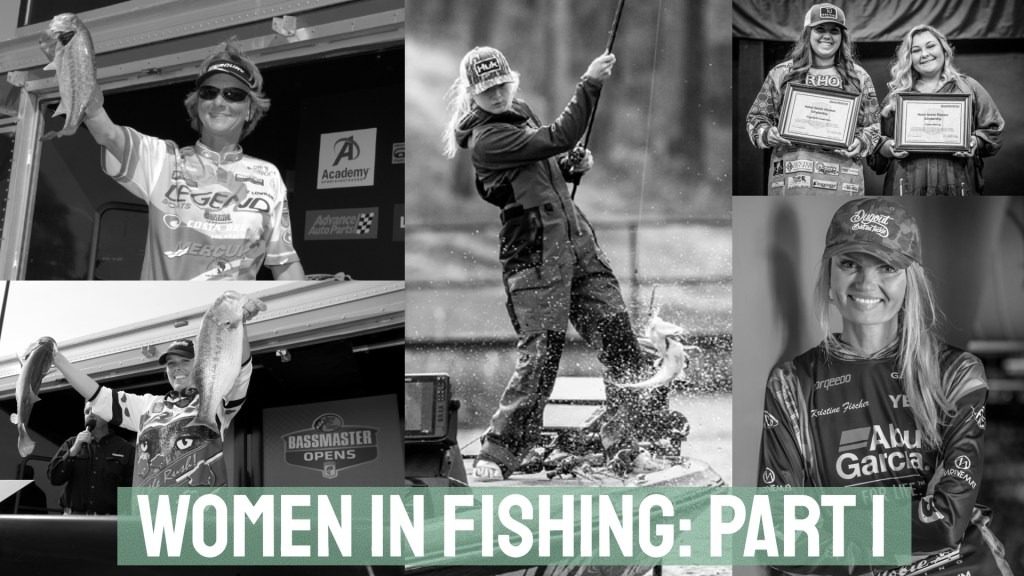
Women in fishing: Part 1 | Part 2 | Part 3
Then, as a high school senior, Tucker won the Timmy Horton High School Challenge on Pickwick Lake as a solo angler, winning $4,500 in scholarship money.
Tucker, who fished a single division of the St. Croix Bassmaster Opens in 2023 as a 24-year-old, has competed at almost every level an angler can experience. From high school, to a year of college fishing at Bryan College, to the grassroots trails around northern Alabama and now the Opens and Toyota Series events, she can’t help but wonder: where are the other ladies?
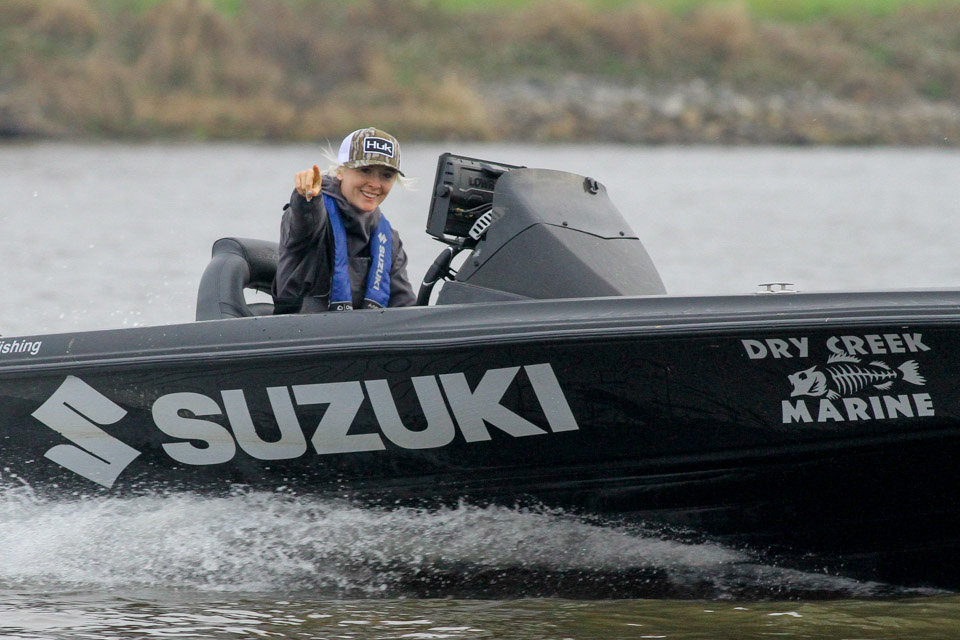
“I definitely questioned why there weren’t more girls around,” she said. “I had such a passion for it and I was like, ‘Am I weird for having this crazy passion for fishing?’ Because it didn’t seem like there was anyone else like me that did and it made it hard having female friends.”
More and more women are fishing recreationally. In fact, women now account for 37% of anglers in the U.S. according to the Special Report on Fishing announced at ICAST 2022 by the Recreational Boating and Fishing Foundation. In 2021, 19.4 million women went fishing, an increase of 8% since 2019.
This includes all recreational angling, from saltwater to freshwater and across all species.
In the bass tournament world, however, that growth has materialized at a much slower rate. A female angler has yet to reach the top level of B.A.S.S. competition and it has now been 13 years since Pam Martin-Wells made history as the first woman to make the cut to fish the final day of the Bassmaster Classic.
At the pro level of bass boat fishing, there are only a handful of female anglers who compete in the Bassmaster Opens as boaters consistently. Several more have joined the co-angler ranks. That is similar to the Toyota Series and there has only been one female angler compete in the newly formed National Professional Fishing League.
“Three years ago, there were three of us on the boater side (in the Opens). It will be one, sometimes two, sometimes three. But even 10 years ago, it wasn’t more than five,” long-time Opens pro Christie Bradley said.
So why are there so few female tournament anglers? It’s a complicated and layered question with no one right answer.
“It comes down to numbers,” Bradley explained. “I think there are a lot of talented, really solid female anglers who don’t give a damn about competing. The population of the good male anglers is much greater. It is percentages. You know when you meet someone and they are wide open and all about it? I think you see that way more from a young man than a young girl.
The majority of girls who pick up a fishing rod are afraid to mess up and embarrass themselves — and that sucks. People like me are like, ‘I’m going to figure this out and I don’t care about looking stupid.’ I don’t remember a moment in my life where I was that timid and that is an important aspect in fishing.”
Bradley, who was an IT systems engineer for many years at GEICO said it also boils down to interest and maintaining the interest. She compares it to women coming up in STEM (science, technology, engineering and mathematics).

“Girls are influenced by their peers. If there is a girl who likes fishing, the chances of her having anyone in her social network that is also into it is low. Then they get drawn into other things. It is like a funnel,” Bradley said. “It is similar to women in STEM. You have 20% of college kids who are in STEM who are female and of those, some of them filter out and don’t stick with it through college and some get married and have kids and shift focus to other things.”
After her meteoric rise to kayak fishing stardom, Kristine Fischer knows how difficult it is for anyone to make it in the tournament world.
It takes a special type of person, someone motivated and driven. In other industries, she knows there are women blazing trails and knocking down barriers. But in the tournament bass world, she has only met and seen a select few who have the cutthroat mentality needed to survive as a touring pro.
“You have to be wired a certain way to be able to fish tournaments and continue to fish tournaments. It is not for everybody,” Fischer said. “Fishing is freaking brutal. It is emotionally, physically and mentally challenging. It is very easy to quit and the fear and intimidation will keep women from doing it.
“I think that is the biggest barrier that is keeping women from doing it. That fear is simply because, historically, women haven’t done it. It is new and scary and it hasn’t been done and maybe women have different goals.
“A woman who is cutthroat competitive, driven to be successful and defy the stereotypes —that is a special breed of person, let alone woman, right there. In other careers, the healthcare industry, MMA, there are women that are wired like that. I wonder what it is going to take to have that on the fishing side.”
Some of it in Tucker’s mind may come down to biology. Not just that women are the bearers of children and those women who choose to have children cannot easily make their way to the lake for a tournament, but also the differences in the male and female brain.
“It almost makes you wonder if there is something as far as men and women having different instincts. It could be a possibility,” Tucker said. “Historically, men are hunters and God gave men instincts to be hunters and providers for the family. I’ve wondered to myself, can men make decisions on the water that don’t come naturally to women as well? Is it somehow the way our brains are wired and more difficult for women to get in touch with that (instinct)?”
But the question of why there aren’t as many female tournament anglers can be a particularly confusing one when considering that at one point, Bassin’ Gals was drawing over 200 boats a tournament for their women’s-only trail between 1976 and the mid 1990s, and the Women’s Bassmaster Tour drew 165 boats in its first season in 2006.
“Nowadays people don’t realize how big Bassin’ Gals was,” Martin-Wells said. “Some things happened and they got out of it. With each progressing circuit that tried to come around specifically for women, it got harder and harder for them to get sponsorship and backing because it got harder and harder to get the payout where more and more people would fish.”
Now, there is the Lady Bass Angler Association, a women’s-only tournament trail that had 30 boaters competing for their Angler of the Year title in 2022.
“LBAA is a great circuit,” Martin-Wells, a LBAA tournament winner, said. “It isn’t huge by any means, but they struggle for the bigger name sponsors. Honestly, since I’ve done this, the biggest hurdle for the women has been sponsorship backing.”
Martin-Wells has maintained for years that if she, or many of the other lady anglers she fished with on the Women’s Tour had received the same opportunities many male anglers received, largely in the sponsorship game, they could have made some noise at the top level of the sport.
In her time fishing the WBT, Martin-Wells notched a remarkable 19 Top 10s in 23 total events and won four times.
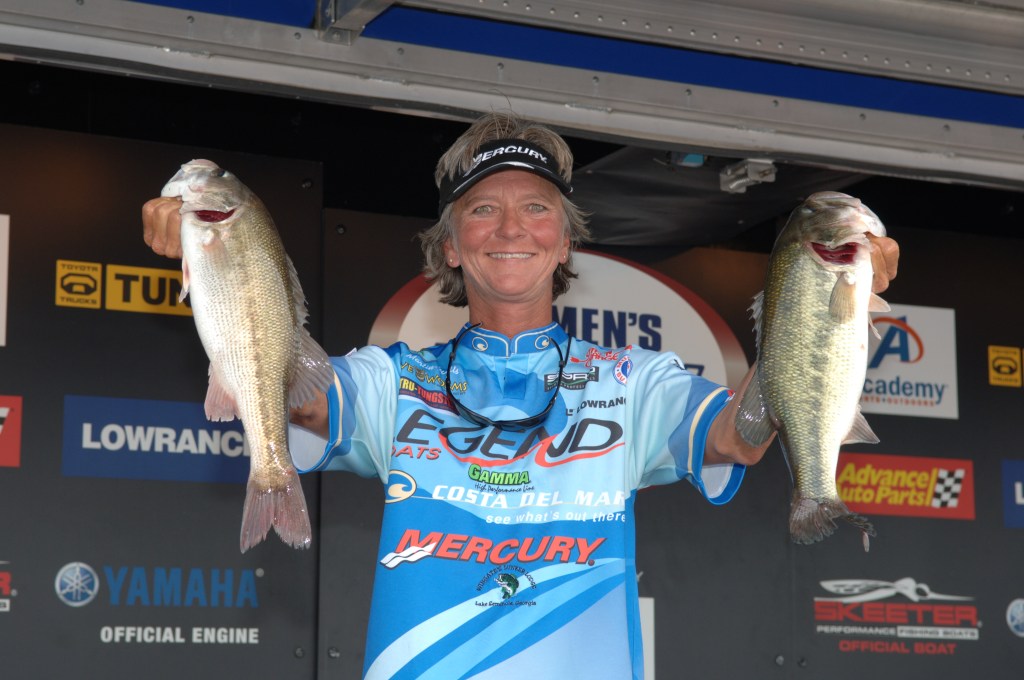
Following in Kim Bain-Moore’s footsteps, Martin-Wells qualified for the 2010 Bassmaster Classic through the WBT and put together an impressive 22nd-place finish.
With a solid finish against the top male anglers in the world, conventional wisdom might lead one to believe sponsors and opportunities would have come flooding in for Martin-Wells. That was not the case.
“As far as me personally, it didn’t have a great impact,” she explained. “It didn’t surprise me either. I have said from the beginning that a bass doesn’t know if it is a male or female at the end of the line so that shouldn’t matter. But somewhere down the line, to someone it mattered.
“It didn’t surprise me that I didn’t get some hefty contract from it. It wasn’t typical for that time. Now if it happened today, there is a big chance someone could benefit from it greatly. For whatever reason, the mindset just wasn’t there and I don’t have the answer to that.”
For Fischer, she didn’t know there were stereotypes to be followed in the outdoors as a kid. Both of her parents and grandparents fished and nearly every waking moment was spent outdoors in some way in her hometown of Weeping Water, Neb.
“I didn’t know it wasn’t common for a young girl to fish,” she said. “I didn’t have a TV so I didn’t watch any of The Bassmasters and didn’t see that it was all men. All I knew was that my family fished. My mom did, my grandma did it. For me, I love this and this is what everyone does. Starting at home is huge. Just getting kids out there and seeing if it sticks.
“(But) since the beginning of time it was boys like this and girls like this — and it has taken a while for women to delve off of that straight-and-narrow path of what women are supposed to do. The outdoors is accommodating to everybody.”
Unfortunately, many girls throughout history did not have the same family support when it comes to bass fishing. Stereotypically, the boys did the hunting and fishing with the father, so girls didn’t always realize a potential passion early in life. That is starting to change.
“One thing I think that is a sensitive topic is, this starts at home,” Bradley said. “I think there are a lot of dads and moms who are getting a lot better at being genuine about encouraging girls that they can do anything. But actions speak louder than words. Guys tend to take their sons fishing.”
That encouragement from home becomes more important as they progress through the sport. High school fishing has been a catalyst for getting girls fishing with their parents as well.
“There are so many young ladies who are fishing in college and high school now and getting more and more involved,” Martin-Wells said. “The beauty of these events is there are a lot of dads who are taking their daughters fishing and being boat captains, whereas before this took place, they might have missed that totally. They might have missed that opportunity to spend time with their child in that way. It’s getting more parents involved with their child.”
Having parents and eventually friends and spouses who support a passion will only keep women invested in the sport. Martin-Wells knows it wouldn’t have been possible for her to compete without the support of her family.
She also points out that many of the male anglers on tour now rely heavily on their spouses and their families, whether that is for scheduling, communicating with sponsors or just simply for organization and support.
“I was watching a video where they were going through an angler’s man cave and every other word was, ‘My wife takes care of this and sets all the scheduling.’ For a woman to get out there and compete the same way, we have to do all the scheduling, organizing. I’m not taking that away from a lot of the husbands, because I have the best husband in the world,” she said.
“It’s not only about taking girls fishing. It’s about intentionally teaching and showing girls the ropes of every aspect of a day on the lake.”
Fischer chose kayak fishing because of the mechanical hurdles that come with a bass boat. It is one of the reasons she hasn’t yet made a run at a Bassmaster Elite Series bid and she thinks it is a major factor for why some girls don’t continue in the sport.
Dealing with mechanical issues on the boat, on top of hauling a boat from town to town, can be a lot to manage, especially for someone who hasn’t done it since they could legally drive.
“You don’t see a lot of women own boats and that is a huge deal,” Fischer said. “That is my only hesitation for not jumping in the Opens. I don’t have experience in a bass boat. In a kayak, there is less that can go wrong and it is affordable. I don’t feel super comfortable operating a bass boat.
“That is another thing for women. For dads out there, have the girls learn how to back a trailer and if things go wrong in the boat, show them what to look for and how to navigate and not just have the boys do it. They always have the boys do that stuff with the boat. It always seems to be the guys who are handling the boat. Guys have been groomed to do it.”