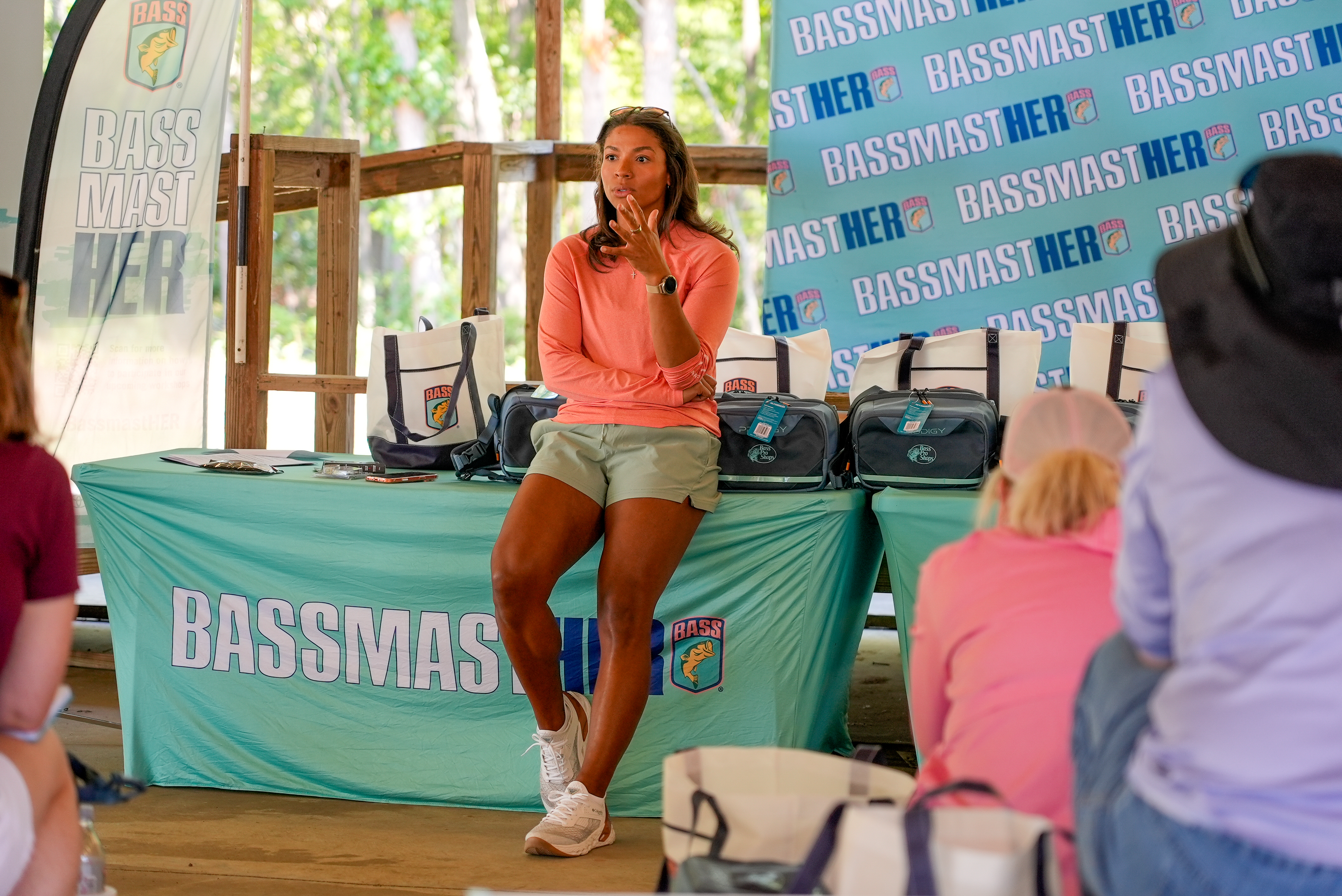

Pond bass don’t just disappear. You simply have to be efficient. When I roll up to a new pond, I’m running a quick system that helps me find fish fast, especially when I don’t have hours to figure it out.
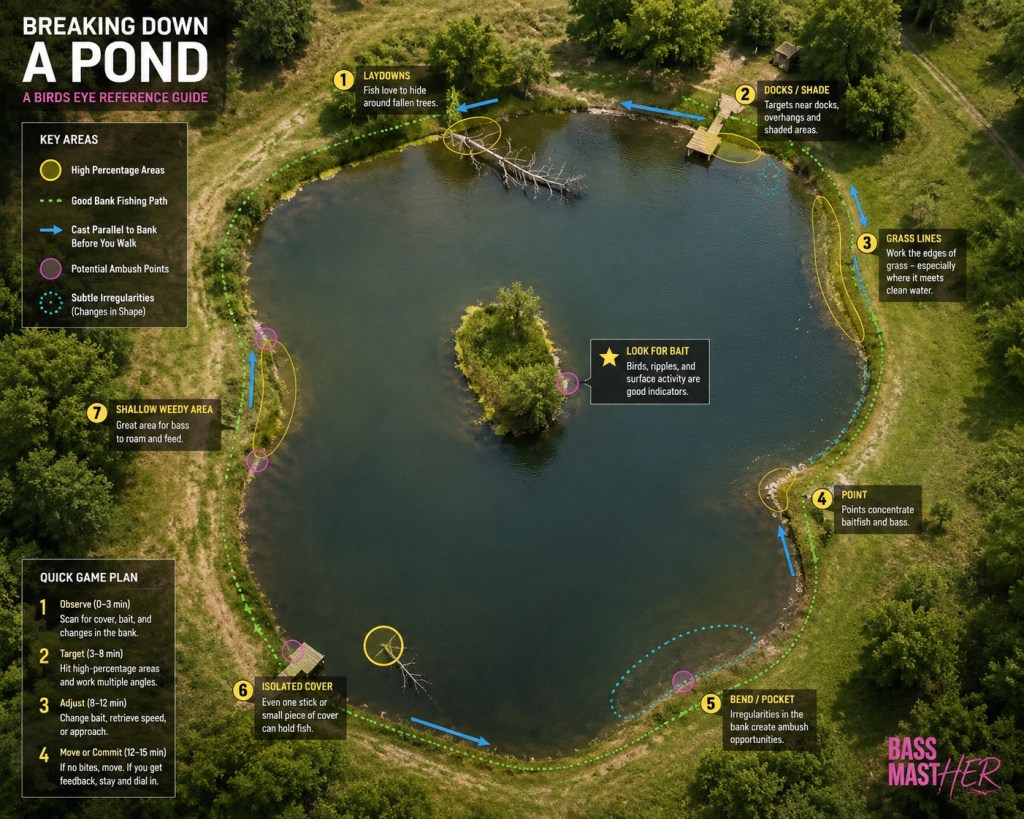
Minute 0–3: Observe before you even cast
I know it’s tempting to start casting right away, but take a few minutes to actually look at the water before making your first cast.
Here’s what you’re scanning for:
- Cover: Grass, laydowns, docks and lily pads
- Bait activity: Ripples, flickers and blowups
- Water clarity: Clear versus muddy water
- Shade: Overhanging trees and darker water
If you see bait, bass are usually nearby.
If the water looks dead with no movement, structure or cover, don’t waste your whole 15 minutes there.
Minute 3–8: Hit high-percentage targets first
Now it’s time to fish, but you’re targeting the spots most likely to hold fish right now.
Priority targets include:
- Laydowns (fallen trees in the water)
- Dock shade or overhangs
- Grass lines
- Isolated cover (one stick, one big rock, a drain, etc.)
Work different angles. Cast past the target, through it and from multiple directions.
Pond bass don’t move far. If they’re there, you’ll know quickly.
Minute 8–12: Adjust your approach
If you haven’t gotten bit yet, adjust instead of guessing.
Ask yourself:
- Am I fishing too fast?
- Is my bait too aggressive?
- What are the water conditions?
Here are a few adjustments to try:
- Slow down with a soft plastic like a Senko. Less space in a body of water means bass don’t always have to chase. They can wait it out, so slowing down your presentation can make a big difference.
- Use a hunting bait like a spinnerbait or underspin to fish water quickly and locate where fish may be sitting, especially during cooler or shadier times of day.
- Throw a bait that gets into cover to force your way into their hiding places. Bounce a crankbait off structure, run a chatterbait through grass or pitch a creature bait into clumps of vegetation.
You don’t need a lot of baits, just confidence in a few.
Minute 12–15: Move or commit
If you’ve covered multiple targets, angles and baits with no bites, move.
Even 20 to 30 feet can make a difference.
But if you get a follow or a missed bite, stay and work that area. It’s worthwhile to focus on places that are already showing signs of life.
Extra pond fishing tips that make a big difference
- Cast parallel before walking the bank. Bass often sit shallow and can be spooked by footsteps.
- If a pond looks like one big bowl, look for irregularities in shape. Even if there’s no visible structure, small differences can reveal likely ambush points, such as:
- A point that sticks out
- A small pocket or bend
- An uneven edge in an otherwise round pond
These subtle changes create ambush points, even if you can’t see what’s underwater.
Final thought
Pond fishing becomes much more efficient when you learn to read small details quickly. The more intentional you are with your approach, your casts and even your footsteps, the more those “dead ponds” start turning into consistent bites.
Tight lines!