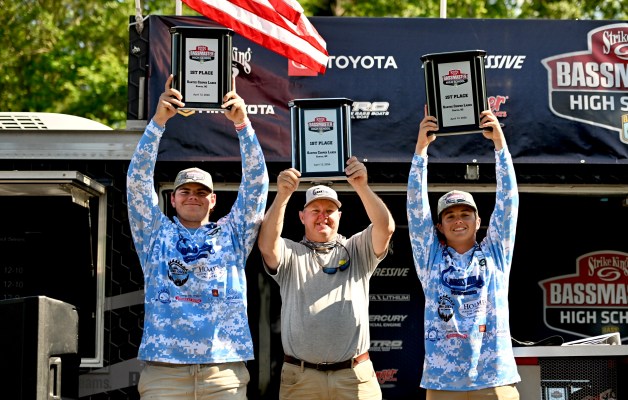
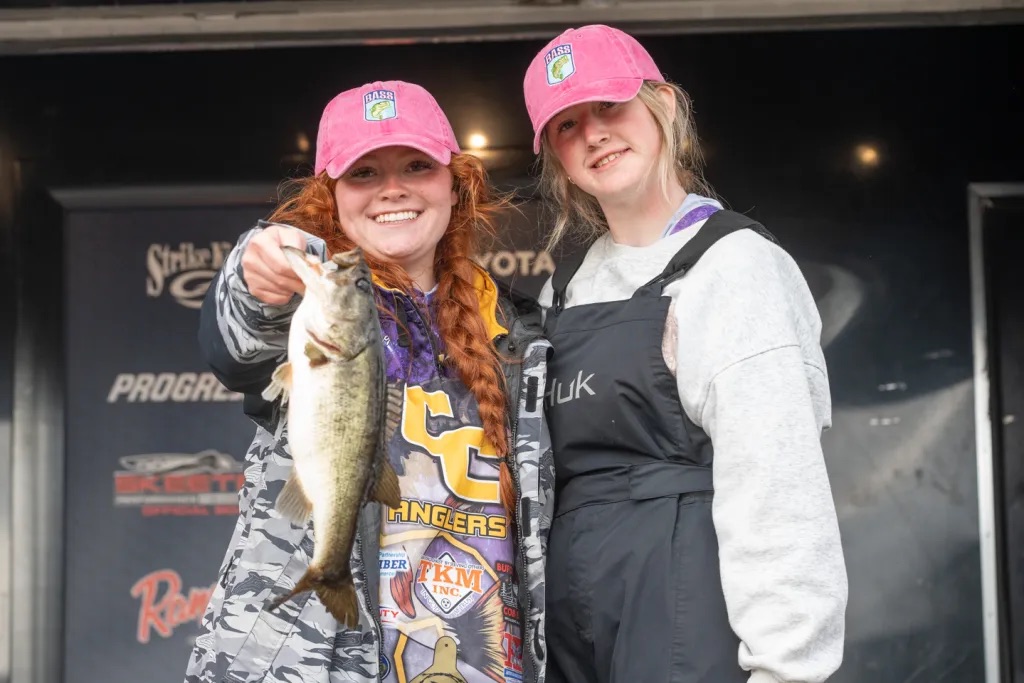

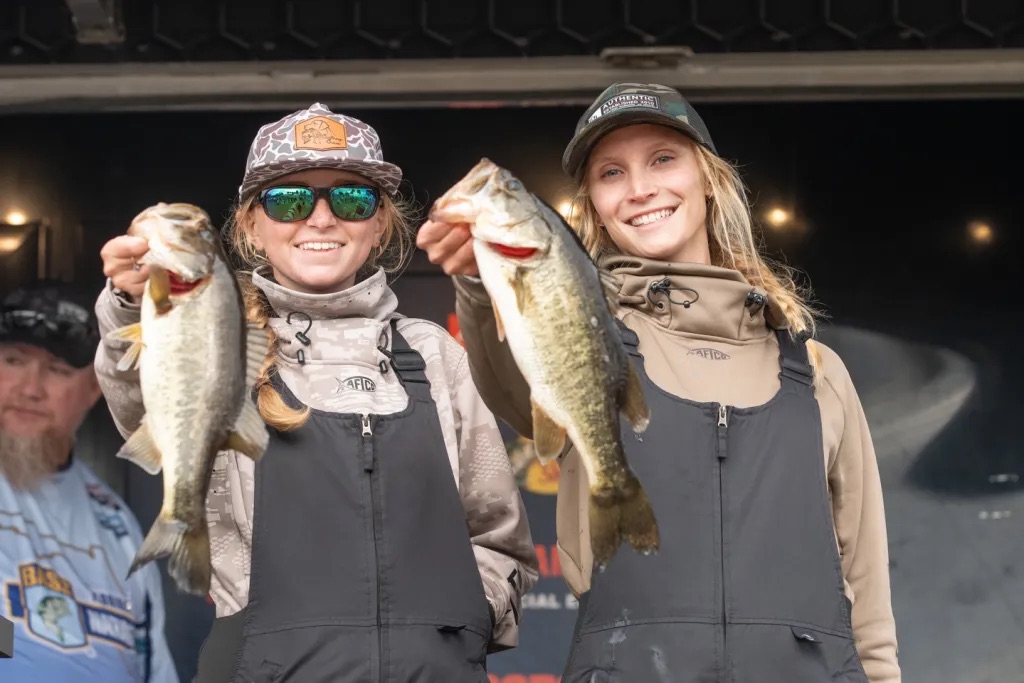
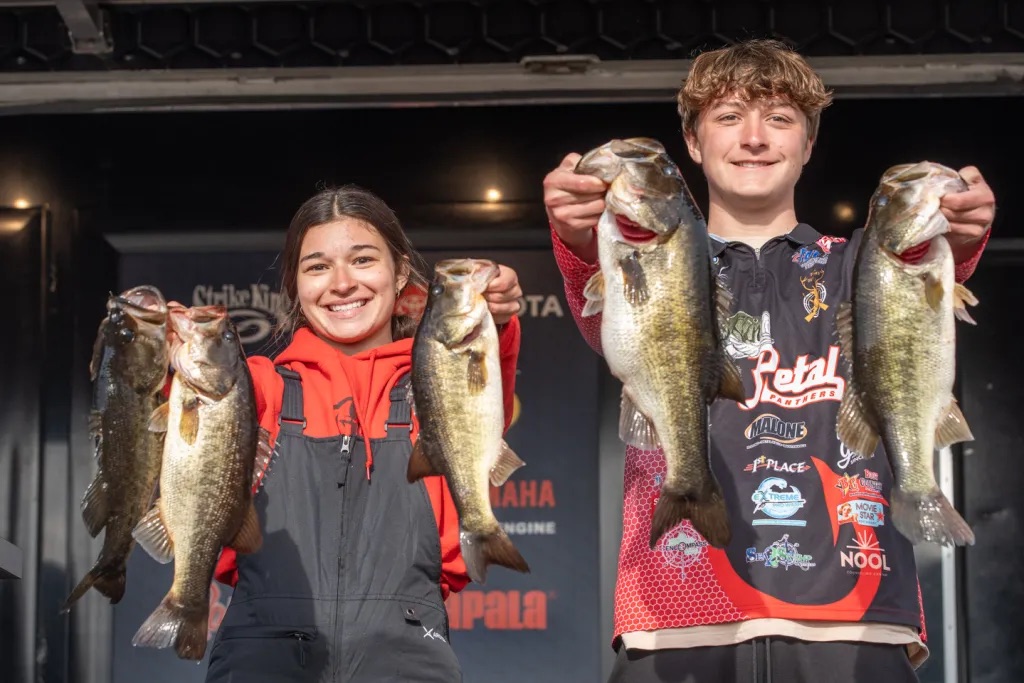
Last week we had our 2026 Strike King Bassmaster High School Series at Kissimmee Chain and our 2026 Tackle Warehouse Bassmaster Junior Series at Kissimmee Chain. As the Bassmaster employee who oversees the content on the BassmastHER page, I took notice of all the all-girl teams and coed teams on both the Junior and High School roster. We had some really successful bags come from the girls.
I thought back to being a high school angler when I was younger and wishing I could have taught myself some of the fundamentals of fishing with a partner, because those fundamentals can truly set a team up for success.
There are so many things you can do to maximize your chances of catching more fish during a tournament with a partner, and I didn’t really realize that until I started paying close attention to angler footage from team circuits like the Alabama Bass Trail and other team championships. You can also see this dynamic unfold in college anglers, because nowadays collegiate anglers are as well seasoned as some of the anglers you see on the pro trails.
Maximizing teamwork on the boat comes down to a few simple strategies that help both anglers grow and maximize potential. In this article, I’m going to cover some of the most important techniques, from the most practical basics to a few more advanced team dynamics.
Power dynamics
Let’s be honest. When you are fishing with a partner you’ve never fished with before, or even a partner you’ve always fished with, there can be a lot of unspoken tension if you don’t have open communication.
It seems like there are a lot of situations where partners don’t have great synergy because they don’t have a fully established power dynamic on the boat.
Let’s say you’re on a team and one angler has a couple more years of experience, plus some hardware that establishes them as the more experienced angler. If that’s the case, you might want to have them lead the two-person team. They are most likely going to have a more accurate cast, better decision-making skills, and a stronger understanding of fish behavior and the lake you’re fishing.
Even if you’re a team of beginners with similar skill levels, you still need to establish who is the team leader. That way, if you reach a split decision on tournament day and have conflicting opinions, that captain can make the final call and keep the team moving efficiently with fewer roadblocks.
If you are a Junior or High School angler, you can also make your adult boat captain the decision maker. However, I still recommend taking on this process yourself, because as much as you can learn from a boat captain, there comes a time when you need to take the decision-making on yourself.
That’s how you learn tournament fishing more intimately, and it also allows you to feel the full reward of success when you do well. Trust me, a team that creates and executes their own plan and has success will be much more accomplished and driven than a team that relies on a boat captain to make every decision. I have experienced this firsthand.
I would also recommend having a conversation with your boat captain ahead of time, letting them know you want to take on more responsibility, just in case they disagree and mistake it as disobedience or disrespect.
Finances
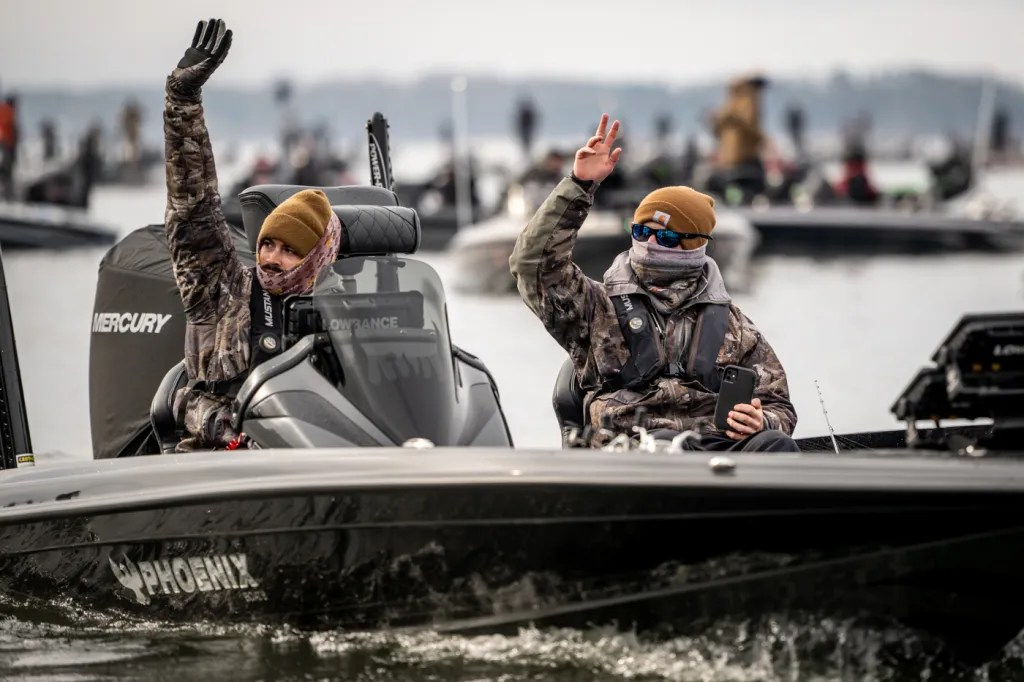
This one can be a touchy topic for some people, especially if you’re rocky in your finances (we have all been there). But you need to understand teamwork is a 50/50 exchange.
It is customary for every angler to split expenses down the middle, including:
- Gas
- Baits needed for that weekend
- Boat snacks
- Lodging
- Entry fees
- Any cost related to the tournament at hand
The only exception is that a co-angler is not responsible for boat financing costs, insurance and oil.
This half-and-half rule applies to both practice and tournament days.
In the same way you split costs, you will also split earnings. This includes tournament winnings, contingency money and even contingency earnings for the type of boat the tournament was fished in. This does not include personal sponsorship benefits an individual has, or any personal earnings someone makes outside of the team tournament format.
I’ll warn you now: if any of these financial aspects are out of balance, it will affect the way a team member fishes and the psychological synergy between two anglers. You might also gain a bad reputation for not being able to carry your weight as a teammate, which can hurt your reputation in the team circuit world.
If you are going through financial hardship, you may be able to negotiate with your partner if both sides agree.
Practice
Practice begins with research first and foremost, and a team should come together and do research together. I want to emphasize “together,” and here’s why:
When you do research separately, you form your own ideas and opinions about a lake, and those views are most likely going to be slightly different than your partner’s. Then you have to spend time filling your partner in on why you feel that way, and that takes up a lot of time when you’re actually on the water trying to practice.
It’s better for a team to be on the same page and see where both anglers are getting their information so everyone is aligned before you hit the water.
On-the-water practice
Your best approach is often to break down water using two separate boats so you can cover more surface area and gather more information. If you take this approach, it’s also important to frequently update your partner throughout the day. That way you maximize efficiency.
For example, say you’re fishing the north end of a lake and your partner is staying south. Halfway through the day, you might discover that a jerkbait on bluff walls is not only catching a lot of fish, but bigger fish, and that some bluff walls are better than others. If you don’t tell your partner as soon as you realize it, they might spend the rest of the day fishing unproductive areas with unproductive baits when they could be finding more bluff walls that will be productive on tournament day.
If you’re practicing out of one boat
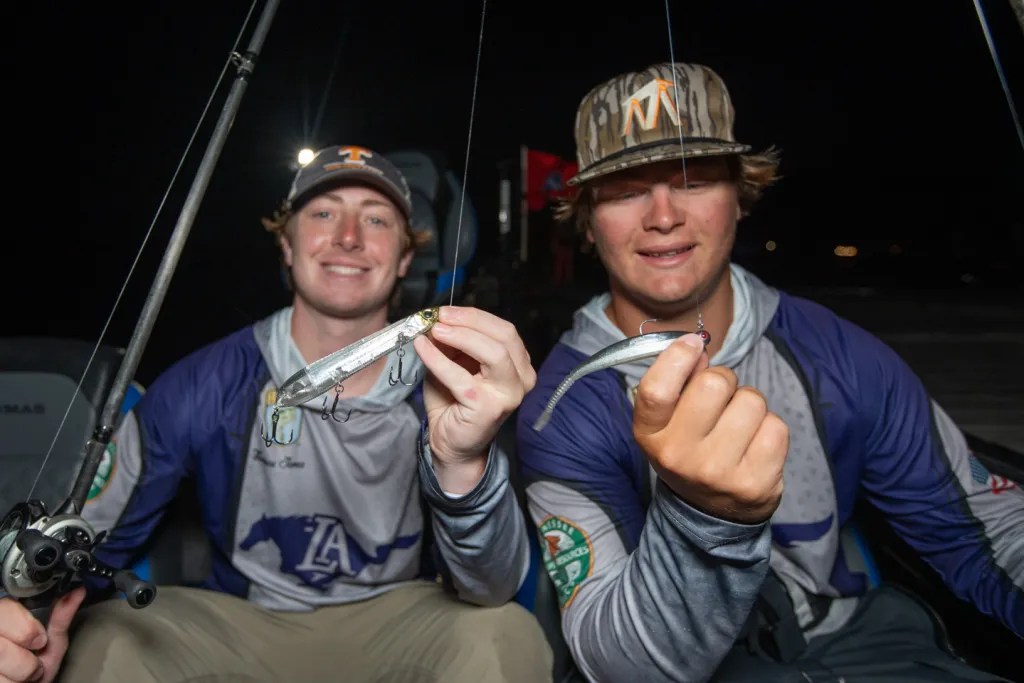
If you’re practicing from one boat together, a good strategy is to find an area of the lake with a lot of diversity. You want to be able to hit docks, bluffs, creeks, points, rocks, bridges and ledges without making long runs, so you spend more time with your lure in the water.
If by the end of the day you find the rocks at a certain depth and water temperature were holding the most fish, then you can dedicate another day of practice to areas of the lake with similar rocks, similar depth and similar water temperature.
Game plan and communication
Once practice is over, it’s a good idea to sit down with your map and come up with a game plan. It’s always good to have two different game plans in case you run into issues.
Example game plan
Plan A: Fish the areas of the lake with rocks in 6 feet of water with a crankbait and parallel the rocks.
Plan B: If they aren’t biting on the rocks and we haven’t filled a limit by 10:00 a.m., switch to fishing docks with swim jigs and wacky rigs to fill a limit.
If neither Plan A nor Plan B works, and the weather conditions are completely different from what you expected, then you go into adaptation mode and start fishing the conditions. You might even be so dialed into the lake that your team leader wants to try something completely different from what you practiced, as long as it’s logical and you’ve tried everything else.
A really effective way to stay organized is to divide your day into time zones.
Example time zones
- Morning: Go into the backs of pockets with a buzzbait and try to get a topwater kicker during the prime topwater bite
- 8:00–10:00: LiveScope the mouth of a creek that held fish and fill out a limit
- 10:00–12:00: Fish docks while the sun is at full brightness
- 12:00–Weigh-in: Fish rocks with crankbaits the rest of the day, and hit the bridge on the way back to the ramp
Dividing your day into time zones helps with efficiency and keeps you from spending too much time in your head wondering how long you should stay in an area if you aren’t making progress.
And of course, if the plan isn’t working, you can always override the schedule. Trust me, it’s a lot more fun going in with a plan and adjusting as needed than going into the day fully on intuition, especially when you’re fishing with a partner.
Trolling, casting, and positioning dynamics
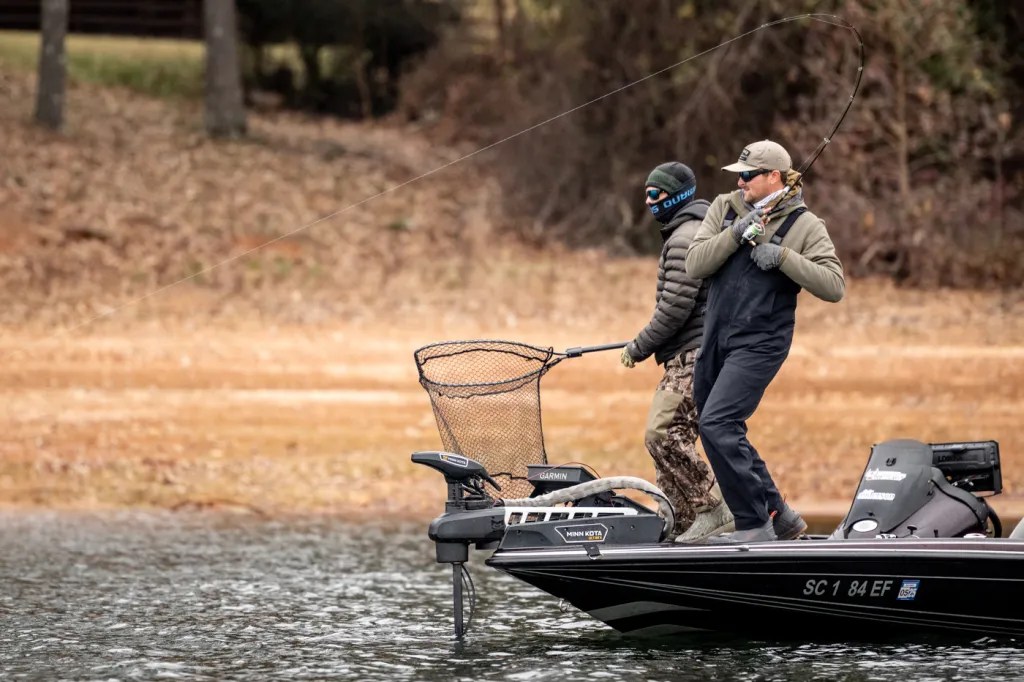
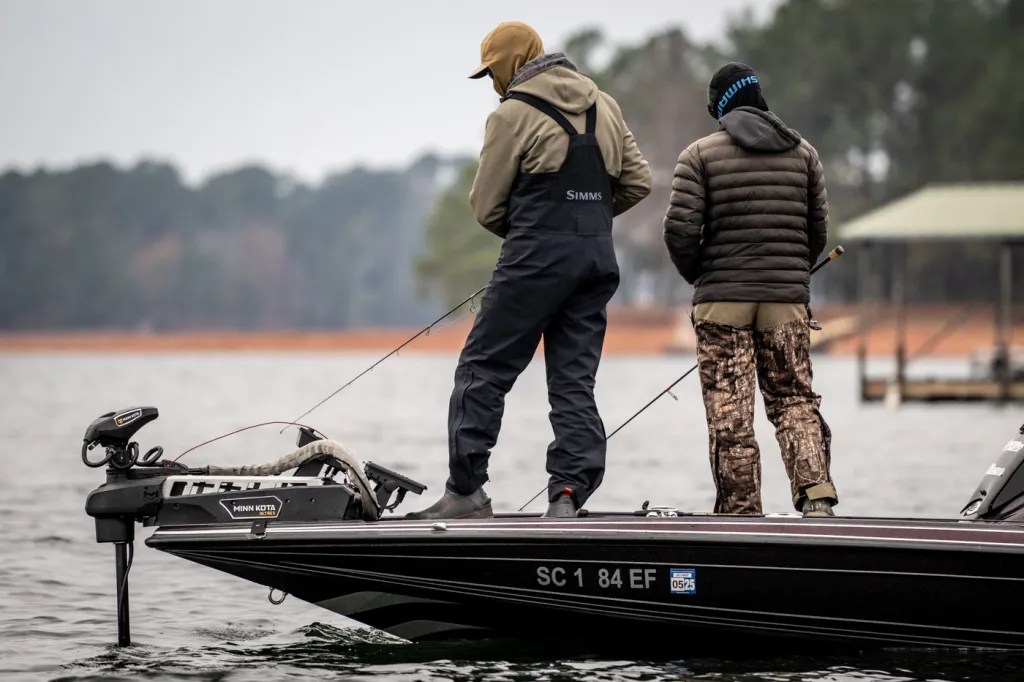
Most anglers assume the team leader needs to troll and the other team member should stay in the back of the boat. Now, if we really wanted to get into all the variables that affect who should be on the trolling motor, we could write a whole separate article. But let’s simplify it as much as possible.
First things first:
- The person who is best at trolling should be up front
- The person who is best at target casting should be up front
- The team leader should most likely be up front on the trolling motor
Now, if you have two well-seasoned anglers with equal casting skills, this is where things can change.
Say you are fishing a line of docks and one partner is really skilled at skipping while the other is really skilled with a Rat-L-Trap. Whoever is skipping should be up front, and the Rat-L-Trap angler should be in the back casting in open water and paralleling across the docks so the angler skipping has room to work.
Now if you’re fishing rocks with a crankbait and both anglers are throwing crankbaits with slightly different diving depths, the angler with the shallower crank should be up front paralleling the rocks as closely as possible. The partner can also be up front by the trolling angler and cast along the deeper side of the boat, still paralleling the rocks but staying slightly farther out.
If both anglers can cast in this formation, it can be an extremely efficient approach.
Anglers with good synergy understand that whoever has the hot bait getting the most bites is usually on the trolling motor. And when that bait is hot, it can be smart for the other angler to throw it too, but cover zones the leading angler hasn’t hit yet. That’s how you cover as much water as possible.
None of this has anything to do with ego or feeling less important because you aren’t up front. An efficient angler does not have time for emotions and egos if they want to be the best and catch fish. It’s simply not efficient.
Netting and culling
One last component of this team dynamic is netting and culling.
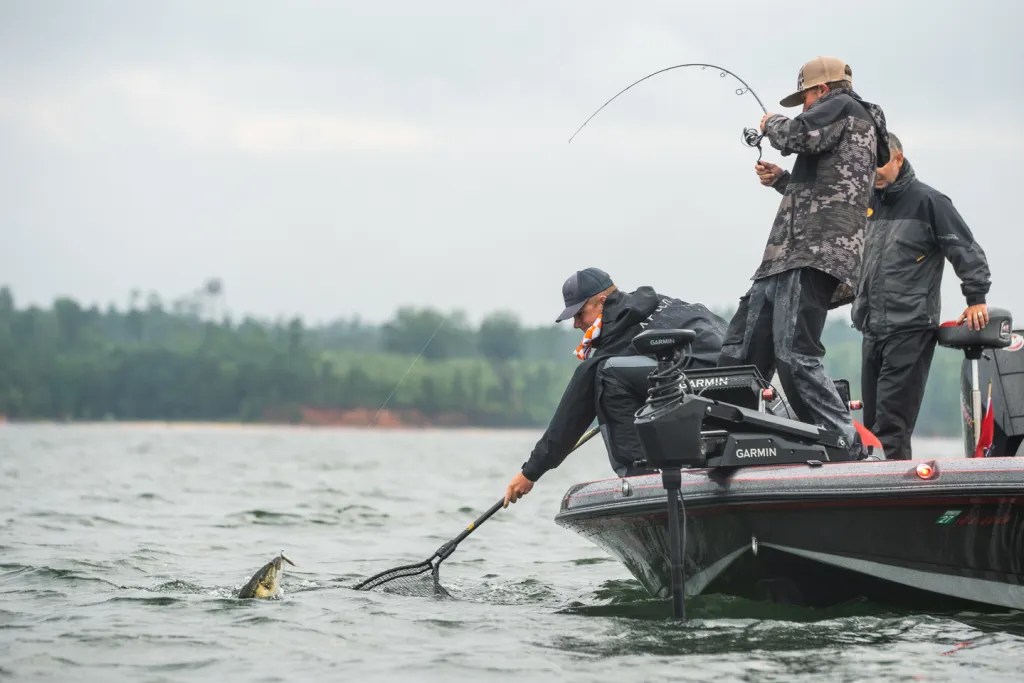
Say you are fishing a tournament and the team leader is on the trolling motor catching fish on a minnow, and they’re catching fish after fish. You can fish with them and also throw a minnow, but if they have the hot hand with the right twitch technique, then your focus needs to be netting fish quickly and efficiently.
After that, take the fish back to the livewell and handle culling so the hot hand can stay chasing the school and keeping their bait in the water.
This applies to all techniques, not just LiveScope. You might start to think, “Oh, I’m just the net boy/girl, which means I’m less important.” Yeah, I’m going to need you to stop right there. That mindset will drain your efficiency and drag your team down.
Sorry, but we don’t have time for that.
What the ultimate team looks like
To recap everything we just learned, let’s walk through what the ideal partnership looks like in a narrative to give the full picture.
Jack and Jill fish a tournament on Lake Guntersville in May.
Jack and Jill first meet up at Jack’s house to do research. They watch videos of tournaments on Guntersville together while also looking online at articles, websites and any public information on Guntersville during May. They discuss their findings and whatever personal experience they have on Guntersville.
Next, they create a three-day practice plan leading up to the tournament. They decide to fish from two separate boats and divide Guntersville into upriver and downriver. Jack finds an area upriver with lots of diversity and a range of depth, while Jill does the same thing downriver.
Jack and Jill constantly update each other throughout the day in a group text. Jill finds that a chatterbait is catching really big fish in grass and in the backs of pockets downlake, while Jack finds a lot of fish on LiveScope around the openings of creeks. They continue testing and executing both patterns across the lake.
Practice is over and it’s the day before the tournament. This is a one-day tournament. Jack and Jill make Plan A and Plan B, and Jill is established as captain.
Plan A: Fish with a buzzbait and frog in the grass downriver first thing in the morning, then go upriver and fill out a limit, then spend the rest of the day looking for big fish.
Plan B: Fish with a frog, fill a limit with LiveScope and if they don’t catch anything on the chatterbait by 12:00, spend the rest of the day LiveScoping for upgrades.
Jack and Jill arrive at the ramp the next morning. Jack gives Jill gas money and lodging money, brings boat snacks and contributes some tackle for the day.
They go to their first spot. Jill puts the trolling motor down and starts throwing a buzzbait up front (the faster bait) to cover water quickly, while Jack is in the back throwing a frog and targeting any areas Jill might have missed. They catch two keepers and move to the next spot.
Jack then gets on the trolling motor to fish with a minnow on LiveScope (Jack’s specialty), while Jill also throws a minnow standing beside him up front. Jill nets and culls, they fill their limit and make two upgrades.
Next, they go to their grass spots downriver with Jill in the front throwing a chatterbait. Jack decides to throw a swimbait, and Jill agrees. They both cull two fish but don’t get any more bites until 12:00.
With two hours left, they mutually agree to LiveScope the rest of the day until weigh-in.
At the end of the day, they place in fifth place with 26 pounds and split a $1,500 check. They also earn a small $500 contingency check from Phoenix and decide to put it toward lodging and gas for the next tournament.
That’s a rock star team. They fished with composure and endurance the whole day and cashed a check because of it.