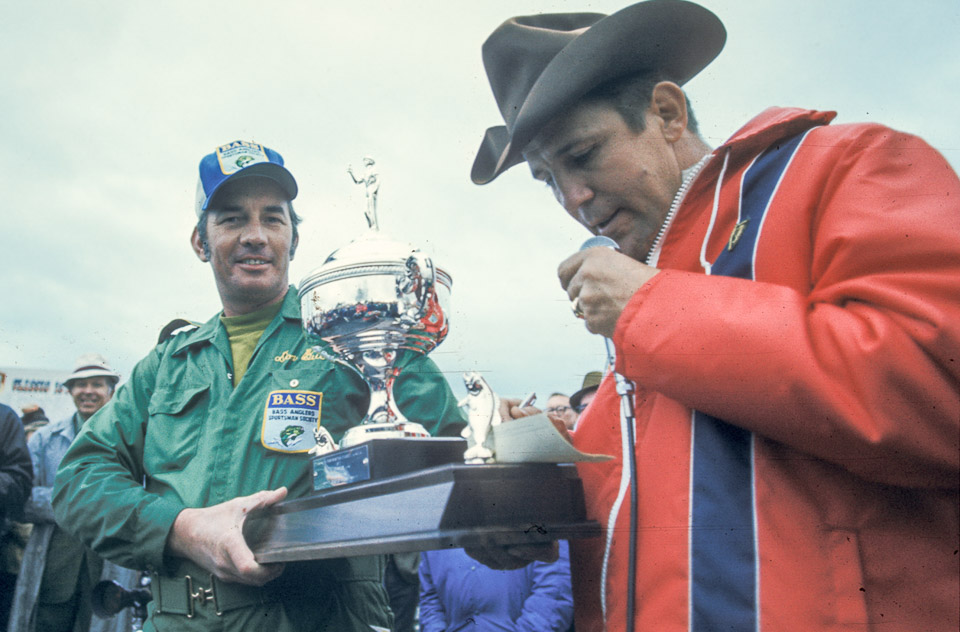
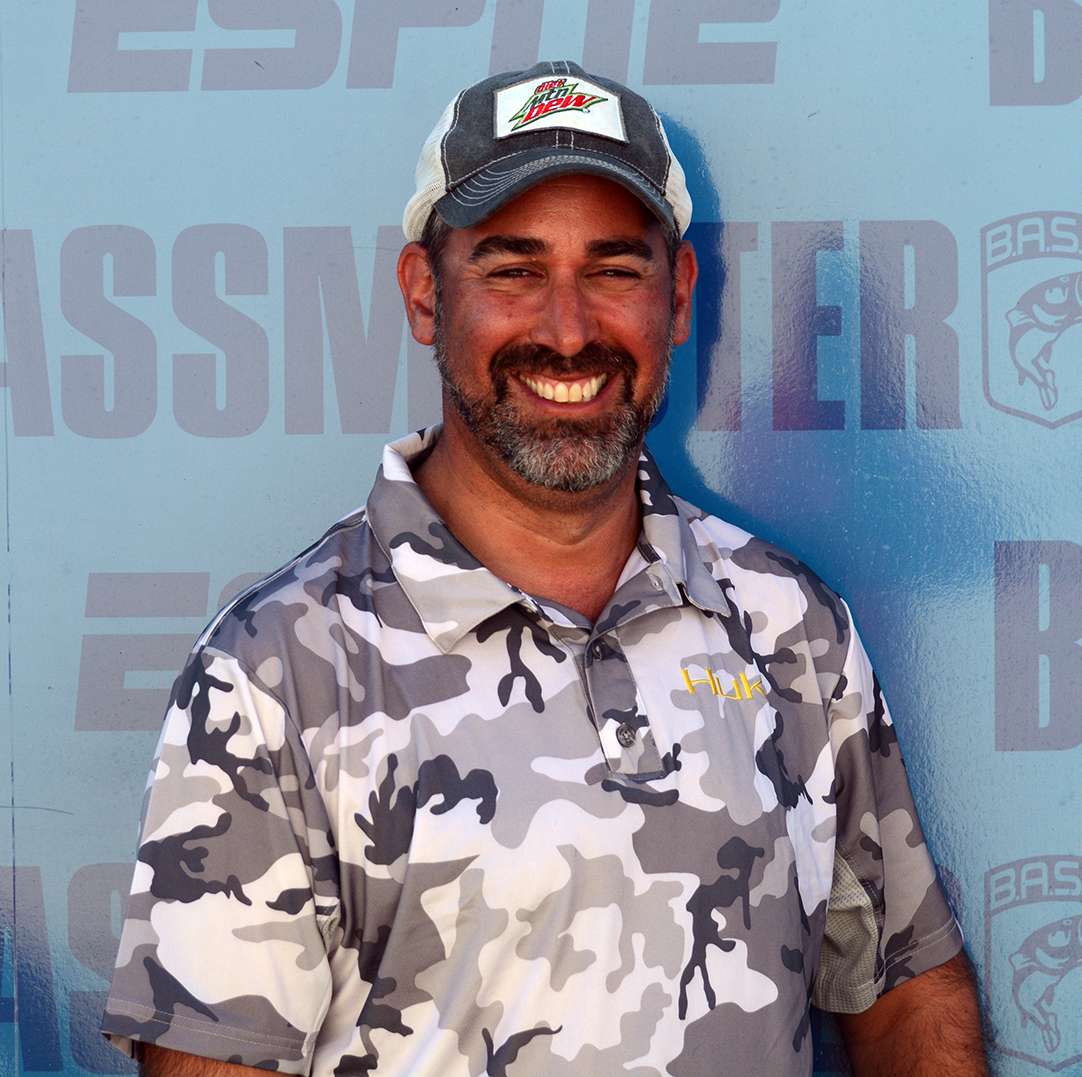
The first 30 or so years of B.A.S.S. competitions featured a hodgepodge of apparel — everything from repurposed hunting gear and patch vests, to jumpsuits and plain old t-shirts. The savviest pros always sought to maximize the use of their bodily real estate for advertising purposes, and the emergence of the Bassmaster Elite Series in 2006 made clear that they were expected and encouraged to do so.
While the various fishing leagues didn’t specify the material of the clothing they were to wear, FLW and B.A.S.S. mandated the inclusion and placement of certain logos. For B.A.S.S., that included the member patch, any Bassmaster Angler of the Year badging and the placement of last name on the back.
Some of those placements resulted in unintended consequences, whether good, bad or indifferent. In the era of forward-facing sonar, when viewers tend to spend a lot of time looking at anglers’ backs, it helps the fans to put a name with a voice and to ensure they know who they’re watching.
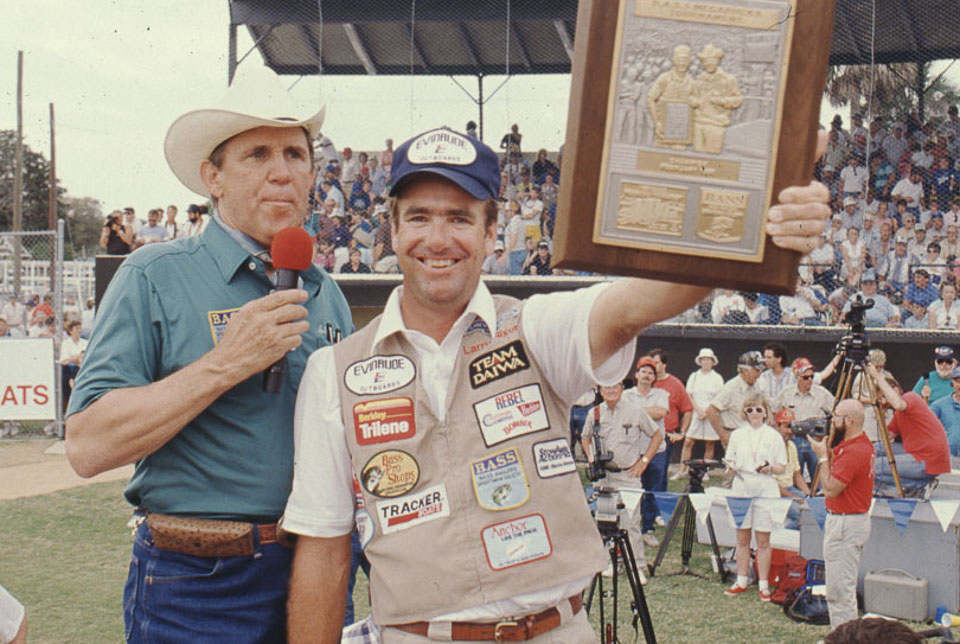
One thing that made jerseys more palatable in 2006 was the change in technology. Patch vests were far in the rearview mirror as a dated look. Meanwhile, embroidery and patches were tough to justify, both in terms of function and finance.
“After you put all the patches on, you kind of felt like an armadillo with a shell, or a knight in armor, because those shirts were so stiff,” Rick Clunn told Bassmaster’s Mike Suchan in 2018.
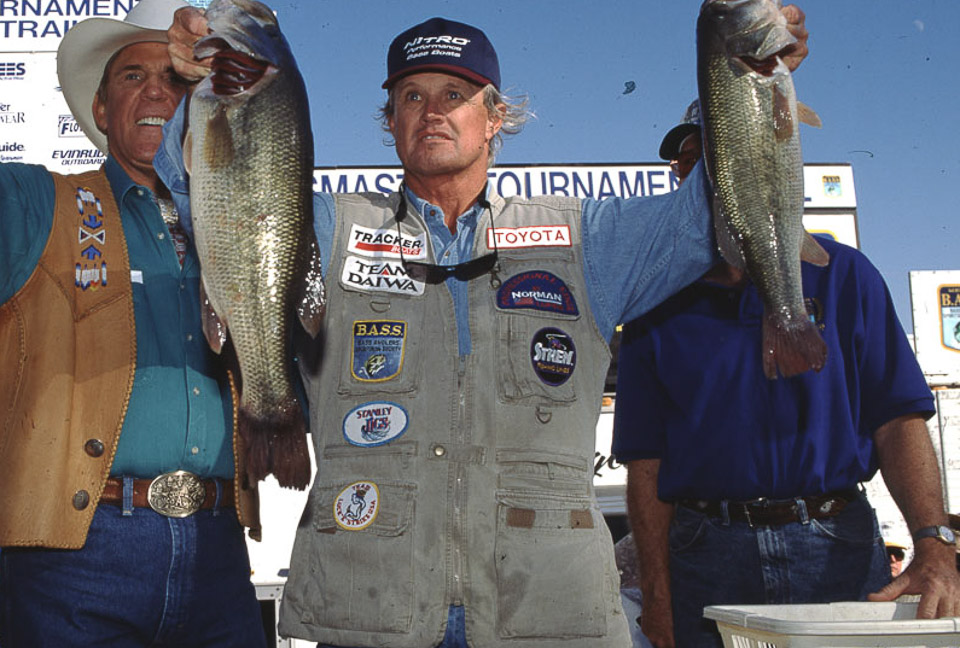
“There were several guys who experimented with the vests. They were easier than the shirt, and if it got hot, hot, hot, you could take it off on the water, and put it on for the weigh-in.”
Kevin Short recalled they averaged him $400 apiece, which meant that you protected them with your life. “I remember thinking, this SOB is going in my casket.” He worried about getting blood on them, but the hassle factor was high, because “even if you dry cleaned them, you still had to iron them, which was a huge pain with all of the embroidery.”
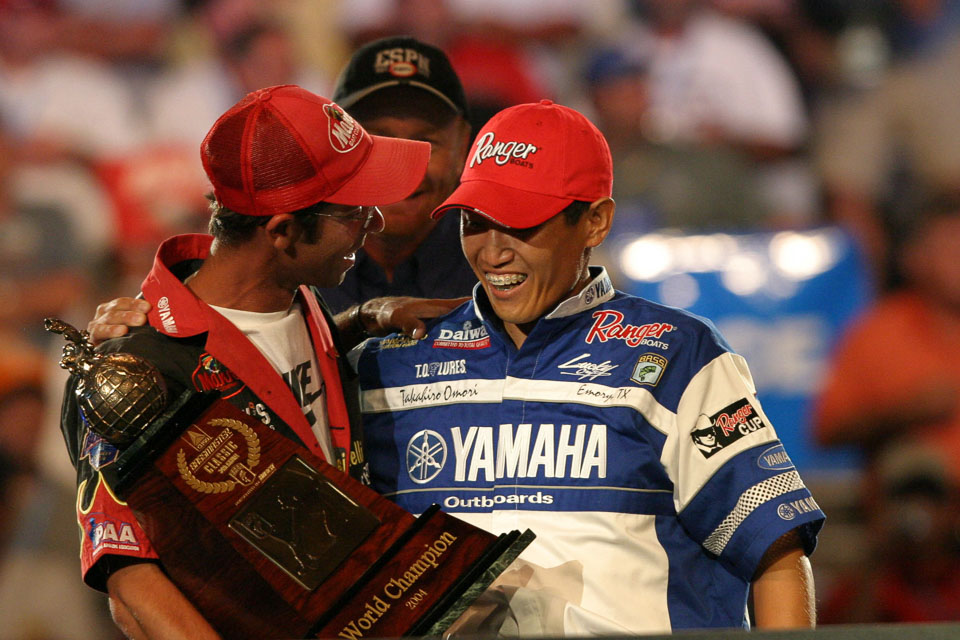
There of course had been efforts to professionalize the look before. Several major companies developed specific looks for their teams. Boat brands like Nitro had off-white shirts with black accents. Triton and Skeeter had red, black and white patterns. Nonendemics like Crown Royal got into the game with matching shirts for their teams. But the jersey requirement, combined with increasingly available and affordable dye sublimation technology, democratized the look. It meant that anglers could brand themselves with a color, as Skeet Reese did with yellow and Kevin Short did with pink (Pantone 219 to be exact).
They could also brand themselves in a way that supported different types of commerce. While most pros festooned their jerseys with logos that ranged from Bass Pro Shops down to local muffler shops, New York pro Matt Sphar advertised a soon-to-be-released movie called The Alphabet Killer.

In some cases, pros — either by design or by contractual obligation — elected not to distinguish themselves, but rather to reflect their largest sponsor in a way that oozed professionalism and uniformity. For example, there were the iconic blue and white Yamaha jerseys and the red, black and white Skeeter jerseys. Mark Menendez, who has worn both over the course of his career, said it has been a good choice for him.

“At first I didn’t see an advantage or disadvantage, but today I see the value of consistency,” he said. “It’s almost always been a red jersey and a solid Yamaha hat. I’ve spent 20-plus years of my life dressed a certain way, and now people recognize me immediately.”
Randy Howell, the 2014 Bassmaster Classic champ, early on adopted utilizing his slight frame as a way to promote sponsors. The young angler was so recognizable that he was known as “Patches” on the local tournament circuits. To this day, Howell’s advertising mantra is “leave no space open.” When the jersey requirement was announced, he remembers that it “felt like we were finally NASCAR.”
Over the course of his career, Howell increasingly stresses the value of logo placement, setting differential pricing for prime placement. While pursuing individuality, he’s embraced the Menendez theory of being recognizable over time. Thus, his wraps and jerseys in recent years have typically been in a singular Prym1 Shoreline Blue Camo color.
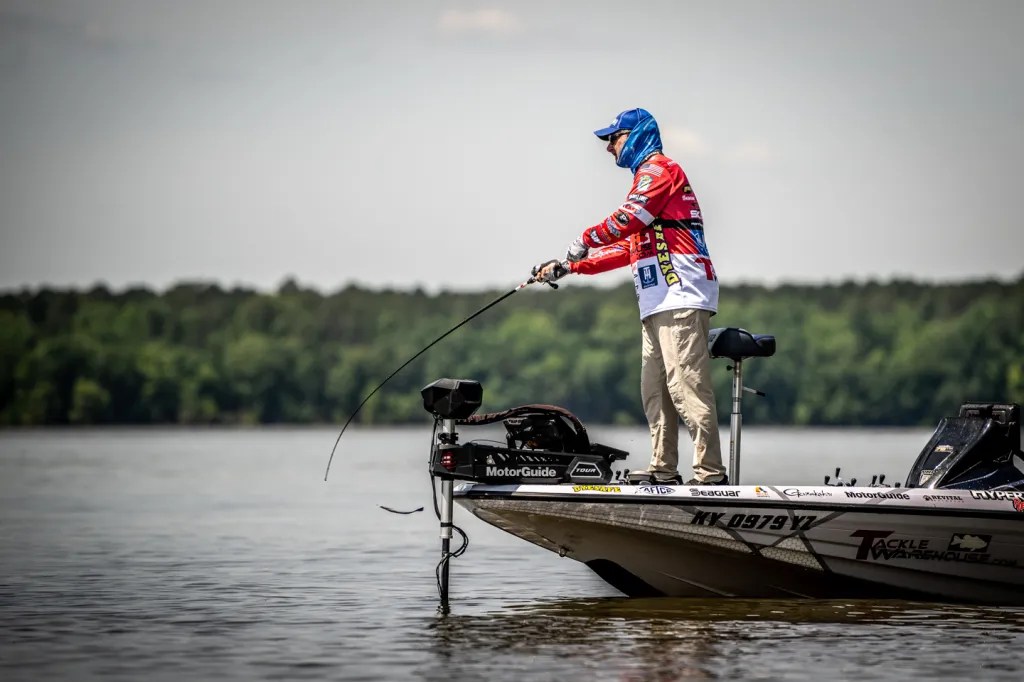
The move from patches to embroidery to dye sublimated shirts resulted in a lowering of costs, another change with mixed blessings. It makes the shirts more accessible to fans and weekend warriors, who can now replicate their favorite competitor’s look, just as they would with Patrick Mahomes, Aaron Judge or LeBron James, or create a design of their own to promote their own personal interests. Some pros and companies have grumbled that this devalues their own efforts, making it harder to tell who is actually a “pro angler.”
On the flip side, the dye sublimation allows Elite Series pros to get multiple jerseys or other apparel – from short sleeves to long sleeves to hoodies – to account for differing weather conditions. That facilitates giveaways, too, helping to fill the coffers of numerous charity organizations, while giving fans an opportunity to obtain “game worn items” just as they would with other sports. Numerous bars, man caves and she sheds throughout the country are decorated with one or more jerseys in a manner that reflects the sport’s growing influence.
The reduction in cost also means if an angler changes sponsors midseason, it’s possible to get a new shirt in a hurry, at a reasonable cost. Still, just as in the days of patch-covered shirts and embroidery, there’s the occasional strip of electrical tape or duct tape to cover things up.
The jersey look is here to stay. Certainly, there will be technological changes that improve this process – perhaps a hologram of the Classic champ or a means of rotating the logos as on a billboard. Just as they have with their boat wraps, anglers struggle to balance the understanding that simpler is often better with the need to fully represent. The savvy ones have figured out how to keep everyone happy and to make their time on the water, onstage and on YouTube maximize their impact.