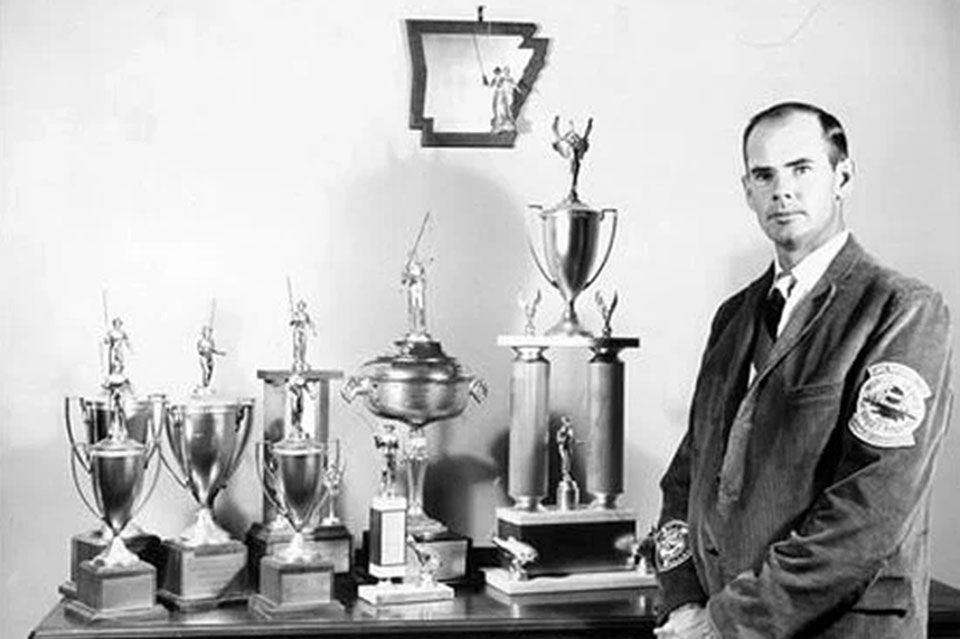

Glen Andrews, a little-known angler who many called the best that’s ever been, passed on June 23 at 95.
“Glen is probably the greatest angler that no one has ever heard of,” two-time Classic champion Bobby Murray said. “However, his influence on modern bass fishing is unparalleled by any other angler.”
A dominant force in early competitions, Andrews was instrumental in helping Ray Scott launch his first tournament, which helped usher in B.A.S.S.
Andrews, born May 31, 1931, grew up in Lead Hill, Ark., and guided on the region’s lakes. He won state bass championships in Arkansas and Missouri and was the only two-time world champion.
As Scott rallied forces in 1967 for his All-American Invitational Bass Tournament on Beaver Lake, Andrews played a major role in both the format and drawing the field. His son, Shane Andrews, who co-authored “An Impossible Cast: Glen Andrews and the birth of professional bass fishing,” said his father was key in getting anglers to enter – specifically, if he didn’t compete.
“They all asked the same thing – is Glen Andrews going to fish the tournament?” Shane said. “Ray Scott told dad, ‘If you try to fish this tournament, I will get no one to come fish.’ And dad agreed.”
“They all knew no one could beat dad. But dad knew everybody, and he provided the roster for all the people who he had fished with all those years in those other tournaments. That’s how Ray got all those people to come.”
The All-American drew 106 competitors from 13 states, including the likes of Bill Dance, Don Butler and tournament winner Stan Sloan. As two-time champion of Hy Peskin’s World Series of Sport Fishing in the mid-1960s, Andrews conferred with Scott to draw up the event rules, assuring there would be no “monkey business.”
“It was dad’s experience in knowing that you can’t allow this, you can’t have that, you can’t have this,” Shane said. “They took Hy Peskin’s rules and transitioned them into the rules of bass fishing.
“Ray Scott always had a great plan, but he had to bring on dad because nobody would even talk to Ray Scott unless dad was on board. If Ray Scott had not sold dad on helping him, Ray Scott may never have existed.”
And ergo B.A.S.S. If Andrews wasn’t involved, Shane said, Scott wouldn’t have secured the loan to put on the All-American. Yet Andrews never received a windfall for his assistance. As Scott went back to Alabama to develop B.A.S.S., Andrews began his own fishing organization, the Professional Bass Fishing Association, but it never took off.
“Just to be honest, Ray’s tournaments were better,” Shane said. “You’re not hearing what you thought you’d hear from his son, but it’s a fact. Dad tried to compete with Ray, and he couldn’t do it because Ray was one of the greatest promoters of all time.”
Andrews never fished a Bassmaster event, withdrawing from competitive fishing around 1968 to sell real estate. Scott went on to become B.A.S.S. boss.
“There’s no regrets there,” Shane said. “Let me add this – Ray called dad until almost the day he died. They were still friends. They still loved each other. There was no bad blood between Ray Scott and my dad, period.
“That was not my dad’s style. He was so proud of Ray and what he did. Dad wanted to do it himself, but Ray was just better at it and he knew it. And it was okay. I’ve never known anyone who loved life more and hated less than my dad.”
Bass icons looked up to Andrews
Andrews received great accolades from many of the bass icons who knew his fishing prowess. Before he passed, former B.A.S.S. owner Jerry McKinnis said Andrews, a regular on his long-running The Fishin’ Hole show, was the top bass fisherman.
“Because of my business,” McKinnis said, “you can image how many times someone asks, ‘Who’s the best bass fisherman you ever knew?’
“My answer is always, ‘You’re probably not going to know this man, but it’s a guy by the name of Glen Andrews.’ Glen was the best. I had a wonderful career and I owe a lot of it to Glen Andrews. A bass angler who had talents that can’t be taught – you’re born with it.”
Bill Dance said Andrews “is my mentor, my friend, my advisor and absolutely has always been among the top contributors to the success of the name Bill Dance!”
Dance recalled Scott and Andrews ran across him on Pickwick Lake as they sought to fill the All-American field. After talking, Andrews told Dance he’d get bit if he casted behind him in 17 feet of water.
“‘I was like ‘whatever,’” Dance said. “I had never fished much deeper than 3- to 5-feet deep. But when they went around the bend and got out of sight, I threw my worm out there and as soon as it hit the bottom a fish bit. I went nuts. Seventeen feet of water! I couldn’t believe it. I did it again and again.
“After that I called Glen every day during a tournament and he coached me. He taught me so much. I wouldn’t be here today without him.”
From Andrews, Dance learned how to read shallow and deep water, how to use electronics and maps to locate structural features where bass lived, and then how to catch them.
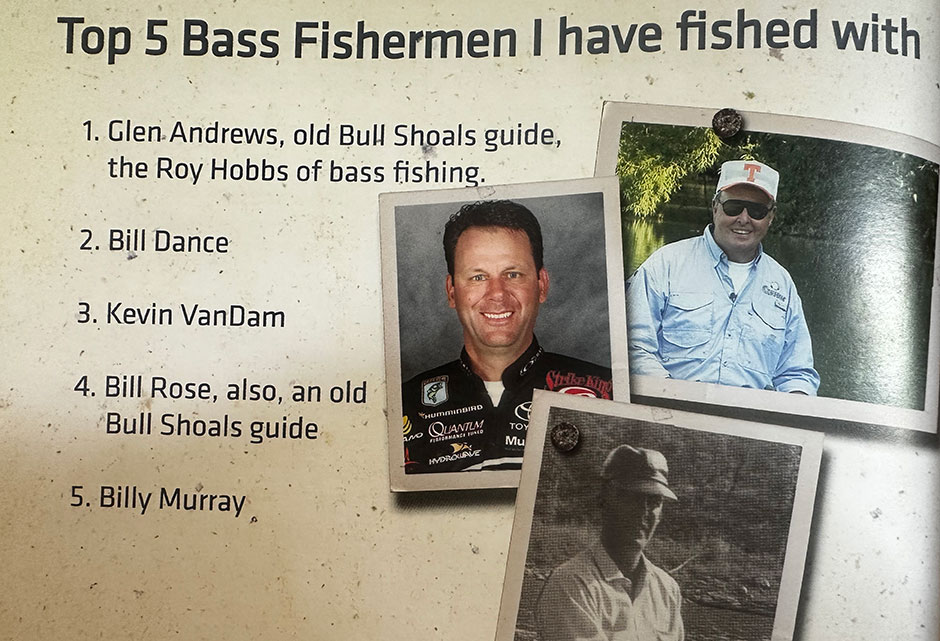
“He knew bass habits and bass habitats better than anyone I had ever met,” Dance said.
Murray said Andrews was a natural angler. He recalled an event on Greers Ferry where Andrews, who had Dance on his team, single-handedly beat all the four-man teams.
“He was one unbelievable angler,” Murray said. “Back when fishing was more of an art form, Glen was so far ahead of everybody. He knew how to find fish better than anybody I ever knew. It was almost like he could make them appear. He didn’t have to find them. They followed him around, it seemed like.”
Andrews was one of two memorable mentors for Murray, who won the first Bassmaster Classic in 1971 on Lake Mead and doubled up with the 1978 Classic title on Mississippi’s Ross Barnett Reservoir.
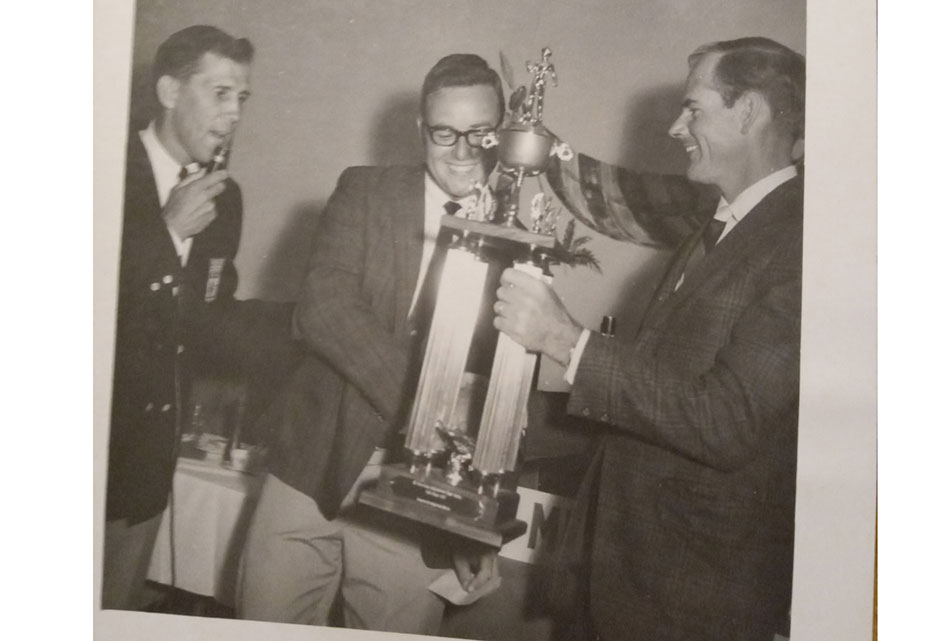
“There are two guys in my fishing career that I learned something from every time I ever stepped in a boat with them or got around them, Glen Andrews and Bill Nichols,” Murray said. “I was all ears. I watched everything they did and listened to everything they said, because they were just a wealth of knowledge. Those two guys knew more about fishing than anybody I’ve ever been around.
“There were heroes of mine growing up, certainly. Everybody has somebody you want to emulate or be as good as and Glen and Bill were always my heroes. That’s why I was so proud Glen got inducted in the (Bass Fishing) Hall of Fame. He needed to be there. He should have been there long ago.”
Long haul to the Hall
In his youth, Andrews did farmwork and spent weekends honing his fishing skills. Graduating high school in 1950, he cleared timber as Bull Shoals Lake began to fill. Immersed in fishing, he was among the first guides on the new reservoir. When Table Rock and Beaver lakes were impounded, he expanded, spending close to 300 days on the water for 15 years.
Much of what Andrews learned about fishing came from his mentor, Joe Lindsey of Harrison, Ark., who he called the greatest bass angler he had ever known.
“He took me under the wing, and for five years, every day, he coached me,” Andrews told the Bass Fishing Hall of Fame for this article. “He taught me how to find bass. He taught me how to catch them.
“He said, ‘You know. The important thing is finding the bass. You can take an idiot and knock his brains out and he can catch a limit of bass if you got someone to put him on top of them.’”
Seeing and remembering shoreline features before Bull Shoals filled helped Andrews more than any map, and that gave him a leg up on the dozen or so guides he competed with for clients.
“You had to produce or you’d lose your customers,” Andrews said. “It was a dog fight every day who was going to have the best string of fish out of 10 guys. I got pretty good at it, and of course I’d hold my own.
“That’s one of the reasons that bass fishing tournaments were so easy for me, because the pressure didn’t bother me one bit. I was used to it. I fished against it every single day. I didn’t have nearly the competition in the World Series of Sport Fishing as I did from those guides.”
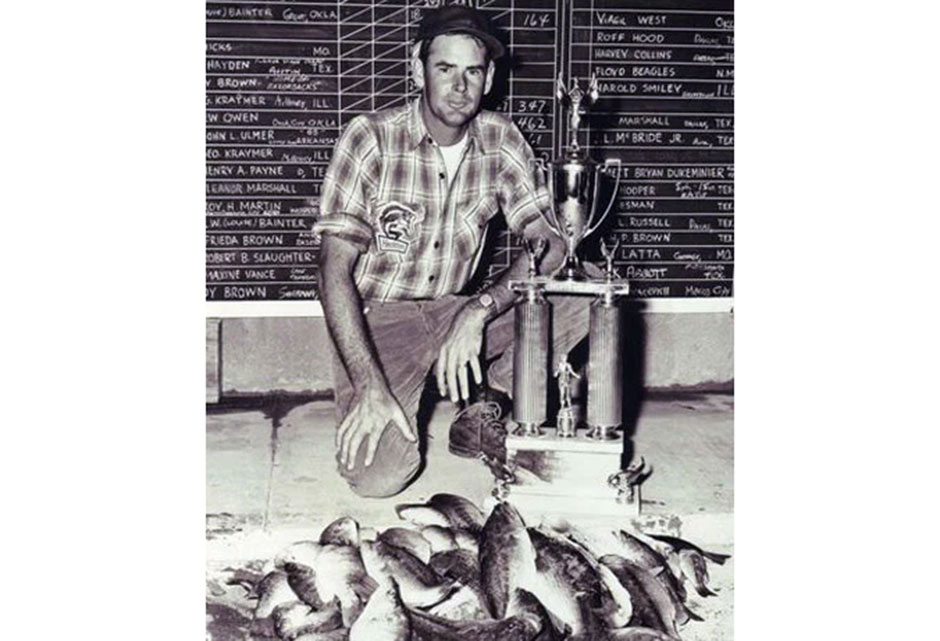
In 1962, the 22-year-old Andrews won his first of three Missouri State Championships and finished second to Virgil Ward in the World Series of Sport Fishing set on different Oklahoma lakes. Points were given for different species, bass receiving the most.
Andrews qualified for the 1963 tournament on Bull Shoals but at first was denied entry because he guided there. Media rallied behind Andrews, and Peskin relented, yet penalized him 104 minutes each day. As Andrews held an insurmountable lead after four days, Peskin again changed the rules. Weights were zeroed, and Andrews again was runner-up when winner Ken White “illegally caught a 5-pound bass” as he had two lines in the water.
After sitting out 1964, Andrews was the 1965 Arkansas State Champion and went into the World Series event as a favorite. Practicing on Texas’ Lake Tawakoni, Andrews had a boater harassing him all day. With his own spy, Andrews said he learned that man had a $10,000 bet on another angler and was trying to run him off.
“When that didn’t work, he jumped me in the parking lot,’’ Andrews said. “His first punch took out two ribs. But five minutes later he was begging me to stop hitting him.”
Andrews suffered two broken ribs and broken bones in his right hand. He barely made it out of bed the next morning to the competition. Casting left-handed, Andrew won his first World Championship. When told no one had ever won two, he repeated on Lake Eufaula the following year.
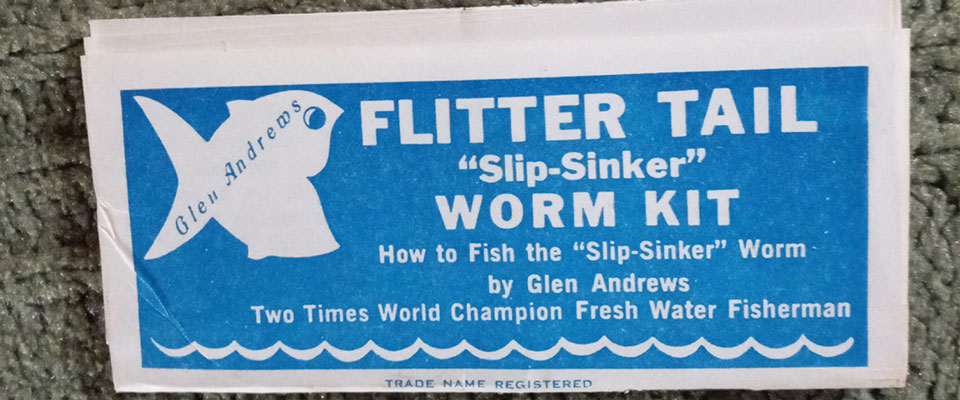
For all his success, Andrews never made a single dollar in prize money. The Andrews Lure Company he started in 1955 had flourished. It offered nine lures and employed 15 workers at one time. His best-known bait was the Andrew Flitter Tail Slip-Sinker, which later became known as the Texas Rig.
“If you’re ever lucky enough to find one of the pamphlets to how to use the Texas rig, otherwise known as the Slip-Sinker Worm Kit, it tells the story about how Dave Hawk gave dad permission to create it and market it and he never asked for anything in return,” Shane said. “And it’s the only time in dad’s career that somebody gave him something that nobody ever said, you need to pay me.”
Andrews sold his lure company to Billy Murray, but all the molds were destroyed when his house burned down.
“So there was no more Texas Rig until somebody else picked it up and ran with it,” Shane said.
Bobby Murray said Andrews certainly inspired a lot of people, but was saddened by his exit from the sport. “Glen disappeared obscurely due to financial constraints and went on to pursue other careers … only to become a faint memory in fishing legend history,” he said.
Shane said he worked hard to remedy that his father had been forgotten. In researching his book, he traveled to a number of states, visiting libraries to scour through newspaper articles. Soon after “An Impossible Cast” was published, McKinnis wrote a column on Andrews, calling him the Roy Hobbs of bass fishing.
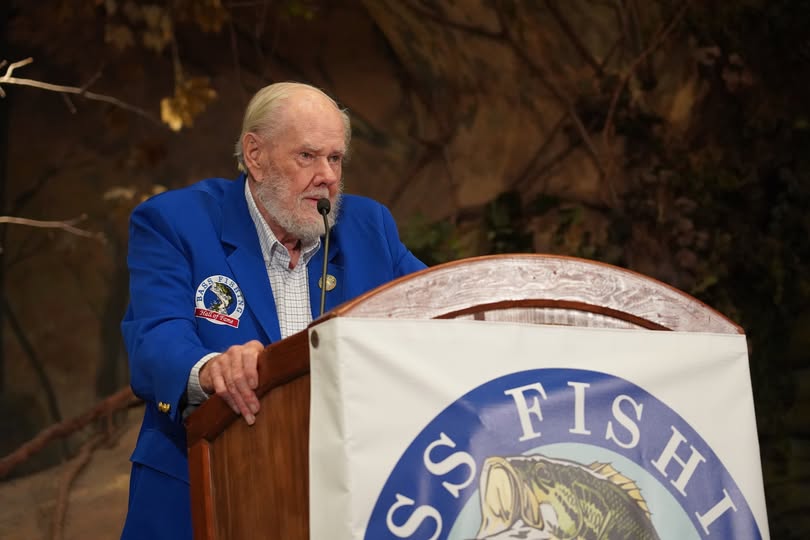
“When dad got inducted into the Bass Fishing Hall of Fame in 2023, he was introduced by Bill Dance,” Shane said. “He told the 300-plus people in the audience, ‘You’re simply the greatest bass fisherman I’ve ever known.’
“Jerry McKinnis said that. Bobby Murray wrote in the front of my book that he was the first real professional bass fisherman. You talk to Roland Martin, Tommy Martin, Rick Clunn, Jimmy Houston, they’ll all tell you that he was so inspirational to them that they just flocked to his information. That is the truth.”
And on the back of the book, Ray Scott offered this: “Glen Andrew is the best natural born fisherman I’ve ever met in my life.”