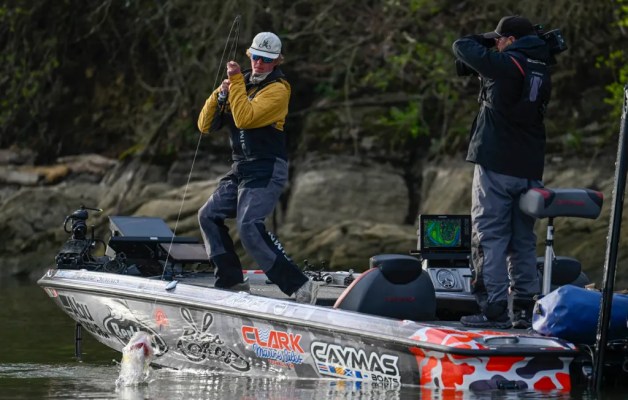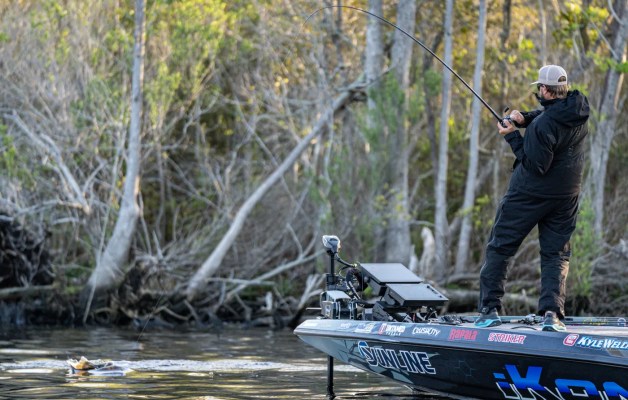
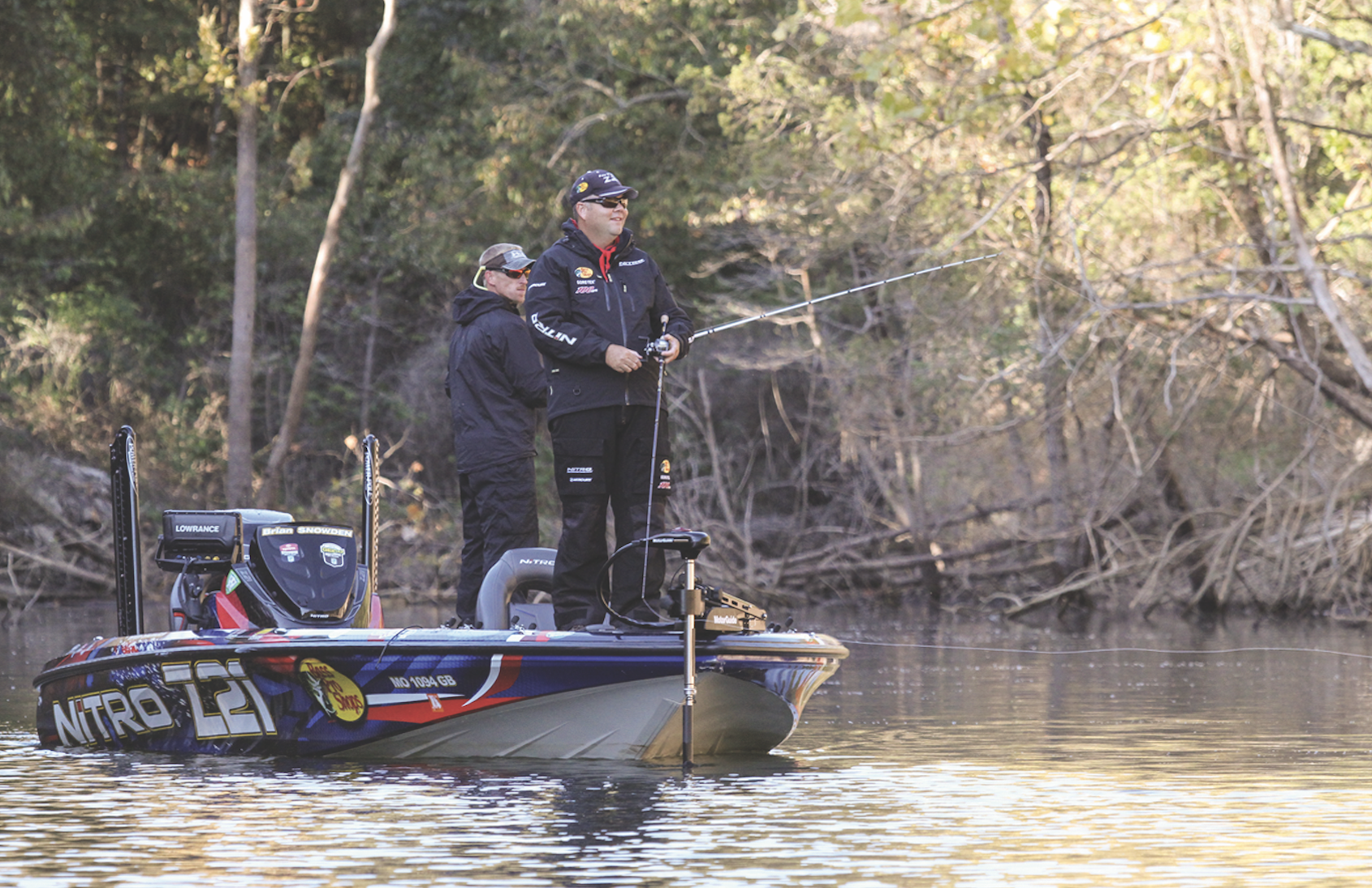
Knowing the plans for preventing floods in the spring can improve your chances of catching wintertime bass on man-made reservoirs. Reservoir authorities annually draw down lake levels during the winter to prevent flooding in the spring, so anglers must adapt to the falling water to catch bass. Winter drawdowns occur at different times on various reservoirs throughout the country, depending on anticipated rainfall amounts. Bassmaster Elite Series pro Mark Davis said his home waters of Lake Ouachita do not have a scheduled drawdown, but other Ozarks lakes he fishes experience falling water levels beginning in October.
Typical winter drawdowns lead to three phases that anglers must adjust to in order to keep track of bass. Phase One occurs when the drawdown begins and bass move from the shallows to deeper sanctuaries. Next comes Phase Two, when the lake level bottoms out and bass bunch up in certain holes during the dead of winter. Phase Three follows in early spring when the lake is still low and shoreline cover is high and dry, but bass have the urge to move shallower in search of warmer water.
Here’s a look at how Davis and fellow Elite Series pros Casey Scanlon and Brian Snowden track and catch bass during each phase of the winter drawdown.
Phase one
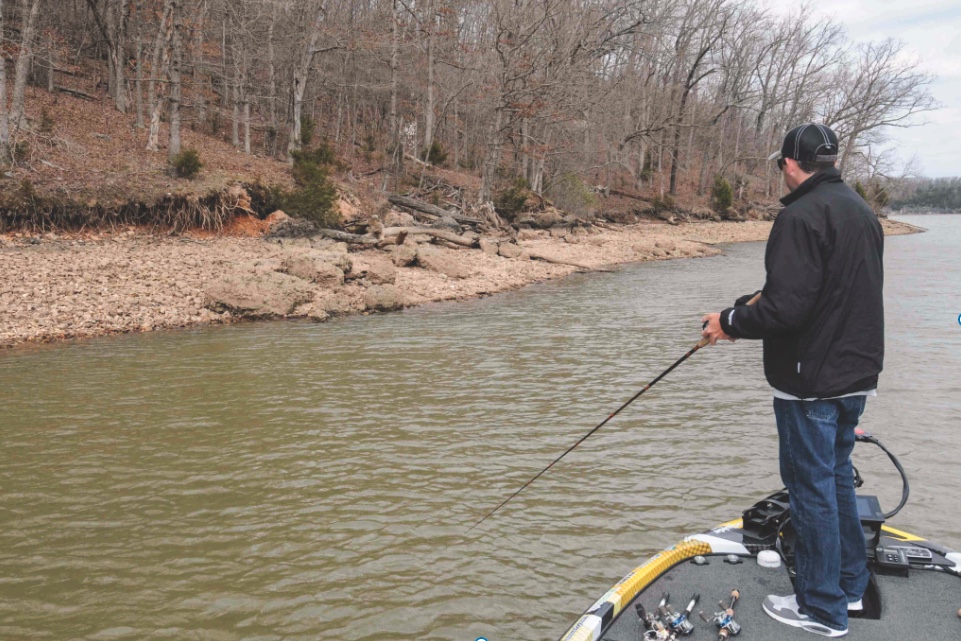
When the water starts dropping on clear water reservoirs during early fall, Davis looks for bass suspended over points, humps, creek channels and swings. “I catch a lot of fish during that initial drawdown, and one of my favorite ways to catch them is working a topwater, like a Strike King Sexy Dawg,” he said.
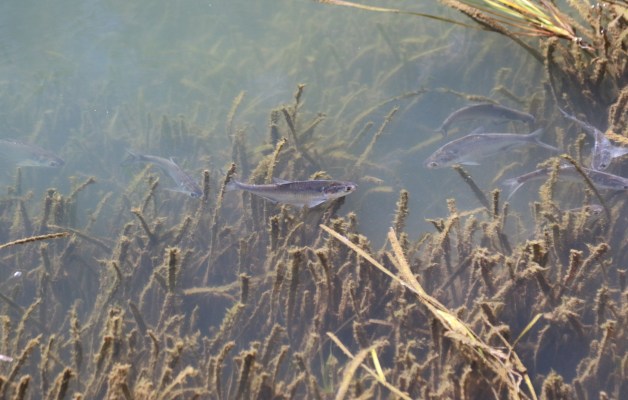
As the drawdown continues throughout the fall, Davis said bass “kind of adapt” to the falling water, so the shallow-water bite returns. “It all starts to revolve around the shad activity,” he said. “Even though the water is falling, the shad actually put bass back shallow. When the lake is falling, the shad will get up on those mud flats in the creeks, and then there is probably not a better way to catch bass than on a lipless crankbait.” The Arkansas pro opts for a 1/4-ounce Strike King Red Eye Shad lipless crankbait for bass chasing shad close to the bank, or a 1/2-ounce version for bass cruising farther out in the shallows.
The first drawdown phase on Scanlon’s home water of Missouri’s Lake of the Ozarks usually starts slowly in late November or early December, and then he notices the water levels drop sharply at some point.
Scanlon keys on main and secondary points where bass are feeding on larger meals for winter. “Those fish are up there eating those big gizzard shad,” he said.
During the early stages of the drawdown, Scanlon relies on a Luck-E-Strike buzzbait or other topwater lures to catch bass chasing the gizzard shad. As the lake level continues to fall, bass start suspending on points and vertical structure on the main lake, so Scanlon tempts these fish with a Luck-E-Strike Rick Clunn STX jerkbait or a 3/4-ounce spinnerbait that he slow rolls. Winter drawdown starts around September on Snowden’s home waters of Table Rock and Bull Shoals.
“At the beginning [of the drawdown], the best way to catch bass is still usually relatively shallow,” Snowden said. “All I am doing is looking for the last piece of cover in the water, like a boat dock where the fish move from the back to the front of the dock as the water falls. I have also done well fishing a little steeper bank [45 degrees or greater] with laydowns that still stick in the water. I start catching them on the very tips of the laydowns then.”
Snowden continues to target bass in depths of 2 to 5 feet and throws Zara Spooks or Bagley’s Balsa B2 square bill crankbaits around the wood cover. He also flips a 3/8- or 5/16-ounce jig with a Zoom Super Chunk Jr. to the laydowns.
Phase two
Davis considers this phase one of his favorite times to fish for winter bass. “Fishing gets pretty stable, and the fish will tend to school up and become very predictable,” he said.
Depending on the water clarity, Davis finds bass ranging from 10 to 40 feet deep. He catches bass in the 10- to 20-foot range on Strike King 5XD or 6XD Series crankbaits, 3/4- or 1-ounce jigs tipped with Strike King Rage Tail Menace Grubs or Carolina rigged 6 1/2-inch Strike King KVD Finesse Worms. For bass holding in deeper water, Davis serves the fish a flutter spoon, such as the Strike King Sexy Spoon.
The guts of creeks and main-lake pockets are Scanlon’s favorite targets during the bottom-out stage of the winter drawdown. He finds bass suspending at 8 to 10 feet over a depth of 20 feet or greater and casts his lures down the middle of them.
“In the middle of winter, I use a suspending jerkbait, and I am also going to throw some kind of an Alabama Rig,” he said. He throws an Alabama Rig without blades in clear water on calm, sunny days but changes to a bladed version of the rig in windy or cloudy conditions. During the dead of winter, Snowden heads to the backs of feeder creeks, where he looks for deep cuts along steep banks. He usually finds bass suspended from 15 to 30 feet deep next to standing timber over depths of 20 to 40 feet.
The Missouri pro chooses a 3/4-ounce jigging spoon or a Zoom Fluke attached to a Fish Head Spin jighead to catch these suspended bass. If Snowden notices the bass are holding in the 15- to 20-foot range, he will tempt them with the Fluke and Fish Head Spin. Snowden also casts the spoon for bass suspended above 20 feet but resorts to vertical jigging the spoon if the fish are deeper than 20 feet.
Phase three
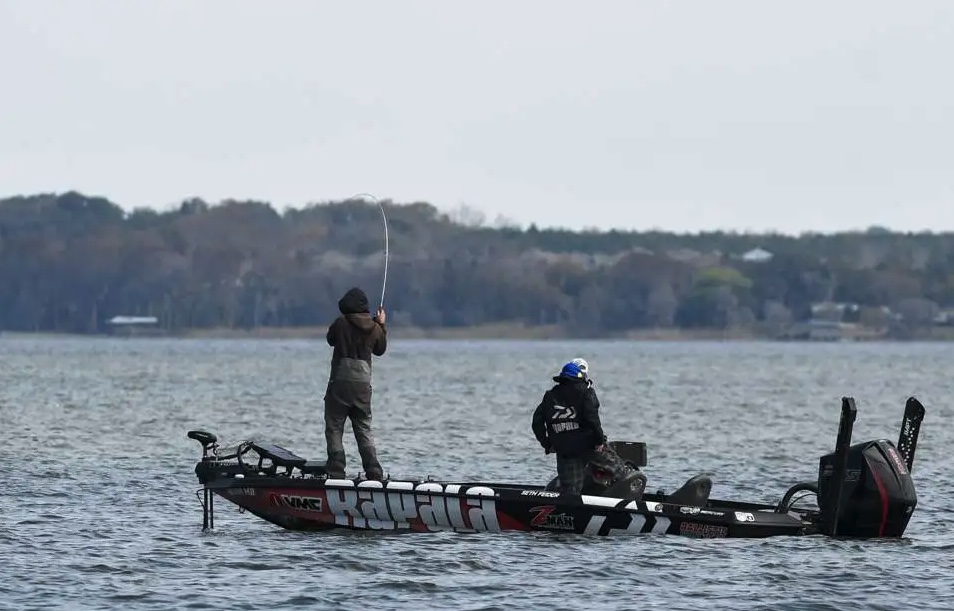
This is the trickiest phase of the drawdown because bass want to move to warmer water in the shallows, but shallow cover is sparse and cold fronts can send them deep.
“I start looking for the good, shallow bottom-contour structure, like creek channel points or humps or creek channel swings that are still close to deep water but right at the doorstep of where you think bass will be going,” Davis said. His favorite lure for the final phase is a Strike King jerkbait, but he will also throw a football jig, magnum spinnerbait and Strike King KVD 2.5 or 1.5 square bill crankbait.
Scanlon concentrates on boulders and docks in the shallows along points and bluffs in the backs of creeks. “I look for just any type of cover available on the bank, and I will throw a 1/2-ounce [Trophy Bass Co.] jig with a big trailer to slow the fall rate down,” Scanlon said. He also fishes a suspending jerkbait and a Luck-E-Strike G5 crankbait for bass suspended in deeper water.
Snowden, too, looks for bigger rocks or rock outcroppings jutting from the bank in water 5 to 8 feet deep. He positions his boat parallel to the bank and casts a Storm Lures Wiggle Wart crankbait, ChatterBait or spinnerbait to the shallows to catch bass in the final phase of them winter drawdown.