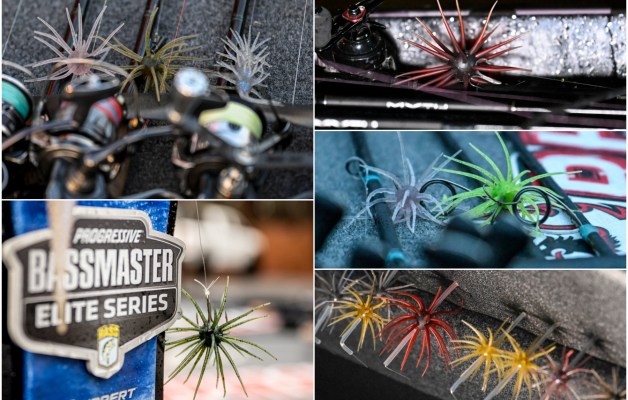


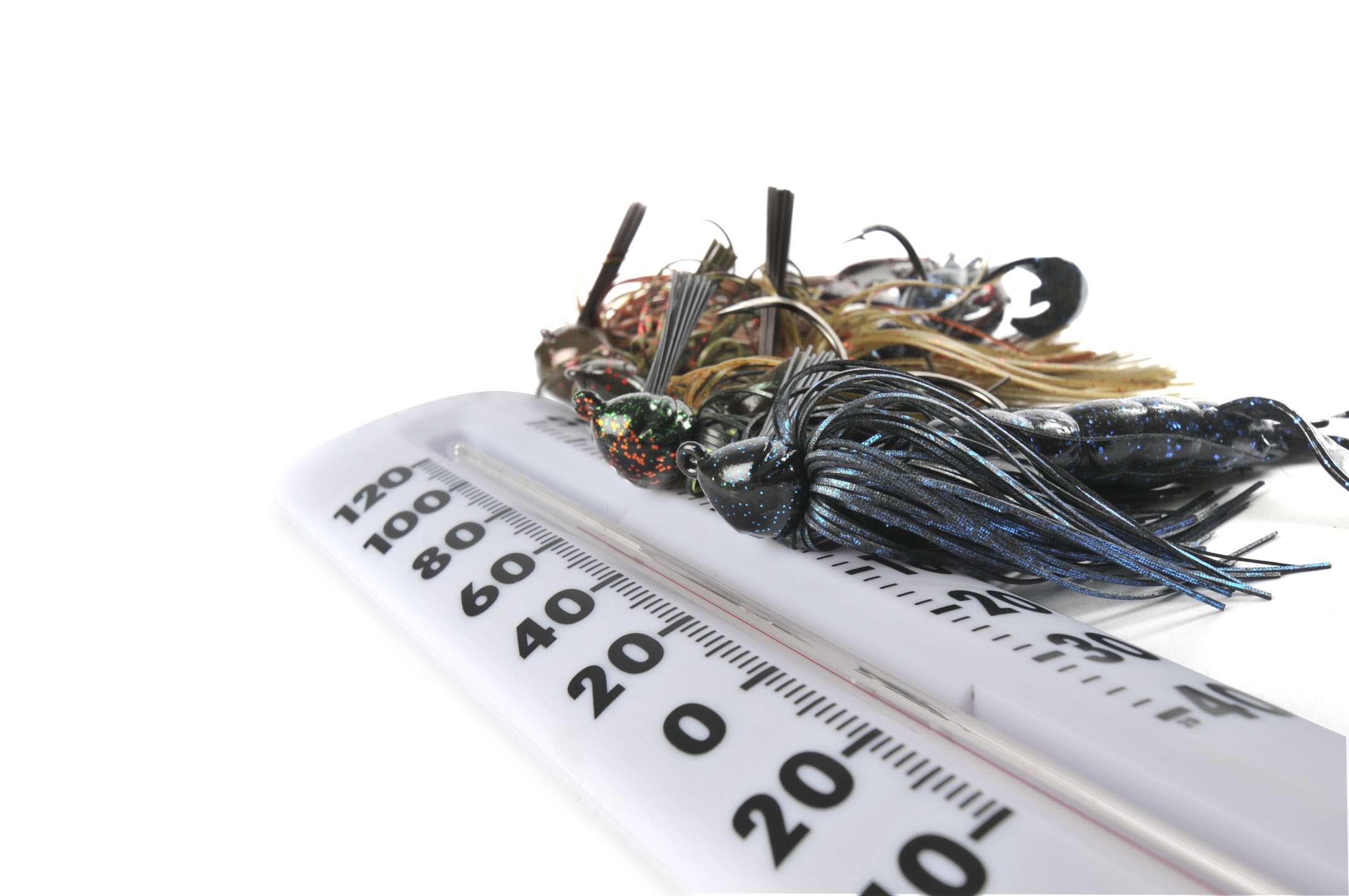
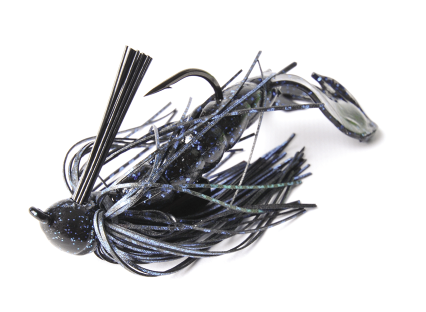
Bass relate heavily to rock now and will gravitate from deep water to riprap and chunk rock banks to forage for crawfish, especially on calm, sunny days. Pitch a 3/8-ounce black-and-blue jig with a big chunk trailer to these targets; itâll float down slowly instead of plummeting down and wedging between the rocks as a heavier jig would. In clear lakes, cast a 3/4-ounce green pumpkin football jig to long points accessing potential spawning coves. Brauerâs bonus tip: In winter, murky runoff from heavy rains can warm icy tributaries as much as 10 degrees overnight. Pitch a 1/2-ounce black-and-blue jig to isolated laydowns and stumps where stained runoff mixes with clearer water.

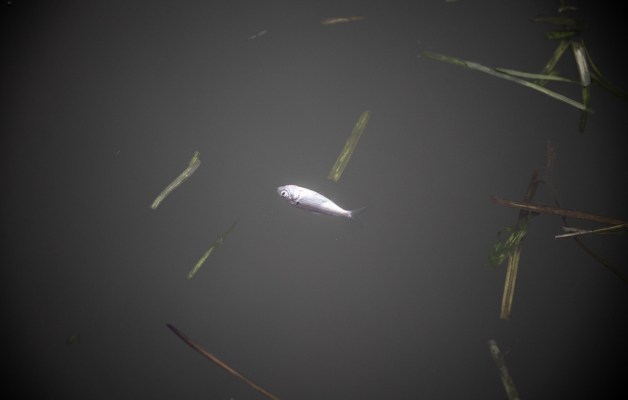
In reservoirs, baitfish (especially threadfin shad) are on the move now, and where thereâs bait, there will be bass. I pay more attention to baitfish location than surface temp in fall, especially in deep lakes where the water 10 feet down may be much warmer than the water on the surface. Use your electronics to locate baitfish schools suspending around primary structures such as long main-lake points, offshore humps and channel breaks. Determine the depth of the baitfish, make a long cast to the school with a white 3/4-ounce jig with a matching chunk trailer, count the jig down to the depth of the bait (â1,001, 1,002,â etc.), then begin a slow, constant swimming retrieve. Bass bird-dogging the baitfish school will hammer it! Brauerâs bonus tip: Isolated wood Âtargets on the outer edges of flats will hold big bass now. Hit these with a 1/2-ounce black-and-blue flipping jig.

Bass will move to ârest stationsâ such as flooded bushes, stumps, laydown logs and weed patches close to bedding areas to recuperate from spawning. Flip a black-and-blue jig with a chunk trailer to these targets, making your initial presentations to the shady side of the cover. Brauerâs bonus tip: Bass will head farther out toward the main lake via the tributary arms as the water gets progressively warmer; probe secondary mud or gravel points with isolated cover with a 3/4-ounce green pumpkin football jig.

Bass will stage on isolated pieces of cover adjacent to sheltered coves and shoreline pockets waiting for the water to warm to around 60 degrees before they move shallower to spawn. The lake may be murky now from heavy rains; if so, try pitching a jig with a mixture of skirt colors (such as black, brown and chartreuse, aka, Texas craw) and a contrasting trailer (such as black with red flake). Brauerâs bonus tip: Boat docks near the entrances of spawning coves can hold monster bass now. Flip a 1/2-ounce Texas craw jig to the outside corner of dock pilings.

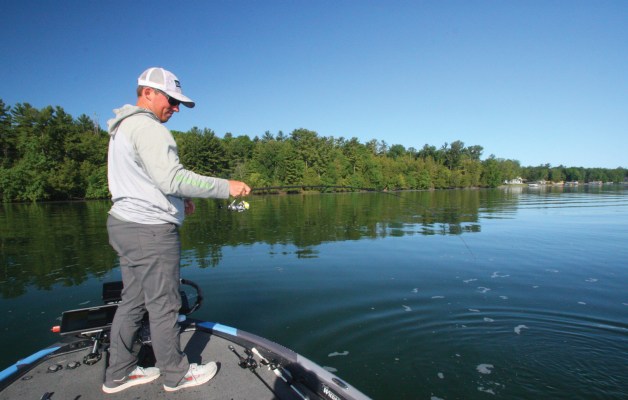
A flipping tube is probably the most popular bedding bass bait on the pro circuit, but thereâs no telling how many lunkers Iâve jerked off their spawning beds on a 3/4-ounce black-and-blue jig! When sight fishing for bedding bass, you want a big, bulky presentation that both irritates the bass and can be easily seen by you in stained water or cloudy sky conditions. Using a flipping rod and 25-pound fluorocarbon, pitch the jig onto the nest and aggravate the bass into biting by shaking the rod tip gently so the lureâs skirt and trailer writhe enticingly while its heavy head remains pinned to the bottom. Brauerâs bonus tip: In grassy lakes, try retrieving a watermelon/red flake swim jig with a small craw trailer horizontally across holes or pockets in vegetation to mimic an egg-robbing bluegill

Many reservoir bass will be on primary main-lake structures â including offshore ledges, long points intersecting deep channels, humps and submerged roadbeds â and will hold around isolated pieces of cover associated with these structures. Deep weedbeds are my go-to summer bass targets. I fish these with a 3/4-ounce green pumpkin Strike King DB Structure Jig, which has a flared head to enable it to slide easily through cover. In lakes with thick milfoil and hydrilla, Iâll punch a 1-ounce Strike King Hack Attack jig fished on braided line through the surface mat, letting it sink down to bass holding on the bottom. Brauerâs bonus tip: If slow-dragging a football jig isnât working when the waterâs hot, try going for a reaction strike by stroking the jig off the bottom with a sharp, upward swing of your rod.

Iâve caught bass on jigs in water as cold as 33 degrees and as deep as 60 feet during winter. Choose a jig style and weight according to water clarity; as a rule of thumb, bass will be one-half to one-third as deep in murky lakes during winter as in clear lakes. In murky lakes, probe wood and rock cover on steep channel banks with a 1/2-ounce black-and-blue flipping jig with a matching craw trailer. In clear lakes, target deep main-lake structures such as the sides and ends of major points, offshore humps, rockpiles and channel dropoffs by slow-dragging a ÂÂÂ3/4- to 1-ounce green pumpkin football jig, again with a matching craw trailer. Brauerâs bonus tip: Because their Âdigestive process slows way down in frigid water, bass will usually target smaller prey during winter. If you arenât getting bites on your jig, trim back the skirt and downsize the trailer to more closely match the size of a small crawfish.