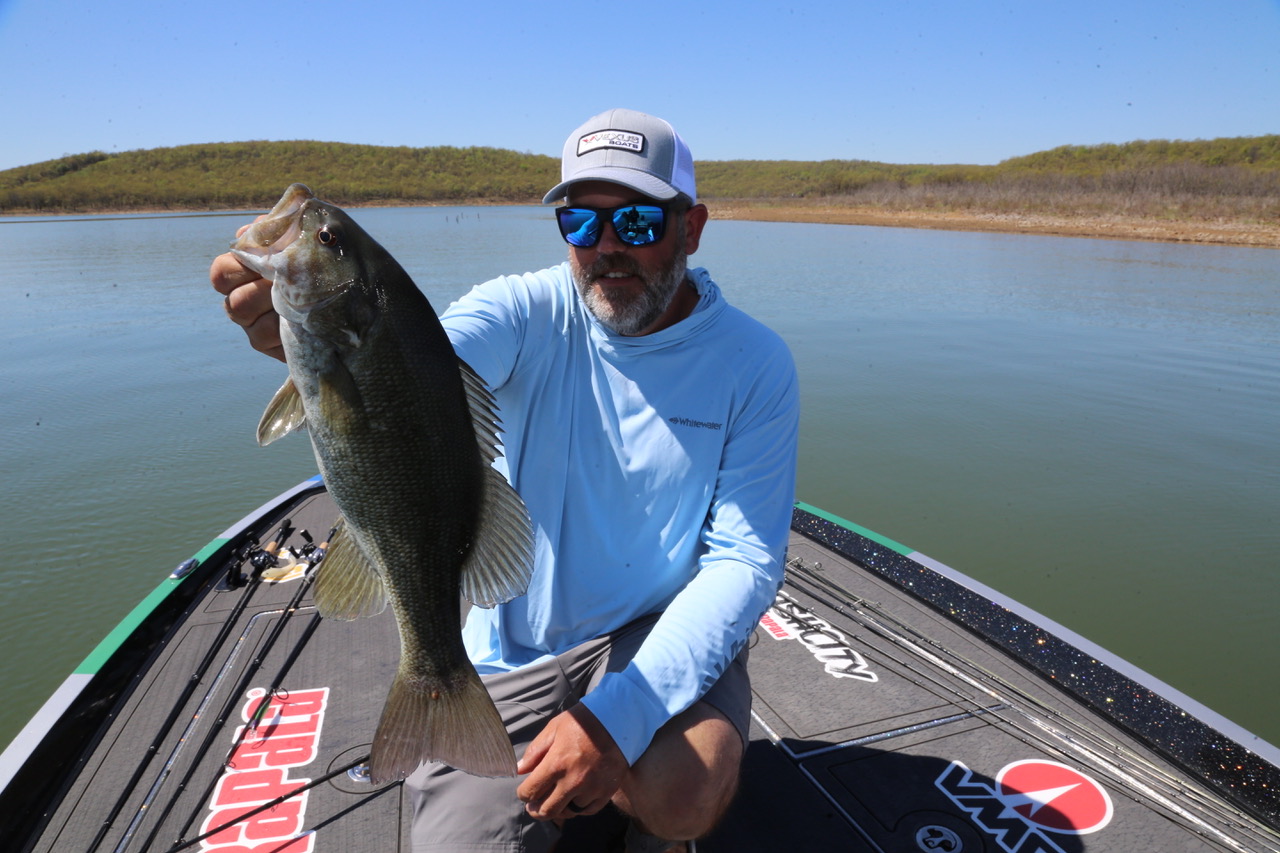
The question of how top pros find bass so well on waters they’re not familiar with may be the most often asked question by fans in the history of the sport we all love.
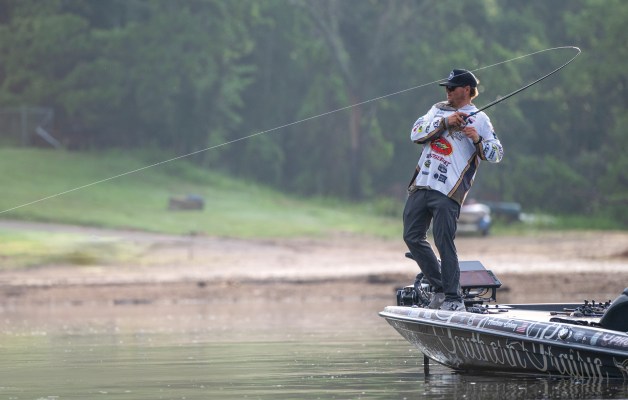
For insight into the answers, take a quick ride in the Vexus® VXs21 of Adam Rasmussen, an easy-going smallmouth master from Wisconsin who has proven he can win anywhere, including a B.A.S.S. Open and Nation event in Alabama.
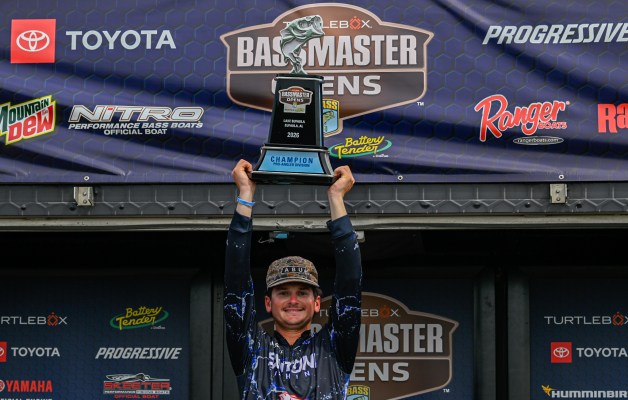
Not to mention, he made a serious run at winning the Bassmaster Classic on Grand Lake, Oklahoma in 2024, and currently sits near the top of the Opens points standings in 2026 after events in Texas, Florida, and Alabama.
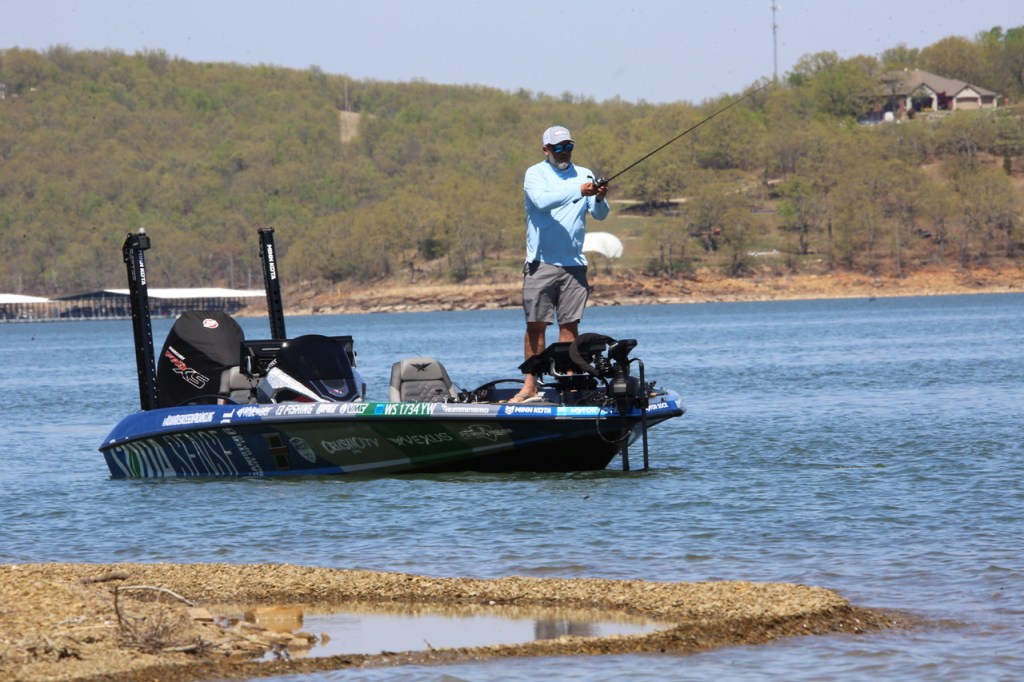
We didn’t make it easy on Adam
The playing field was a 10,000-acre reservoir north of Tulsa, OK, which he had never fished, with both largemouth and smallmouth – but it’s a good 14-hour drive from his home, and to make it tougher, we didn’t launch until high noon, on a bright sunny day with hardly any helpful winds.
Survey the situation and understand the basics of bass behavior
Top pros like Rasmussen don’t take a random approach to finding a ‘lucky spot’ or even a good looking spot, instead they study the topography, the habitat, the water clarity, water temperature, and know what phase of the spawn bass are likely to be in – and you should too.
“I can tell by looking at the map, that most of the smallmouth are probably on the deeper, clearer, rockier east end of the lake, and the largemouth are probably in the major creeks full of trees and shoreline bushes to the west. The water temp is 63, and that tells me smallmouth are probably spawning on shallow points, and largemouth are about to,” says Rasmussen, who once lived on a salmon boat for two years that he piloted on guide trips.
With all that data, where to look first?
Rasmussen’s fast assessment of the lake he’s never seen is highly accurate. So, where’s he going to make his first cast on these unfamiliar waters?
“Looking at my Humminbird mapping, I’m picking this big, but shallow point close to the main lake, because I know spawners want to be shallow, but experience has taught me that the larger spawning fish want to be near the main lake just as much or more than way back in the creek,” he says.
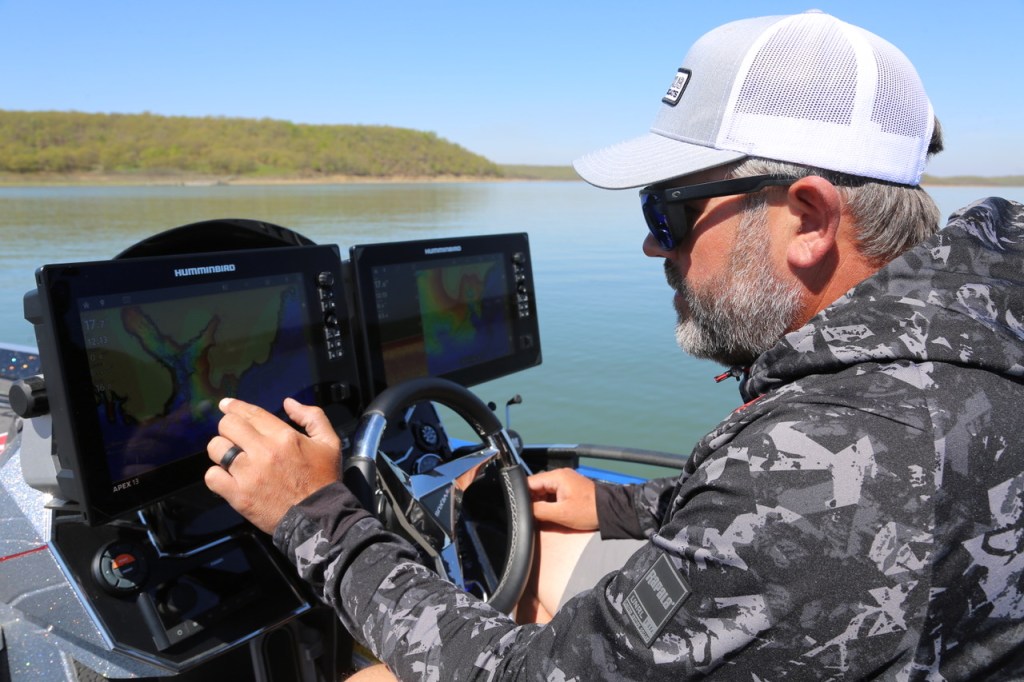
Make use of modern technology
You don’t have to have four or five sonar units on your boat to find and catch bass, but at least one that allows you to ‘split the screen’ to show modern-day mapping, forward-facing sonar, and perhaps a 360-degree view of the bottom is a wise investment. A number of those single units exist, and Rasmussen makes full use of all of the ‘views’ they provide.
That didn’t take long
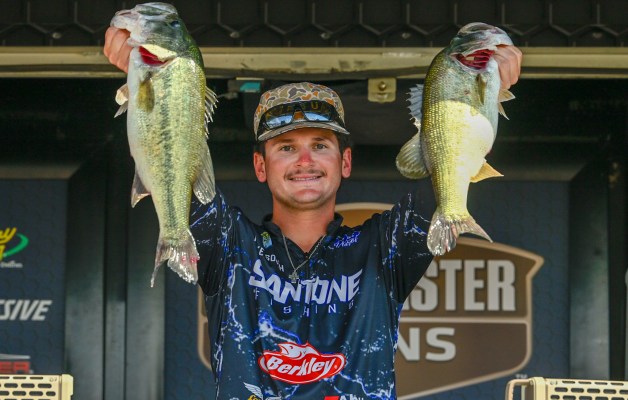
Less than 10-minutes after leaving the dock Rasmussen connected on two keeper sized smallmouth with a Rapala Mavrik jerkbait. It was not magic. It was not luck, or a result of insider information.
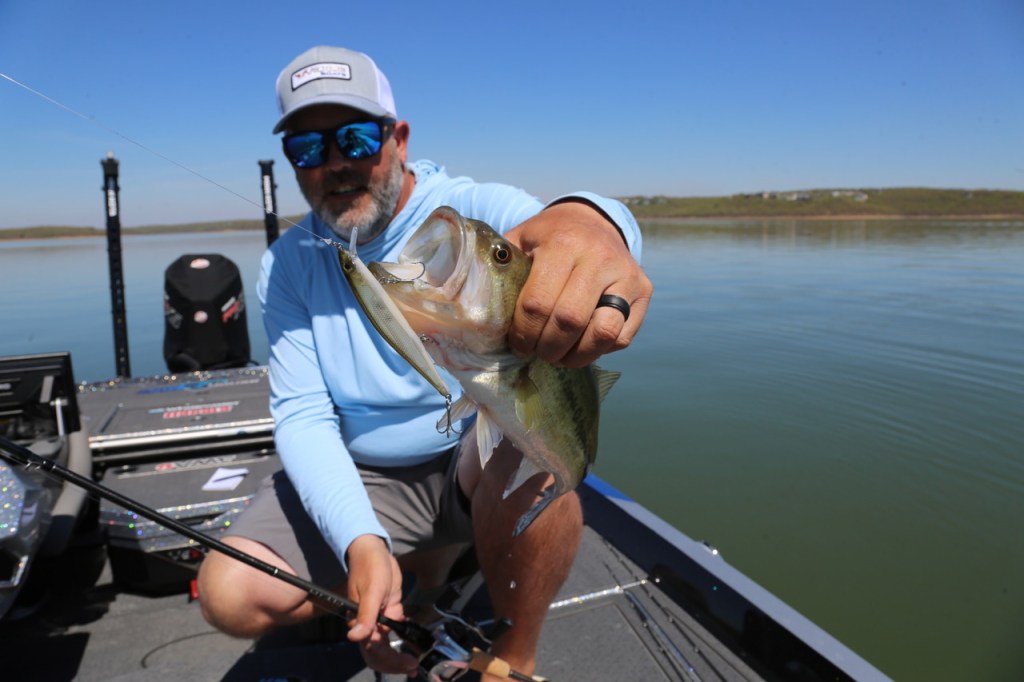
It was a classic case of using every bit of knowledge regarding water conditions, bass behavior, and phase of the spawn, to land on a make-sense location. And then he utilized all the available sonar advancements, along with a lure he has great confidence in, to find and catch bass quickly on a lake he had no previous knowledge of.