Cranking for smallmouth is certainly not new. This is a proven technique when targeting smallmouth in rivers, down south, and on the highland reservoirs of Arkansas and Missouri. But northern smallmouth fishing is typically a more finesse affair. The bronze backs living in crystal-clear glacial lakes feed primarily using sight, so wide wobbling flashy crankbaits can sometimes be a turn off.
However, there is a window of opportunity when cranking for these roaming bass is one of the best options on the table. We caught up with Tennessee native and Elite Series pro Cole Sands to learn more about when, where, and how to crank for pelagic smallmouth.
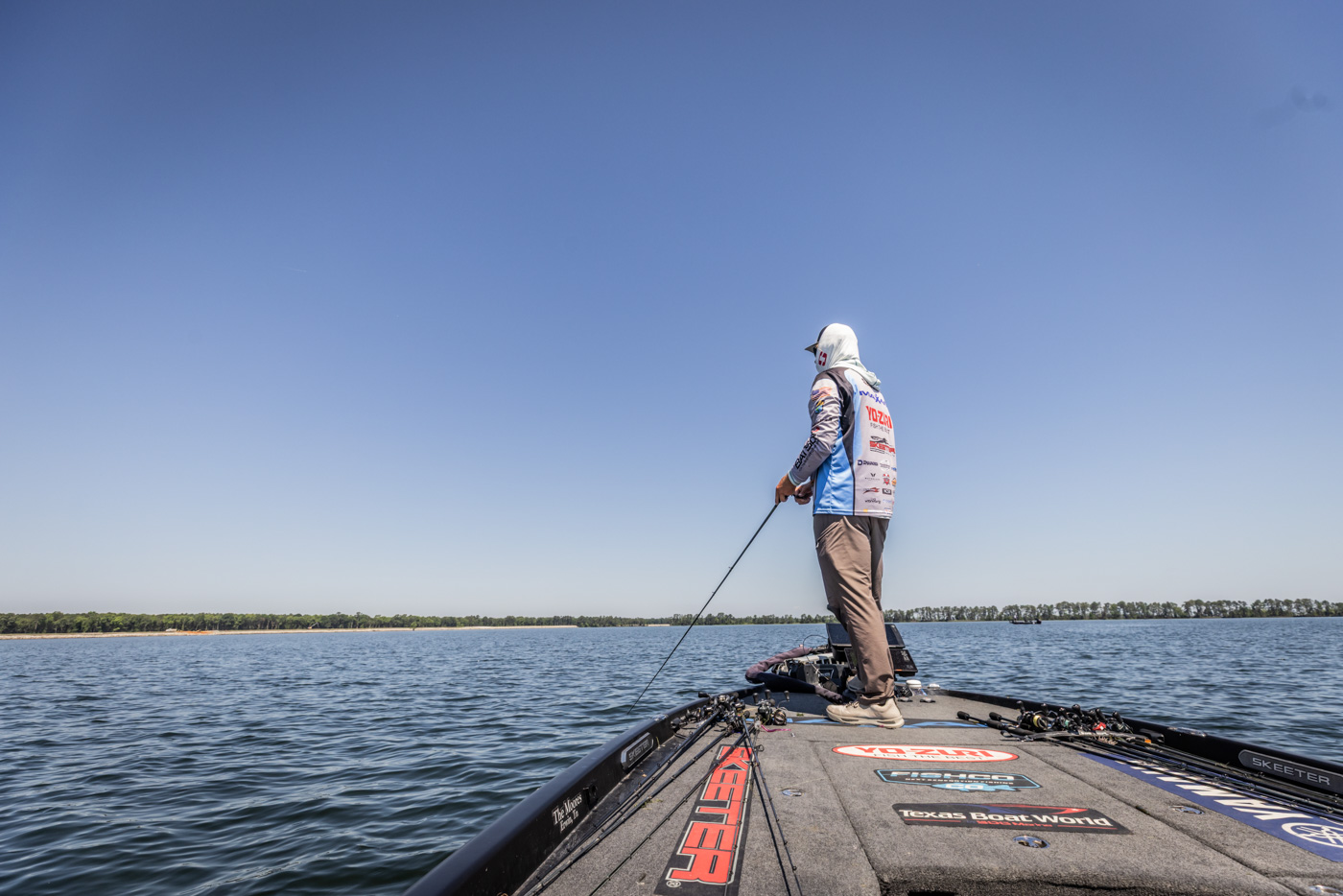
“On the Tennessee River, it’s very spot-specific,” said Sands. “A lot of times you’re making one cast to a rock pile, whereas northern smallmouth like to roam flats, making them very much area-specific. When locating those groups of smallmouth, especially without Livescope, you want to be able to cover a lot of water. And a crankbait is one of the best baits out there when it comes to covering water.”
Using a crankbait, Sands can keep his trolling motor on high and rule out vast stretches of dead water between groups of smallmouth. But the conditions need to be right for this to work well. The biggest key to knowing when to crank for pelagic smallmouth is wind.
“I’ve noticed when it’s windy, it definitely seems to excel. When it gets sunny and flat calm, it can be a little bit tougher. But a lot of times, I am cranking it so fast that even with calm conditions, I can still trigger some bites—just because of the sheer speed of it.”
Speed is key, so Sands likes to crank for northern smallmouth using an 8:1 gear ratio reel, which is uncommon to say the least for most cranking aficionados. The Tennessean noted how much more the smallmouth of the north like to chase, as compared to those on his home waters of the Tennessee River.
“On the TVA fisheries, I’m grinding a plug on the bottom, whereas, on Champlain or St. Clair and places like that, if I’m in 12 feet of water and the grass comes up to 5 feet, I want my crankbait to just barely tick the top.”
Burning his bait back across the top of cover or even over top of a bare sandy spot triggers something in the curious smallmouth that inspires a chase. To keep his bait up higher, Sands will also do something else that’s a little uncommon in the cranking world.
“Sometimes I do go with a heavier line because of that. I might go with 14-pound or 16-pound Yo-Zuri T7. Also, my number one crankbait that I love to use for smallmouth up north on those flats is a Yo-Zuri 1.5 MR. It’s one of those crankbaits you can burn really, really fast without it blowing out.”
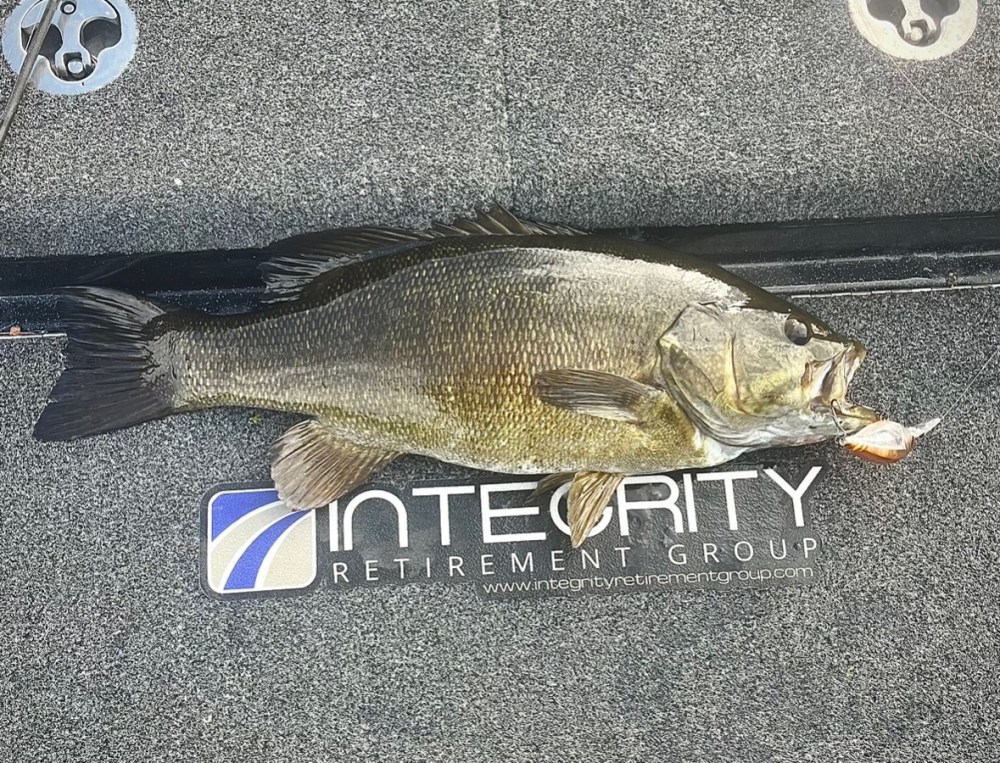
Sands keeps his color selection simple, alternating between perch, clear brown crawfish, and burnt orange crawfish. The clear brown is relegated to the calmer, clearer days. And then the choice between perch or burnt orange craw comes down to what Sands is seeing from the fish, noting that he’s often caught smallmouth up north that spit up orange pinchers in his livewell.
Cranking for northern smallmouth presents several unique challenges. To combat these, Sands pairs his high gear ratio reel with a 7’ 2” medium Sandman Series Rod from Witch Doctor Tackle. This rod has a good blend of backbone to be able to pop his bait out of vegetation and a soft tip for wrangling wild smallmouth. Hook selection is also critical in keeping these feisty fish pinned.
“The stock hooks are actually pretty good. But with smallmouth, I do like to have something that has a little bit of an inward curve to it. I think the Owner Stinger Hook is one of the best hooks out there, and I usually upgrade to a number 4 on those crankbaits.”
If you want to try your hand at cranking for northern smallmouth, it’s best to pick this bait up and lock it into your hand on a windy day. But, as you build confidence in the technique, you’ll find that you can catch some fish on a crankbait in calm conditions as well.
Let the conditions and fish tell you which color to go with, be sure to use a fast reel so you can burn your bait in and select a bait that won’t blow out. Round out your presentation with a rod and hook selection that will give you the best chance of getting fish to the boat. According to Sands, if you keep your crankbait up off the bottom and burn it in, you’ll have a smallmouth try to rip the rod out of your hand soon enough.