
Just like jackets and shoes, there’s no one-size-fits-all when it comes to bass fishing presentations. That’s why a diverse arsenal of baits helps you dial in the day’s color, size and shape preferences.
Along with that thought, diversifying your presentations further enhances your ability to find something the fish like. Most bass anglers started out slinging a Texas-rigged worm off a dock, seawall or shoreline and, while there’s still plenty of room for such simplicity, gaining proficiency in the five techniques below will cover you in practically any scenario you face.
You’ll also want to keep a few reaction baits — spinnerbaits, topwaters, crankbaits, bladed jigs — handy, but the following presentations are foundational to a well-rounded bass program.
FLIPPING
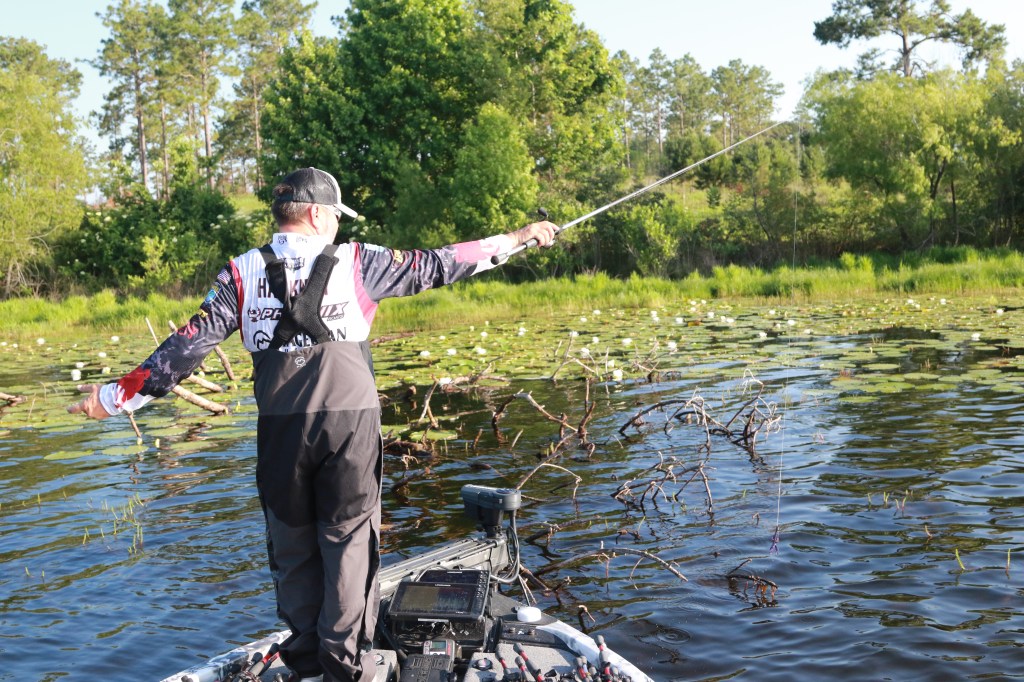
How to Do It: In its basic form, the setup might, resemble fly fishing, as you’ll hold the rod in one hand and pull the line to the side with your free hand. The difference, of course, is that fly fishing uses heavy main line to propel a fly and the leader, while flipping relies on the bait to move the line.
Open the bail on a spinning reel, or disengage a baitcaster to let out about 1 1/2 times your rod length in line, then close the bail or engage the baitcaster. Grab the line with your free hand and pull it to the side to raise the bait.
Lift your rod tip and move the rod backward to swing the bait toward you and then move the rod forward to send the bait toward the target. As your bait lines up with the mark, release the line from your free hand to allow the bait to drop into the water.
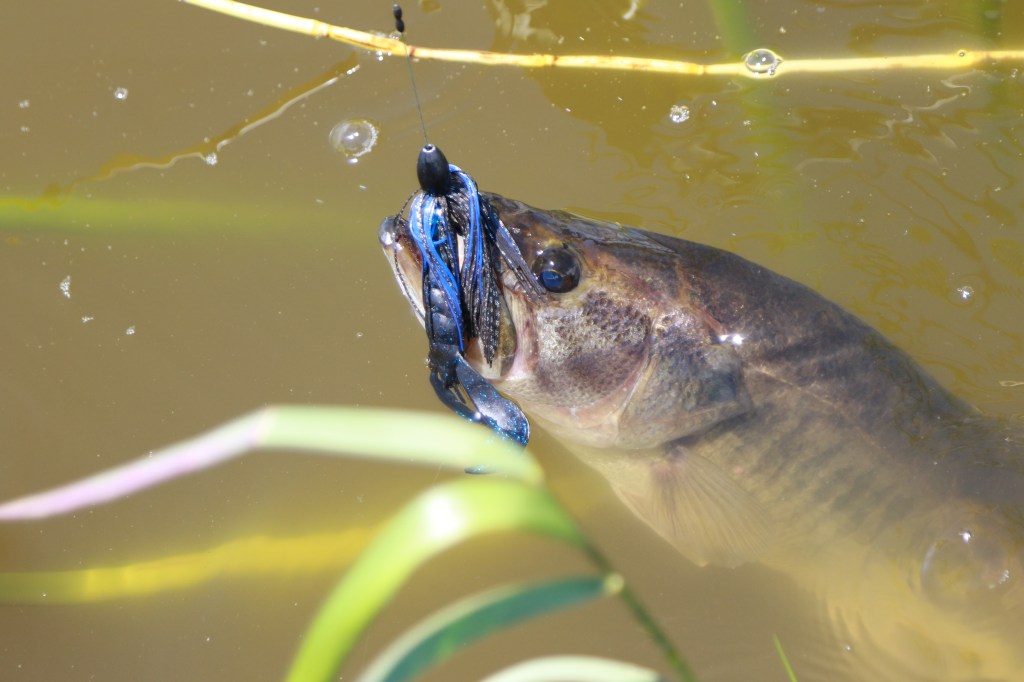
When It’s Right: Flipping excels for targeting specific spots like holes in a grass bed, small gaps amid lily pads, or a certain space between a laydown’s branches.
Presentation Pointers: Less is more, so learn this technique with a shorter amount of line and expand as you become comfortable. Less line also helps with the hook set because when you get bit, you have to drop the line you were pulling to the side and quickly reel tight. If you’re wrestling with too much line, the fish has a second or two of slack and that’s all a big one needs to say “See ya!”
PITCHING
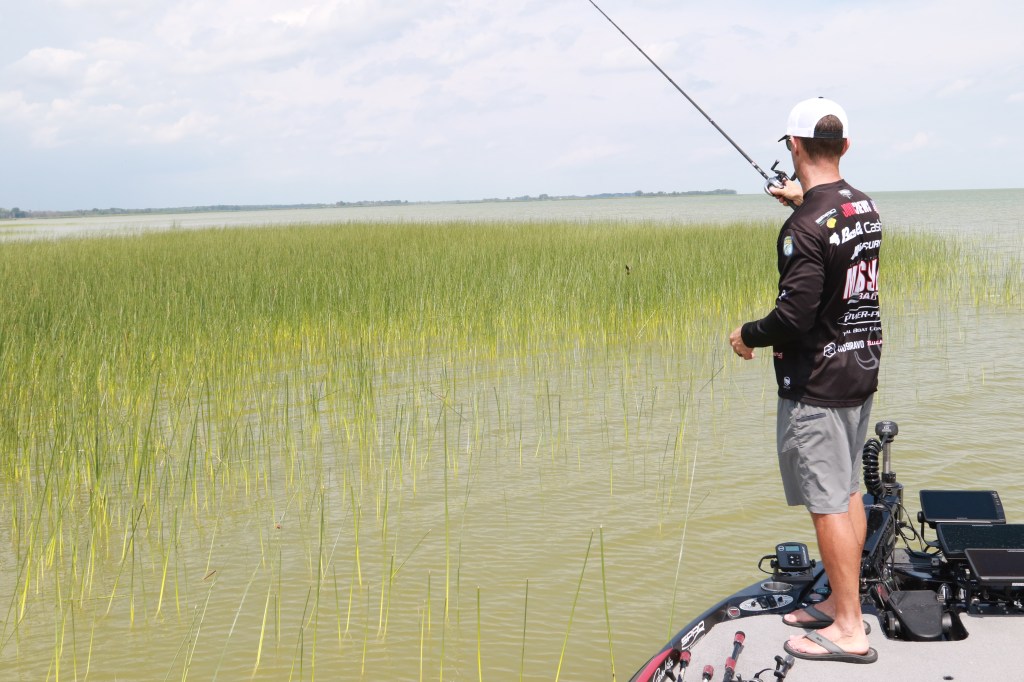
How to Do It: Anglers commonly refer to any underhanded swinging presentation as flipping, but there is a difference. Specifically, pitching uses an open reel for customized casting distance on every presentation.
With a baitcaster, disengage the reel with the thumb bar, hold your thumb on the spool, dip your rod tip low to swing the bait back toward you, then quickly snap the rod tip forward as you release the spool. (With a spinning reel, open the bail, pinch the line against the rod as you would for an overhead cast and then follow the same rod movements as with the baitcasting pitch.)
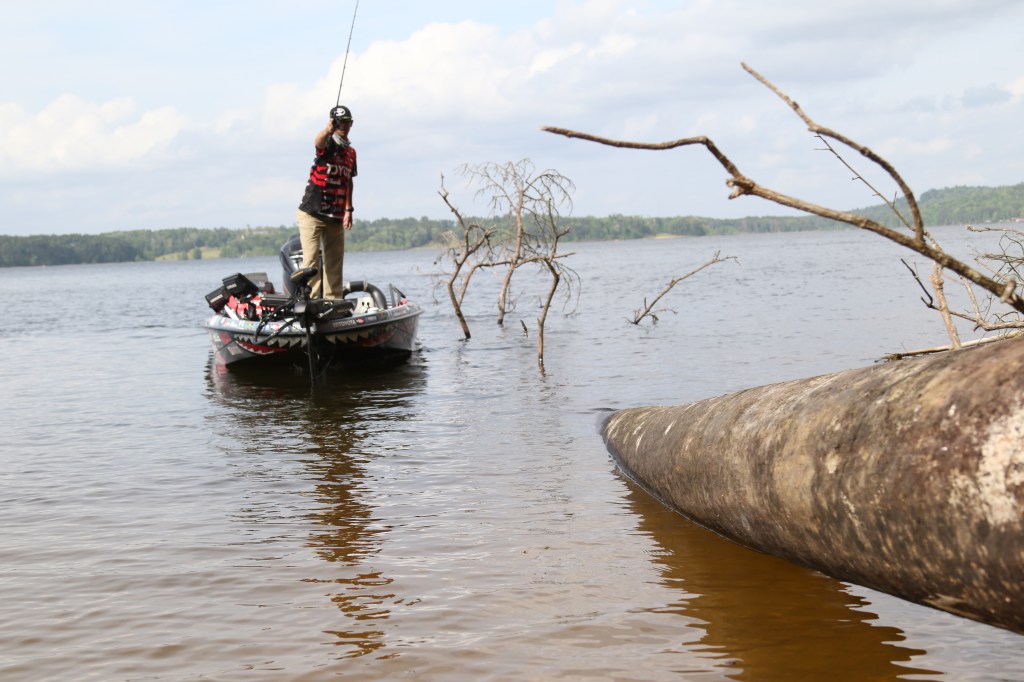
When It’s Right: Ask most bass anglers and they’ll say they do far more pitching than flipping, as the latter is intentionally more time consuming with its specificity. By comparison, when you’re trying to quickly work through a larger grass edge, pad field, or brushy shoreline, pitching is your technique because it’s a quicker sequence — pitch, shake the bait, reel up, repeat.
Presentation Pointers: You might occasionally see an angler palming a pitch bait before the presentation, rather than free swinging it. This method controls the bait more for a precise pitch angle. This helps for bed fishing or returning a bait to the exact spot of a missed bite.
PUNCHING
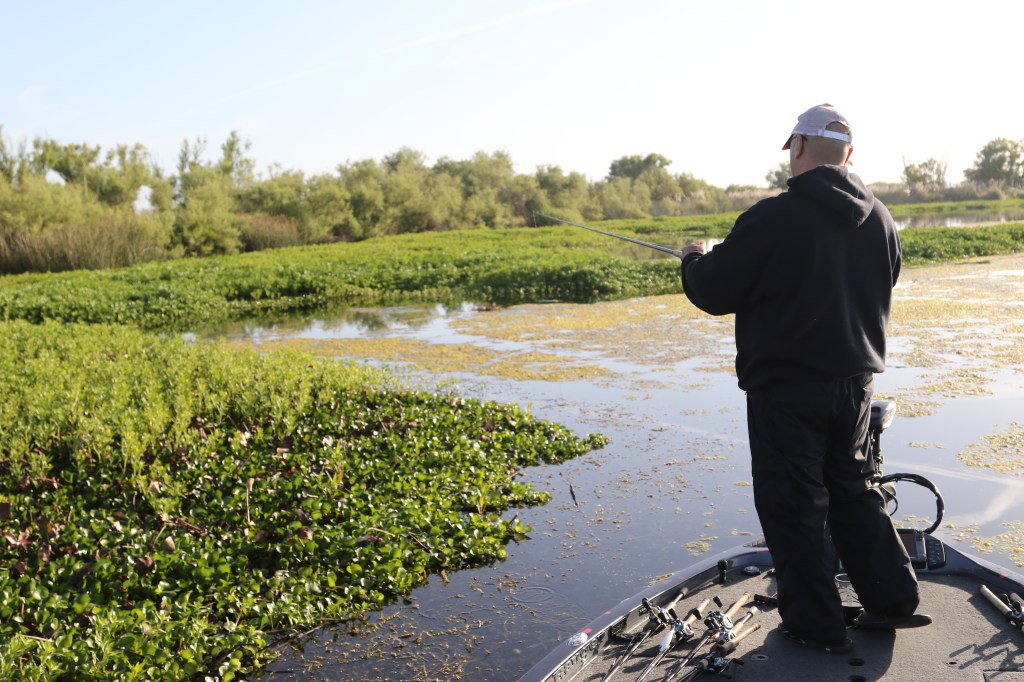
How to Do It: Simply put, this is the heavier version of pitching. Instead of a 3/16- to 1/2-ounce weight, punching will use a 1- to 2-ounce weight to drive the bait through cover.
When It’s Right: Dense, topped-out grass beds, thick floating hyacinth or pennywort mats, and “trash mats” comprising rooted and floating vegetation and random flotsam. Anywhere bass may hide in shadowy caverns with a substantial roof, suddenly popping a bait into their living room usually elicits an aggressive reaction bite.
Presentation Pointers: While that sudden shock of a punched bait usually does the trick, if you don’t get bit right away, hop the bait a couple of times and then move on to the next shot. One exception is “tickling” the mat — reeling up until you feel your bait against the mat’s underside and then wiggling it to mimic a crawfish crawling across the mat, or possibly bluegill feeding on aquatic insects.
SKIPPING
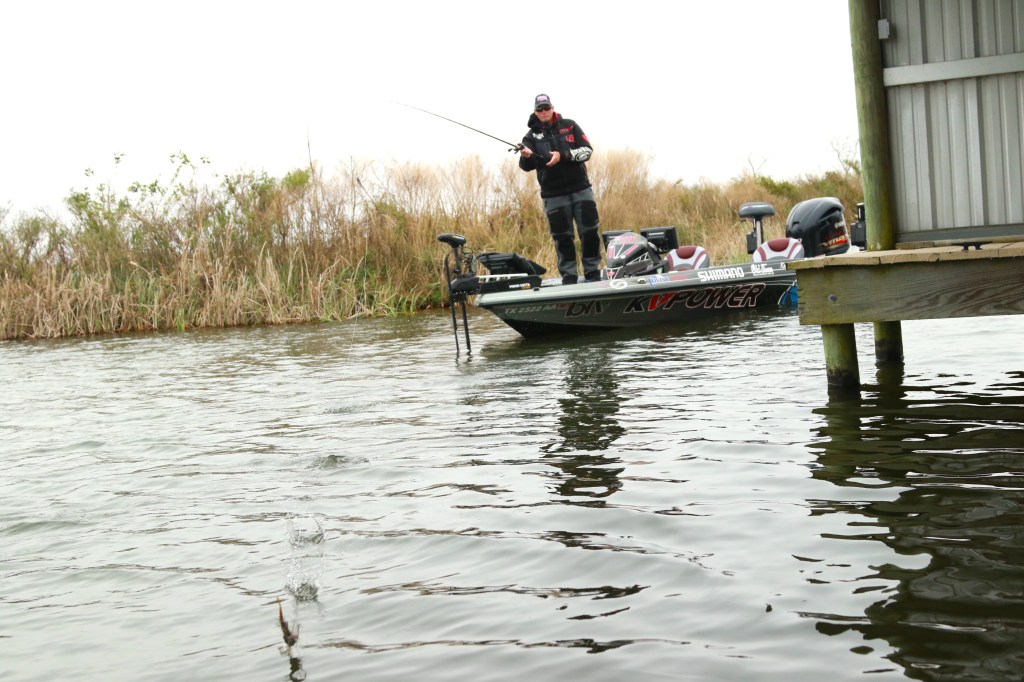
How to Do It: For a helpful visual, think about skipping stones across the pond. You’re not making a straight line toss from Point A to Point B; rather, you’re using momentum and angles to send your bait hopping into the targeting zone.
With a sidearm or underhand roll cast, sling your bait at a spot about 6-8 feet from where you ultimately want it to go. This one typically takes more practice than just about any other presentation, but with repetition, you’ll dial in the timing.
When It’s Right: Use this one for docks, boat slips, overhanging trees, culverts and anywhere a bass might hide in or under.
Presentation Pointers: Use a rod length appropriate for your height. Taller folks can work with a longer fishing rod than shorter anglers, but as long as you’re not slapping the water with the rod tip on every skip, use what feels comfortable.
One thing that accomplished skippers often note is that filling your spool about 25% from its capacity tends to reduce the dreaded backlash. When your spool’s maxed out, that line wants to jump off with the slightest miscalculation in spool braking. Leaving a little buffer space helps your cause.
Also, start your skipping from a reasonable distance. It might sound contradictory, but when you have more room to work, the performance pressure is much less than when you’re tight to your target and trying to hit a narrow space.
DRAGGING
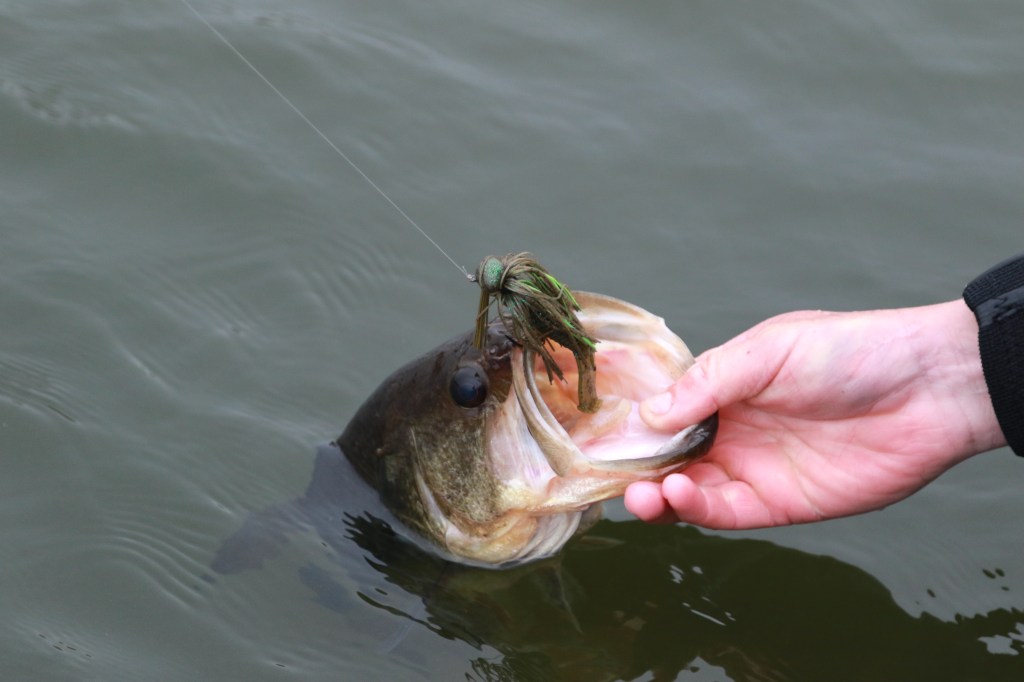
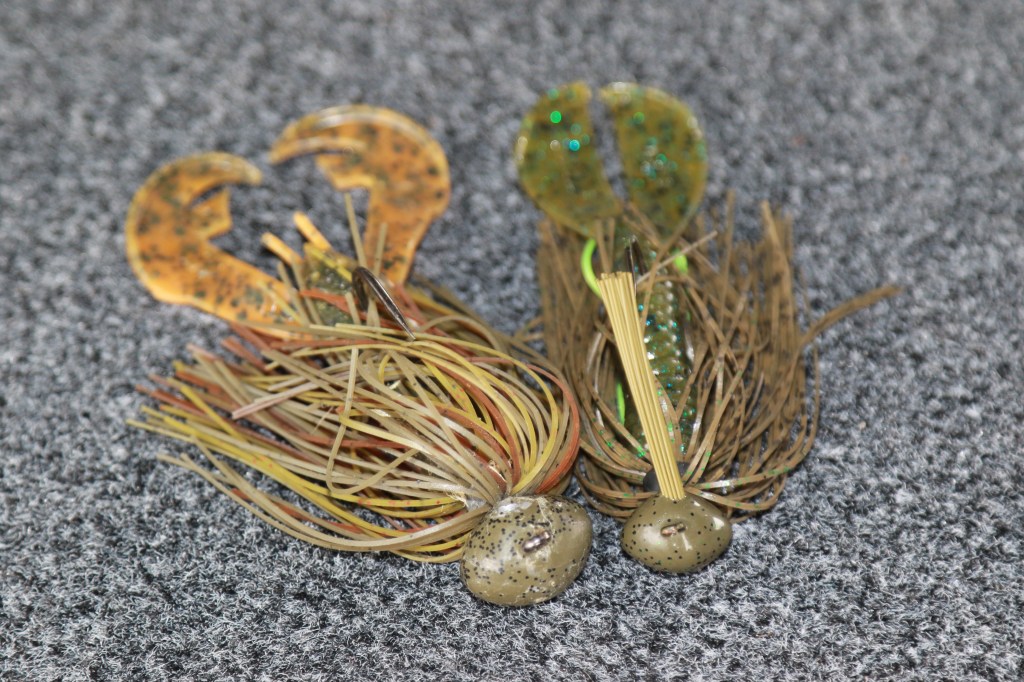
How to Do It: Use football head jigs and articulated jigs (aka “wobble heads”), or Carolina rigs with craw or creature baits for long casts and straight retrieves to grind across the bottom with the noise and commotion that attracts interest.
On northern smallmouth fisheries, dragging a tube is a popular technique for covering water and locating scattered fish. A tube does a good job of imitating the round goby, a common smallmouth forage, but dragging a finesse football jig, Carolina Rig, or Ned rig also works.
When It’s Right: With fish-friendly features like scattered weed clumps, small rocks, gravel bottom presents a vast area of potential without definitive targets, “covering water” is the way to go.
Presentation Pointers: For working broad swaths of likely area, anglers often use wind or current (rivers) to propel a controlled drift. Here, angling the motor and possibly using a drift sock to drift in a somewhat broadsided manner allows the full boat length from which to work.
Drifting bow-first runs a greater risk of a hooked fish tangling in the prop, as the line runs down the length of the boat, rather than straight away.
Depending on where you fish, some combination of these techniques will help you put more fish in the boat. When possible, practice each one and you’ll develop an arsenal that can handle anything you encounter.