
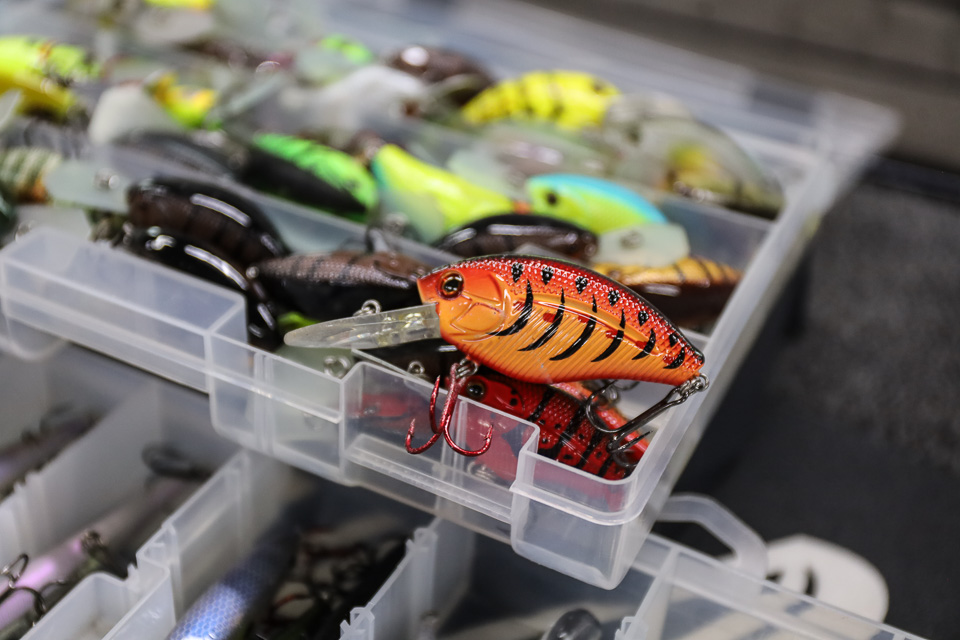
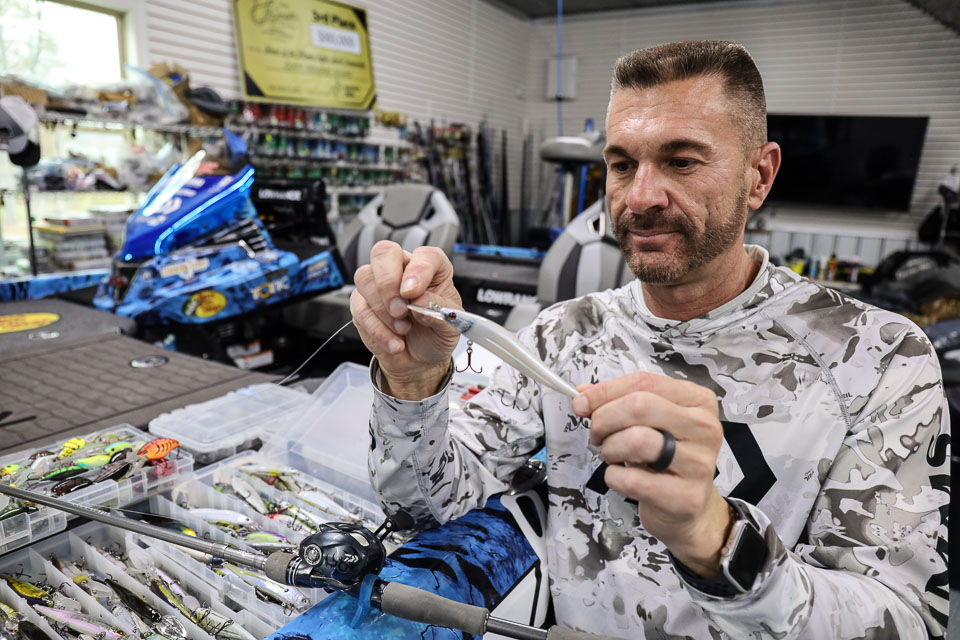
Randy Howell’s winter tacklebox

Find the bait, catch the bass with this lineup of wintertime lures.

Winter is an overlooked season for bass fishing success. All it takes is patience along with the tackle and baits aligning with the location of bass and baitfish. Find both and you’ll be in luck. Water temperatures dropping into the 40s and lower can trigger shad die-offs, which in turn triggers lethargic bass to take advantage of an easy meal. Forward-facing sonar functions as your eyes below the surface and can expedite your search for suspended baitfish and bass. 
That’s where crankbaits and sinking jerkbaits come into play. Both baits resemble dying shad favored by winter bass. Those baits also most effectively cover the water column to pinpoint active strike zones. Bassmaster Elite Series pro and Bassmaster Classic champion Randy Howell is an expert on dialing into the bait and bass bite. “In winter that’s the pattern; the bass aren’t really relating to a common pattern around specific habitat like they do during spawning cycles,” he said. “Instead, they will suspend in shallow or mid-depths of the water column and look for the baitfish.” 
Why so many baits? “Winter bass can be finicky and lethargic, so you need to keep an open mind about switching up baits,” Howell said. “The main thing is finding the bait, and the bass will likely be nearby.” Here are Howell’s top choices for winter bass, including the specialty tackle needed to maximize their potential. 
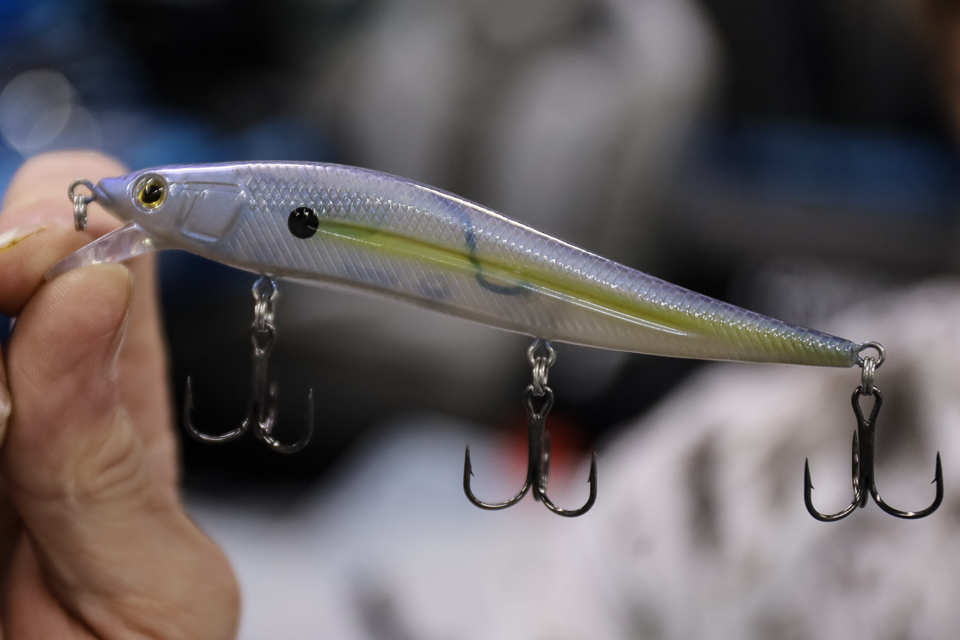
Livingston Lures JerkMaster 121D
Howell’s primary bait for dying shad scenarios with its slow sinking rate. Dives up to 10 feet at the rate of 1 foot every three seconds. Weight transfer system enables essential long casts for covering vast strike zones with schools of shad. EBS Technology with dying shad sound draws in lethargic bass from afar. 
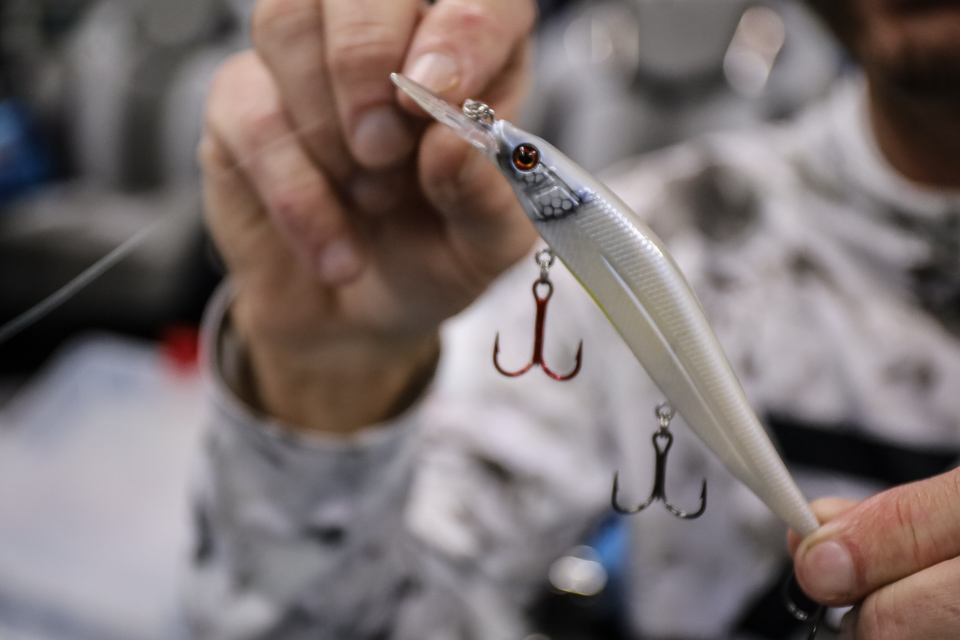
“Slow fall rates are essential in winter and the sinking, fluttering action of this bait resembles dying shad,” Howell said. “For deeper bait and bass this is the ideal choice.” A deep lip enables the lure to dive into those key strike zones. Allow it to fall through the water column after reaching the ideal strike zone. 
Livingston Lures JerkMaster 121C
For shallower bass this midrange ultra-slow sinker covers 4- to 6-foot strike zones. Internal weight transfer system doubles casting distance of traditional jerkbaits, while EBS Technology with dying baitfish sound gives lethargic bass time to react to the bait. Howell favors using it with forward-facing sonar to find suspended bait and bass. The bait’s profile allows it to vividly show up on screens. Howell favors this model for warmer water conditions when bass are shallower. 
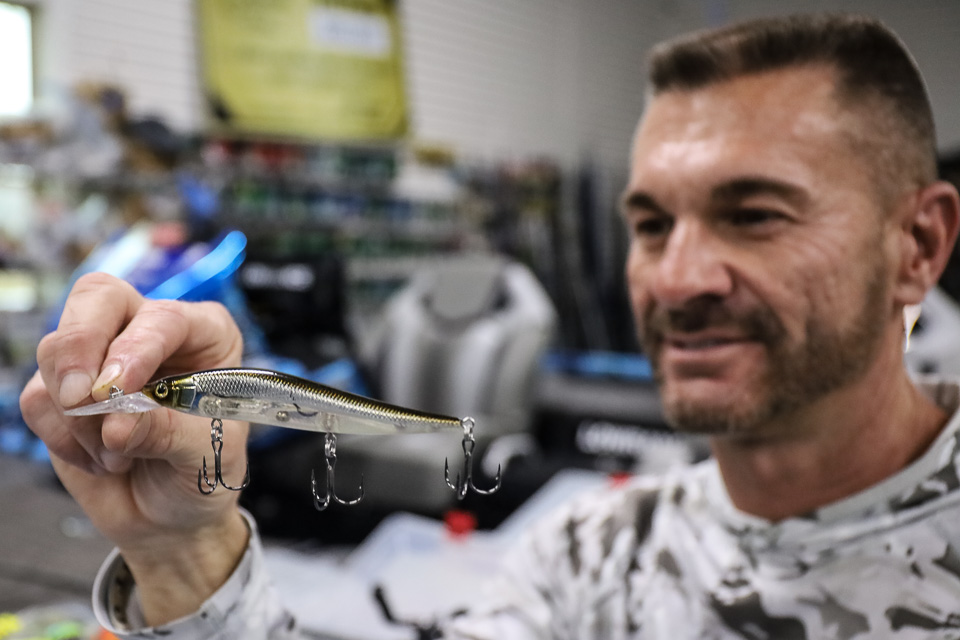
Livingston Lures JerkMaster 121 DP (Deep Plus)
Howell favors this slow sinking, deeper diver in midwinter for bait and bass suspended up to 15 feet. Get longer casts with the internal weight transfer system and benefits of EBS Technology for attracting bass from afar with its dying baitfish sound. A key benefit is a deep-diving, slow-sinking lure with jerkbait benefits in ultra-deep water. 
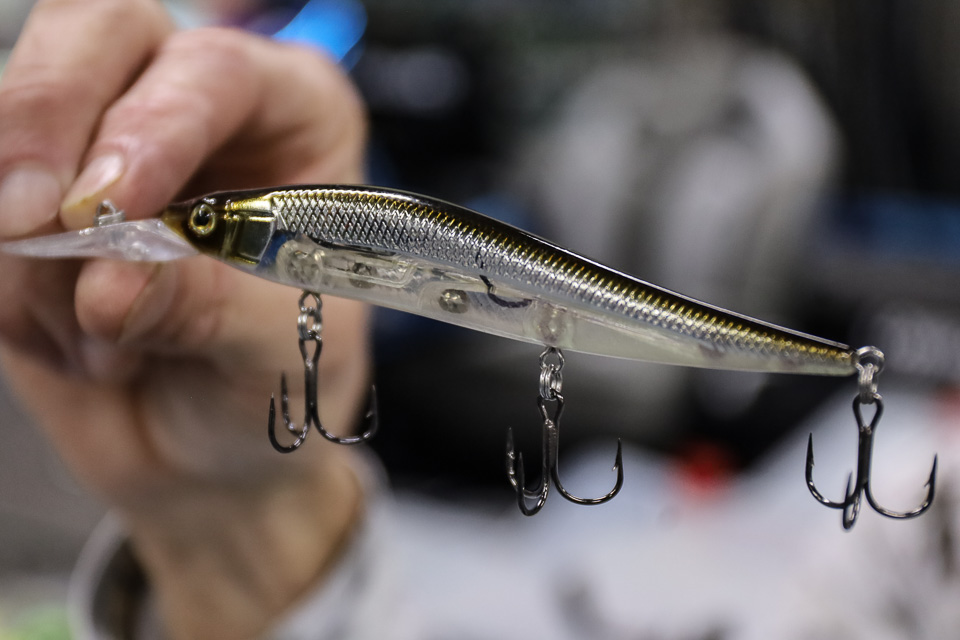
Howell favors this bait during midwinter when water temps force bass into deeper water. “This jerkbait is uniquely designed for up to 15 feet, but it’ll go to 20 when allowed to fall on lighter line.” Howell favors using the bait for suspended bass on deep bluff banks and other vertical cover over deep water. He hones in on specific schools of bass and bait using forward-facing sonar. 
Livingston Lures School Master
You get a sinking lipless bait that can be fished like a jerkbait at any depth of the water column, with the action of a fluttering (or dying) shad. EBS Technology doubles its strike appealing range. 
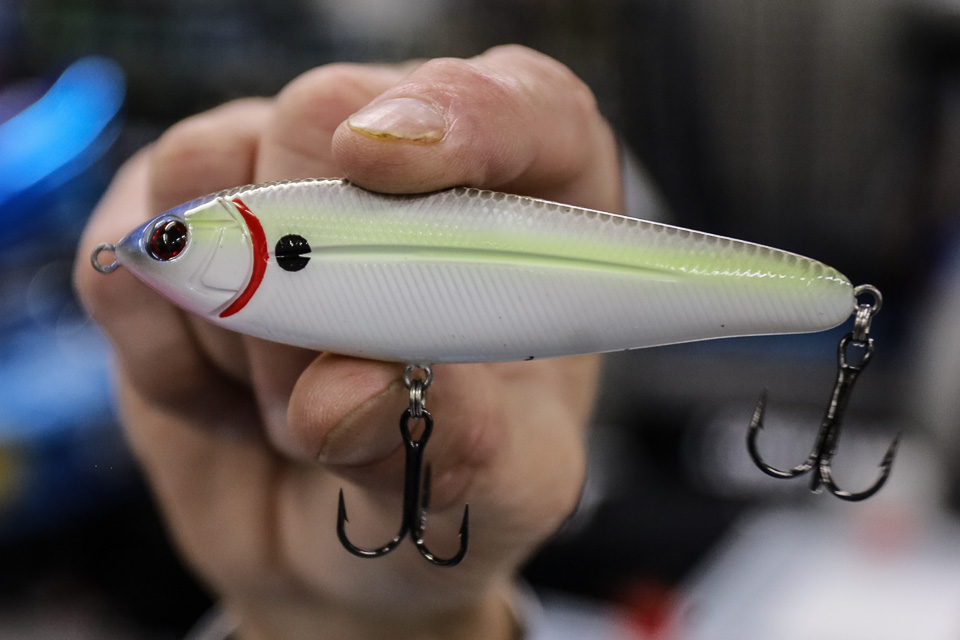
Originally designed to fire up schools of actively feeding bass, Howell resurrected the bait for winter when used with forward-facing sonar. “It really opened up a new dimension in how effective this bait can be, and it’s seldom seen by wary, lethargic bass in that situation,” he said. With a sinking rate of about 1 foot every two seconds the bait can quickly reach deep strike zones. “On the fall you can slowly dart it and then it’ll fall forward and rock back and forth,” Howell said. “That makes it even better for winter fishing, because you can tweak the action using the same bait to dial into the bite and any depth.” 
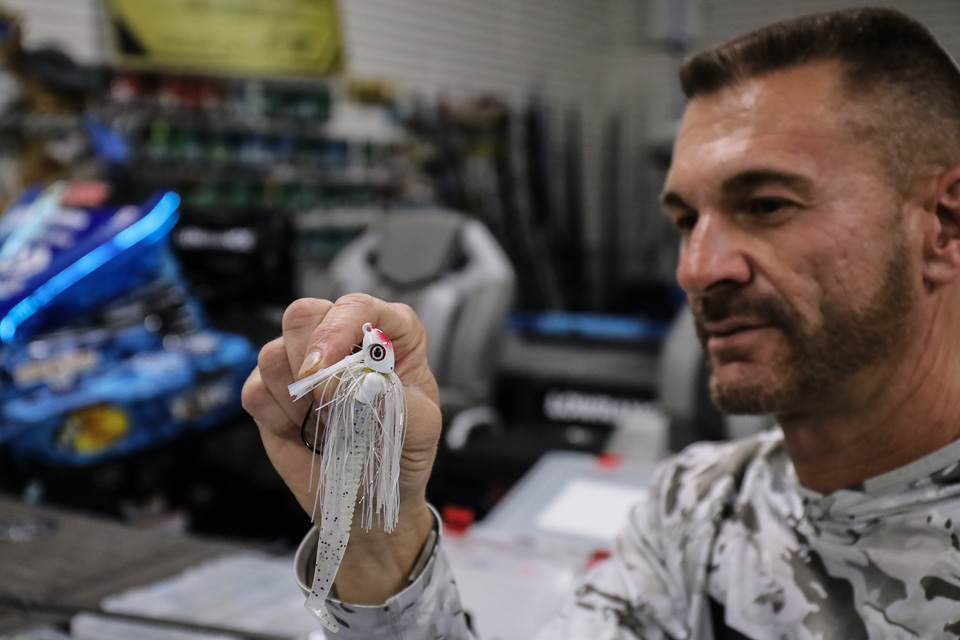
Lunker Lure Randy Howell Swim Jig
Big bass favor big meals, regardless of the season. That’s why Howell always has this 3/4-ounce jig with heavy-duty 6/0 hook rigged and ready for action in winter. He pairs it with a Big Bite Baits 4-inch Cane Thumper. In fact, Howell had the heavier jig added to his signature lineup specifically for winter conditions. 
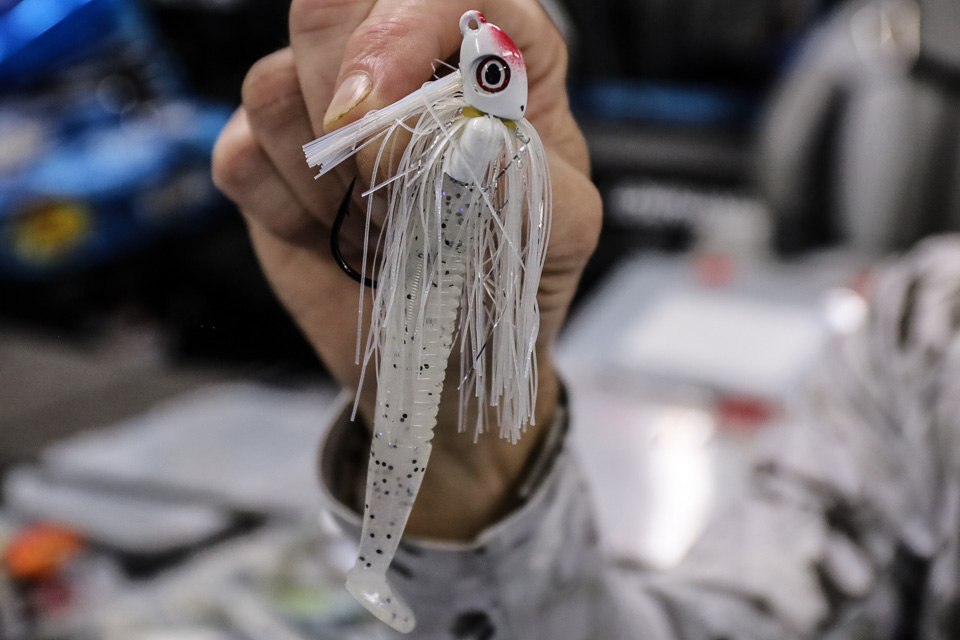
“The heavier bait gets quicker into the deeper water column strike zones in winter,” Howell said. “Plus, the bulkier profile shows up on forward-facing sonar, so you can track bigger bass about to bite it.” The bait features Lunker Lure’s integrated double rattle sound chamber from its Original Rattleback Jig for much-needed enhanced strike appeal in cold water. Howell favors the Cane Thumper for its added bulk to beef up the appeal for hungry bass. 
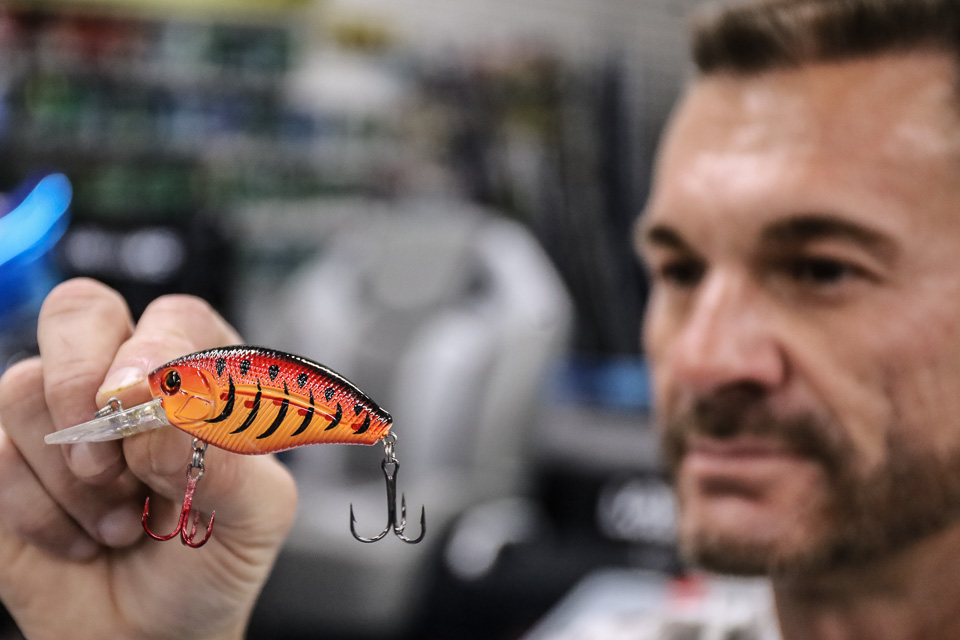
Livingston Lures Howeller DMC (Dream Master Classic)
Another outlier in the jerkbait-dominated tacklebox is this crankbait designed to run at depths of 8 to 10 feet. A compact body produces a fine-tuned wide wobble for displacing water, while you get fleeing, distressed crawfish sounds from EBS Technology. 
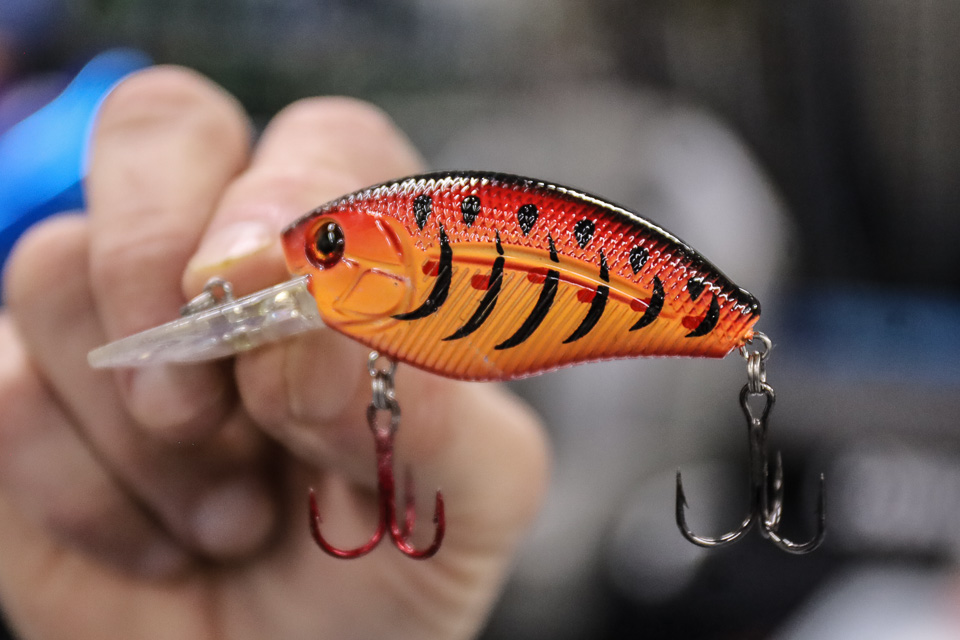
“Bass gorge themselves on shad during the peak of the shad die-off in mid-to-late winter,” Howell said. “You can’t compete against it, so I totally avoid that scenario and go shallow.” Howell reasons on warm, sunny days largemouth can be attracted to the midday warmth of riprap banks, where they will actively feed on crawfish. He validated that point by winning the 2014 Classic on Lake Guntersville along a riprap roadway causeway in early February. 
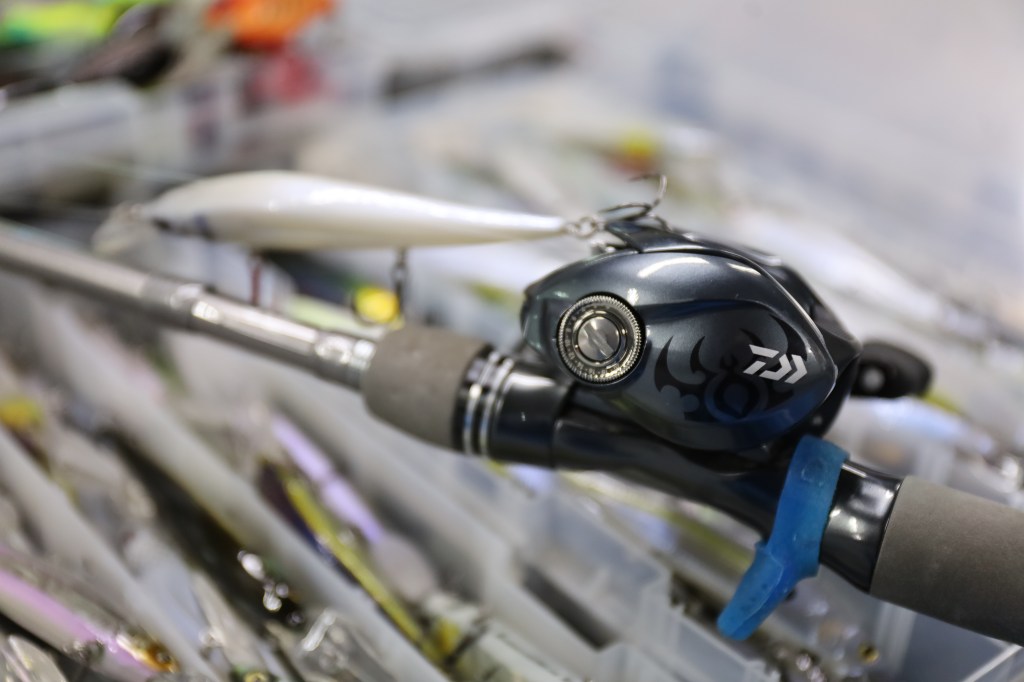
Technique specific tackle is a must for maximizing lure performance and presentation accuracy. A Daiwa Tatula Elite Randy Howell Signature Series Shallow Crank/Lipless/Jerkbait edition is his choice. The rod is 7-foot with a medium/light action and a soft tip and medium parabolic bend for ideal lure presentations and fish handling. The rod also features an 8-inch shorter handle to prevent the annoyance of the rod striking the body. Match it with a Daiwa Tatula 100 SV TW with 7.1:1 gear ratio. Howell spools it with 12-pound Daiwa J-Fluorocarbon.