

How to fish for bass during a shad kill

Learn how to catch more bass during an ultra-cold water scenario where a shad kill is happening.

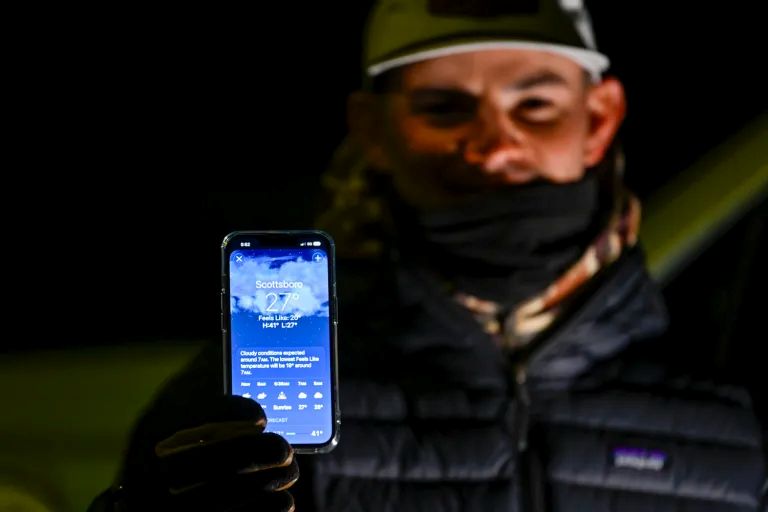
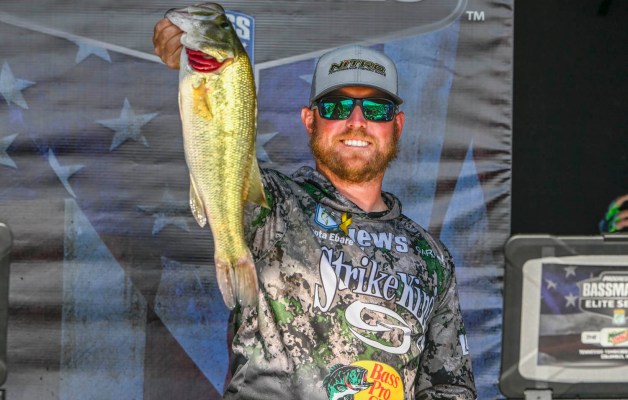
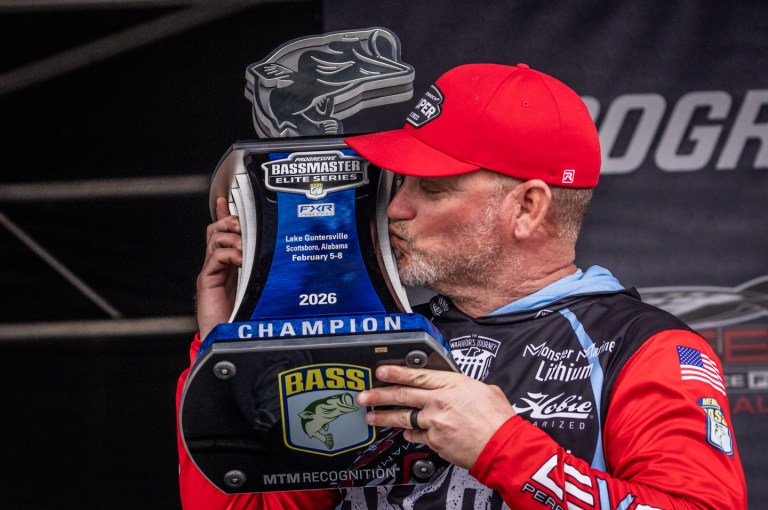
During the season-opening Elite Series tournament on Lake Guntersville, won by two-time Bassmaster Classic champion Hank Cherry, the 101 competitors faced a distinctive challenge: They were on one of the world’s most exceptional and consistent fisheries, chock-full of 3- to 5-pound bass, but plagued by unseasonably cold temperatures.
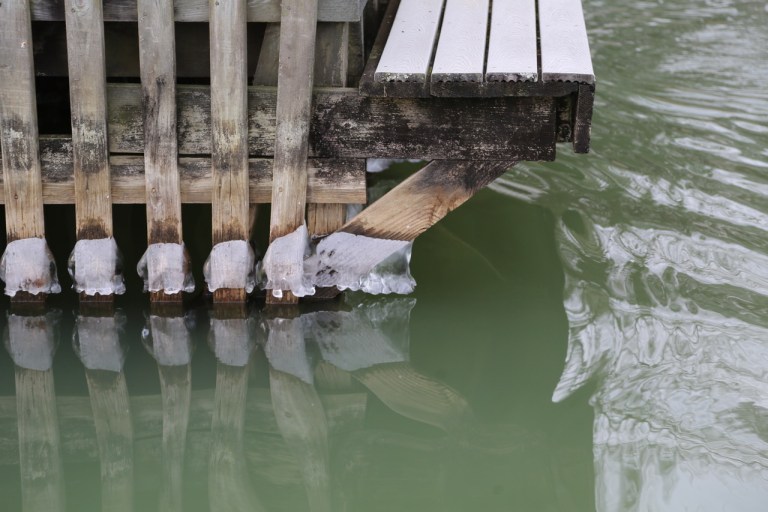
Prior to the event, ice covered many shorelines and the backs of most pockets.
Bill Lowen, who won last year’s opening tournament on the St. Johns River, reported that he caught bass in 36 degree water – the coldest water in which he’s ever caught a bass, despite being raised in the upper Midwest.
One of the reasons that Guntersville is so good is because of its grass beds which support a wide variety of forage including threadfin shad, gizzard shad, crawfish and bluegills.
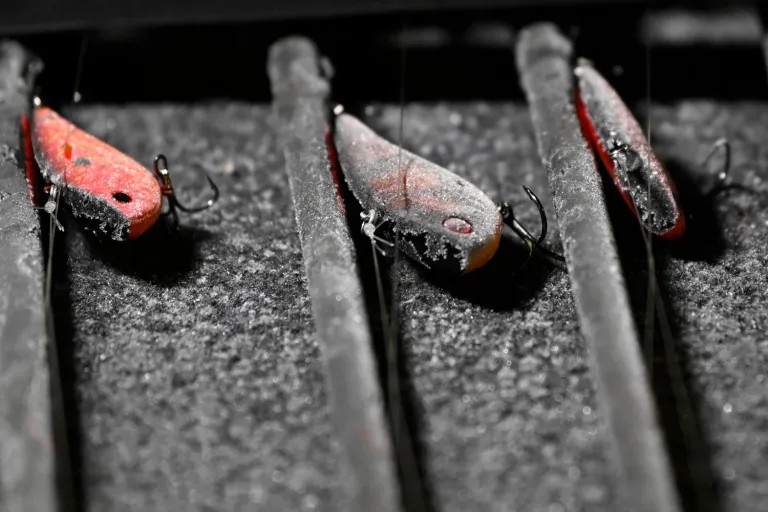
The threadfin shad in particular are prolific and make easy meals for bass. It’s why lures like lipless crankbaits work so well, even when it’s cold.
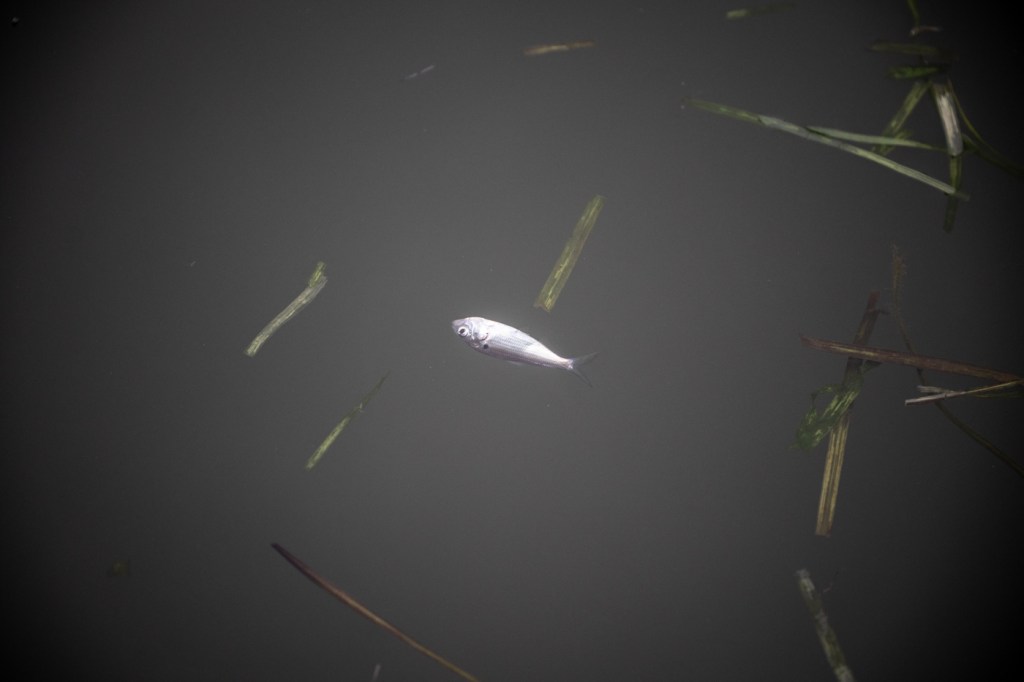
But threadfin shad are not tolerant of the cold. When water temperatures get into the lower- to middle-40s, they get weak, and in the lower-40s they start to die off. That’s why threadfin shad are a southern fish. You’ll occasionally find them in pockets of states like Virginia, Missouri and Kentucky, perhaps even Illinois, but one harsh winter can wipe out a population completely. This week, with much of the lake in the 30s or 40s, the shad started to die off – not everywhere, but in certain portions of the lake.
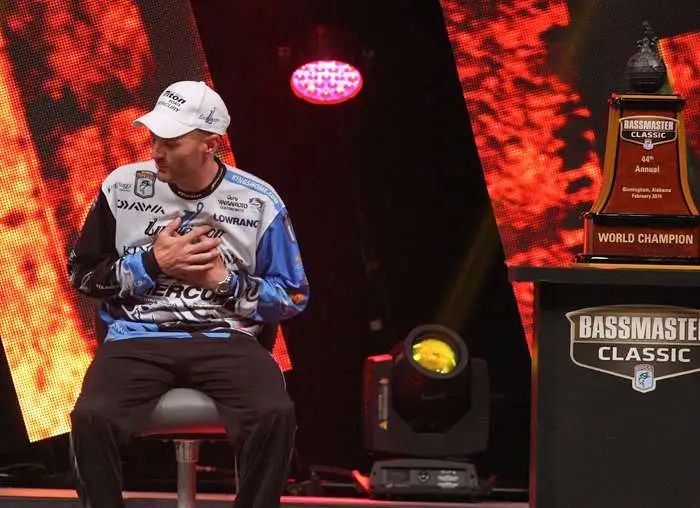
It’s not the first time that this has happened during a BASS event. Prior to the 2010 Bassmaster Classic at Lay Lake, just a few hours south of Guntersville, there was a shad die-off.
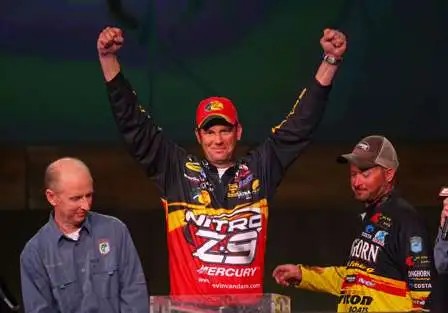
Kevin VanDam won that 2010 Classic in the back of Beeswax Creek on a Gold Sexy Shad Strike King Red Eye Shad. He said part of the reason for his success was that the shad die-off was not as pronounced in Beeswax as elsewhere on the lake.
In January of 2014, about a month before the Bassmaster Classic, Guntersville suffered a shad kill. Randy Howell went on to win that tournament with a monster last day catch.
Howell’s best areas may have had shad traffic, but he used red craw color crankbaits to amass his big limit.
Typically, an Alabama shad kill is not complete. There are areas of the lake, or areas close to deep water, to which shad can retreat and escape the deadly conditions. Anglers like Jeff Gustafson focused on those types of areas with two-dimensional sonar. If the shad kill is substantial, other forage may take its place. Gizzard shad, for example, are more tolerant of cold temperatures than threadfin.
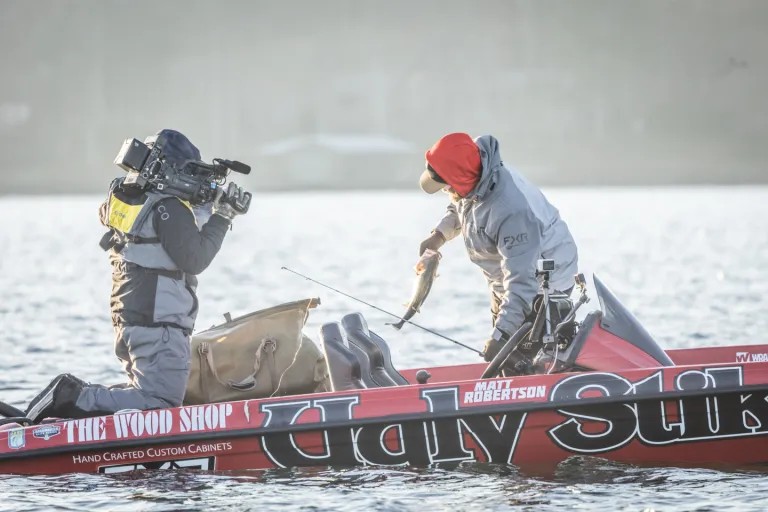
A lake like Guntersville has a certain carrying capacity of total fish life – so expect gizzards, bluegills and other species to fill in any gaps. Soft plastic swimbaits like this Berkley Cull Shad used by Matt Robertson, represent gizzard shad well.
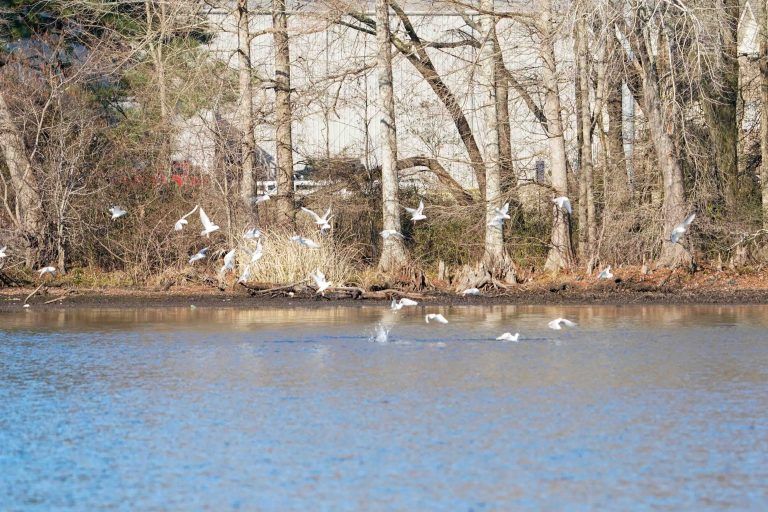
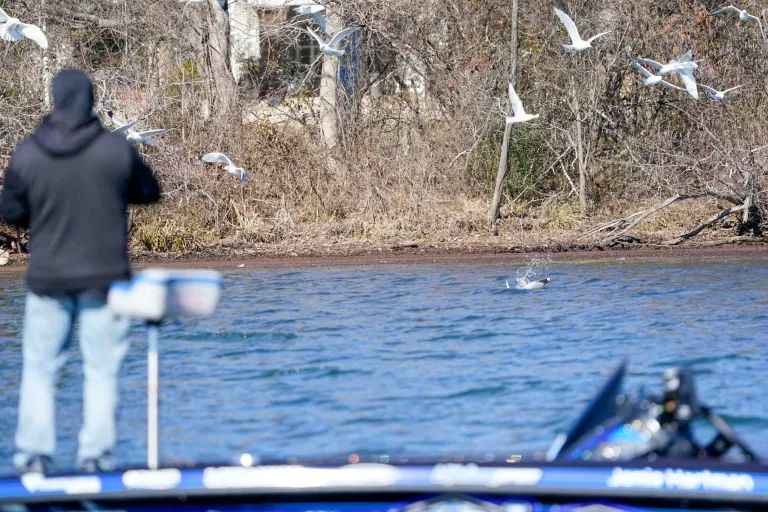
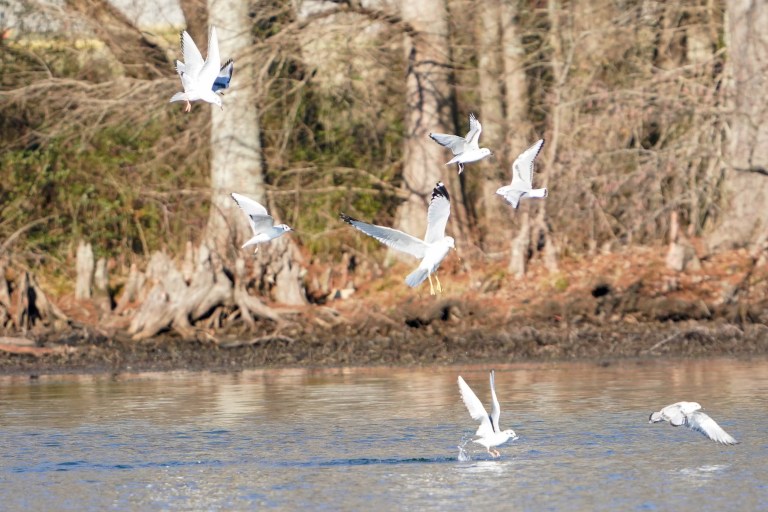
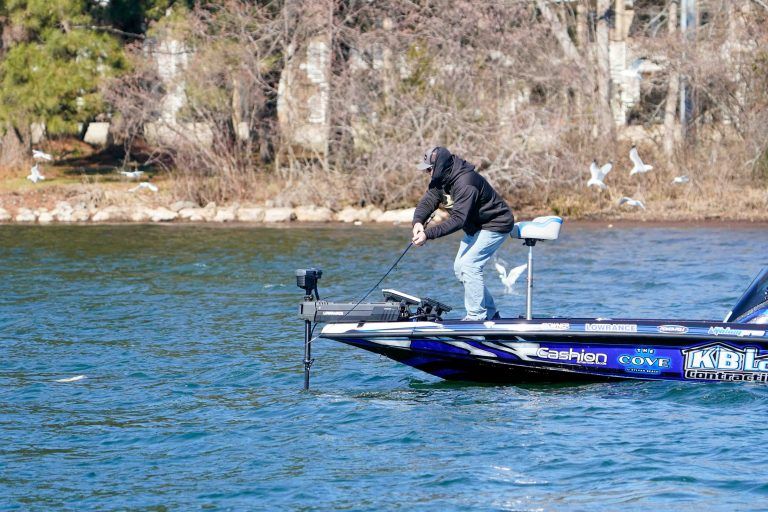
When the shad start to die off, they meander and wander aimlessly, knuckleballing around in a death spiral In the comparatively clear sections of the lake, birds can spot the dying shad from above and start to circle and dive, gorging themselves.
The bass are attacted to the action and the easy meals, with the various species of predators informing one another and firing each other up.
This provides anglers with a visual clue as valuable as any forward-facing sonar, which was prohibited in this tournament.
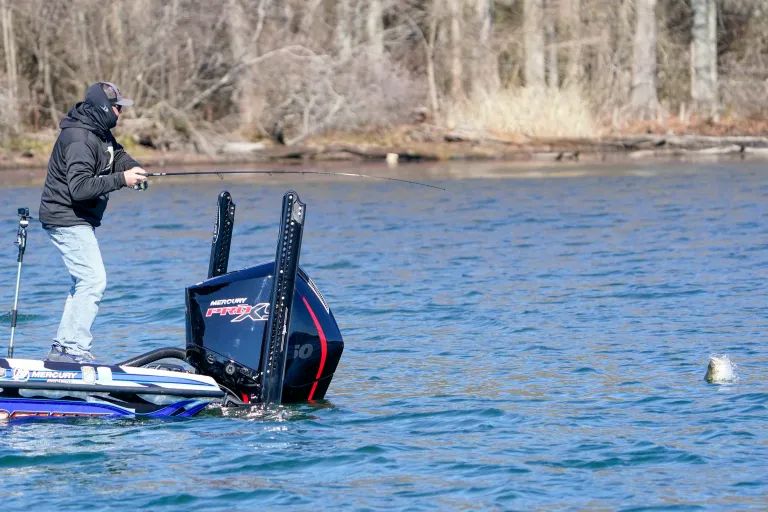
Competitors could ride the lake looking for bird action, then join in the frenzy.
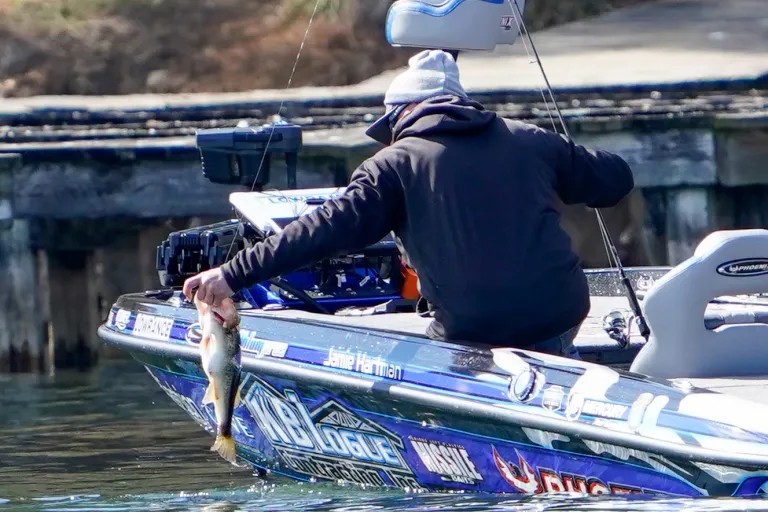
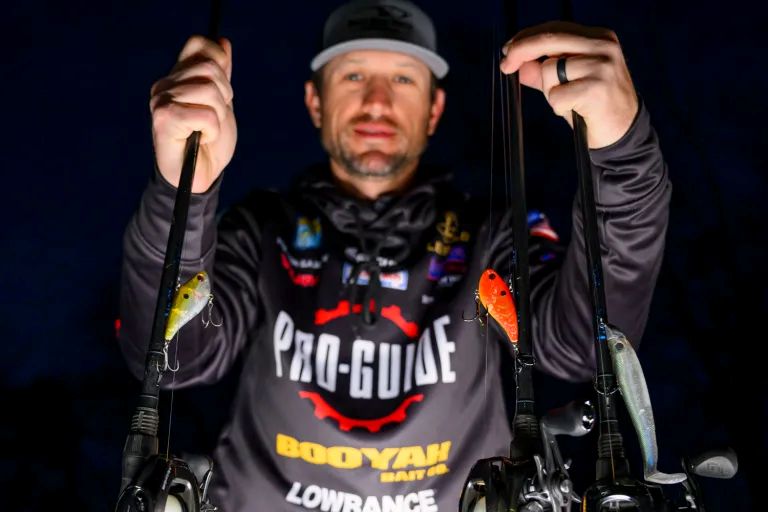
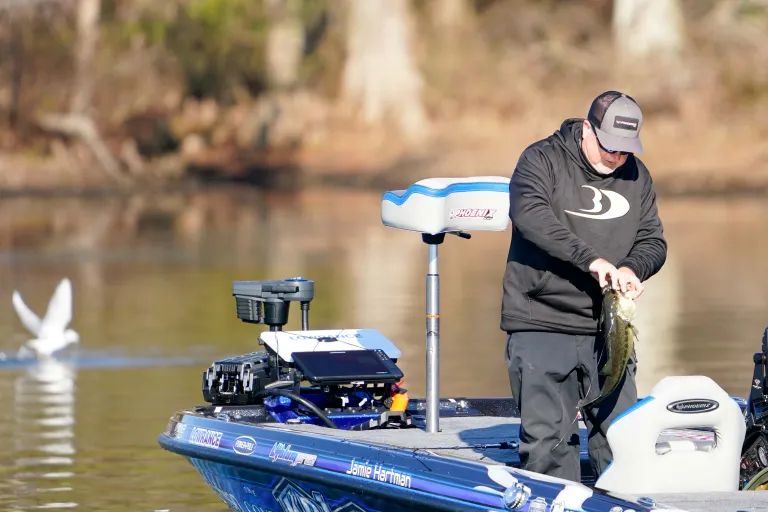
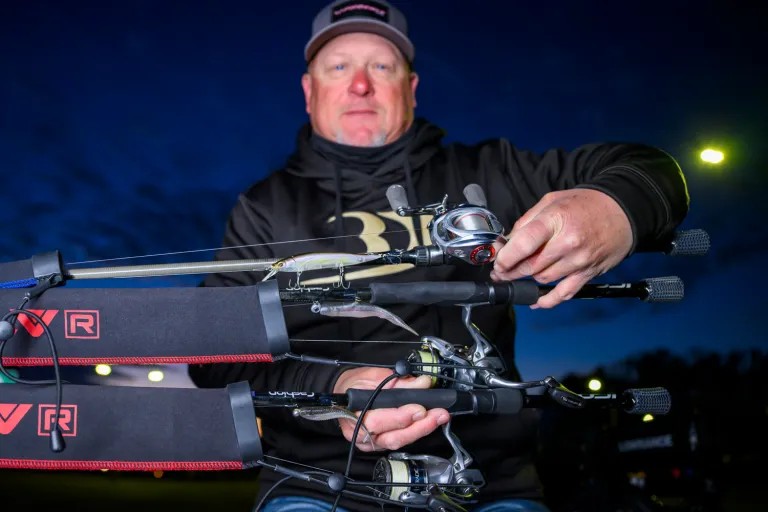
Fourth place finisher Jamie Hartman rotated between a jig head minnow rig and a jerkbait to tally his first top ten Elite finish since 2020.
His primary minnow rig – more typically associated with FFS tournaments — was a Missile Baits Freedom Flyer 4.25 rigged on 1/8-ounce jig head. The Freedom Flyer features pitch elevators on the back half of the bait, causing it to easily roll with a darting action.
Hartman previously won at Guntersville in 2019. That was a June tournament and he caught most of his fish flipping and punching and using a walking topwater lure.
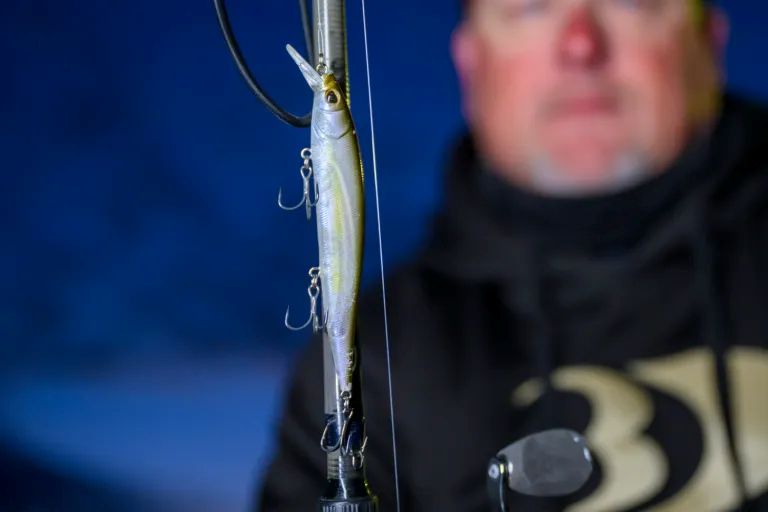
In a tournament where there were lots of red lures in the top ten gallery, Hartman also used a shad-colored jerkbait to “match the hatch.”
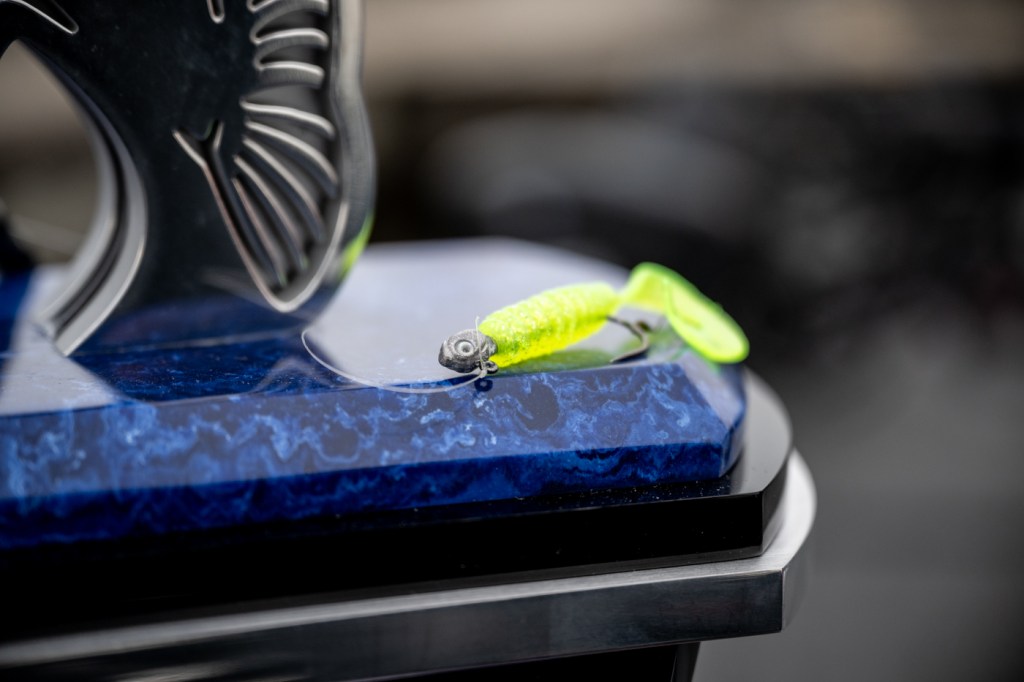
Other competitors used minnow style lures – or at least finesse techniques — successfully at Guntersville. Champion Hank Cherry caught most of his fish on a chartreuse 3-inch grub.
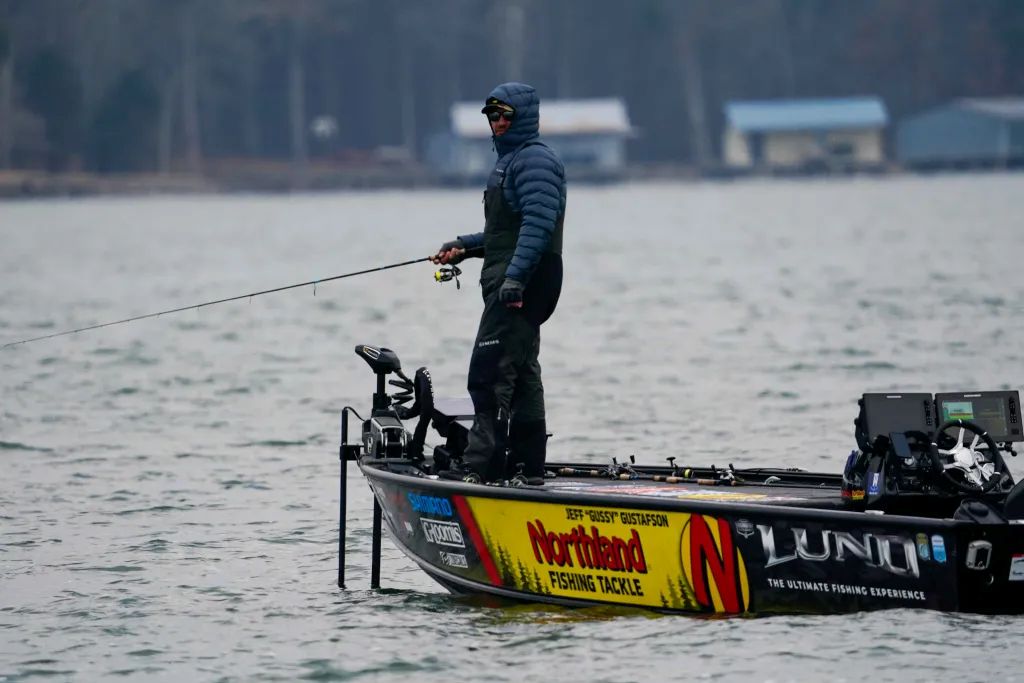
Jeff Gustafson, the 2023 Bassmaster Classic champion, “moped” with two-dimensional sonar and a jig and minnow, much as he did in that 2023 victory. He was in 8th place at Guntersville after Day 1 with 22 pounds 1 ounce, before ultimately finishing 18th.
Anglers in the south typically dread cold weather.
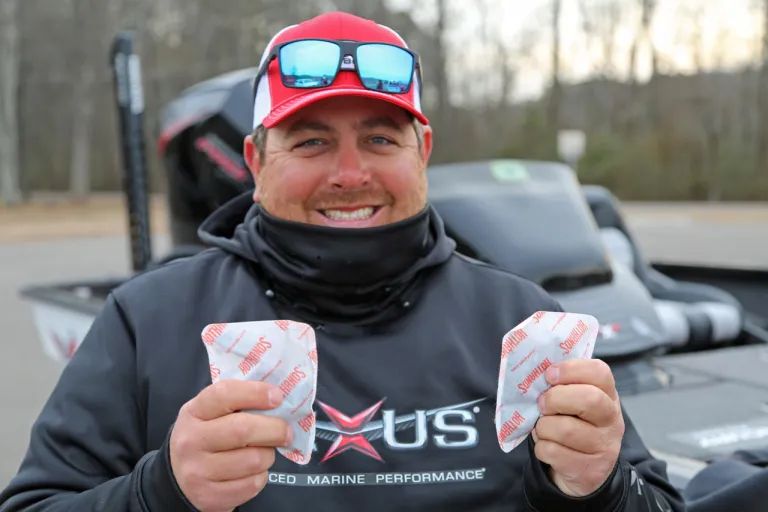
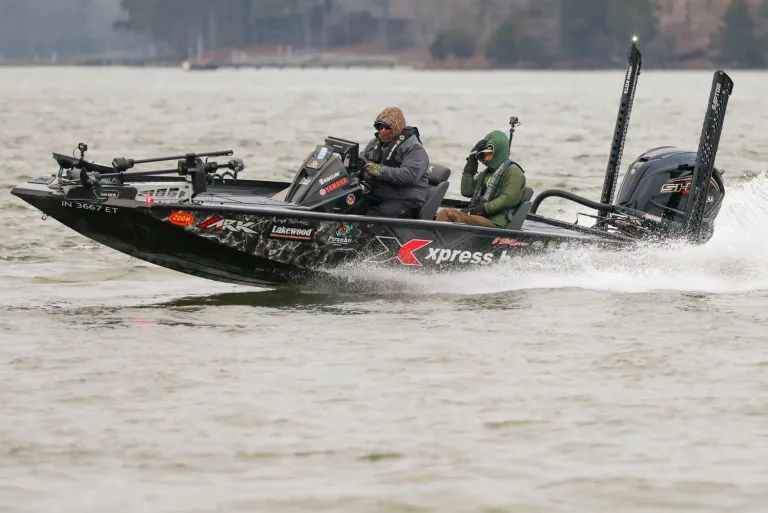
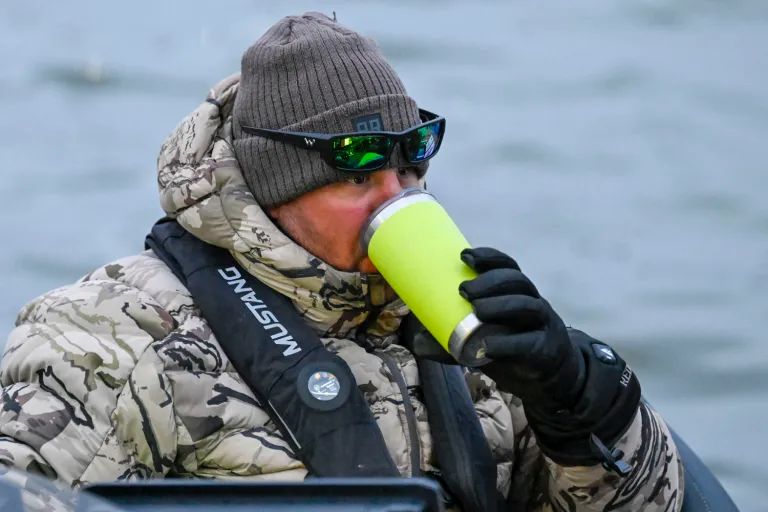
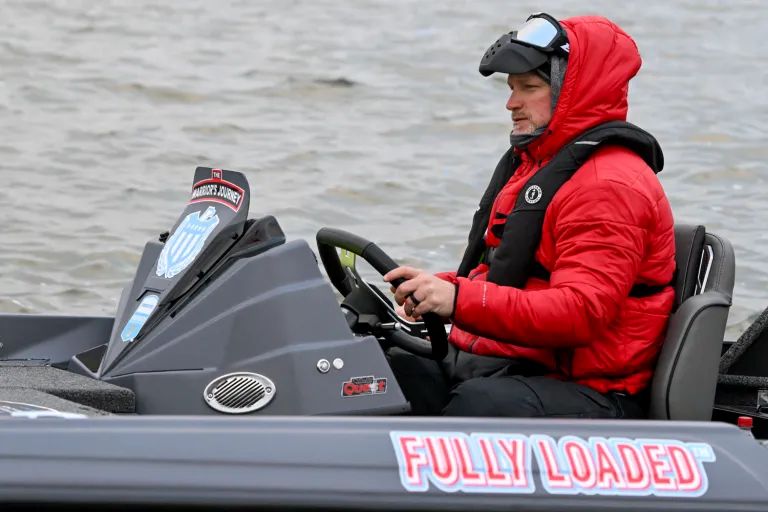
The cold can make the bite tough, require a ridiculous amount of clothing, and ice up guides.
But the benefits of a shad kill – at least temporarily – is that they can turn a difficult situation into a free-for-all.
Just look for the diving birds. And remember, the dying shad can’t migrate significant distances like healthy shad or blueback herring. Once they start to die off, they’re sitting ducks for hungry bass until they’re gone.
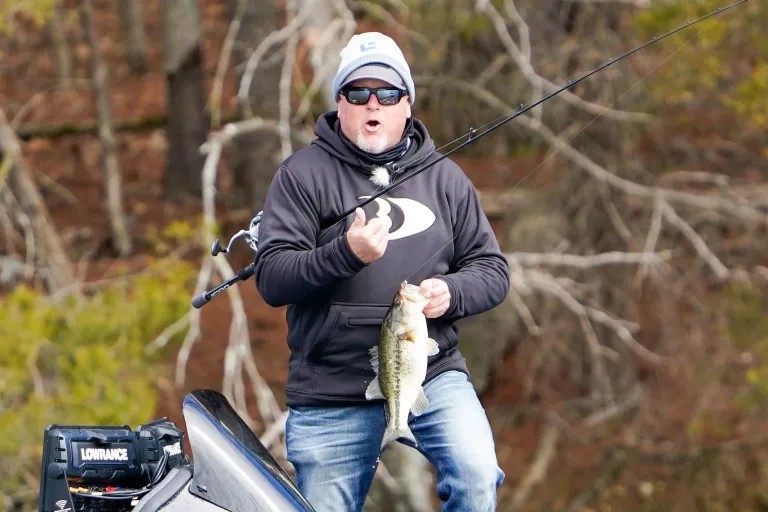
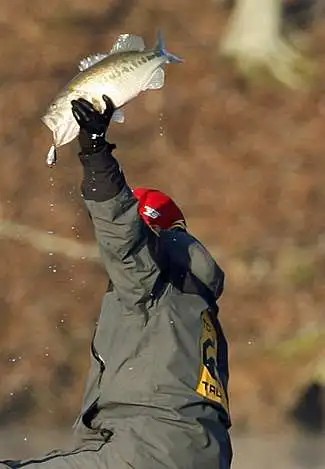
Many of the bass caught at Guntersville were gorging so heavily on dying shad that they looked like they were about to explode. But those same fish were spitting up some of those recently-eaten shad. Livewells had plenty of floating deceased baitfish. Hank Cherry won by nearly 2 pounds, so it likely didn’t hurt him.
But in the middle of the top ten, three anglers – Justin Atkins, Brandon Card and Kyle Welcher — were a total of 7 ounces apart. A few regurgitated shad could’ve meant a few hundred dollars and critical points.
Clearly the shad die-off benefitted some of the Elite pros this week. It could continue to have impacts the rest of the season. For example, the shad spawn bite, which takes place shortly after the bass spawn, could be less prevalent this year. The shad usually spawn on hard cover like seawalls, riprap and dock floats. It typically takes place in the first hour or two of the day, after which anglers have to turn to other patterns. They may not be able to get healthy on that early morning bite as much this year.
Perhaps as the fish move to other forage, like gizzard shad, swimbaits will play a larger role. Since it’s apparent that there hasn’t been a complete threadfin population eradication, expect the population to bounce back in a year or two. They are remarkably prolific.
 
But since there were eventually another shad die-off just about anywhere they live, now you’ll be prepared to take advantage of this easy bite the next time it happens where you’re fishing.