Date: Jan. 19, 2026
Venue: Tennessee-Tombigbee Waterway
Weather: Bluebird skies, no wind, low of 30 degrees, high of 49, water temperature from 49 to 51 degrees
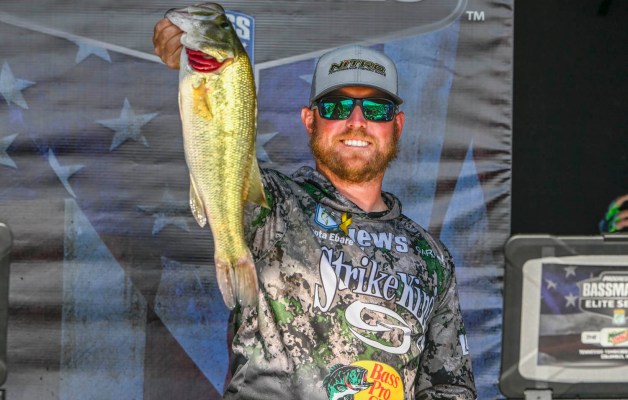
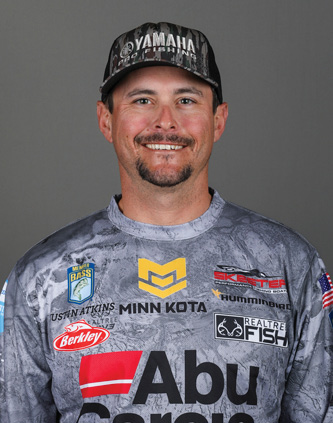
Pro: Justin Atkins, who recently turned 36, launched his professional career by winning the 2017 Forrest Wood Cup championship. He joined the Progressive Bassmaster Elite Series in 2021 and is now approaching $1 million in career earnings across major tours.
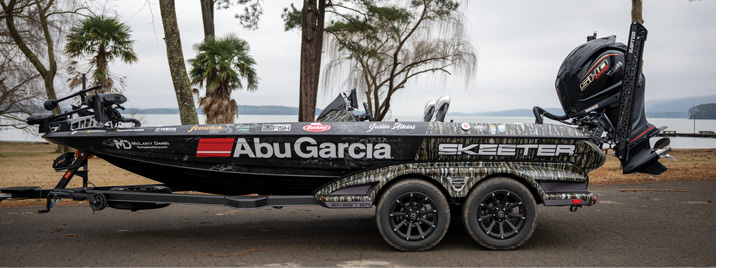
Gear: Minn Kota Ultrex QUEST, Humminbird MEGA Live 2, Humminbird MEGA 360 Imaging, Humminbird LakeMaster Premium mapping, Humminbird APEX 16 at dash, two APEX 16s at bow and 8-foot Minn Kota Raptor shallow-water anchors
This edition of “Day on the Lake” is a bit of a homecoming for Progressive Bassmaster Elite Series pro and Alabama resident Justin Atkins. The sixth-year Elite grew up in Columbus, Miss., fishing the Tennessee-Tombigbee Waterway — stop No. 3 of the 2026 Elite Series season.
Unfortunately, Atkins is greeted with brutal postfrontal conditions that promise to make the fishing challenging. While the hope is to boat a few keepers, the real mission is to use this time to pre-practice for the Elite Series event in late March and see how the Alabama pro approaches a familiar body of water.
In most cases, getting to the boat ramp at safe light would be ideal, but with sub-30-degree temperatures to start the morning, the decision is made to begin the day at Cracker Barrel, game-planning before heading to the lake.
FIVE HOURS LEFT
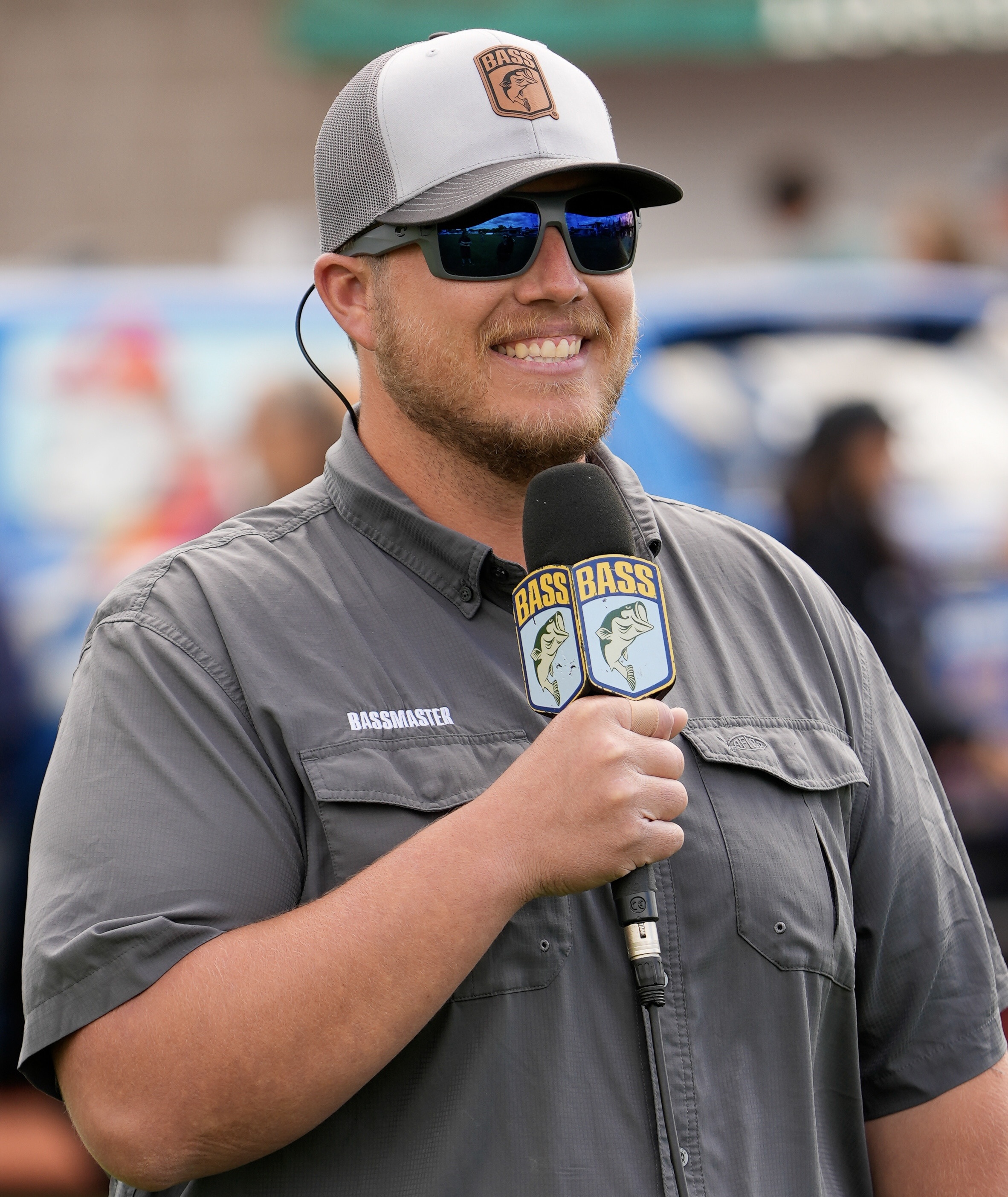
• 10 a.m. Even with the delayed start, Atkins arrives at East Bank boat ramp with temperatures still hovering around 30 degrees. I back his Skeeter down the “wrong” ramp, which he would later claim threw off his mojo from the start. That one’s on me.
• 10:15 a.m. As we idle away from the ramp, Atkins reflects on how long it has been since he fished the Tenn-Tom. “I grew up fishing here with my dad,” Atkins says. “It’s awesome to be out here and think about everything I learned from him on this river. Now I get to do this as a job. It’s a full-circle feeling.”
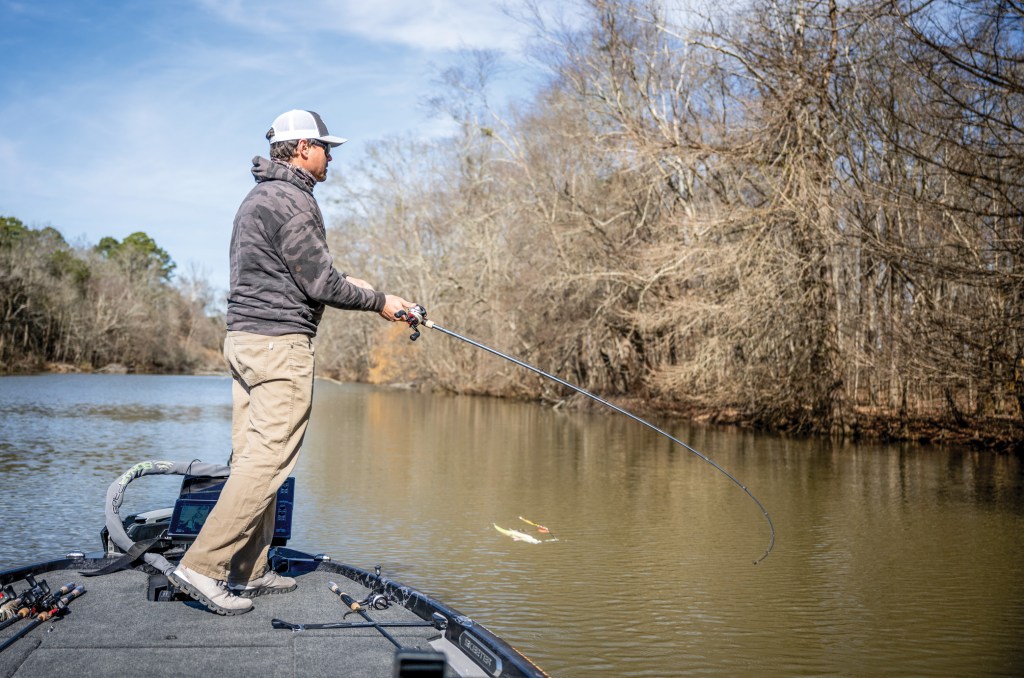
• 10:30 a.m. After a short idle across the bay, Atkins pulls up to a shallow point and starts casting a river staple: a 1/2-ounce Berkley Power Blade spinnerbait in the cole slaw color with an orange kicker blade. He methodically picks apart visible cover along the bank.
“I can vividly remember fishing this point with my dad,” he says. “He taught me how to parallel those wooden posts with a spinnerbait. I ended up catching a big crappie that day.”
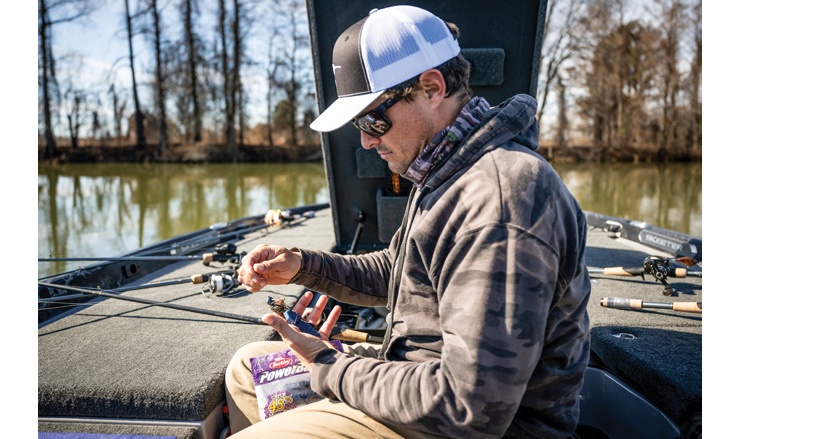
• 10:45 a.m. No bites. Atkins sits down and begins pulling out several rods.
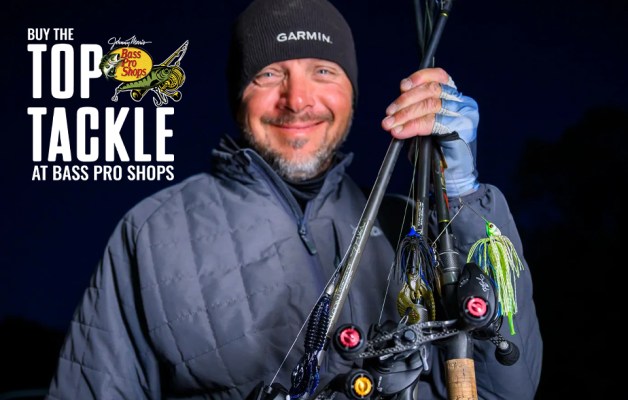
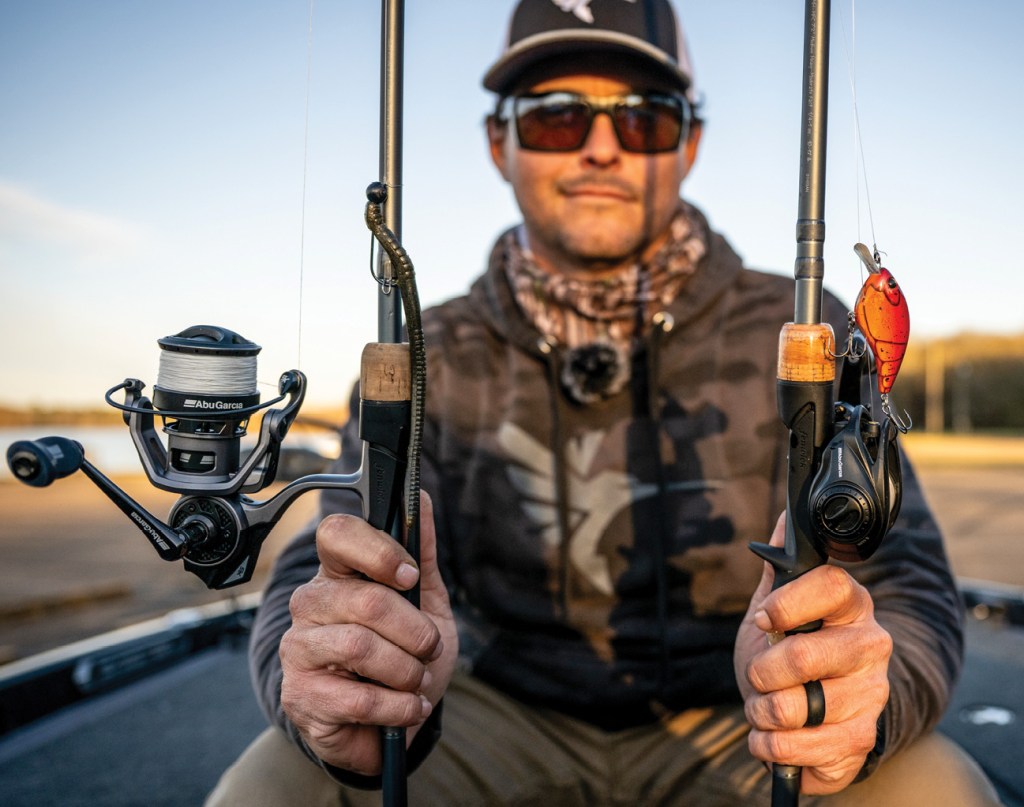
• 10:55 a.m. He readies a crankbait, vibrating jig, shaky head, flipping jig and lipless crankbait, then studies his Humminbird APEX 16 before idling farther from the ramp in search of better water.
FOUR HOURS LEFT
• 11 a.m. Before moving, Atkins explains the plan: “With any river system, things change a lot over time. I’m trying to think ahead to when the tournament is and find areas that could play then. If we get a few bites, great, but this is about re-learning the water.”
• 11:10 a.m. After studying his LakeMaster Premium map, Atkins sets up on a wooded bank and picks up a Berkley Frittside crankbait, occasionally following up with a 1/2-ounce Berkley Finesse Jig.
• 11:20 a.m. He moves to an undercut bank with deeper water. “With it being winter, I like an undercut bank that has a little more depth,” he says. “Fish will pull up and sun on the wood.”
• 11:25 a.m. Atkins switches to a Berkley SlobberKnocker bladed jig. “The water is clearer than I expected. This lets me cover water but still slow roll it off the bank.”
• 11:30 a.m. Using MEGA Live 2 and MEGA 360 Imaging, Atkins spots submerged grass and picks up a 1/4-ounce Berkley Warpig lipless crankbait. After several casts, he lines up the grass edge with MEGA 360 and tries a shaky head. No luck.
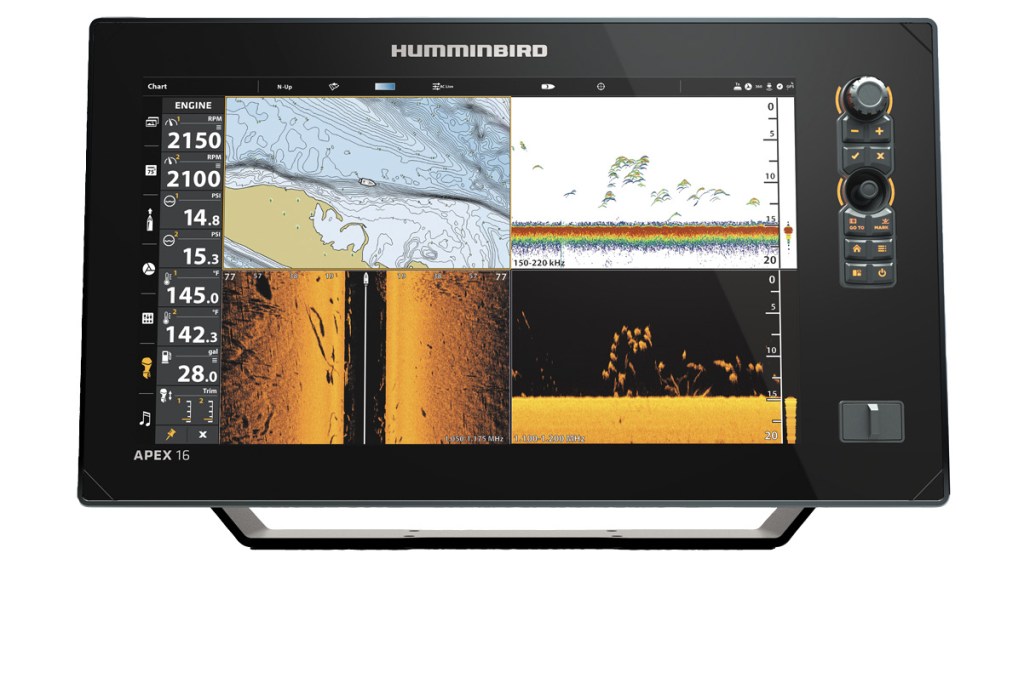
“That’s the awesome thing about this 360 technology,” he says. “You know exactly what’s all around the boat and can make precise casts to the highest-percentage spots.”
• 11:45 a.m. “Let’s take a ride,” Atkins says, as a breeze begins to ripple the main river.
THREE HOURS LEFT
• Noon. A short run up the river takes him to a back-end pond to check bottom composition. With slightly stained water, he returns to the spinnerbait and picks apart visible cover.
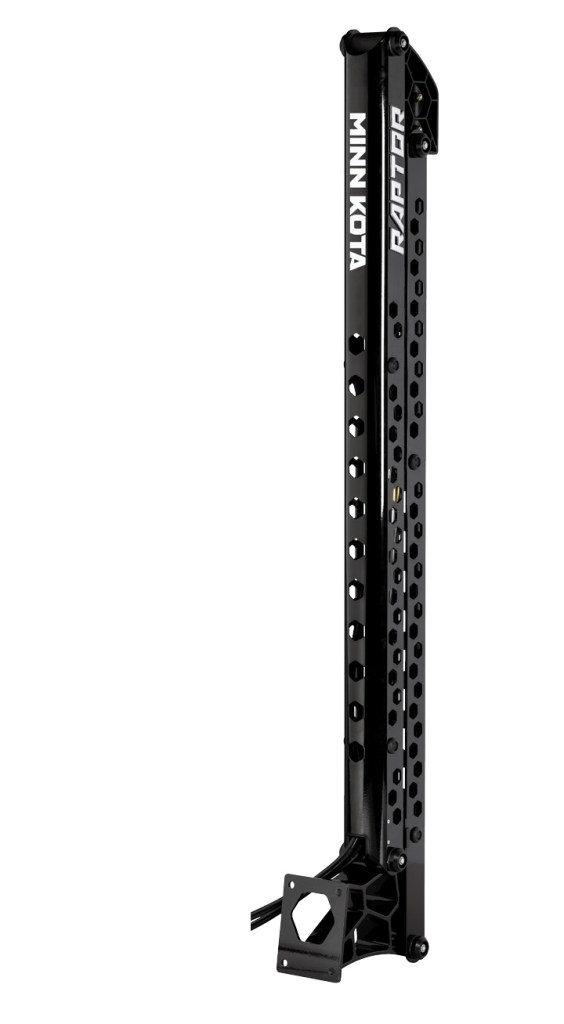
• 12:05 p.m. A large laydown catches his attention. He deploys his Minn Kota Raptors and dissects it from every angle. “If fish are in this pond, they’re around this tree,” he adds. A quick scan with MEGA Live 2 shows nothing.
• 12:25 p.m. Another slough. More water to cover. “Some fish will winter in these backwaters, but this gets better as we move into spring.”
• 12:30 p.m. Atkins sees enough to interest him and deploys the Minn Kota Ultrex QUEST. He begins chunking the Warpig. “The lighter bait helps keep it from digging into the soft bottom,” he says.
• 12:40 p.m. A friend texts him: “There ain’t no bass out there.” At this point, the friend appears correct.
• 12:50 p.m. After a long run, Atkins sets up on a point with an obvious current break and Spot-Locks in place with the Ultrex QUEST. He begins working the Berkley Frittside from multiple angles. “What was the world like before Spot-Lock?” he asks.
TWO HOURS LEFT
• 1:05 p.m. Still with no fish, Atkins makes an adjustment and slows his retrieve dramatically. “The water’s cold. You have to keep it lower in the water column.” It makes sense, but still no takers.
• 1:40 p.m. A patch of grass shows on MEGA Live 2. He flips the jig around the edge closest to deep water. No bites.
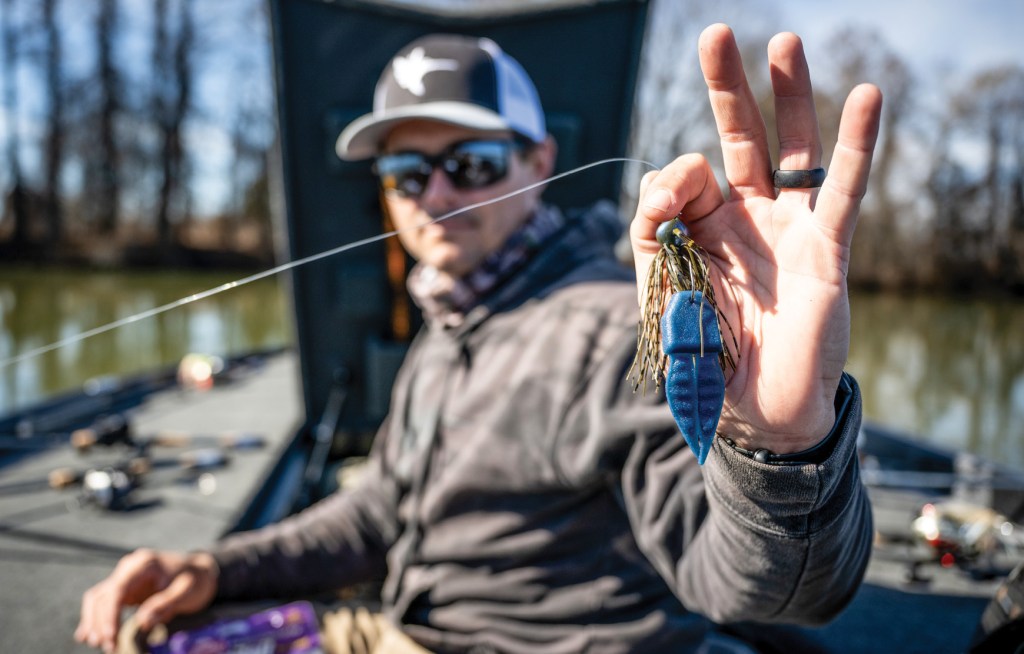
• 1:45 p.m. Atkins reaches a deeper stretch with a current seam and picks up the shaky head. Within a few casts, he hooks up … and loses the fish.
ONE HOUR LEFT
• 2:10 p.m. Another current seam. This time the Frittside. Another fish hooked. Another fish jumps off. “One is a bite. Two is a pattern.” If the pattern is losing fish, I can’t disagree.
• 2:40 p.m. Atkins continues working current seams — the Ultrex QUEST making easy work of it — using the crankbait and shaky head, but he cannot duplicate the bite.
• 3 p.m. Rods go down. Although Atkins’ time is done, he continues checking water clarity in several backwaters on the ride back. “The more information you can get out of a day of practice, the better,” he says. “You just never know what little piece of data will make the difference once the tournament begins!”
THE DAY IN PERSPECTIVE
Two bites. Zero keepers. But as Atkins points out, sometimes the most important days on the water end with an empty livewell. “The river was dirtier than I expected,” he says. “It was good to check areas with cleaner water and revisit a place that traditionally holds fish. That could be where I start practice in March. More than anything, it helped me get a feel for bottom composition, depth and water clarity again.”