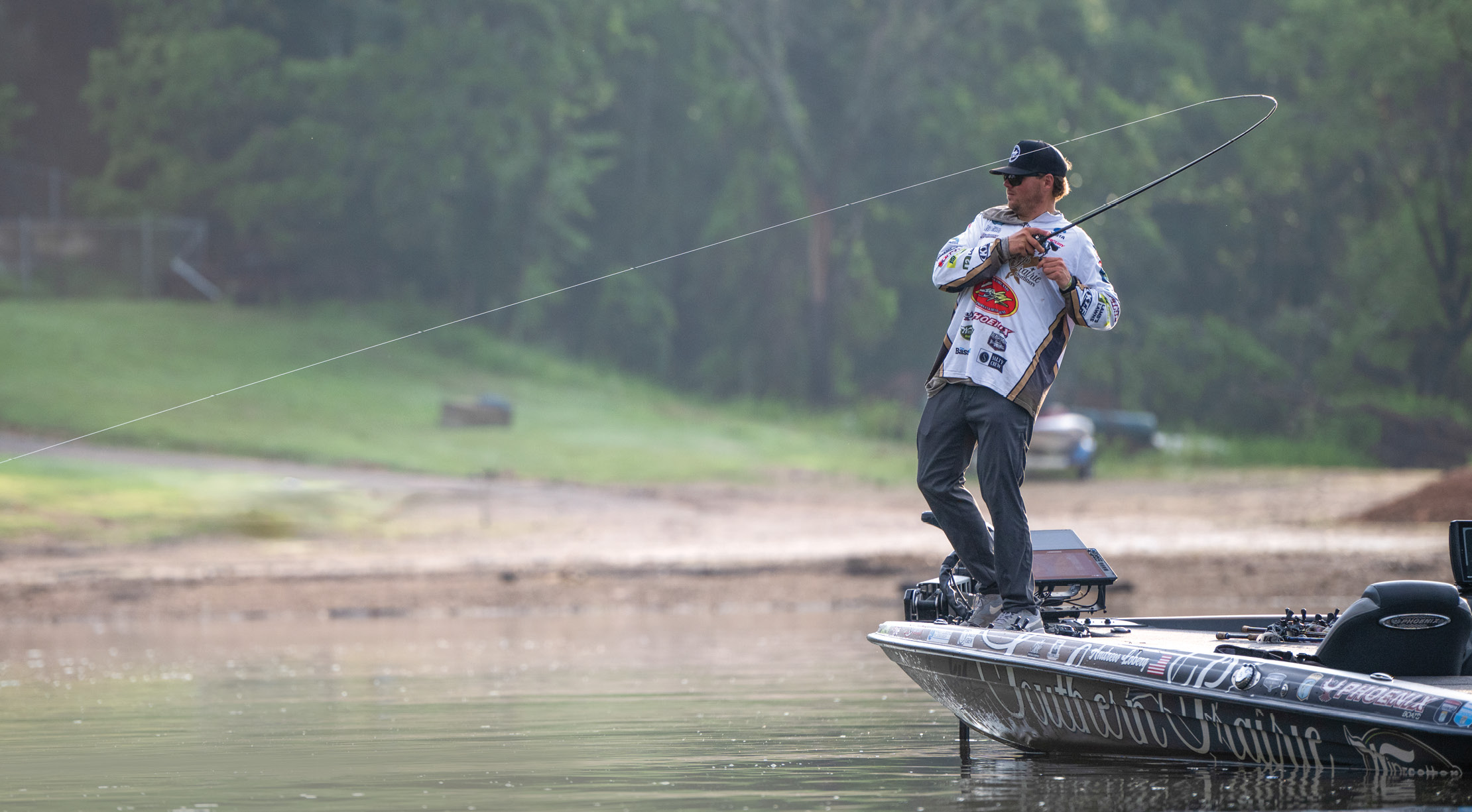

One of the most fascinating parts of bass fishing is the process of refining a presentation down to the absolute finest details. Take swim jigs and their trailers. It seems like a simple combo — a jig with a soft plastic threaded up the hook. That’s just scratching the surface, though. By adjusting the trailer size, action, color and shape, you can refine your swim jig to perfection for a huge range of scenarios.
DiPalma’s three-trailer system
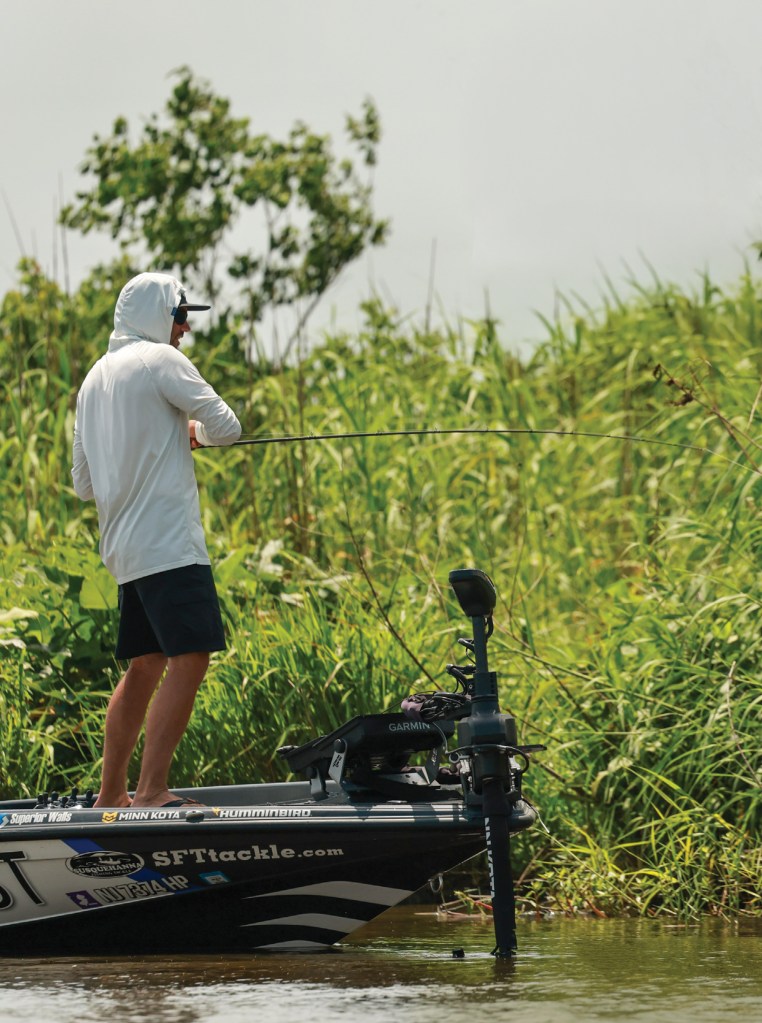
Progressive Bassmaster Elite Series pro Greg DiPalma lives in tidal-water country in New Jersey and has a background guiding clients on the Upper Chesapeake Bay out of North East, Md. It’s a region where a swim jig is a trusted tool.
For a guy who claims to not swim a jig a ton, DiPalma has a jig design to his credit: the Nomad Design Machete. And he’s zeroed in on a trio of soft-plastic trailers to bring out a swim jig’s best fish-catching abilities.
In other words, he’s dialed in.
“Anytime I’m fishing a lot of grass, if I can’t get anything else through, a swim jig goes through probably better than anything except a swimming worm,” DiPalma says. “But the main time I fish one is postspawn. The main reason why is because a swim jig can be very subtle. I fish the Upper Bay a lot, which is in Maryland, and it’s a big grass-driven system. Typically, during prespawn and spawn a lot of fish are picked on pretty hard. So a swim jig comes into play in the postspawn because it can be very subtle.”
Keeping it subtle hinges on the trailer. DiPalma’s go-to when he wants to keep it lowkey is a straight-tail trailer, not a boot tail. He uses the Missile Baits Spunk Shad, a result of a collaboration between Missile and Hog Farmer.
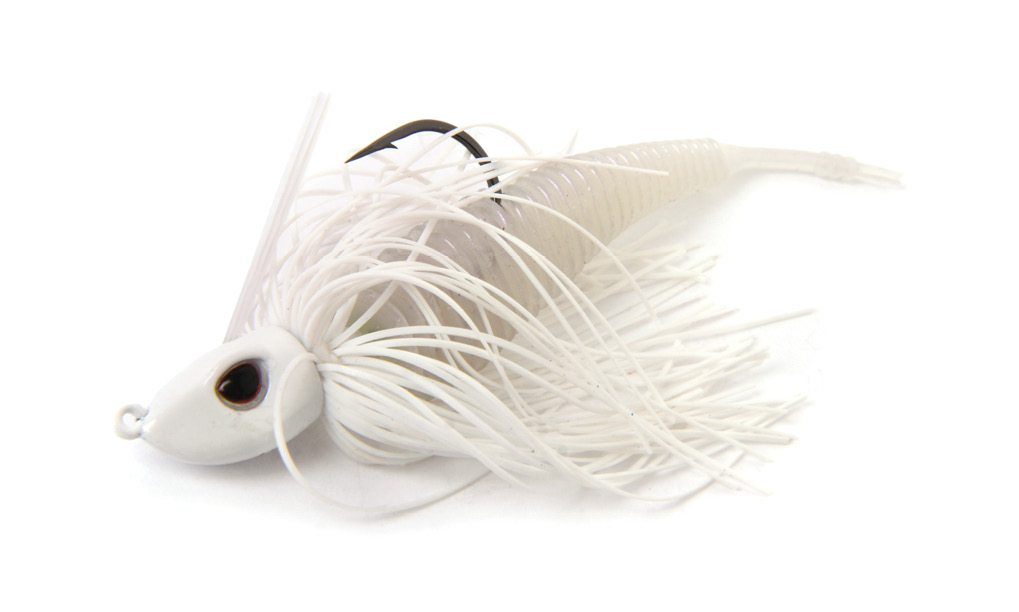
The Spunk Shad has a straight spike tail with three small tail rings that catch just enough water during the retrieve to give it some movement — but not too much.
“Instead of having a boot-tail motion, it has a really straight motion, like a snake more or less, just back and forth,” DiPalma says.
The other trailers DiPalma uses are reserved for any scenario when more action is needed. Usually, that’s the prespawn season into the spawn.
“One, the fish are a lot more active because they haven’t been beat on,” he says about prespawn fishing. “Two, it’s because if they’re down there on a bed or making a bed, if you’ve got something that causes commotion when it comes through, they’re going to bite it. It’s more of an agitating thing for the bass.”
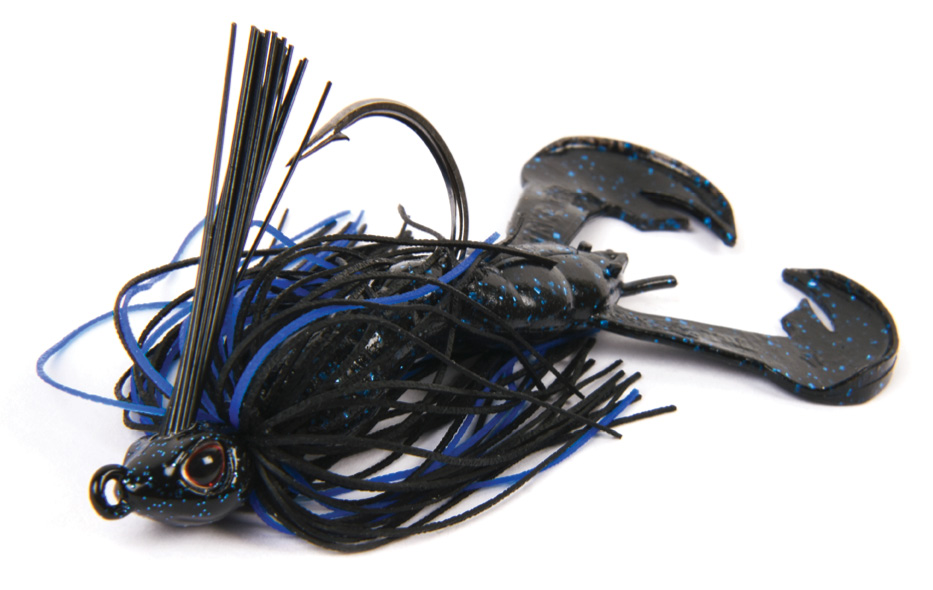
The pro divides high-action trailers into two categories: craws and boot tails. Specifically, he likes the Strike King Rage Craw and a 3.8 or 4.3 Keitech FAT Swing Impact swimbait, usually favoring the 4.3 with a little plastic pinched off the nose to shorten it.
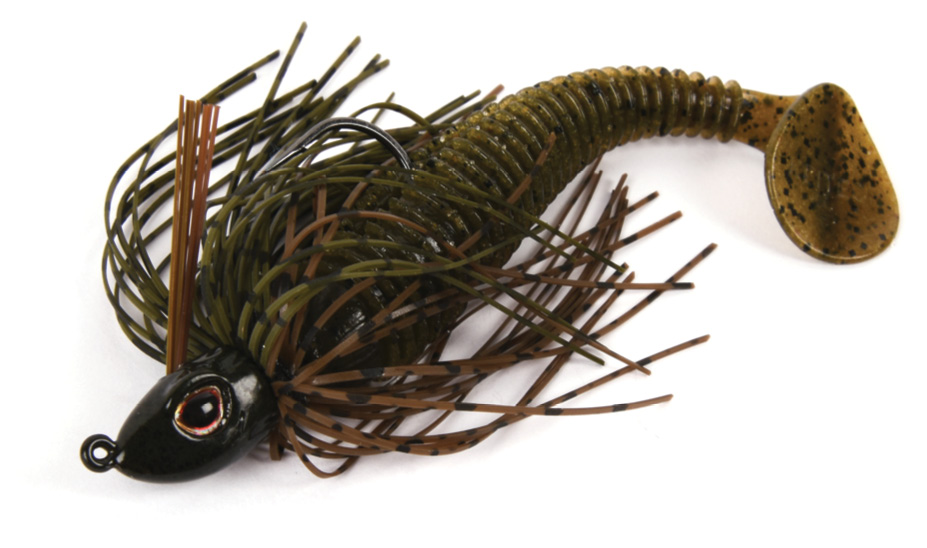
Both have plenty of action. The difference is in the way the Rage Craw creates lift or drag that helps the jig to plane off and stay high in the water.
“The craw style allows you to fish it a lot slower because it’s got more plastic, so it’s up higher,” DiPalma explains. “I don’t want to say the boot tail gives maximum thump, but it could, depending what company you’re throwing. Both of those styles — the boot tail and craw — put off a lot of commotion.”
Both trailers swim hard even on a straight retrieve. When he thinks it’s needed, DiPalma adds extra commotion by using the “Alabama shake” technique, holding his rod tip up and shaking the rod during the retrieve. Shaking is popular in the South, particularly on the Coosa River chain, and it brings a craw-style trailer to life.
“When it’s really tough, I yo-yo it,” DiPalma adds. “I wind it down, whip it up, wind it down, whip it up. Sometimes you can get a reaction bite out of those fish that just won’t bite it on a straight retrieve.”
Loberg weighs subtlety vs. aggression
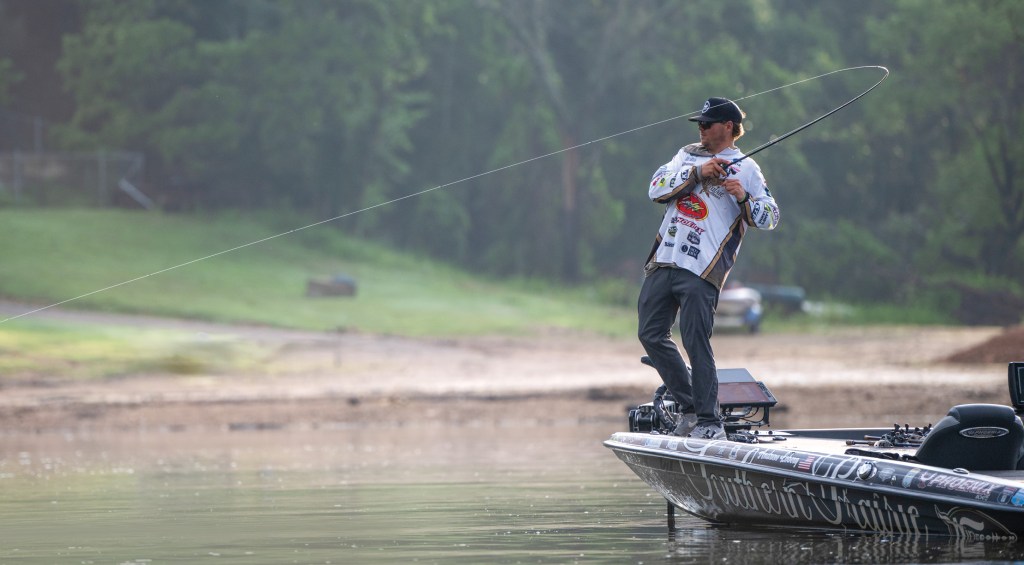
Living in Grant, Ala., Elite Series pro Andrew Loberg is in the heart of swim jig country, the very region where the Alabama shake technique was popularized. While he admits that swim jig and trailer selection can become a matter of endless customization, Loberg has narrowed in on a couple of trailer types that work best for him: the boot-tail swimbait and a craw-type trailer.
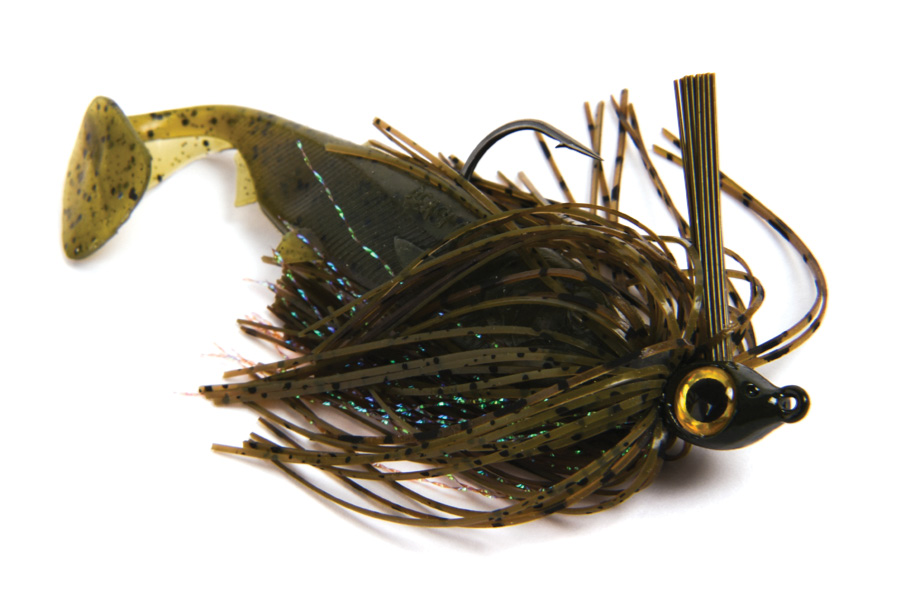
His favorite boot-tail swimbait is a Beast Coast SlowFlow. The narrow tail section in front of the boot gives it great movement.
“When I’m throwing that type of trailer, I’m typically only mimicking a baitfish,” Loberg says, “Whether that be a bluegill or a shad, I’m throwing it mainly on fluorocarbon in open water and a little bit cleaner water. I’m targeting a little bit more rock or around some docks, but not as heavy cover. I want it to look more natural, so it’s basically just a straight retrieve.”
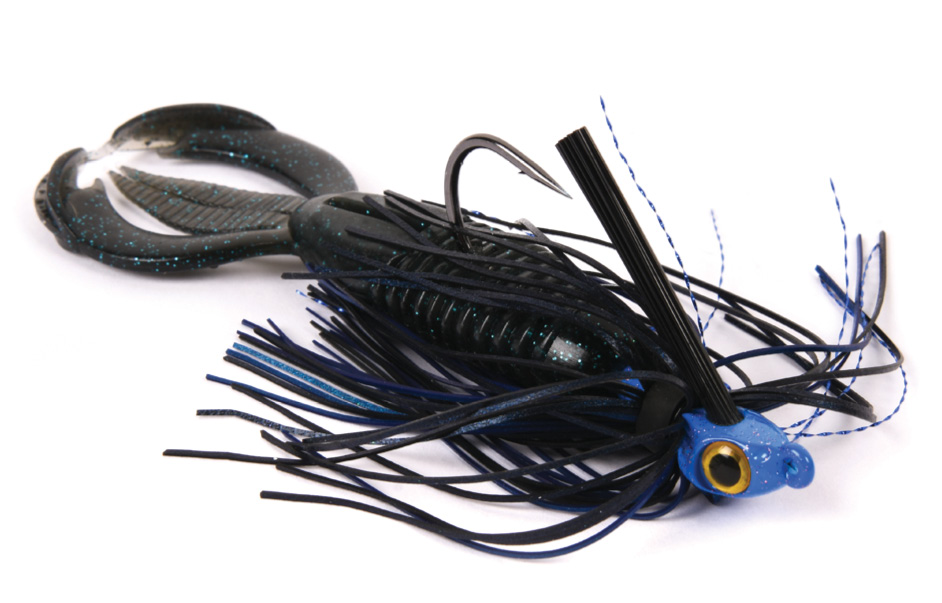
In this case, the swimbait provides all the action — there’s no additional rod-imparted action — and the presentation is similar to an ordinary swimbait’s. The difference is the bulk of the jig. It’s a heftier profile that sinks more slowly and pushes more water than a bare swimbait, creating a unique look and fall rate. Loberg adds that the jig-swimbait combo is a killer in current.
When the fish are holed up in heavy cover, he swaps to the craw-style trailer. His favorite is the Beast Coast Flippin’ Delight. By choosing colors that match local forage, he can make this combo imitate bluegill, shad and crawfish.
“I’m throwing it in the thickest cover you can imagine with straight braid,” he adds. “You have a heavy hook on a swim jig, and that craw trailer just shortens that bait up a little bit so you can get it in and out of cover, while having the most action you can get.”
Emergent grass, brush and even grass that’s practically matted are all targets because of the way Loberg works the jig and the effects of the trailer. He shakes it aggressively to keep it up high while skimming it along.
“I really fish it like a frog in a sense, where I want that bait basically on top of the surface or just below the surface, moving as much water as I can but in a quick manner,” he says. “You can also shake it on a slack line and keep it up in the water column with that trailer and keep it in that strike zone longer than you could with just a paddle tail on it.”
Loberg likes to match the craw-style trailer with some interesting and bright jig colors to help the lure stand out. He uses white and chartreuse; a Beast Coast color called Cajun Crush that’s a mix of black, blue and pink; red hues like classic Rayburn red; and one called dope gill that has shades of red, orange, brown and black.
He uses equally bright trailers and often chooses colors that offer some level of contrast with the jig. For instance, on a red jig he’ll use a black, black-and-blue or green pumpkin red trailer.
The one other trailer that Loberg mixes in on occasion is a hefty 6- or 7-inch hollow swimbait.
“On schooling fish, it’s just a different look and a big profile,” he says, “as well as fishing hard cover like brushpiles and stuff like that. That swim jig just gets through better when sinking it down.”
Kuphall makes a case for simplicity
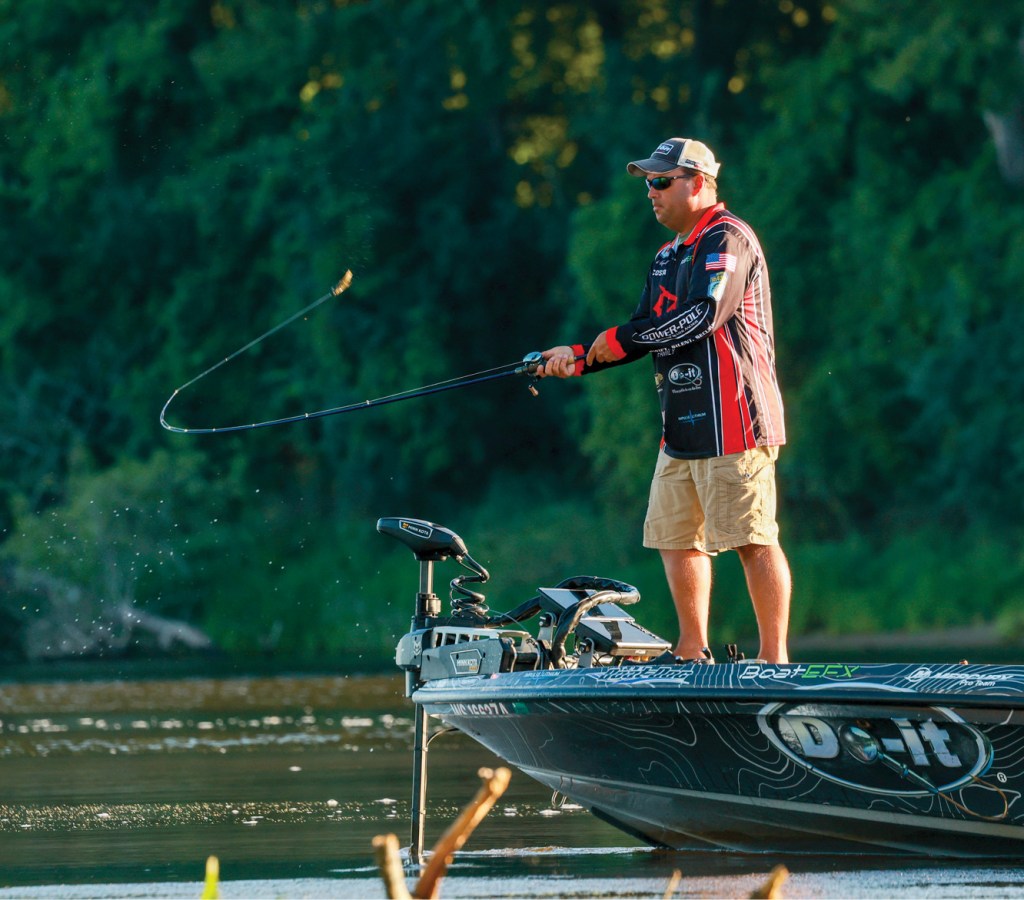
As a Wisconsinite, Elite Series pro Caleb Kuphall is definitely a believer in the swim jig. It’s just not an everyday tool for him.
He uses it in a narrow window of situations, usually around cut banks or grassy areas on rivers when bass are high in the water column. The jig lets him cover water efficiently. To keep it simple, Kuphall cuts out the variables and uses just one trailer, relying on touch, speed control and technique to present the bait effectively.
“I use a NetBait Baby Paca Craw,” says Kuphall. “I’ve used it for years and years fishing the Mississippi River. It’s got a ton of action to it. It’s got claws that flap on it. If I’m throwing a swim jig, that’s what I’m throwing. It’s a confidence thing.”
The Baby Paca Craw has the perfect action for a shaking or pumping retrieve, which is the only way Kuphall swims his jig. And he sees no reason to use a boot-tail trailer due to the predominant forage — more specifically, the forage species that aren’t present.
“Up here in the North, we don’t have a whole ton of shad like they do in the South,” Kuphall says. “It’s more bluegill based. Bluegill, crawfish, frogs, mudpuppies — that’s the main forage up here.”
Pros’ picks: swim jigs
Greg DiPalma: Nomad Design Machete Light Cover Swim Jig and Nomad Design Badlands Heavy Cover Swim Jig
DiPalma designed the Machete with Nomad specifically for fishing with fluorocarbon line. It has a light-wire, ultra-sharp BKK hook and a streamlined head. He opts for the heavy-duty Badlands jig when the cover is thick enough to require heavy braided line.
Caleb Kuphall: Homemade jig poured in a Do-it Molds Casting Jig Mold
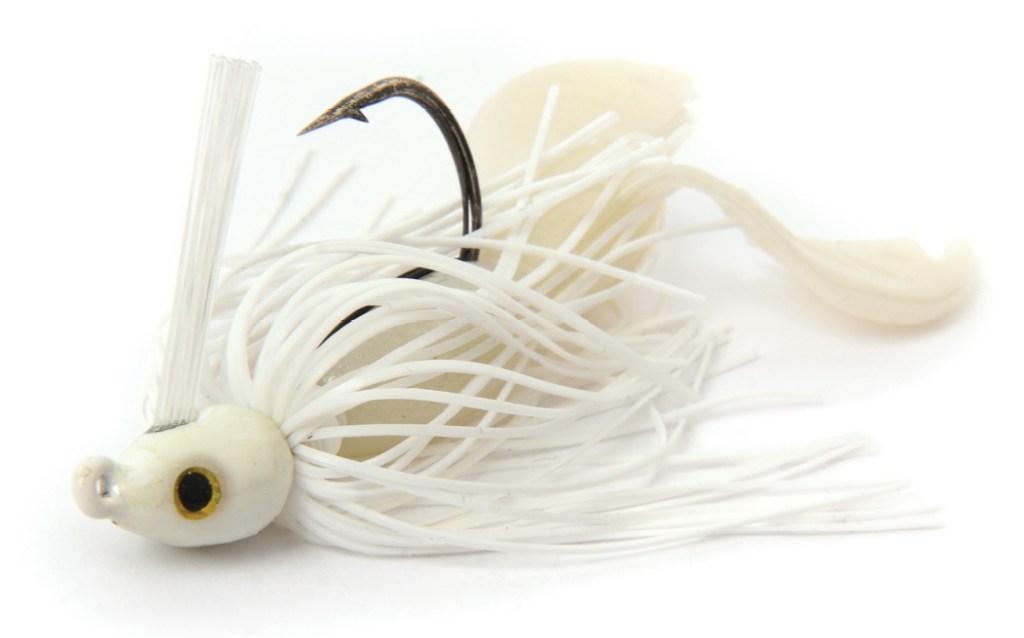
Kuphall pours his own swim jig, opting for a simple bullet-style head with a couple of upgrades: “I like to throw a very large hook,” he says. “A 5/0 294 Gamakatsu is what I generally put in it.” He also cuts off the rear part of the lead keeper barb, opting instead for a custom loop keeper made of a heavy rubber strand (the kind used for bead necklaces) to hold his trailer in place.
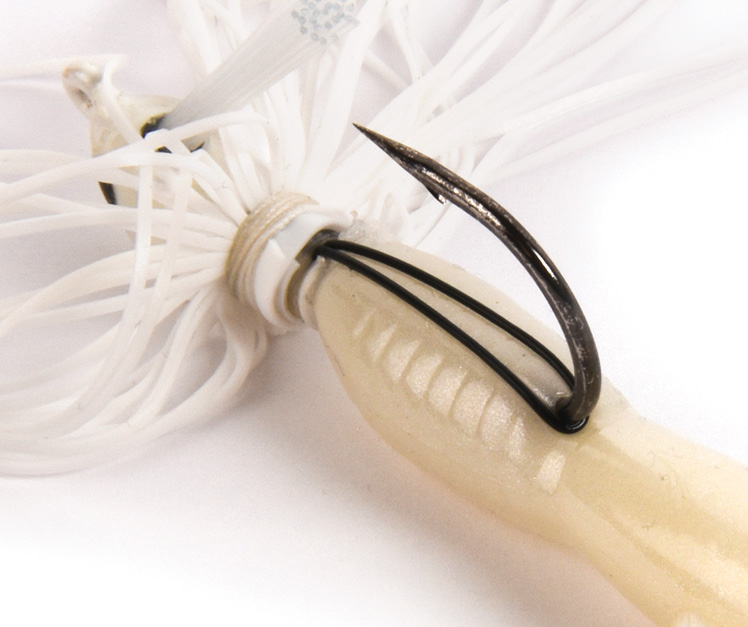
Andrew Loberg: Beast Coast Gorilla Swim Jig and Beast Coast Workingman’s Swim Jig
In heavy cover, Loberg uses the Gorilla Swim Jig, with its stout BKK 4/0 hook and sleek, narrowed nose. It can handle the shock of a hard hook set with braided line. In open water, he uses the Beast Coast Workingman’s Swim Jig.
Pros’ picks: Swim jig and trailer colors
Bluegill or green pumpkin — Great when bass are foraging on bream; orange and chartreuse accents help imitate bluegill.
White or shad — Highly visible hues that stand out in many conditions; also great on fisheries with a shad or white perch forage base; chartreuse accents make them stand out more.
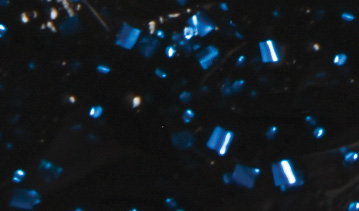
 Black and blue — A top choice for dirty water or any low-visibility scenario.
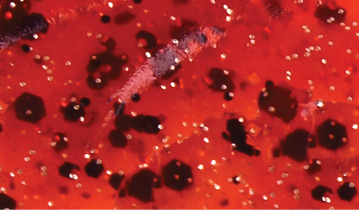
Red — One of Andrew Loberg’s favorites around thick cover, dirty water or where crawfish are common.
Originally appeared in Bassmaster Magazine 2026.