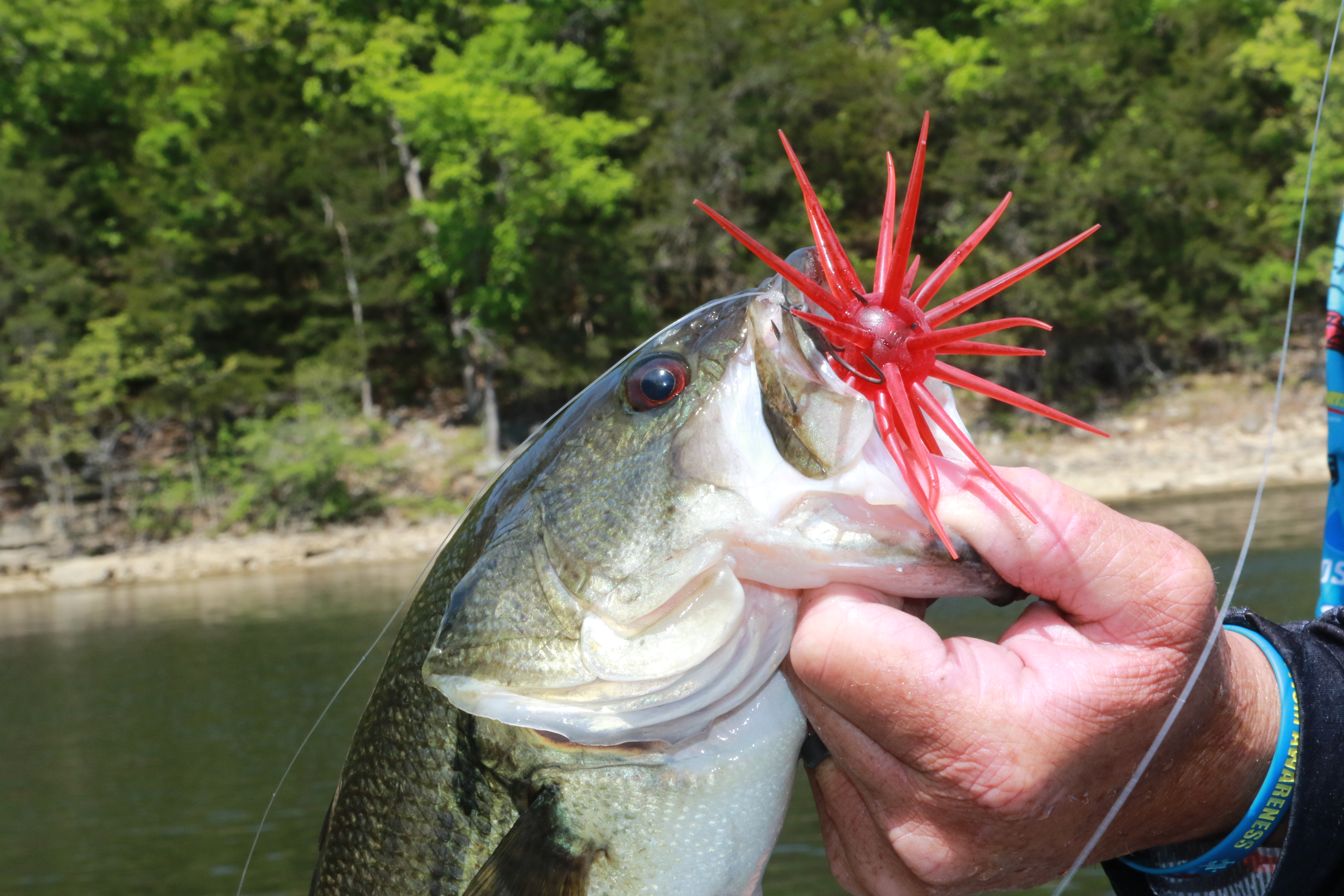
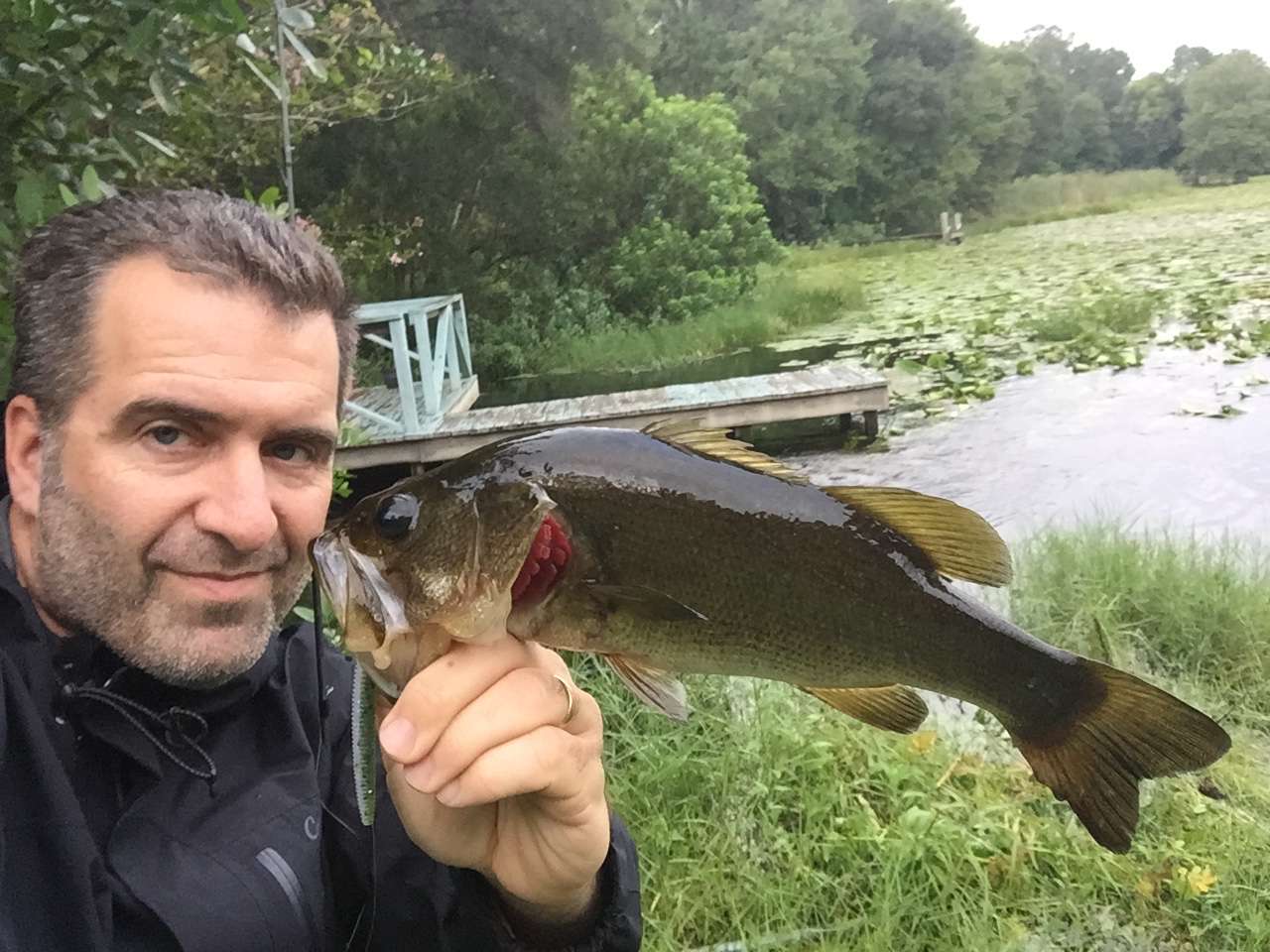
Ask Mike Iaconelli for his view on rigging an urchin-style bait and he goes right to the core of the subject. In fact, that core defines his favorite method for rigging the bait — also known as the spiky ball — that’s currently dominating the bass world’s consciousness.
“This whole category is so new that new ways to rig it and fish it are emerging daily,” Iaconelli said. “All of these baits come with a molded center hole, so I’ll put a weight stop on my line and then insert a cylinder style (“mojo”) weight through that hole.
“You can use lead, but I prefer tungsten weights because they’re smaller and denser. That center hole in the bait is small, so I want a tungsten weight.”
Iaconell uses 1/16- to 1/4-ounce weights, but the 1/8- to 3/16 is the sweet spot. Ten feet or shallower, he likes a 1/8. If he’s in 15-plus feet and watching fish on his Lowrance ActiveTarget, it’s typically the 3/16.
“I want the bait to sink, but I don’t want it to sink like a rock,” Iaconelli said. “I want it to kinda slow fall.
“You can dip that cylinder weight in the water, or you can wet it with your mouth and once you get it started in the bait’s center hole, it’s gonna slide right in there and fit perfectly within the bait.”
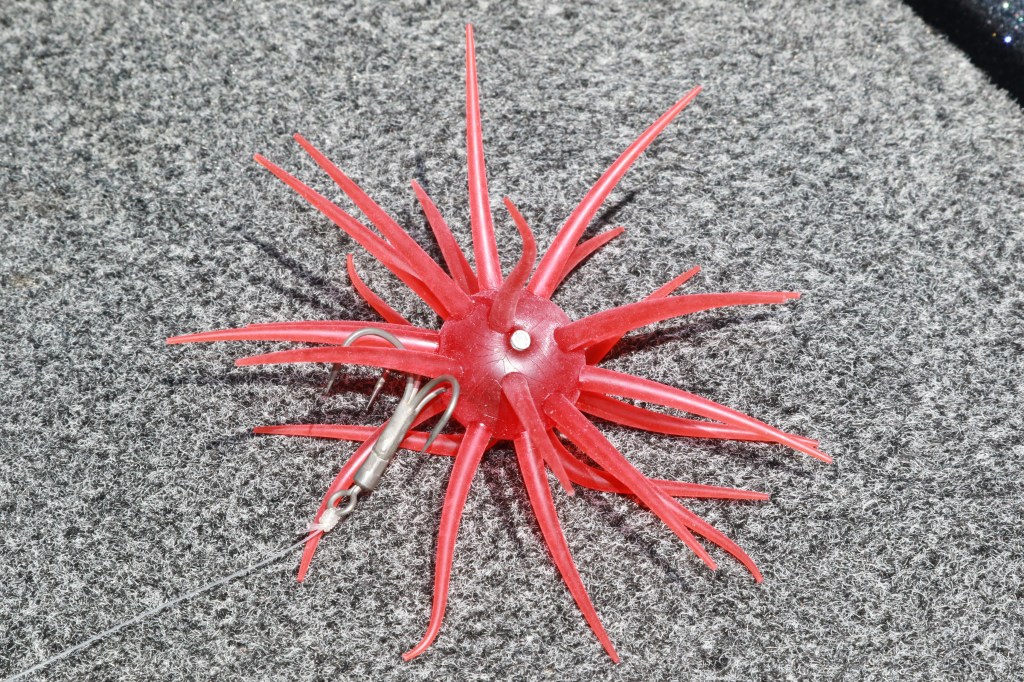
With weight in place, Iaconelli threads his line through the cylinder, ties on his treble or quad hook, snugs the eye against the bait and then slides the stopper against the cylinder’s opposite end.
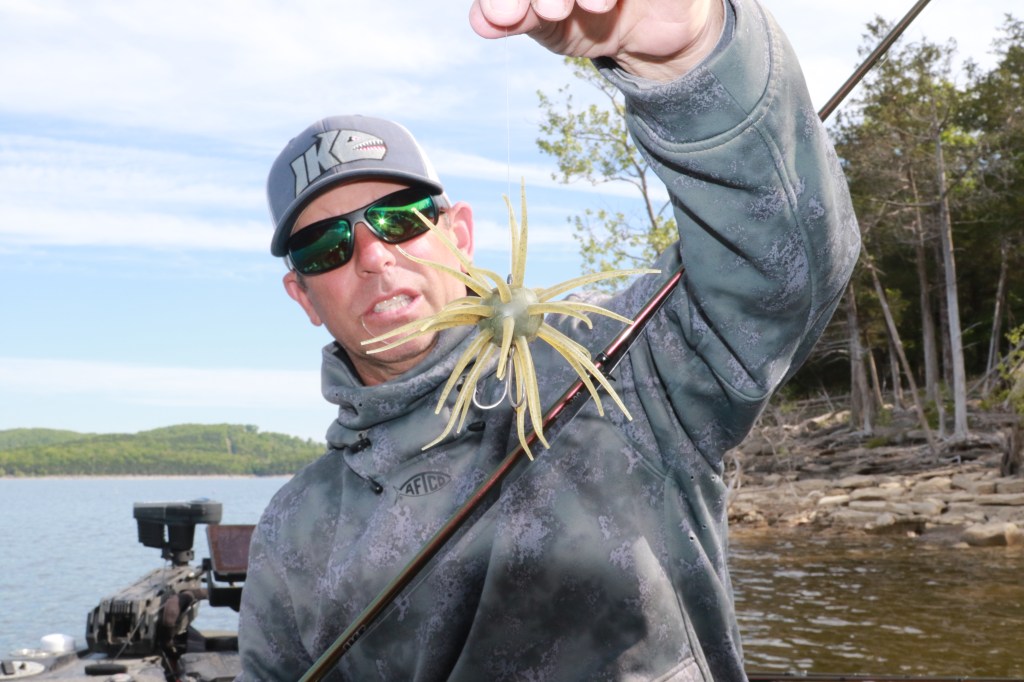
“When you cinch it all together, the neat thing about it is that hook is semi-protected, not just from the (bait’s center sphere), but also from the tentacles,” Iaconelli said. “You might think this is only good for open water, but it’s also good around sparse to moderate cover like isolated logs or docks.
“What I like about this rig, instead of a wacky hook or a worm hook, is the hookup percentage really improves when you go to a treble or a quad hook.”
Presentation particulars
Given that the urchin’s main appeal is the tentacle action, Iaconelli makes sure he never interrupts the show.
“I want this bait to fall unimpeded, just like a jig,” Iaconelli said. “If you’re fishing an old-school skirted jig, you don’t want to throw it under a dock, click over and let it fall on a tight line because it pendulums and you’re pulling action away from it.
“You always want to let that bait fall on what I call ‘controlled slack,’ or semi-slack line, so there’s a slight bow in your line as the bait’s falling.”
When he’s watching open-water fish on his Lowrance ActiveTarget, if Iaconelli sees one rising to his bait, he’ll keep his rod high and shake his slack, as he would with a jighead minnow. The bait’s still unimpeded, but he’s giving it just enough rod influence to get all those tentacles doing the dance.
For a more aggressive presentation, Iaconelli lets his bait fall and then he’ll hit it with a sharp, snappy action comparable to a jerkbait cadence.
“Instead of going up, I’ll go to the side with this,” he said. “My rod is right in front of me, and I’ll hit it to the right, because I’m right handed and my rod ends up moving about 2 feet to the right.
“When I hit the bait like that, it pulls it forward so rapidly that all those tentacles displace water. Remember, a full-size urchin is a massive piece of material and when you do that, it creates a surge of water.”
Important point: Right after a sharp snap, Iaconelli returns his rod to the center position so the bait falls again on a semi-slack line. Repeating this cadence leverages a fish’s curiosity and its attack instinct.
“I think they see it, they’re curious, they see it try to get away, they feel the water displacement and then it stops and starts falling slowly,” Iaconelli said. “Ninety percent of the time, that’s when they annihilate it.”
Other options
A Neko rig may be the most versatile of the urchin bait presentations and Bryan Schmitt knows his Hideup Coike Fullcast is a good option for fry guarders. Proving the point during a recent photo shoot, Schmitt lined up on an isolated piece of standing timber, watched his forward-facing sonar until he spotted a wad of hatchlings and the nearby guardian. One cast and a controlled drop was all it took to red-line the fish’s anger.
For a bottom contact presentation, Bryan Schmitt uses a Varivas Tungsten Grenade Quick Change Weight attached to the eye of his Hyabusa hook. Offering a more functional option to the common Neko rig, this one fits well with a hopping retrieve over various hard bottoms.
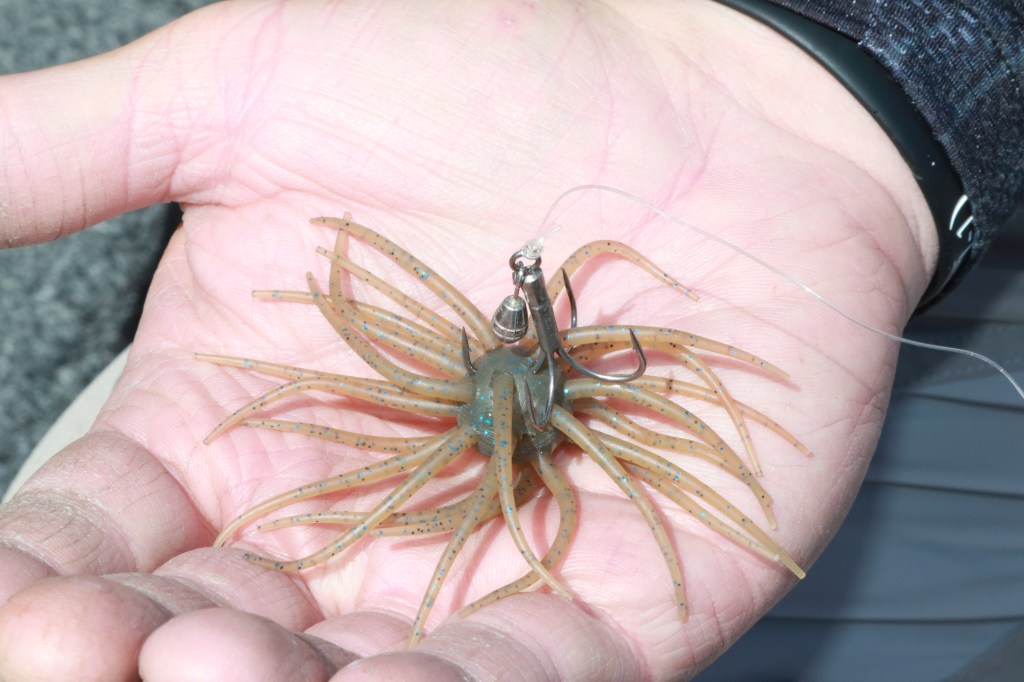
Drew Cook also likes this setup, aka the Moriken Rig, for its presentation options. In standard form, a Gamakatsu Ball Rig Hook holds a Gamakatsu weight attached to its wire holder, and with such rigging, Cook can make his bait pivot and taunt curious fish.
“When the rig is on the bottom, the weight on the front of the hook makes the bait roll front to back; it spins almost,” he said. “Most of the time, I do this when I’m fishing deeper. All your weight is concentrated in one place, so it falls faster and gets to the bottom quicker than an even-keeled bait.”
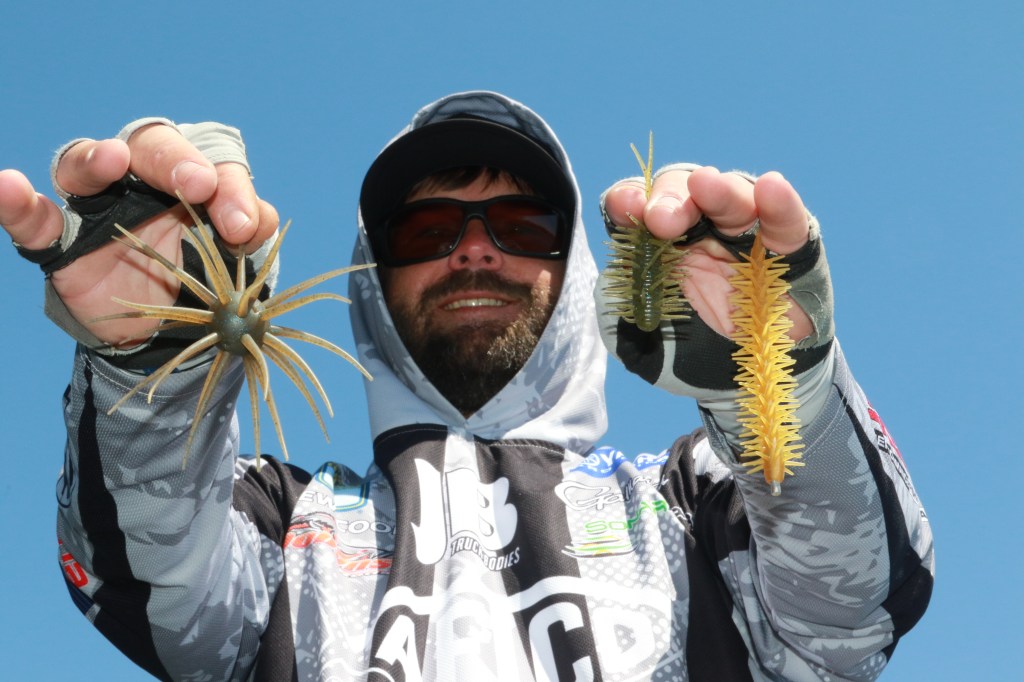
Extending the theme: Along with his spiky ball work, Cook has also embraced the Hideup Coike Shrimp and the Hideup Coike Straight, both slender body baits encircled by wiggling appendages similar to the Fullcast. Same appeal, different forms.
Available in 65-, 80- and 105-millimeter sizes, the Coike Shrimp presents an enticing Carolina rig bait, while the 110-millimeter Coike Straight works well Neko rigged.
Parting tips
Tinkering plus trial and error will, no doubt, continue to expand this relatively new bass-catching option. To that point, we’ll close with these thoughts.
Recycled rewards: Cobb melts used/discarded Zoom baits and pours them into round (soccer ball) molds from Hobby Lobby to form spheres, then adds strands of thick, round rubber. Cobb notes that you can melt the tentacle ends and stick them to the ball, but for greater durability, he threads them through with a darning needle.
Float plan: During the Bassmaster Elite at Santee Cooper Lakes, Brandon Palaniuk gave up a cool detail of his urchin rigging. If the bait’s density (often directly related to strength and durability) causes it to sink too fast, he adds foam to his hook shank. This extra buoyancy levels out the fall rate for the ideal presentation in shallower water.
Flexibility rules: “What I’ve noticed with these baits is that every day is different,” Cobb said. “It’s kinda like the herring fish and the Fluke, you have to try different retrieves.
“I normally start out aggressive with what you might call a jerkbait retrieve and end up with a swimming action where it doesn’t do anything; just holding the line tight to make the appendages quiver.”