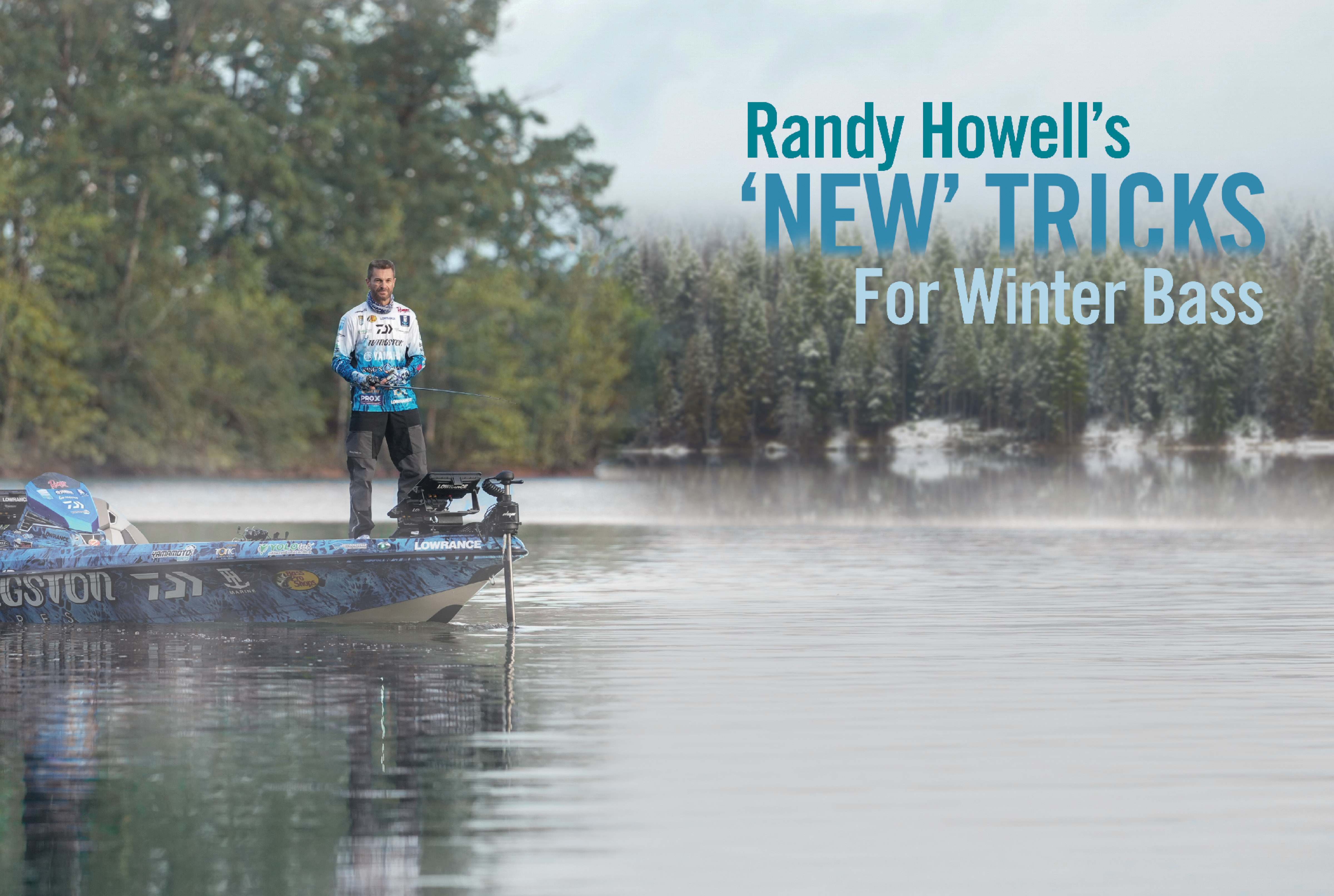
Not long after he won the 2014 Bassmaster Classic on Lake Guntersville, Progressive Bassmaster Elite Series pro Randy Howell and his wife, Robin, moved their family to the shores of the famous north Alabama impoundment permanently. The lake, consistently ranked among the best bass fisheries in America, offered Howell the opportunity to continually hone his skills and expand his knowledge of bass behavior on an almost daily basis.
The “almost daily” part occurred each year during the winter months when the bass fishing predictably became far more difficult. It took him a full decade — until a cold, brutal day on the water during the winter of 2024-2025 — to realize what he and many other anglers had been completely overlooking.
“For years, we all thought bass wintered on deep, vertical-type cover like bluffs, flooded timber and deep brushpiles,” Howell says. “They became extremely lethargic and usually didn’t bite well, so we just fished slow and deep. Everybody had the same bag of tricks, too.”
“For instance, if we ever found shallow, green vegetation, even moss beds, we could sometimes catch one or two on a topwater, but grass doesn’t really come into play in the winter. If you got really lucky, you might even catch a big fish by crawling a spinnerbait along the bottom, but it was never a sure thing, even on a big-fish lake like Guntersville.
“Overall, however, we caught just enough bass in those types of places to continue fishing that way. During the winter months, you basically prepared yourself mentally for a long, slow day.”
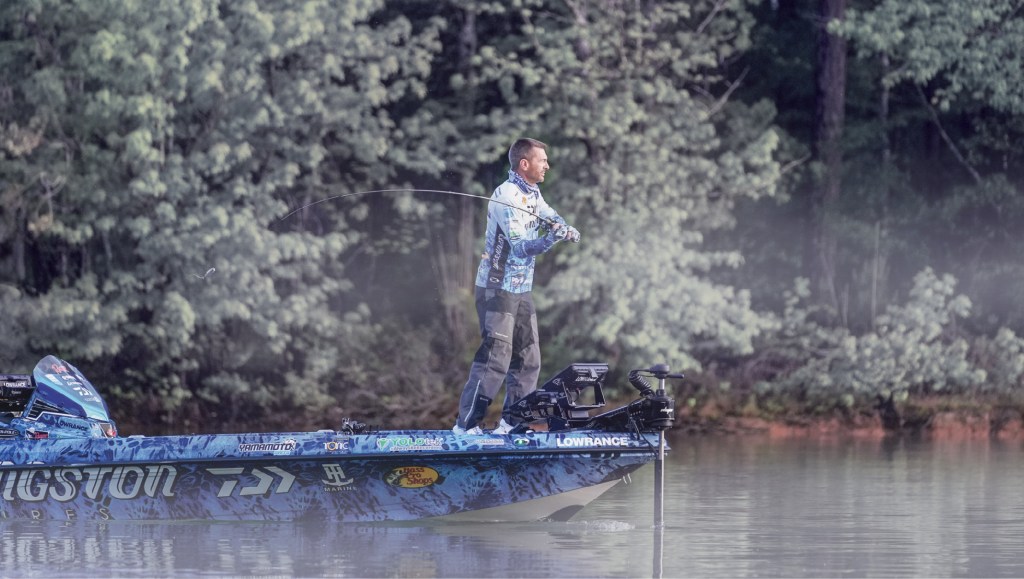
Discovering a better way
In those not-so-long-ago days, Howell used water clarity and, to a lesser extent, water temperature to determine where he was going to fish. If the water temperature had dropped below 50 degrees, he concentrated on rock bluffs, transition banks and certainly deeper boat docks — if they were present. The clearer the water, the deeper he would fish.
That much is still true today. Water clarity nearly always determines how deep you should fish. To some, it’s probably more important than water temperature.
“Then, the scenario began to change, slowly and very quietly,” recalls Howell. “Winter fishermen on Guntersville began bringing in five-bass limits weighing 30 pounds or more. Not only that, but multiple fishermen would do it during local winter tournaments on the lake. Everybody knew Guntersville was good, but many of us had never seen anything like it in all the years we’d fished the 69,000-acre impoundment.
“At first, my son, Laker, who’s 24 now and a guide on Guntersville [and the winner of both a Bassmaster Open and a Nitro Bassmaster Elite Qualifier presented by Bass Pro Shops this past season], wasn’t sure what was happening, either,” continues Howell. “We’d go out together and see all the other boats, but no one was fishing around vegetation or even specific breaklines like we used to.
“They’d be offshore fishing channel swings in the deeper water. So, of course, we went out, too, just to look around, and we were absolutely amazed at how many bass were out there. It seemed like they were easier to catch, too. They were out there just cruising around, following the baitfish.”
The absolute key, Howell realized, was the presence of the baitfish. They are almost always part of the key anywhere, but during the winter, shad form huge schools and drift in seemingly open water, attracting active bass.
What Howell saw were balls of shad suspended high in the water column. One of his first experiences with them was in water 50-plus feet deep, but the shad were only 5 to 15 feet deep, and the bass were 10 feet down. Everything was clearly visible on ordinary sonar, too.
“It’s a completely different world out there than we ever imagined,” Howell says, “and I know now that it continues for months. A lot of fishermen have fished around schools of baitfish over the years, most often on shallow creek flats during the autumn. If it was in deeper water, we dropped spoons down through the schools to catch a few bass.
“The electronics of today, including forward-facing sonar, have truly opened our eyes to something we never imagined, and it’s a world that is open to every angler, regardless of whether he uses forward-facing sonar.
“The lesson is that winter bass are not always as deep as we previously thought, nor are they as lethargic as we believed. They are much, much higher in the water column, and they chase lures. In fact, I’ve learned that if I’m not getting many bites with what I’m throwing, I speed up my retrieve instead of slowing it down.”
Gaining clarity
To put this into perspective, consider a winter day Howell spent with a young pro angler named Drew Gill, a good friend of Howell’s son, Laker. Gill had come for a visit after a tournament on Kentucky Lake and took Howell fishing on his own Lake Guntersville. They ran out over the main-lake channel and began seeing balls of baitfish suspending in 50 to 60 feet of water. They fished for just three and a half hours, during which time Gill caught 26 bass weighing 97 pounds.
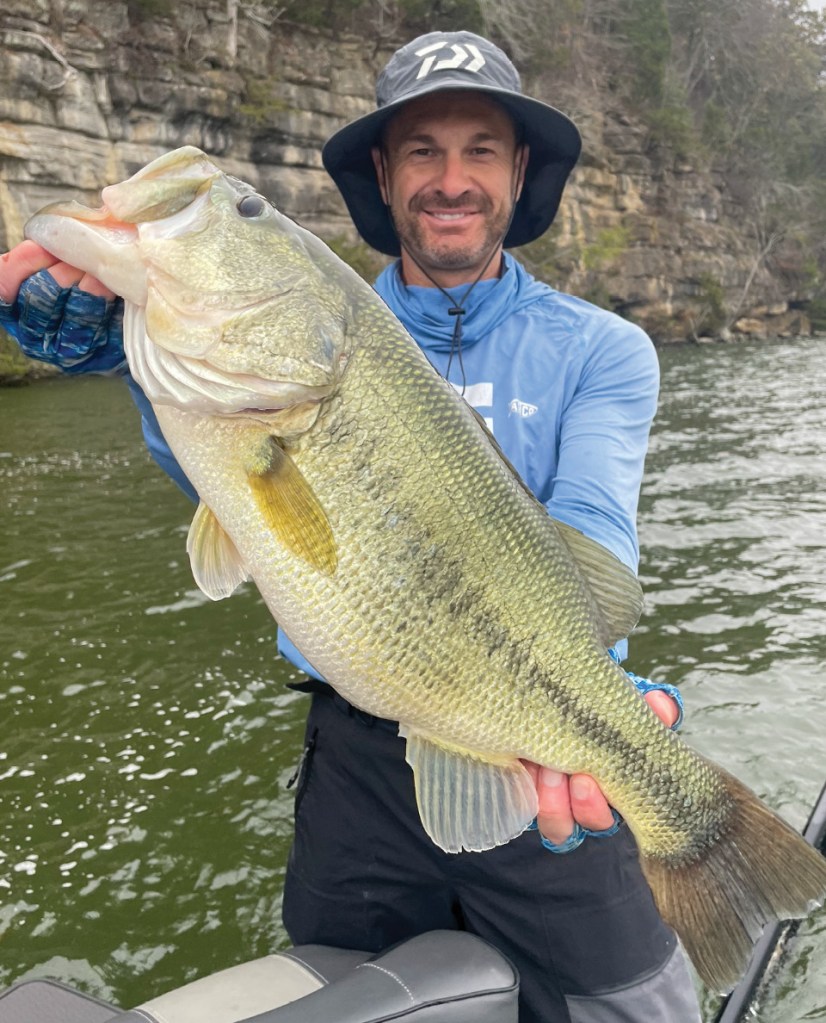
“That’s also the day I caught the biggest bass I’ve ever caught on Guntersville,” Howell says, laughing. “The baitfish were only 6 to 8 feet down, and bass were suspended underneath them. I made a cast with a 1/4-ounce jig and let it sink through the bait, and a bass slammed it. The fish weighed 9-1.
“I went out the next day and fished from the Guntersville Dam up to Goose Pond. I stayed in the main Tennessee River channel for more than 20 miles and caught more bass than I’ve ever caught before, just by keying on the baitfish.”
On another brutal 38-degree day with a 20-mph wind, Randy and Laker entered a local one-day tournament on Guntersville, fishing this same suspended baitfish pattern in the area around South Sauty Creek. They caught bass just 5 to 10 feet deep around baitfish suspending over 30 feet of water, but not anything big. They brought in 23 pounds, but it took 35 pounds to win, and everyone in the Top 5 had more than 30 pounds.
Fine-tuning a new approach
Howell spent the remainder of last winter trying to fine-tune this type of fishing and determine its parameters, if there were any. Here’s what he’s added to his “new” bag of winter tricks, some of which are a little surprising.
First, he likes moderately stained water, not clear, because the clear water pushes bait and bass deeper. Howell wants to see his lure in 1 to 2 feet of water, but not in 5 or 6 feet.
He begins his baitfish search in both the main-lake river channel and in larger tributary creek channels (particularly on windy days). The best places seem to be where a channel swings close to the shore, especially if it’s a rocky shoreline. His starting depth to begin looking for schools of baitfish is between 6 and 12 feet deep. In midafternoon on sunny days, baitfish will push even higher in the water column, while cloudy days will keep them a little deeper.
There will be schools of baitfish in different areas, which is why main-lake river channels can be followed for miles. If schools of baitfish cannot be located, the chance of catching a large number of bass decreases.
Water temperature can still play a role. If the temperature falls below around 50 degrees, this winter fishing pattern is absolutely worth trying. When actual water temperature drops and remains below around 40 degrees, this pattern may begin to slow. Howell believes that’s because the baitfish schools break up and move closer to the bottom in deeper water when it gets that cold, and the bass do the same. Likewise, in early spring, this pattern fades as water slowly begins to warm.
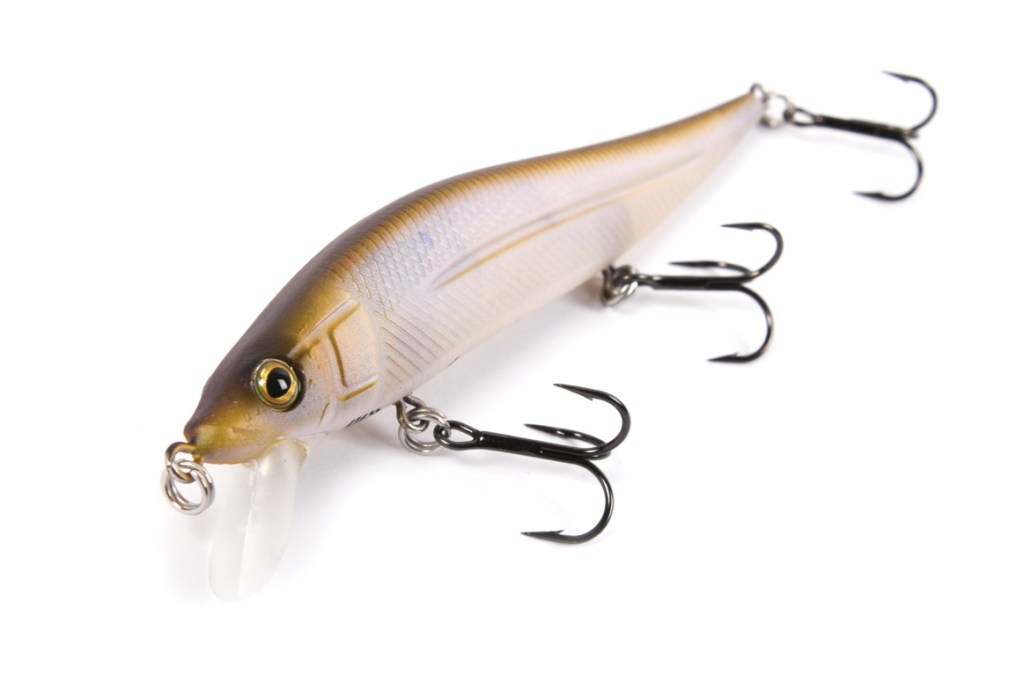
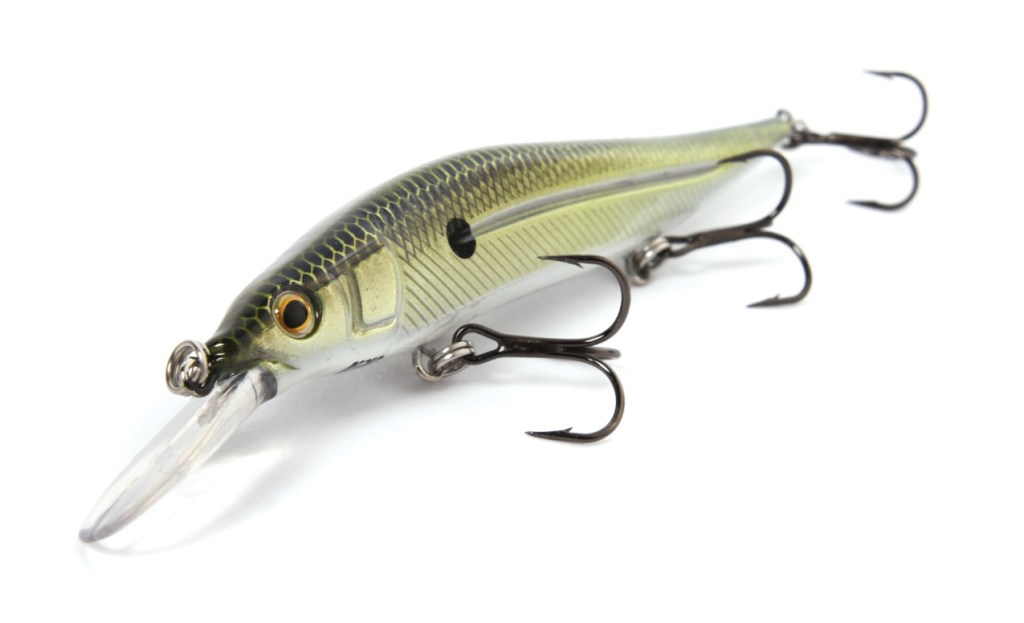
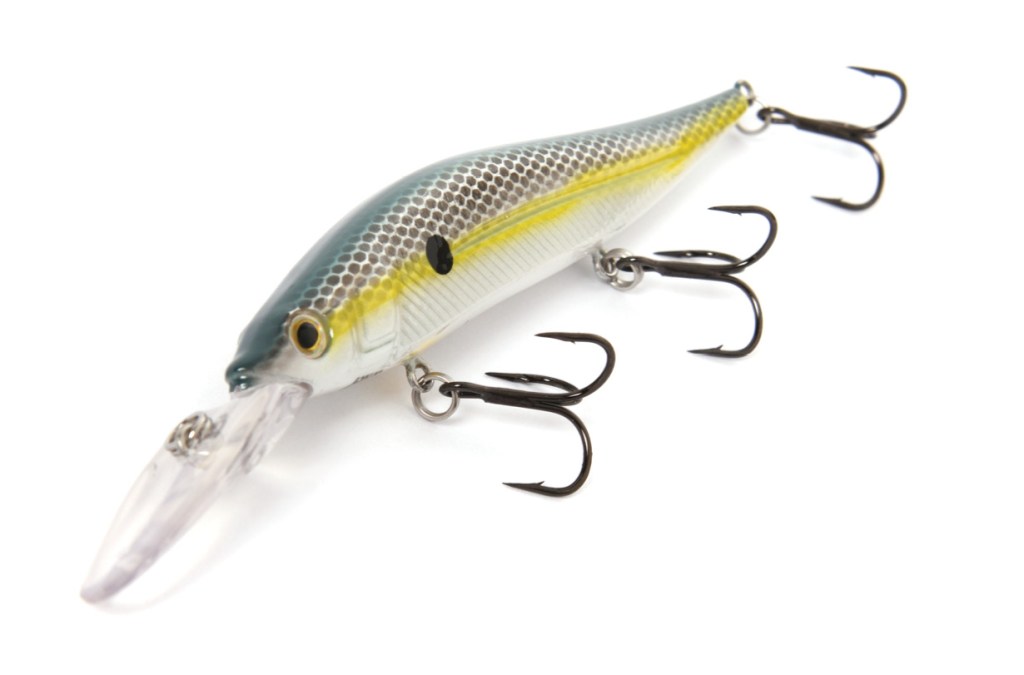
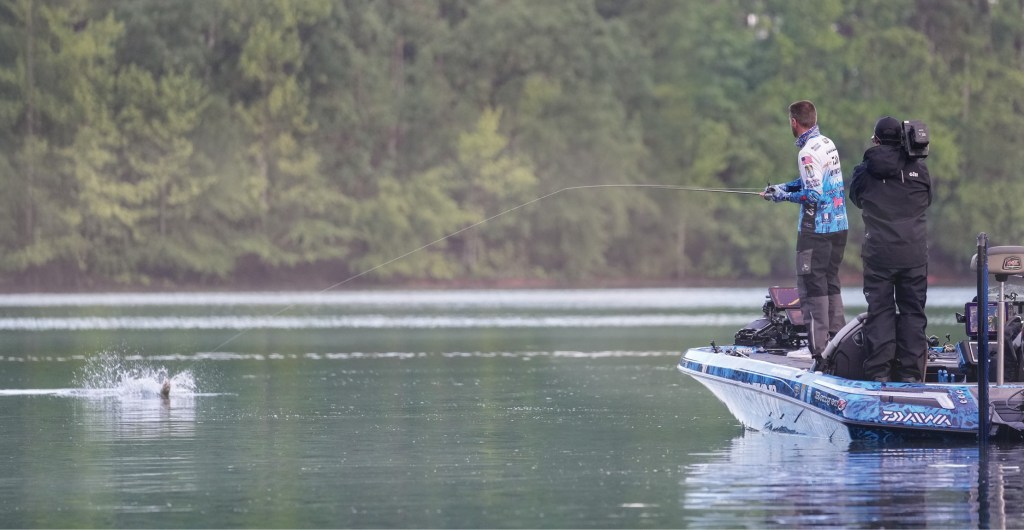
Several lures and presentations also appear to work more effectively than others. Howell’s favorite is a jerkbait, and, depending on water depth, he uses three models produced by Livingston Lures. All are slow sinkers, including the JerkMaster 121C, which gets down to about 6 feet; the JerkMaster 121D, his favorite, which runs between 6 and 10 feet; and the JerkMaster 121 Deep Plus, which runs 12 to 15 feet deep. His favorite colors, not surprisingly, closely match the local baitfish, and he’s rigging with 12-pound-test Daiwa J-Fluoro fluorocarbon line.
“With these lures, I cast parallel along bluffs and over riprap, and my retrieve varies from a rip-stop, rip-stop, to something faster, like rip-rip-rip-stop,” says Howell. “The bass I’m targeting are active, roaming fish that are following the bait.”
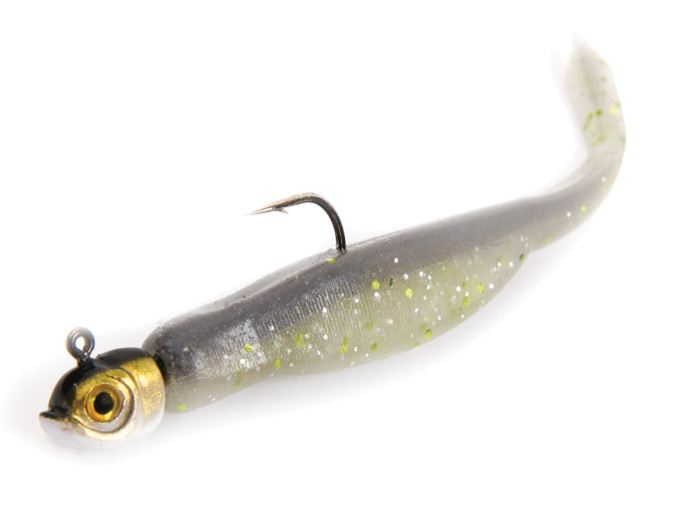
Howell also likes a jighead minnow-type lure, and he’s not hesitant about giving these lures a lot of credit for the increased catches anglers are experiencing in winter fishing. He likes a 1/4-ounce jighead with one of the Yamamoto plastics, especially the D-Shad, which is what he was using when he caught his 9-1. If the bass are particularly high in the water column, he may change to a lighter 3/16-ounce jighead.
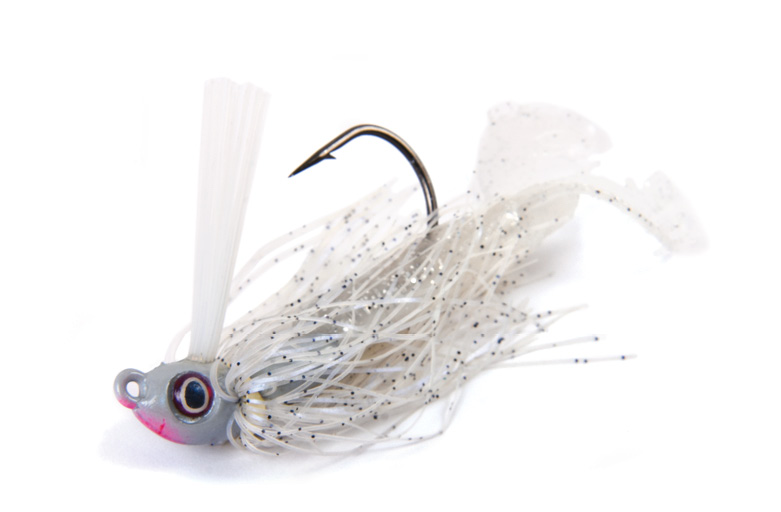
His third lure choice is a white/gray 3/4-ounce Lunker Lure Randy Howell Double Rattleback HD Swim Jig, rigged with a Yamamoto YamaCraw trailer. This is for when the fish are deeper and near the bottom. He casts, lets the lure fall, then begins a slow retrieve just above the bottom.
Furthering his understanding
“Everything about this particular pattern has been revealed to us by forward-facing sonar,” Howell admits, “and it’s certainly one of the best things we have learned from it. Winter bass are a lot more active than we ever realized. They roam and chase bait in open water surprisingly high in the water column.
“I have been a tournament pro for 33 years, and I have done a lot of winter fishing, but I never realized how many bass would be swimming around in 5 or 10 feet of water. We simply never looked for them. I used to fish offshore in the winter for striped bass, and every once in a while I’d catch a largemouth, but I always thought it was just an accident. Now, I know it wasn’t. The largemouth were out there all the time.”
Howell may have discovered this winter bass behavior on Lake Guntersville, but it is certainly not unique to that impoundment. He’s fished it successfully on other Tennessee River lakes; on Lewis Smith Lake, a clear, deep-water impoundment completely different from Guntersville in that it’s primarily a spotted bass lake; on Dale Hollow, known primarily for smallmouth bass; and on other impoundments as his schedule has allowed. It works on Georgia’s Lake Seminole and literally wherever shad are the primary forage. Gill has even used the presentation on numerous lakes he’s fished in his home state of Illinois.
“Just as importantly,” Howell concludes, “is that now we know bass are not just lying around waiting for the winter to end, and that they’re accessible to anglers of all skill levels throughout the cold-weather months. Even the most basic sonar units will show schools of shad out in open water. We can concentrate our search for them, confident largemouth will be very close to them and they’ll willingly hit our lures.”
Originally appeared in Bassmaster Magazine 2025.