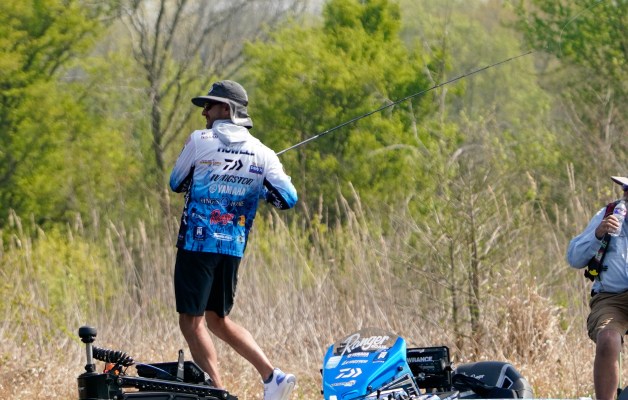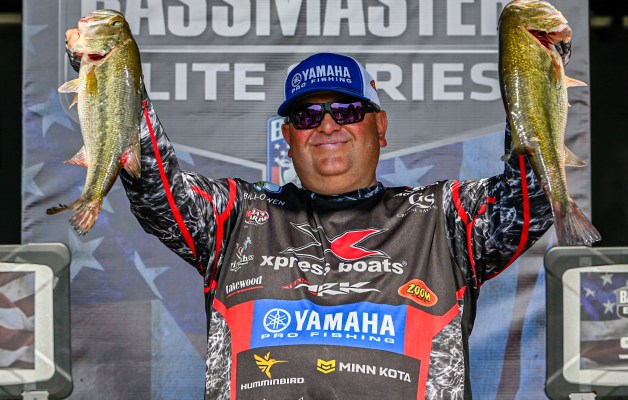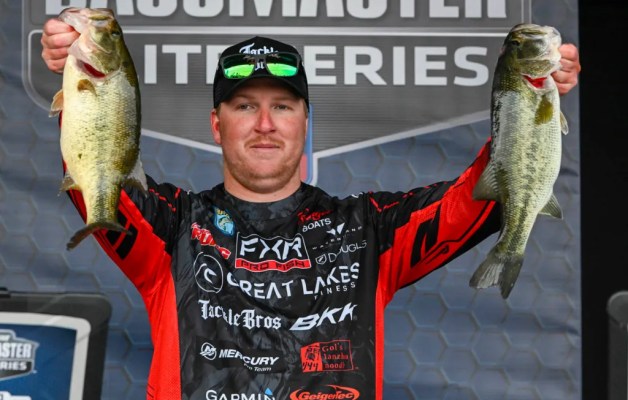
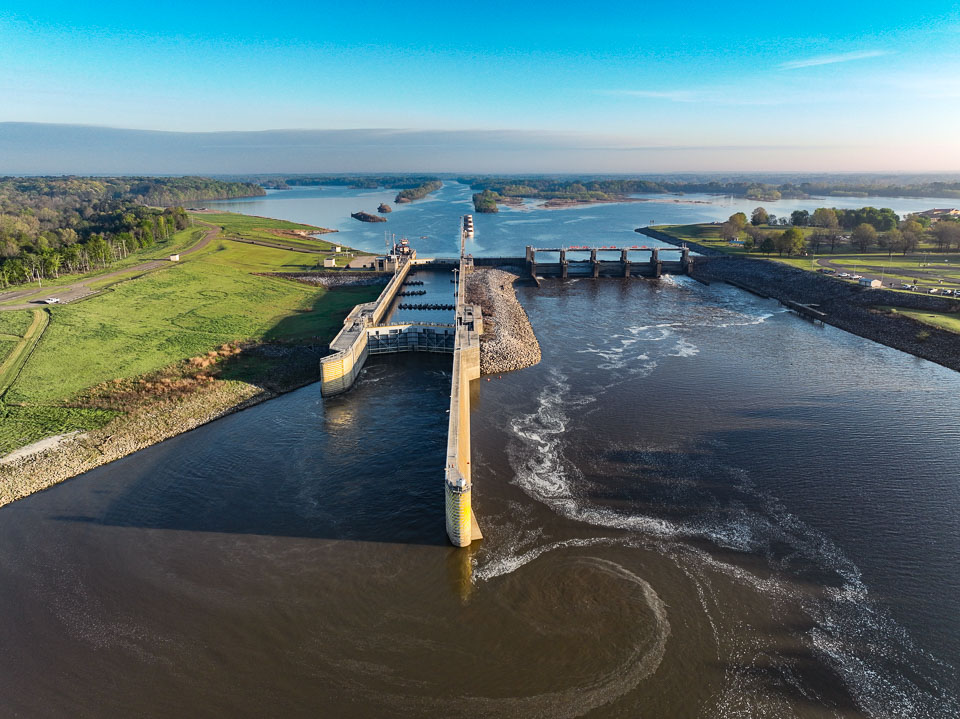
When the U.S. Army Corps of Engineers designed the Tennessee-Tombigbee Waterway, the agency’s plan for 10 locks and dams considered commercial shipping traffic. This week’s Bassmaster Elite event has demonstrated the secondary benefit.
While this 234-mile artery linking the Tennessee and Tombigbee Rivers was created to connect the nation’s interior to the Gulf of America (via the Tombigbee’s merger with the Alabama River, which flows into Mobile Bay), the Tenn-Tom and its locks also connect bass anglers with various fishing opportunities.
By locking up or down, competitors have the option of spreading out and exploring more distant areas. Sometimes, that works, other times, not so much.
The upside: Getting away from the fishing pressure (competitors and local recreational anglers) that typically concentrates in the pool in which the tournament is based.
The downside: Gambling significant fishing time in hopes of finding greener pastures, only to lose the bet to unforeseen challenges.
Get to the promised land and find other boats in your area; make the big run and find water level or clarity has dramatically changed; miss the scheduled lock opening or get stuck behind one of the commercial barges, which take navigational priority.
Many are the uncontrollable factors with day-wrecking potential.
Justin Atkins grew up in Columbus, Miss., so he knows well the Tenn-Tom locking decisions. On Day 1, he locked down one pool and placed ninth with 15-7.
“You can get in some dead water and you just don’t have a ton of time,” Atkins said. “When you go through that lock, you immediately shorten your day by two hours (coming and going cycles) and then it just doesn’t take long to burn up 6 hours. So, you just try to make good decisions.”
Locking must be weighed carefully, so let’s look at some of the common considerations.
Takeoff Order: Early flights check in early, later flights check in later. Pretty straightforward, but a “short” day might curtail an angler’s willingness to give up a big chunk of their time for running and locking, while someone with a “longer” day might feel more comfortable doing so.
To even the fishing time, takeoff order switches from one day to the next. Anglers in Day 1’s earlier flights take off later on Day 2, so a competitor might make a different locking decision from one day to the next based on time management.
Habitat Preference: Along any dammed waterway, pools will vary in size, layout and offerings. Anglers may consider trading fishing time in exchange for finding what fits in their wheelhouse, a prudent move.
Day-1 leader Bill Lowen did just that by spending most of his day in Aberdeen Lake, one pool up from Columbus. Here, he found more narrowly confined habitat that best matched his Ohio River pedigree.
Specific Objective: Making a big practice run and finding promising potential often lures anglers into derby day locking. That really needs to be more than a single-bed fish, or one really nice dock, because fish move and anglers often find the same stuff. Developing a sustainable, replicable pattern in a distant pool — now that’s a lock-worthy scenario.
Out of Options: Should practice prove fruitless, or if significant weather changes stymie your game plan, or if you find yourself out of fish later in the event, locking elsewhere may be the only logical call.
Personal Comfort: Mississippi’s Brock Mosley, who placed 21st on Day 1 with 13-6, said he believes the local Columbus pool holds superior quality, but that also means it will receive the greatest fishing pressure. Moreover, past experience on lower pools drew his attention.
“I think the bigger fish live on Columbus; it’s tougher getting bit, but unless I have fresh fish every day, I think it will be won in Columbus,” Mosley said. “I grew up fishing the pools (below Columbus) and I’m more familiar with the water down there.
“The more pressured stuff gets, the farther south I’ll go. I’m not going to run out of places to fish.”
Seasonality: Jason Christie’s no stranger to long runs; in fact, traveling nearly to the northern boundary of the 2021 Bassmaster Elite at the Sabine River earned him a blue trophy. That time was a straight run, but when he’s calculating the risk/reward of locking, Christie often bases that call on the calendar.
“This time of year, around the spawn, the fish can be predictable,” said Christie, who locked two pools up from Columbus. “The springtime is the best time to make a long run because they’re confined to small areas and you don’t have to run around a lot like you would in the summertime.
“Sometimes that works, like at the Sabine, but sometimes it doesn’t. When I’m running, I always think about how many fish I’m running by to go where I’m going.”
Stay and Play: Many are the sound reasons for locking, but there’s no denying the benefit of remaining in the takeoff pool, eliminating potential locking mishaps, and making the most of your time.
“I burned two gallons of gas (on Day 1),” Gore chuckled. “I found an area that reminds me of home (Coosa River) and I can fish the way I want to. I had nine bites and caught all nine of them.”
Noting that staying local ensured maximum fishing time, Gore said his strategy also allowed him the flexibility to find new areas.
“I didn’t have anywhere (specific) to start, I just had an area, so I just went to where I had a good bite in practice and built off of that,” he said. “I got to practice some (on Day 1) and look at some areas I didn’t fish in practice because I was bouncing pools.
“For Day 2, I know how to run around and, hopefully, I’ll be more efficient.”