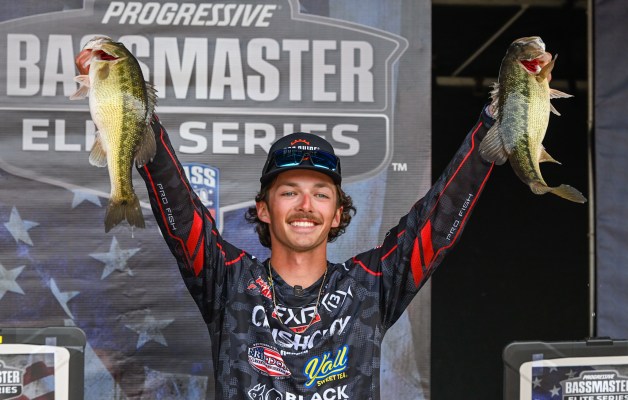
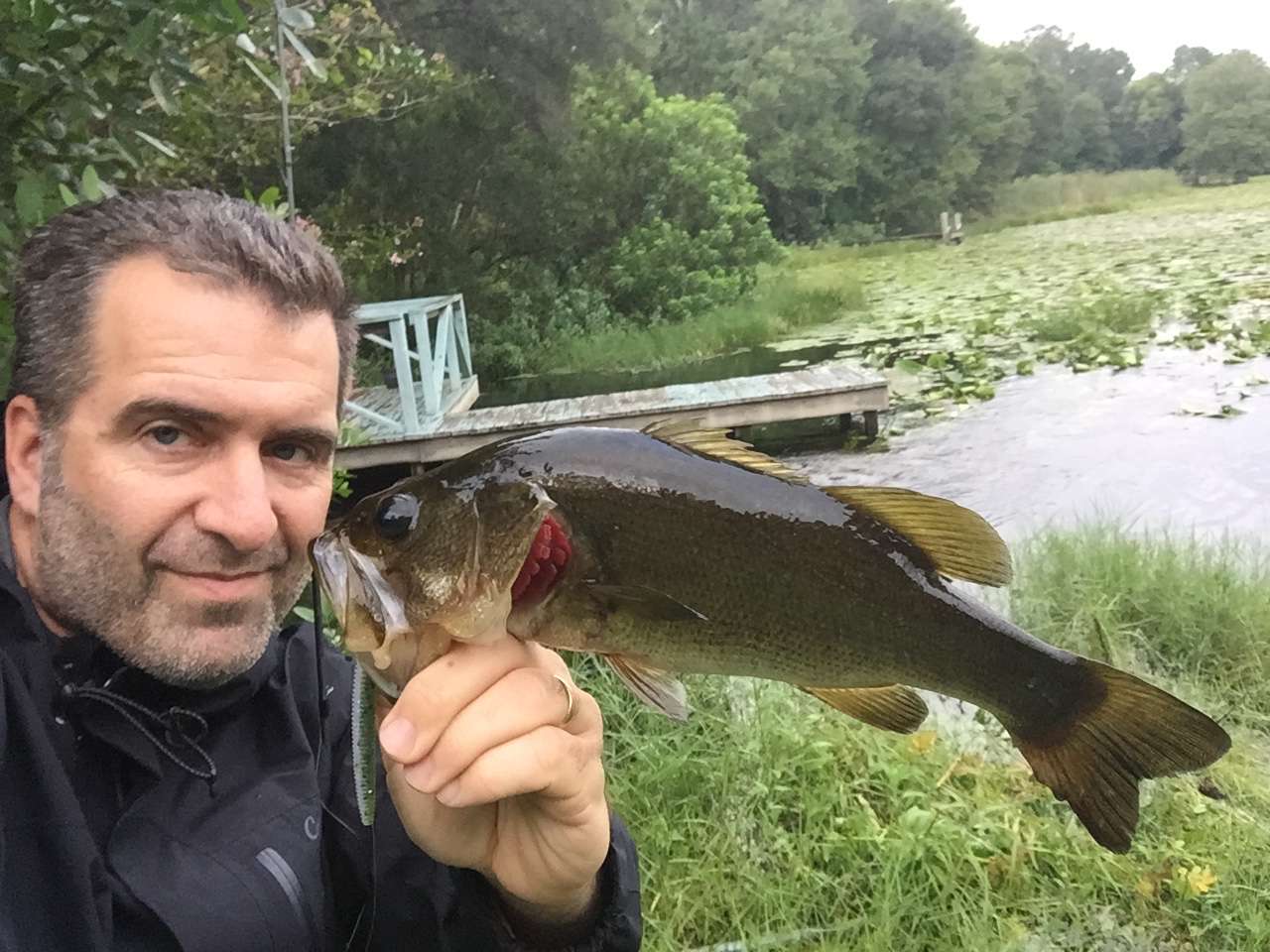
Growing up in New Hampshire, pro Tim Dube spent many winter days perched on the frozen surfaces of lakes Winnipesaukee, Winnisquam and Merrymeeting. Targeting white perch, yellow perch, crappie and the occasional smallmouth bass through holes in the ice helped him hone some of the skills that have served him well in professional bass fishing.
“Early on, with 2D sonar and a flasher, ice fishing really helped me understand what I was looking at and made it easier for when I went into open water,” Dube said. “Now, with LiveScope, I feel like I’ve become more efficient at telling what species I’m looking at.
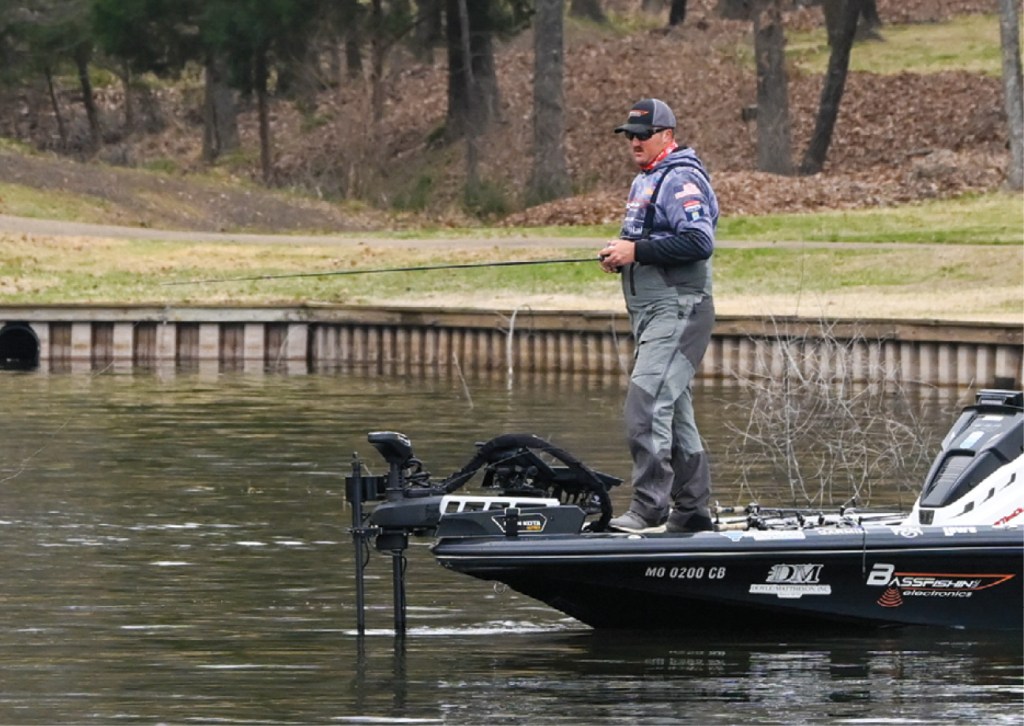
“Targeting different species in the wintertime, I’ve learned how the schools look in the water. So now, I can pan over and see a group of fish that are bass-size but know that they’re white perch because of how close they are or how tall they are. Ice fishing has made me more efficient at using forward-facing sonar.”

Dube is not the only pro to apply hard-water knowledge to catching bass in tournaments.
Jeff Gustafson won a blue trophy by topping the 2021 Guaranteed Rate Bassmaster Elite at Tennessee River with a moping technique that’s not too different from how he used to ice fish for walleye and lake trout during his days of guiding on Lake of the Woods in northwest Ontario. Like Dube, he’s also spent years staring at a flasher, studying fish in real time.
“I’ve got a lot of confidence and a lot of time using electronics — stuff that’s sort of obsolete now, but it served me well coming up in the pro ranks,” Gustafson said. “I think it’s seeing how fish react to your bait and getting bits of information on how to trigger them to bite.
“There’s no set rules there, but through ice fishing, you get more confidence in how you see a fish move on your electronics and then translate that into getting a bite.”
Chill baits
The parallels between ice fishing and open-water fishing don’t end at electronics. When the warmer months find Dube backing into lakes instead of driving across them, he does not necessarily pack away all of his ice fishing gear. And that’s the main point here: The concentrated nature of reaching fish through a hole smaller than a steering wheel requires using baits that can strategically entice bites. Many of those lures also deliver in challenging open-water scenarios.
Dube’s favorite double-duty ice/open-water lure is the Rapala Jigging Rap. Designed for an erratic darting and gliding action, this bait features a minnow form with a dorsal line tie, single hooks at the head and tail, a belly-mounted treble hook and tail wings.
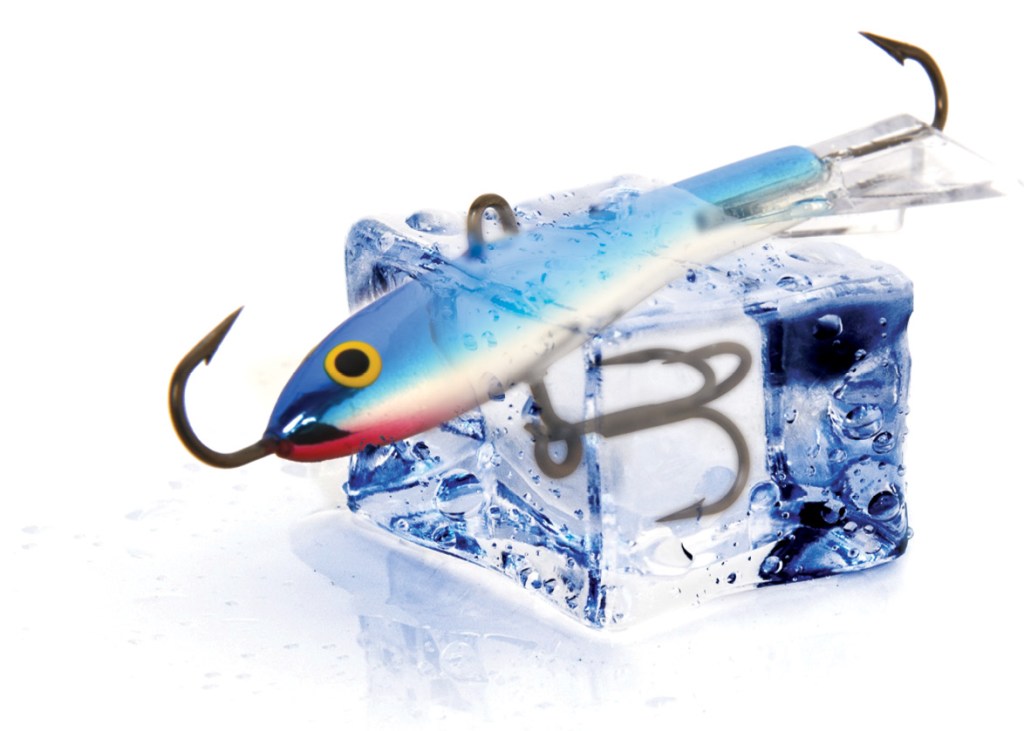
“It’s very good anytime you need to get a reaction out of a bass in highly pressured scenarios or over deep water,” Dube said. “With ice fishing, you have one hole, so you can go down and up, but the Jigging Rap’s good because the fins on the back shoot it out, so you have a little more range. When you pull the bait, it will dart forward and then pendulum back.
“With open water, most of the time you’re making a cast, so you’re presenting the bait less vertically. In open water, I’ll be more aggressive with a Jigging Rap. With ice fishing, I’m popping the bait up and down 6 inches, but in open water, I’m popping it 2 to 3 feet. I’m using the full length of the rod to get it to dart away from the fish.”
Gustafson also favors the darting-minnow form, preferring the Northland Tackle Puppet Minnow. He considers this bait style to be a subtler presentation than jigging spoons and will fish it over deep, main-basin structure.
For deeper water or larger fish, Gustafson reaches for Northland’s newer Pitchin’ Puppet. Made for the walleye market, this bait has a stockier form, no nose hook for reduced snags, a wide-gap tail hook for better connections at depth and a split ring on the belly treble to help prevent big fish from shaking loose.
More options from ice to open water
The Jigging Rap and other similar walleye glidebaits aren’t the only baits that unite the ice fishing and open-water worlds. Our pros weighed in on some additional options.
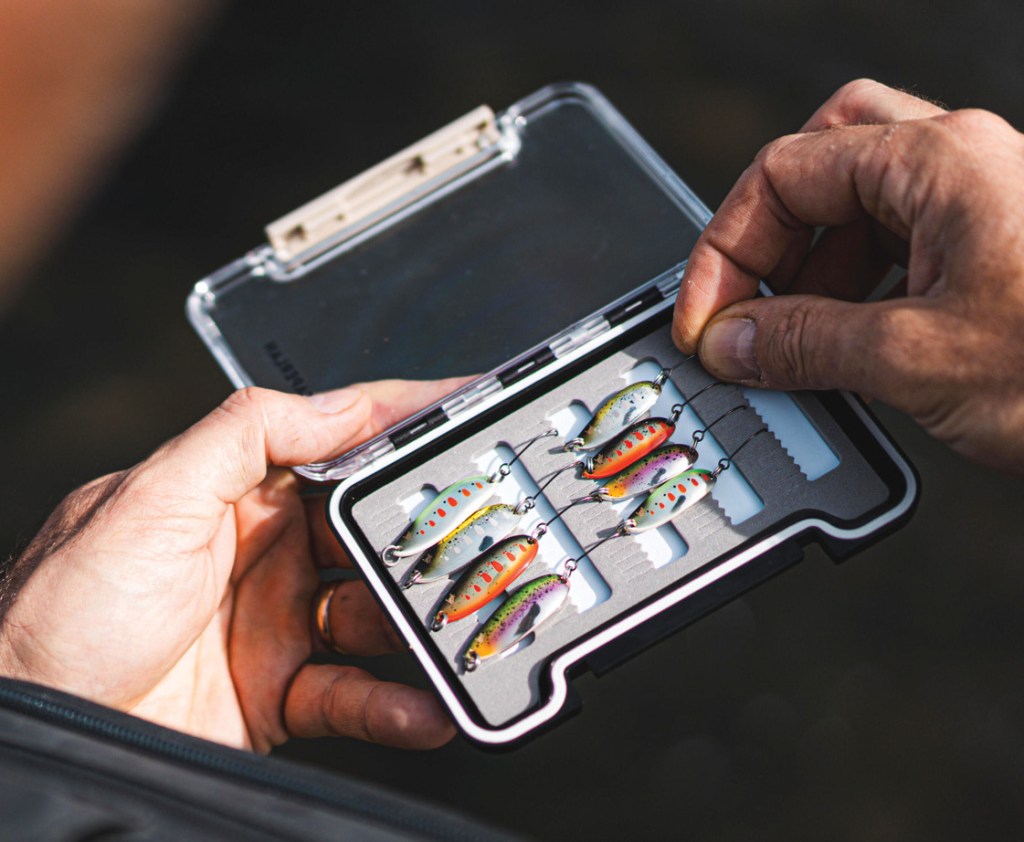
Jigging Spoon: Using a Northland Buck-Shot Rattle Spoon, Gustafson sticks with the same vertical presentations he uses for ice fishing to present his bait to bass holding on a rockpile or boulder. The spoon is a good dying-baitfish imitator, but Gustafson stresses seasonal limitations.
“I like to keep the spoon above the fish a little bit, but in cold water, you’re not gonna make them move very far,” he said. “I try to keep it a foot or 2 above them.”
Progressive Bassmaster Elite Series pro Alex Wetherell does a lot of his ice work with a 3/16-ounce Caperlan KEA MCO micro spoon. Beyond the ice, he keeps this bait handy for certain open-water scenarios.


“I like something small and compact for the times when the bait is small and traditional lures are too big to match the hatch,” Wetherell said. “An example would be in the fall, when the bass get dialed in on bait. Sometimes, that bait is really small, and this spoon matches the size better than anything else.”
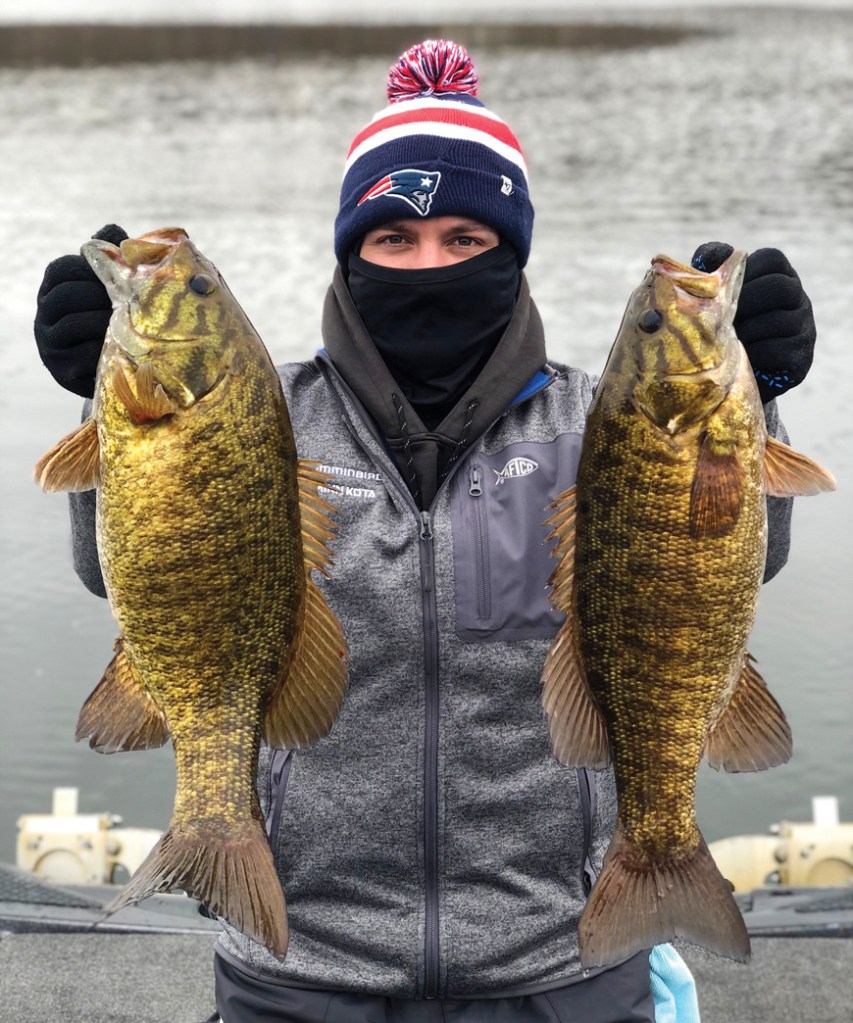
Jighead Minnow: While nothing new to the bass world, this simple yet versatile bait serves most of Gustafson’s ice-season pursuits. What he’s learned from kneeling on the hard water merits consideration for open-water efforts.
“Maybe you use more downsized versions in the super-cold water, but you do try to match the hatch on size of the most prevalent baitfish,” Gustafson said. “Anytime I’m fishing cold water, that bait’s gonna be tied on. If I’m in 20 to 30 feet, I’m probably gonna have a 3/8-ounce Northland Smeltinator Jig, and deeper than 30 feet I’ll go to the 1/2-ounce.
“We have the Smeltinator in 1/0 to 5/0 hook sizes, so we’re able to match hook size to any size minnow bait. In cold water, I may use a 2- to 2 1/2-inch minnow on the 1/0 hook size. Sometimes in cold water you may need to go with micro baits to get a bite.”
Itty-Bitty Bites: Small jigs fool big bass frequently, if unintentionally. It happens when crappie anglers catch bass on their 1/32- to 1/16-ounce jigs, or when a pudgy largemouth falls for a tungsten jig and plastic that mimics a tiny minnow or aquatic insect dropped through a hole in the ice. It’s not a stretch to think that a particularly difficult open-water fish might also part its pouting lips just enough to suck in such an easy meal.
“My absolute favorite is the Caperlan RB JIG MCO,” Wetherell said. “Their tungsten micro jig is hand-tied with a BKK hook — everything you’d want for a small jig that can still catch a 5-pound fish.
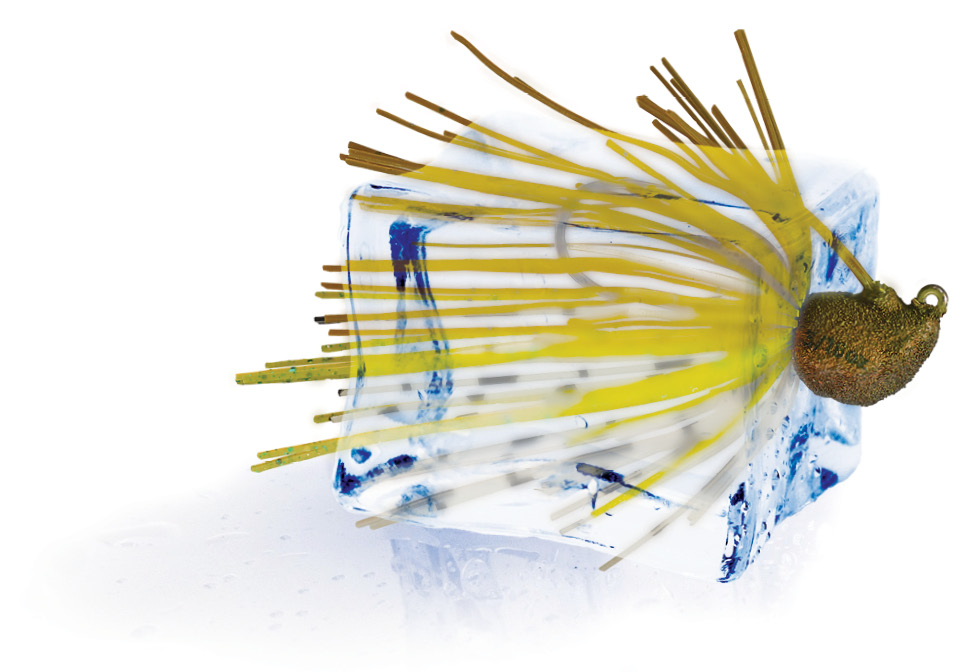
“Boulders, sparse grass and any cover is where this bait shines, and I use them year-round, usually with a 2-inch craw trailer.”
Blade Bait: Wetherell is also fond of the Damiki Vault blade bait. He says the 1/4- and 3/8-ounce sizes do the trick for late fall and early spring open-water bass.
Drop Shot: This one’s no stranger to the open-water scene, but when the water is cold, Dube’s experience studying fish reactions to the bait through the ice informs his strategic presentations.
“I use drop shots a lot for ice fishing with a Strike King Baby Z-Too, and I thread it on the hook because that presents the bait naturally,” Dube said. “I use a drop shot if the bottom has dead weeds because the bait [on a plain jighead] won’t stay clean if you drop it into the muck.”

Another of Dube’s ice fishing observations also speaks to general fish behavior relevant below the ice belt.
“If schools of fish are coming through, I’ll use a drop shot to keep the bait above them,” he said. “For whatever reason, in the wintertime the fish will never chase it to the bottom and eat it off the bottom. That way, I can keep the bait in one place, keep it moving and keep it in the strike zone longer, while keeping the bait weed free.”

When they work
Living up North, Dube has actually ice fished a couple of areas where his Bassmaster Elite Series travels have also taken him, including Henderson Harbor on Lake Ontario and Lake Champlain’s southern end near Ticonderoga. Elsewhere, he’s learned from his early season experiences up North some lessons that may apply anytime bass anglers encounter bone-chilling conditions. Notably: The fish ain’t chasin’ anything on those bitter days. You’ve got to finesse them, and ice baits can do the trick.

“Say we have a tournament, and the ice has just gone out,” Dube said. “We’ve had a long winter, so the ice field is very good, and then you have a tournament where the water is ultra-cold, like, below 40 degrees. I’ll be throwing those ice baits in these conditions. I’ve seen [open-water] tournaments when the water was 35 degrees, and I’ve tied on all my ice fishing stuff.”
Dube has also fared well on herring lakes like Hartwell by working his Jigging Rap over deep water for fish that snubbed the jighead minnow. This heavy lure allows him to quickly get the bait down to the strike zone, then rip it up to incite aggression.

Similarly, Gustafson knows his ice baits will deliver open-water largemouth and smallmouth action, but he’s seen them deliver best on spotted bass strongholds such as Lake Lanier and Smith Lake. Looking ahead to the 2026 Progressive Bassmaster Elite Series schedule, he’s eyeing Lake Martin as a potential candidate for the hard-water tacklebox.
Facts from the frozen
Making his home in the Great White North, Gustafson is not intimidated by extremely cold water. As he points out, ice fishing proves that a decent bass bite really isn’t out of the question in temperatures that leave ice in rod guides.
“I think that as cold as the water gets, like in the mid-30s during ice season, these fish are still catchable,” Gustafson said. “It’s not like it gets cold and they go into hibernation. Sometimes, you might have to put the bait right in their face a little more, and they don’t move around as much, but they’re still catchable.”
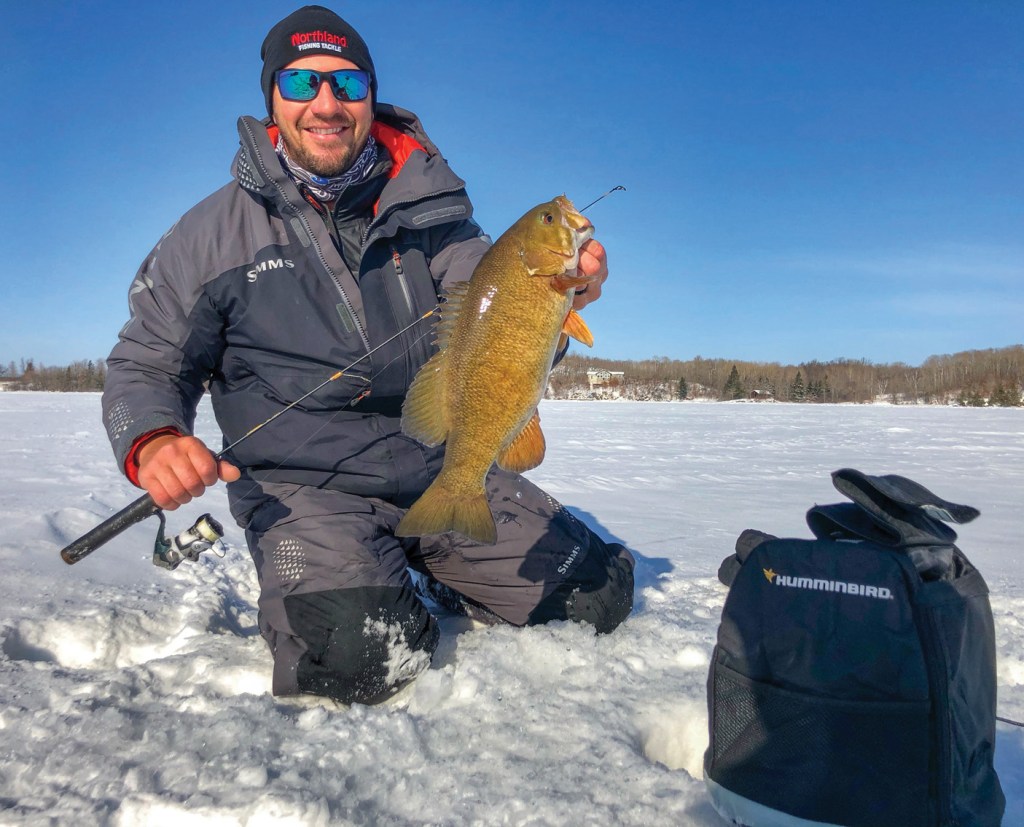
Case in point: When Gustafson won the 2021 Elite event at the Tennessee River, the February weather had the fish in a serious bottom-hugging lethargy.
“During that Elite event, the fish were glued to specific pieces of cover, and you wouldn’t see them just driving over them with your 2D,” Gustafson said. “You had to get a bait down there to suck them off the bottom a little bit to be able to see them.”
Lastly, even though the “small and slow” wisdom generally guides the application of ice fishing baits and tactics, don’t act like you’re actually ice fishing when on open water. Even in colder times, make the appropriateadjustments.
“For example, with a jigging spoon, you want to make 6-inch to 1-foot hops [through the ice], whereas we’re doing 3- to 4-foot moves on the bait in open water,” Gustafson said. “With forward-facing sonar, now we’re able to see how fish are reacting to what we’re doing, so that’s what a lot of guys are getting really good at — interpreting how fish are reacting and figuring out how to make them bite.”
A cool way to catch bass
If you think bass don’t bite under the ice, think again. Fish that live in lakes that freeze deal with the seasonal changes every year, so they simply adjust.
Tiny jigs tipped with minnows or maggots bring plenty of bass through drilled holes, but New Hampshire pro Tim Dube prefers artificials like the Bay de Noc Swedish Pimple — a jigging spoon that’s too small for effective open-water casting but highly effective through the ice.
“For smallmouth, I look for a deep hole with either sand or isolated boulders around it, and for largemouth, I like a shallower bowl with a grassline going through it,” Dube said. “It doesn’t matter what the day is; they have toeat to live, so I just keep jumping around until I find them.
“I’m a much more active ice fisherman. I’ll drill 100 holes a day until I bump into a group of active fish, because they do move a lot.”
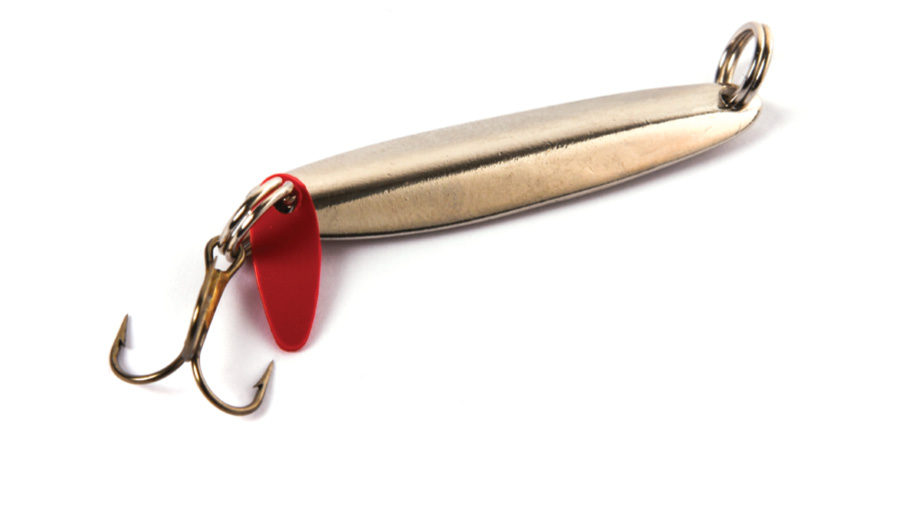
Dube advises prospective ice bass anglers to start with a small pond to learn when and how the fish use the different depths and structure. Understand the basics and then expand to larger water bodies. In any scenario, don’tpack the gear at sunset.
“The last hour of sunlight, ‘the golden hour,’ is always best for me,” Dube said. “I think the fish are just eager for their last meal of the day.”
As Dube notes, some of his most aggressive activity — bass included — happens just as the sun’s disappearing. Kind of like catching that tournament kicker five minutes before check-in.
Originally published in Bassmaster Magazine 2025.