Starting in Florida — it’s bass fishing’s yin and yang, the ultimate case of good news/bad news.
The good: Florida’s double-digit size potential makes every cast a potential game changer. The bad: These fish are nature’s biggest sissies and cold fronts like the one that blew into town mid-week quickly turn “wide open” into “bad hair day.”
The Bassmaster Elite Series opener on the St. Johns will perfectly exemplify this reality and, in so doing, spotlight the inescapable truth: You gotta prepare for everything.
A deep dive into all possible scenarios would keep us here well past Championship Sunday, so let’s take another avenue — preparation schedules. Most Elites will tell a similar tale of starting sometime after the holidays with identifying tackle needs, placing orders and filling trays.
Along the way, a few notables arose.
It was time
Last year, anglers throughout the Midwest and Southeastern states saw the ultra-rare dual cicada hatches, where bugs on 13- and 17-year cycles emerged during the same spring timeframe.
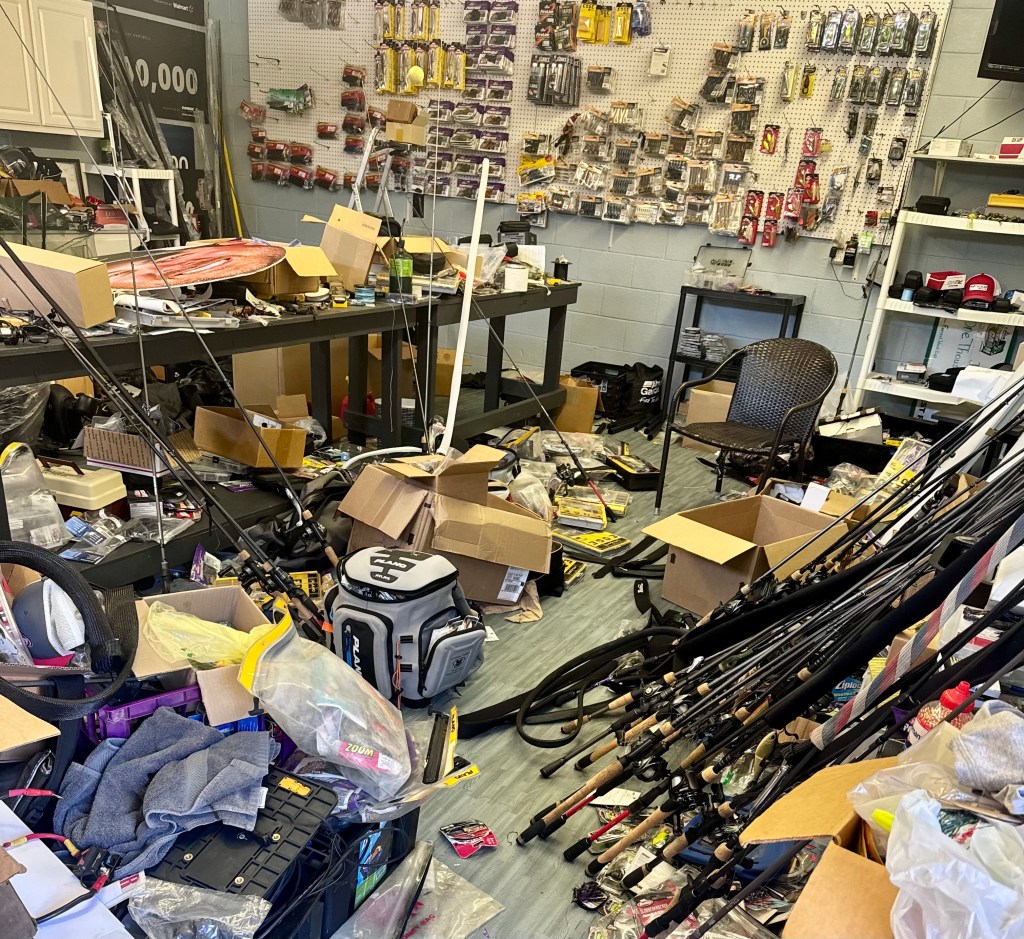
Similarly, early February found Florida pro John Cox knee deep in what he termed an “every 5 years garage dump.” Plowing through a major tackle room clean-out, Cox eliminated clutter, gathered a pile of gear for donations, restocked peg boards, and prioritized the rod arsenal.
Cox sent a couple of before-and-after images that showed what looked like tornado aftermath morphing into an organized, battle-ready assemblage. The preparation effort clearly paid off, at least in the early goings, as mid morning found Cox in BassTrakk’s (unofficial) third-place spot, on the strength of an early 6-pounder.
Contrasting styles
With his home waters of Lake Okeechobee hosting Elite stop No. 2 next week, Scott Martin said he enjoys the Florida starts from a simplicity standpoint. Grabbing what he anticipated needing for the St. Johns, he was able to leave the bulk of his tackle at home.
From the broader stance of new season prep, Martin admits to what he describes as intentional procrastination. During a mid-January conversation, he noted that, while he was behind schedule for he new season prep, Martin was well within his comfort zone.
“I seem to work better under pressure — I’ve always been that way,” Martin said, with a comparative pivot his fellow Elite. “Matt Arey and I are good friends, but we’re the complete opposite in the way we do life. Matt was rigged for the St. Johns, Okeechobee and the Bassmaster Classic last year, when they were announced.
“I’m a little more last-minute, but it seems I work better when my back against the wall. If I’m prepared too far in advance, I lose the vision. I almost like doing it right before I get ready to leave for an event. It kinda preps me and gets me in the mood. I actually don’t want to rig all my stuff and let it sit around for two weeks. I like to be out there rigging tackle the night before I leave.”
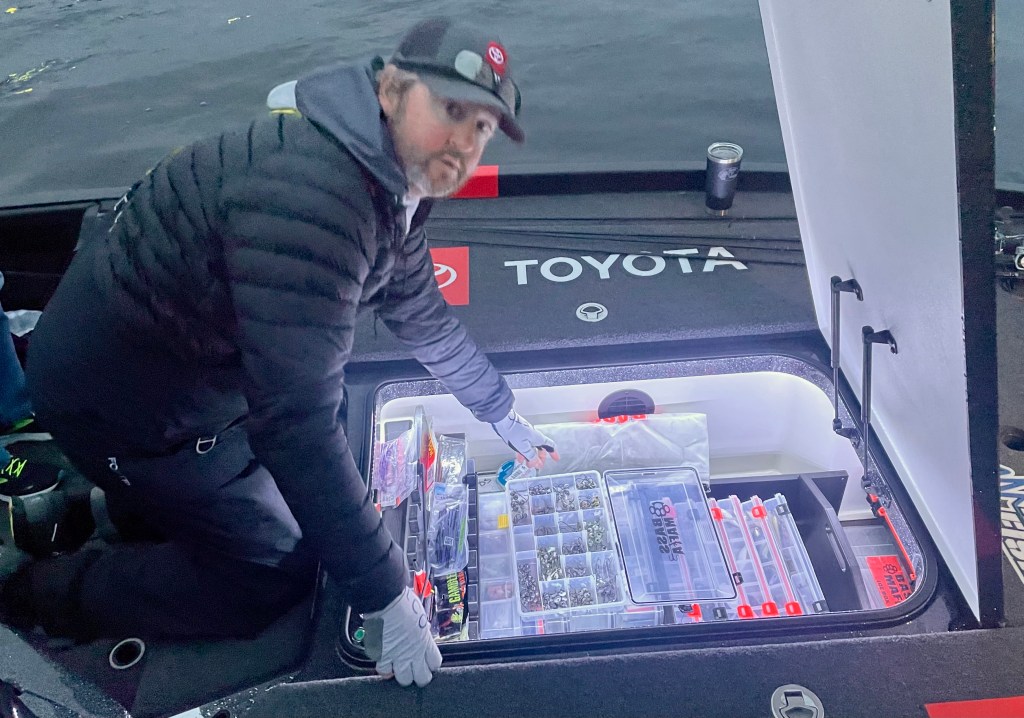
Proactive perfectionist: Arey chuckled when clarified Martin’s slightly exaggerated description of his preparations, but noted how he definitely appreciates early organization.
“I do prep early, but end of the year, I kinda take a break and then pace myself in getting ready far in advance,” Arey said. “I fish better that way; I’m more prepared. It’s just a mindset for me.
“I was starting to piece together what I needed for the St. Johns and Lake Okeechobee in late-January. I had everything read to go a solid week before I had to leave for the first event.”
In terms of his overall preparation process, Arey said the overlapping baits and tactics he envisioned for consecutive Florida events simplified his 2025 start.
“Back-to-backs are easier, as long as you’re prepared and they’re within a 3- to 4-hour drive,” Arey said.
That being said, even the easier preparation cycles require forethought.
“I was prepped for these Florida events in late-January, but I was starting to take some tackle inventory right after the first of the year to see where I needed to refill some voids,” Arey said. “That’s more of an event-based schedule. I’m not looking (too far) ahead, because if I start ordering tackle for a tournament six months ahead, I’ll end up misplacing it if I don’t stay super organized.
“I’ll have a little reset a couple times each season to order the tackle I need. Before the season gets started, I’ll make notes on my phone for what I need to get replenished.”
Arey’s fixation: Anticipating specific rod/reel needs and rigging multiples so he never finds himself having to make do with mismatched outfits.
The long hauls
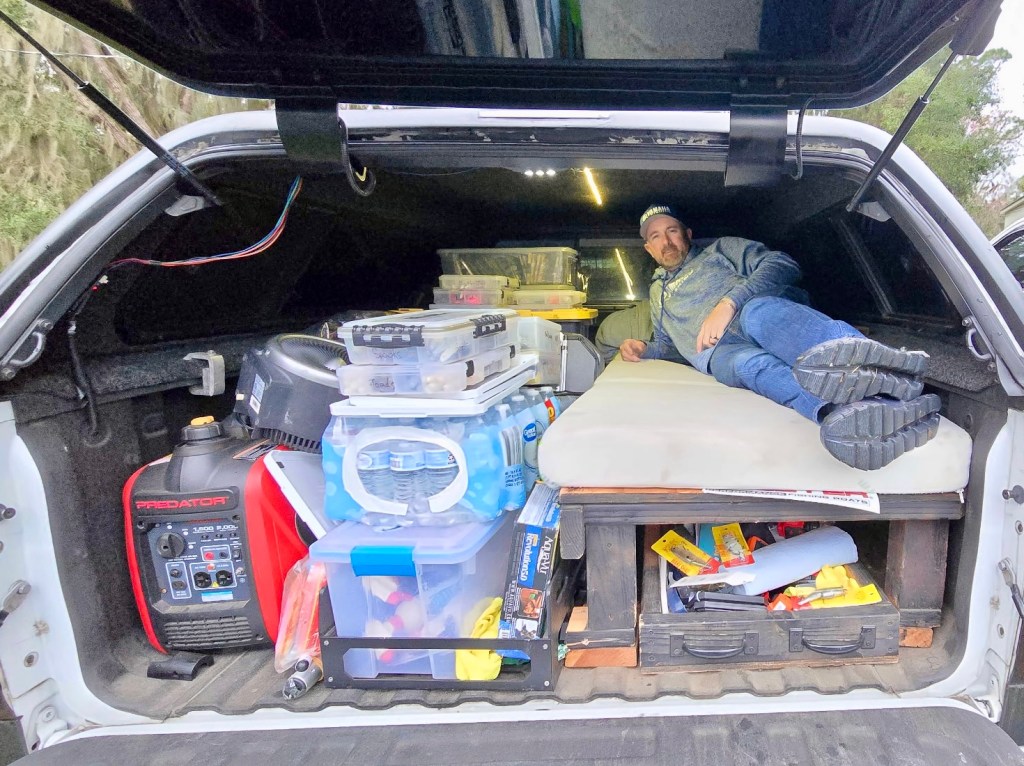
With a field literally drawing from all regions of the country, as well as international competitors hailing from Canada, Japan and Australia (most spend part of their year in the U.S.), the Elite Series typically sees angler preparation schedules influenced by travel plans. Case in point: Third-year Elite Bryant Smith, whose Roseville, Calif. home sits about 2,750 miles from Palatka, Fla.
Facing a 52-hour drive, which he broke into multiple legs interspersed with a couple of boat-related stops, Smith had his tackle prep completed by Feb. 7. As the year unfolds, Smith will leave his boat and tow vehicle with various friends, fly home to enjoy some family time and then travel east for subsequent tournaments.
He might grab a few items with each visit, but the prep Smith undertook for the Florida Swing was only part of a Herculean effort.
“When I leave home, I have to be prepared for the entire year,” Smith said. “I don’t have the opportunity to drive back home between events, so I prep everything from Florida to northern smallmouth and everything in between.”
This level of quantity and diversity could easily create an organizational nightmare — especially once he’s three or four events into the season — but Smith’s front-end discipline ensures year-long efficiency.
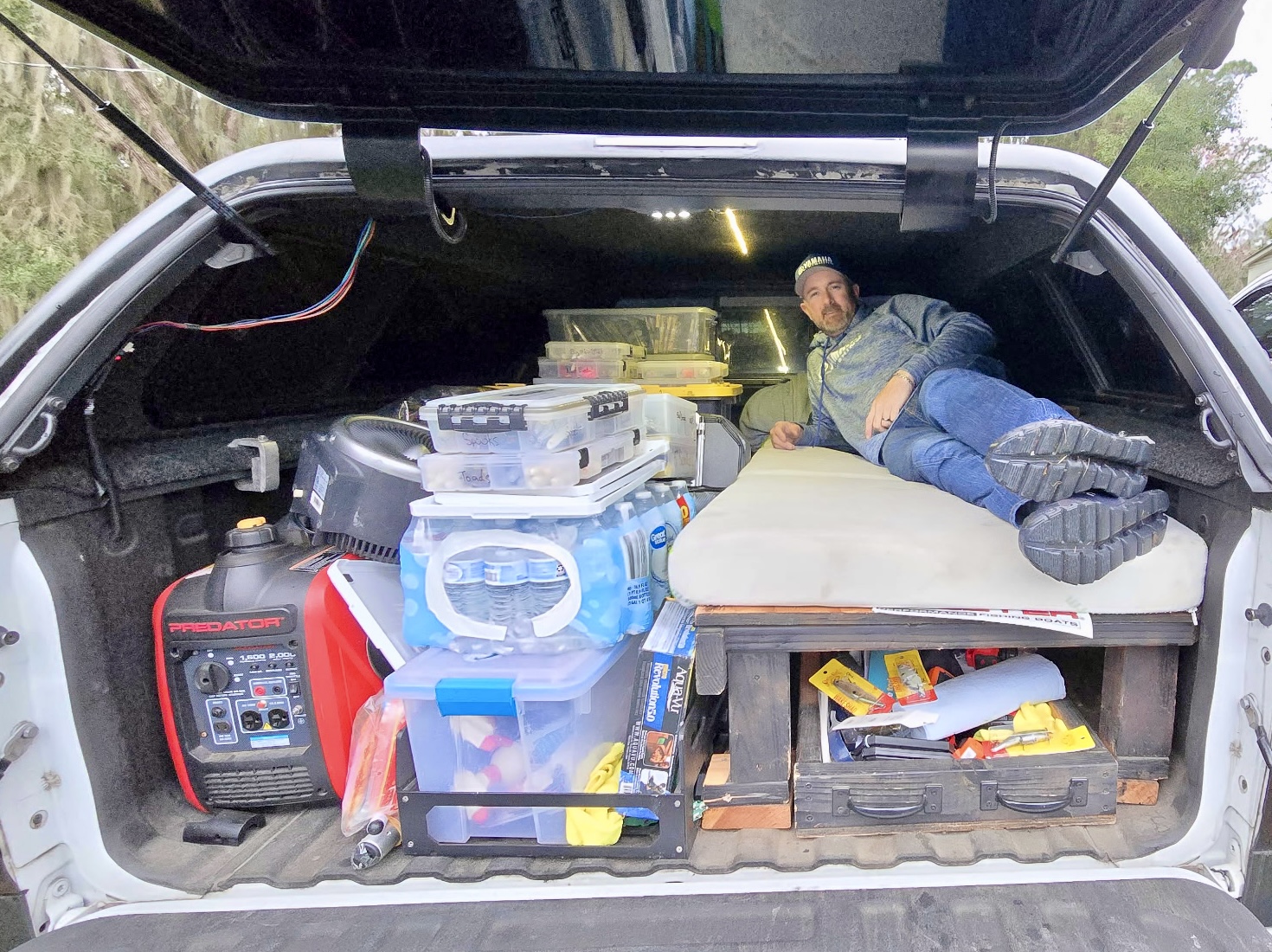
“Having everything in its place is very important for me; that way I know where everything is in the back of my truck,” he said. “I have every tote labeled and I take a picture of everything inside so that way, I know where everything is and I can quickly go find it.”
As for those weather-based variables, Smith’s big on thinking of every possible scenario and packing the requisite tackle. Ever mindful of space and weight considerations, Smith’s off-season routine includes completely emptying his truck, examining every tote and tackle tray and restocking as needed.
Smith said the process takes about a week of 15-hour days, but once he’s done, he’s ready for whatever the year may require.
“I always like to have back-up plan on back-up plan on back-up plan,” Smith said. “Usually, there’s not any wasted space in my boat for the first day of practice and then, I kinda dwindle it down after that.
“After seeing where the fish are, I’ll take a bunch of stuff out of the boat to focus on what I’m going to do.”