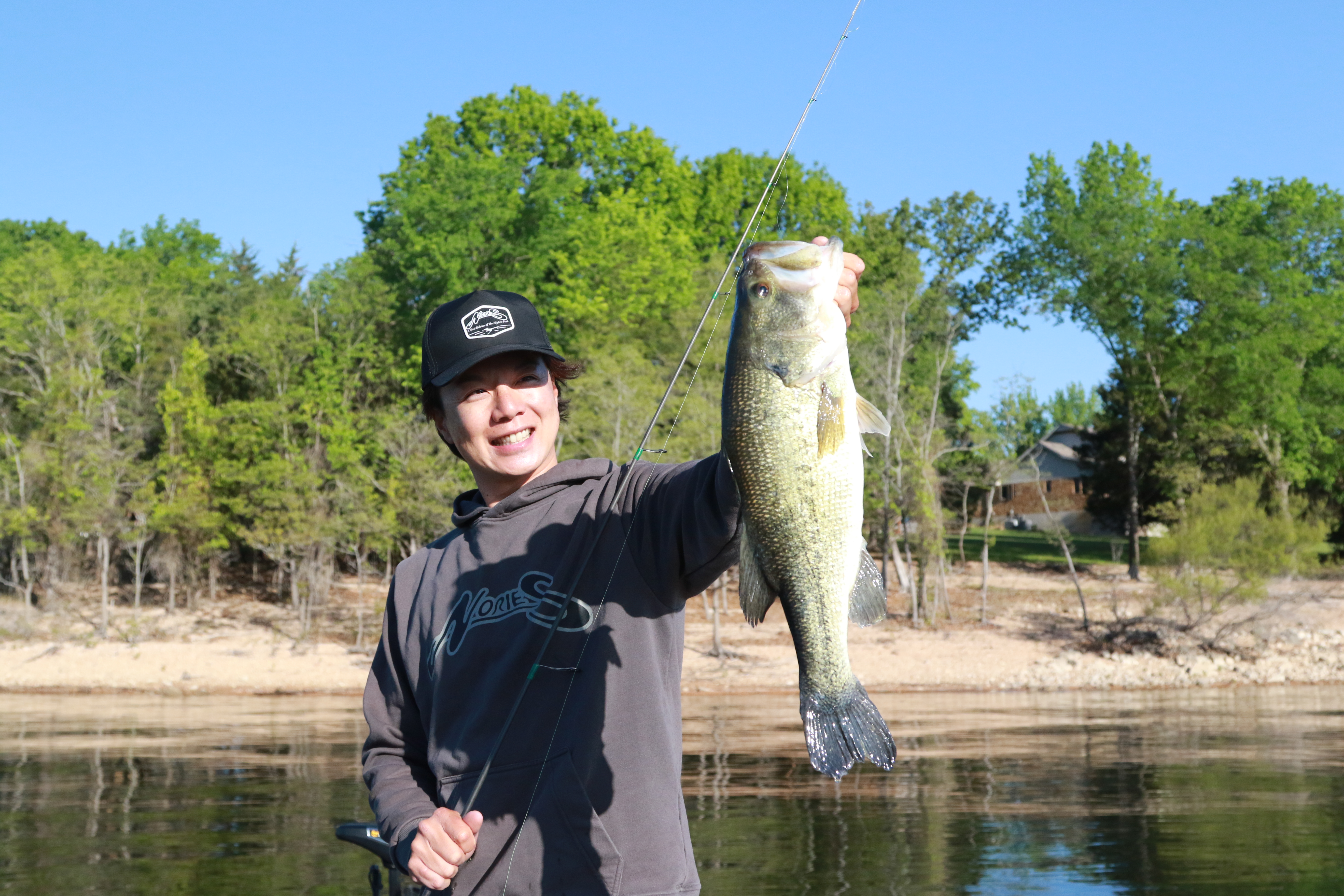
It’s the first session of the first day of a two-day photo shoot, and we’re all tired from the Progressive Bassmaster Elite Series tournament that concluded a day prior. Suck it up, buttercup? Yeah, I agree with that, but we needed a photo fish and, ya know…
Not to worry. I was working with Elite standout Takumi Ito, one of the sport’s sharpest minds and a real ace with the jighead minnow. While Ito showed me a prototype Nories Minnow and a jighead made for maximum hooking efficiency, the real star of the show would turn out to be something beyond his reach, but well within his ability to leverage.
Current.
After a quick look at his Humminbird mapping screen, Ito ran right across from the boat launch, dropped his trolling motor and eased along some 50 yards off a fairly nondescript shoreline. Foot on the trolling motor, head tilted toward his Garmin LiveScope, he looked for his targets.
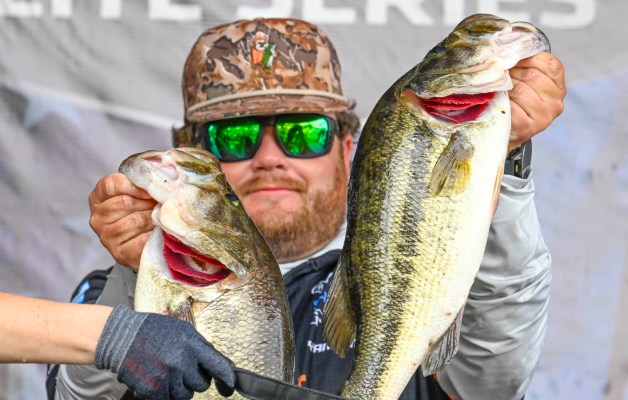
Cast number five — boom! A 4-pound largemouth.
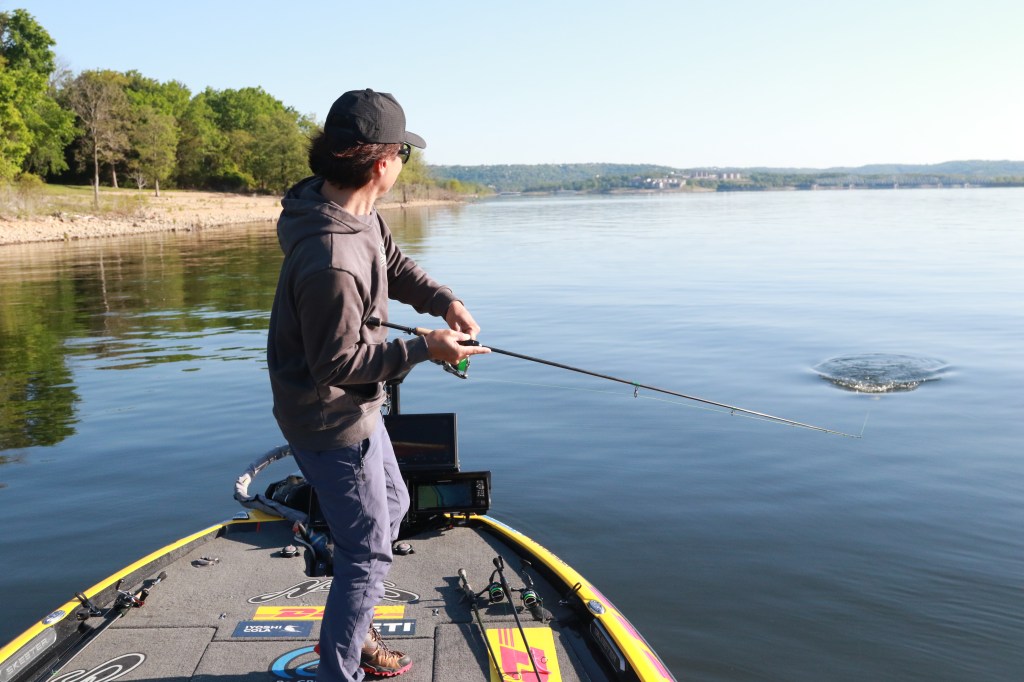
“That spot had a short point with brush, but the most important thing was the current,” Ito said. “The river current comes close to that point, so it’s a good place for bass to feed.”
Having established a stellar career in Japan before advancing on the U.S. competitive fishing scene, Ito is a student of the game. Consistently, he’s learned to trust nature’s food delivery service.
“Current is the most important thing because, if the (water) is moving, the fish will be feeding,” Ito said. “If the current is running, shad and other baitfish are schooling tight. But if there is no current, the baitfish spread out, so it’s harder for the bass to feed.”
Expounding on this principle, Ito described the common current scenarios he seeks.
River channel: “It’s easy to find a current spot on a river channel. I check my map and find the channel and then I look for where the current will come close to good spots, like a point.”
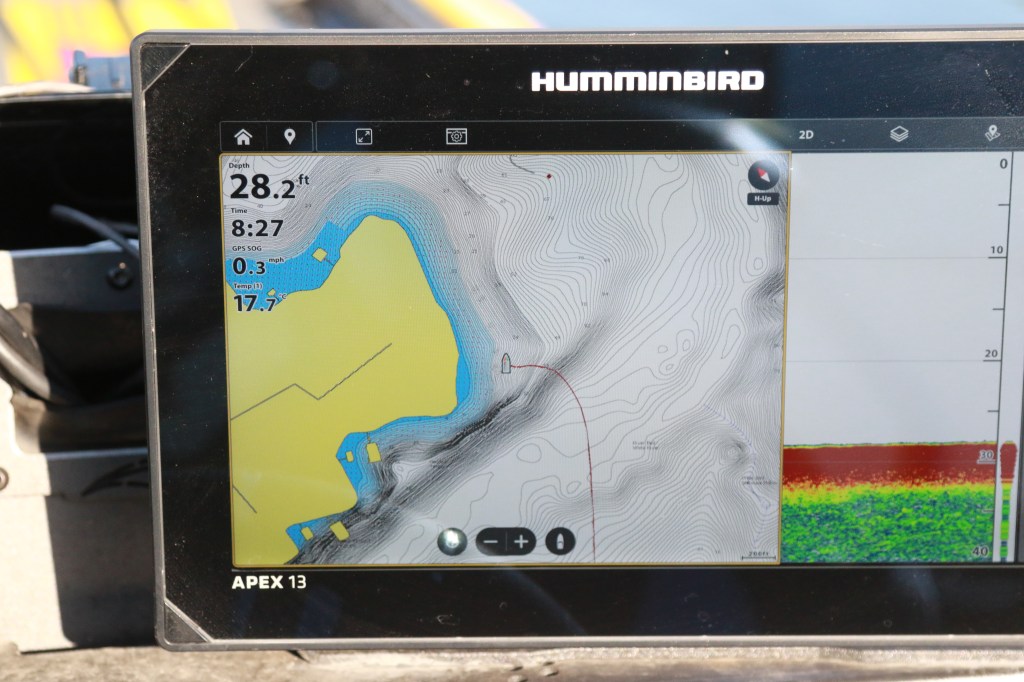
With a river channel, or certain neck-down areas of a lake, Ito’s very mindful of the width.
“A narrow area has stronger current, but a wider area has not so much current,” he said.
In these scenarios, Ito’s top baits are the minnow, a jerkbait, a Neko rig and a drop shot.
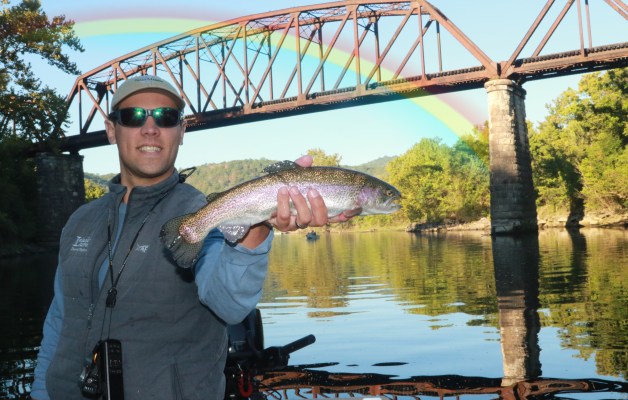
Bridges: One of the most easily identified bass fishing scenarios, these transportation structures linking a fishery’s opposite sides stand on hard bottom and bolster that natural foundation with their vertical supports. These pillars not only enhance the natural habitat, they also funnel current, break flow and provide slack water feeding spots where a jerkbait, swimbait or jighead minnow mimics baitfish washing through the target zone.
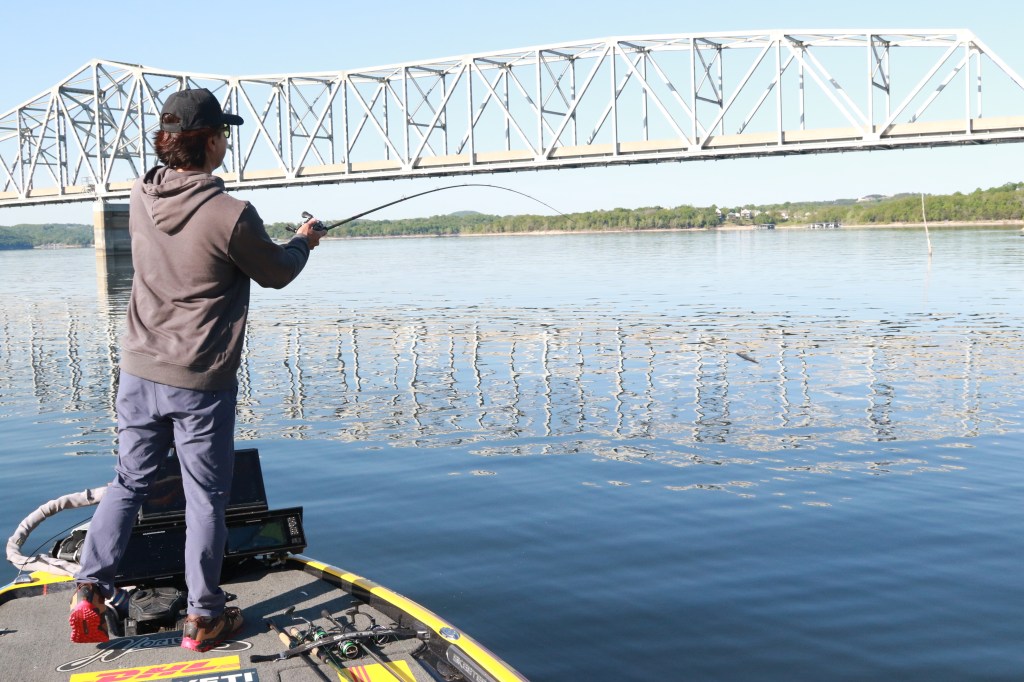
Ito’s observation: “The bridge legs create mini-river channels.”
Channel swings: Simple physics here — when a flowing water body makes a sharp turn or bend, current speed accelerates in the outside bend, while slowing on the inside. The faster water on the outer edge tends to carve out steeper walls, while also stacking up random wood cover and piling baitfish into distinct feeding zones.
“The current is always complicated as it moves through these areas and the structure is unique,” Ito said of the channel swing scenario. “I always try to find something different with the structure and the bottom contour. That’s where I’ll find the bass.”
Again, the jighead minnow’s gonna be one of Ito’s top presentations, but he also likes a couple different Neko rig setups. For active fish, he’s going with a straight-tail worm, but if they need some coaxing, Ito will switch to the Nories Flip Gill.
“The Nories Flip Gill has a stronger (presence), so if there is a lot of fishing pressure, that bait is good,” Ito said. “The Flip Gill is a flat-side bait, so it pushes more water.”
Inflows: Creeks, rivers and other tributaries flowing into a larger water body create concentrated current zones. It’s food arrival, it’s temperature changes, it’s oxygenation — your basic fish magnets.
“These areas are very good in the summertime,” Ito said.
Baits are relevant to the habitat features — some may require the lighter stuff, but others may welcome reaction baits.
Additional examples
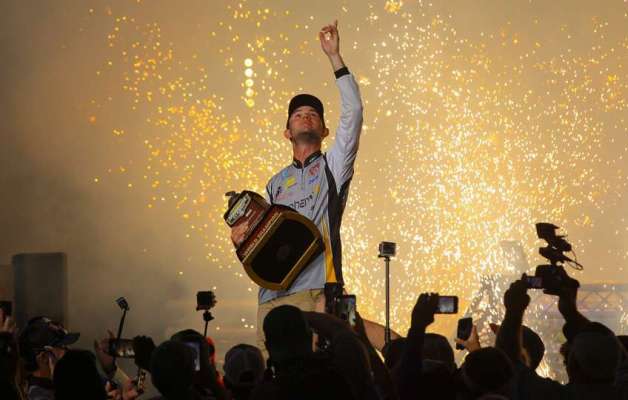
Mid-April saw Jacob Foutz experience a breakthrough moment with his first Elite win at the Arkansas River. His current strategy was based less on water velocity than water temperature, as the water flowing out of Lake Tenkiller kept the Illinois River backwaters where he fished considerably cooler than the rest of the fishery.
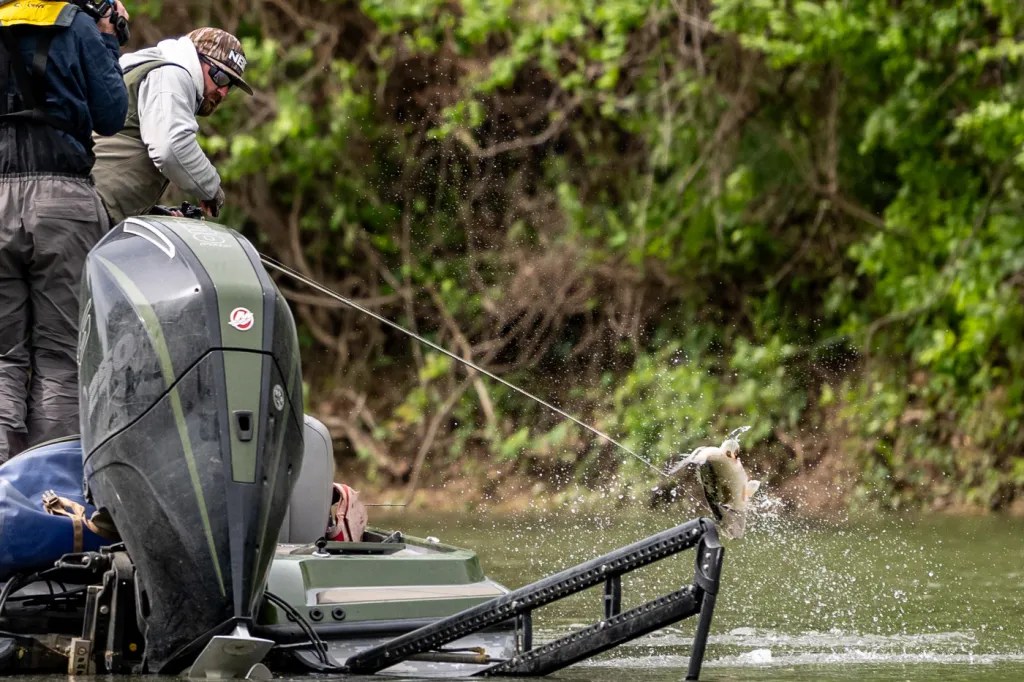
Mostly targeting spawning fish on a shallow gravel bank, the Tennessee pro used his Garmin Perspective Mode to monitor the area and pick off key fish. Notably, several anglers mentioned they had checked the Illinois River and decided to look for fish in warmer areas. Foutz’s faith in the cooler current paid off, as it held up the seasonal cycle long enough to keep several fish in the spawning mood.
A month prior, defending Bassmaster Classic champ Easton Fothergill made two important current-related decisions that led him to a fourth-place finish. First, when pre-event rain increased the Tennessee River current and challenged his jighead minnow presentations, Fothergill went to a Carolina rig and caught fish by keeping his bait beneath the current.
Later in the event, as the rainwater inflow worked its way through the system, Fothergill found his current decreasing. Needing that swifter water to position fish and stimulate feeding, he relocated to areas where neck-downs and other features constricted the flow. Same water pushing through a smaller area — that’s a current maker.
One more for good measure. During the 2022 Bassmaster Open at the Red River, Greg Hackney fared well in the scorching September heat by leveraging isolated periods of moving water on a characteristically slow waterway. When the lock opened and expelled its chamber water, the rushing current stimulated the areas Hackney fished.
Noting this occurrence created what amounted to a mini tide, he took advantage of the fluctuating water levels, along with the cooler, oxygenated flow.
Every day is different, and considering the diversity of fisheries that Bassmaster events visit, specific game plans are invaluable. Every variable merits consideration, but you’ll never go wrong by leveraging current.