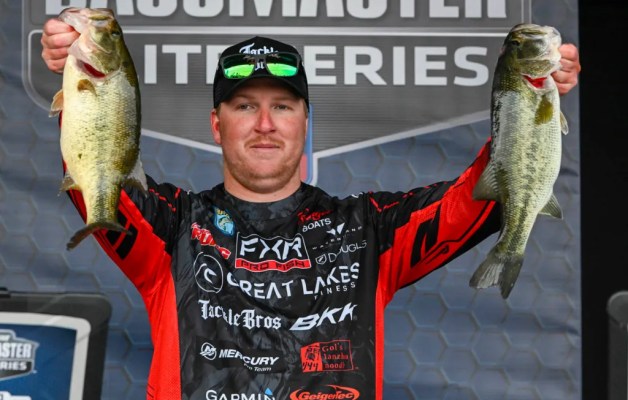
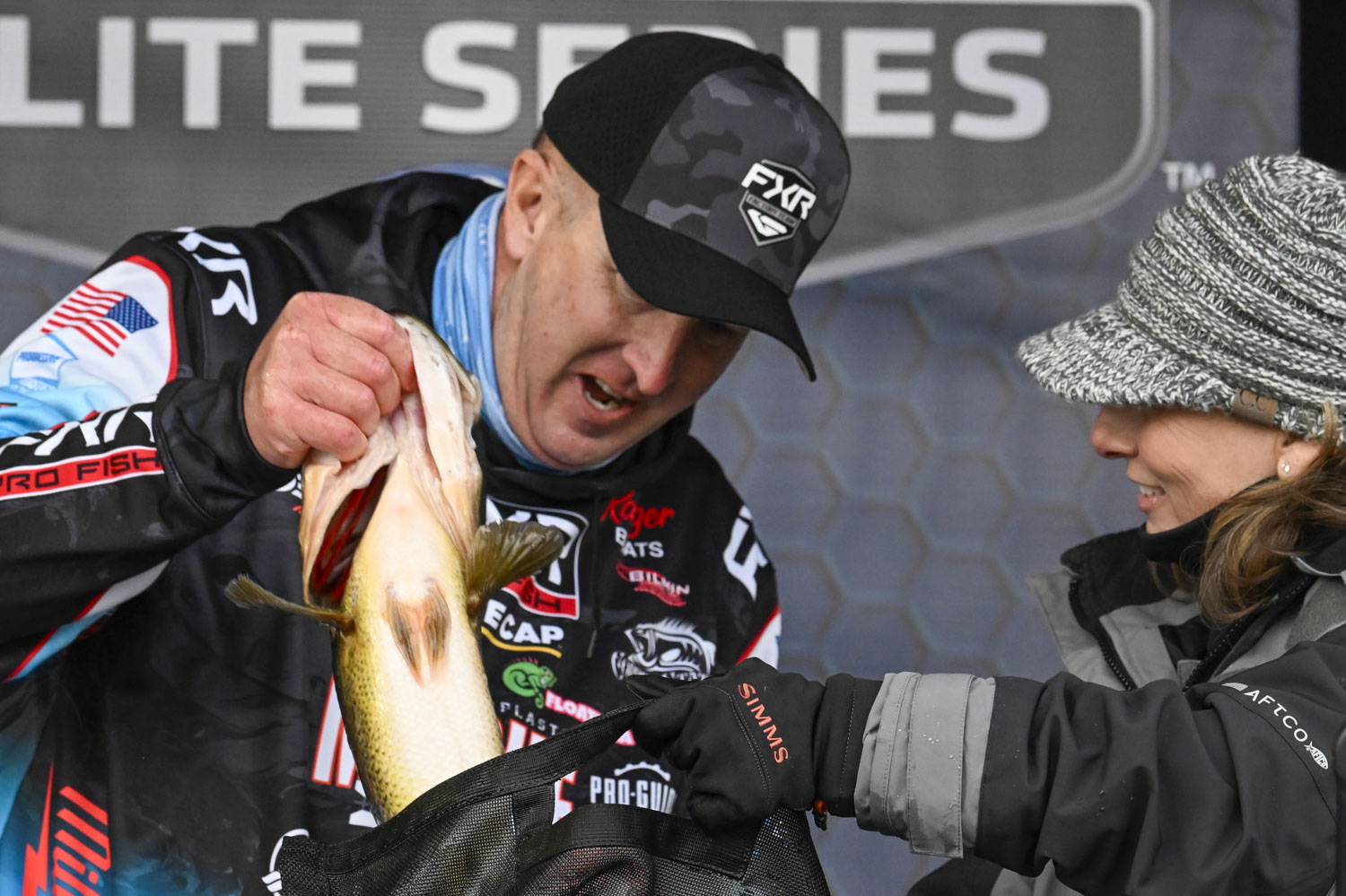
Bryan Schmitt started the 2026 Bassmaster Elite Series with a bang, as his first cast of Day 1 tempted a 7-pound, 4-ounce kicker that buoyed his third-place finish.
At the Day-2 weigh-ins, Cooper Gallant lifted the event’s heaviest fish — an 8-4 that bit during the second round’s waning minutes.
Two big bass, two very different time frames. Both examples of the species’ opportunistic nature.
As B.A.S.S. Conservation Director Gene Gilliland explains, there’s not a lot of random in bass feeding. Starting with the early stuff, it’s all about hungry fish leveraging daily conditions to their benefit.
“The morning bite is going to be the typical situation where, under relatively low-light conditions, the predators have an advantage over the prey,” Gilliland said. “That’s why that morning bite is universal.”
Notably: Stetson Blaylock capitalized on Semi-final Saturday’s morning bite by sacking up an unofficial limit of 21 pounds in the first hour of competition. He opened his day with a 7-pounder less than 30 minutes after takeoff.
Off then On Again
Just as dependable as the “morning bite,” the midday lull brings several hours of tough fishing that can, at times, make the lake feel like a barren wasteland. Reaction baits often trigger impulsive bites, while flipping or punching can startle fish into snapping, but there’s no sense sugar coating it — the midday hours are slim pickings.
As Gilliland explains, it’s simply a matter of fish with full bellies usually keep their mouths shut. Imagine leaving your favorite breakfast spot stuffed full of pancakes, scrambled eggs, bacon, or whatever your preference. You step outside and there’s a guy rocking the mobile barbecue stand.
Those ribs might look amazing, but you’re full. Same deal with bass and when all goes as nature scripts it, the fish get their chewing done before their ambush ability diminishes.
“As the sun gets up, you have that transition period where now the prey has a little more of an advantage because of the sunlight penetration, especially when you have relatively clear water,” Gilliland said. “It’s a little harder for the bass to forage, but they’ve already fed early, so there’s not as much need.”
As for Gallant’ big day-maker, the afternoon bite’s simply the next chapter in that opportunistic feeding. This week’s frosty tournament has shown that bass will eat during those low-light morning hours, even with water temperatures in the upper 30s. But once the sun starts tilting westward and water temperatures rise, it’s game on.
“You get the later bite because the sun gets up, it starts warming the water and it doesn’t take but a degree or two difference in water temperature to change fish’s behavior,” Gilliland said. “Just tiny changes can make a big difference in the behavior of the fish.
“Of course, our tournaments only go until 3 o’clock in the afternoon. If you’re on the water after this time, you would see another flurry and that’s more related to that low-light condition, where we’ve shifted back to where the predators have a sight advantage over their prey, as you get into dusk.”
Each to Their Own
While the early and late feeding tendencies remain pretty consistent, BassTrakk has shown sporadic bite windows when the right combination of micro details trigger a handful of fish to open their mouths.
“Not all of the fish do the same thing at the same time,” Gilliland said. “There are going to be sub-populations that have their own schedule. That’s why you’ll see these flurries.”
Suffice to say, the anglers that position themselves closest to the better quality fish and then capitalize on the flurries — whenever they occur — will have the best shot at lifting the blue trophy.