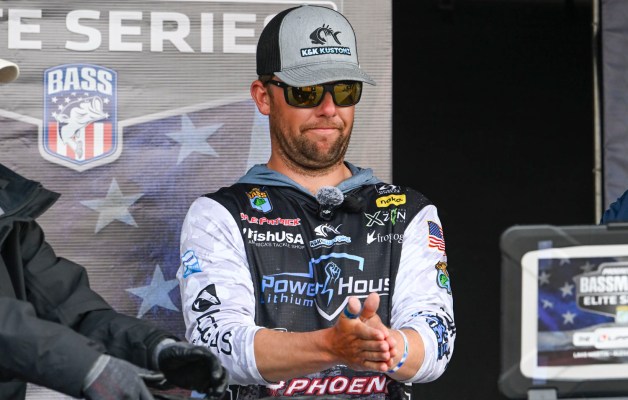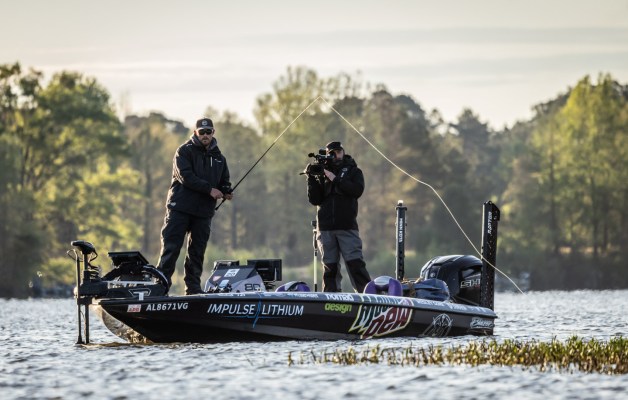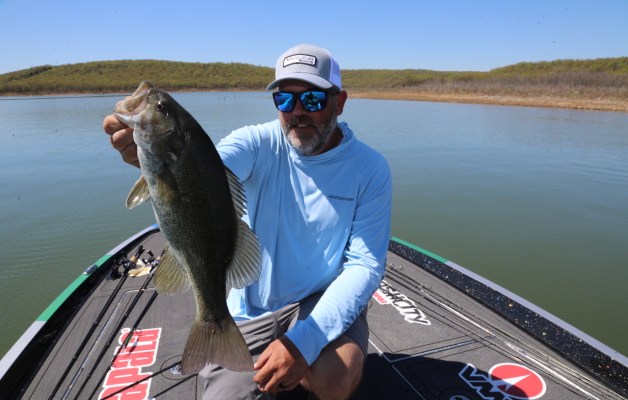


The Progressive Bassmaster Elite Series is just about done with its 20th year of competition, and those two decades have gone by in a flash. I can still vividly picture my son Beau showing up to the weigh-ins in a stroller, and now he’s out there competing on that same big stage. While a lot of things have changed on tour, from the boats to the lures and certainly to the electronics, one thing has remained the same: The competition is as good as it gets. If you’re not hungry to win, you won’t remain out there long.
I’ve seen that in Beau’s progress and in the way he attacks the water. He eats, breathes and sleeps bass fishing. It’s what he wants to do every day, and while he enjoys the heck out of it, he’s constantly learning too.
I’m proud because he reminds me of a much younger version of myself, and his passion has inspired me to double or even triple my own efforts on the water. At a time when many of my contemporaries are calling it quits, I fished all of the St. Croix Bassmaster Opens presented by SEVIIN this year. I’m doing it partially because I still love the game, and partially because I want us both to walk across the Elite Series stage at the same tournaments. I want us to battle it out on the water and celebrate each other’s victories.
I’m fortunate to have won four B.A.S.S. tournaments in my career. I also won what was then called the Red Man All-American in 1996 on the Arkansas River. I’ve qualified for 10 Bassmaster Classics. I even won $100,000 on ESPN’s Wild Rules reality TV show. If my tournament career ended tomorrow, I believe I’d have plenty to be proud of — but I sincerely hope that it goes on for quite a while. I have a lot more to give to the sport.
While I’m ready to test myself against the best of this generation, I do realize that one major impact of the Elite Series has been a trickle-down of sorts. The high school kids are getting better, then they go into the college programs, and then into the Opens and eventually (if everything goes right) the Elites. All of that education and effort, plus the sheer number of those who aspire to do it, has made it harder to qualify.
The weights are constantly going up too. Early in my career, if you caught a limit every competition day you’d probably make the Classic. Then it got a little harder — you needed 12 or 13 pounds a day. Then it went to 15 to 16 pounds and eventually 18 to 20 pounds. When I started off, 20-pound bags were far from common; now we see them at nearly every venue. If you want to know what a fishery holds, don’t trust the results from the locals — bring an Elite Series tournament to town and prepare to have your preconceived notions challenged.
A lot of people think it’s a young man’s game. The evidence is pretty compelling. Trey McKinney is barely out of his teens and Beau isn’t much older. Neither of them were around for Y2K or when a 54-year-old Woo Daves won the 2000 Chicago Bassmaster Classic to become the oldest winner of our sport’s biggest event. Woo seemed so old to me back then, and even now, as I’m about to turn 60 and he’s about to turn 80, both of us are still fishing with B.A.S.S. He continues to inspire me, but I do want to take away one of his achievements: I want to become the oldest Classic champ. I feel like I have the perfect combination of aptitude, attitude and family fishing knowledge to get it done. Hunger doesn’t have an age limit.