
Blueback herring lakes can seem overwhelming.
Don’t let them be.
When faced with a blueback herring lake, it’s easy to go down a blueback wormhole that includes buying all kinds of herring “imitators” like segmented swimmers and specialty wake baits. I’m sure these lures work, but when anglers ask me about herring-lake lures, I always say, don’t overcomplicate the situation. Keep it simple.
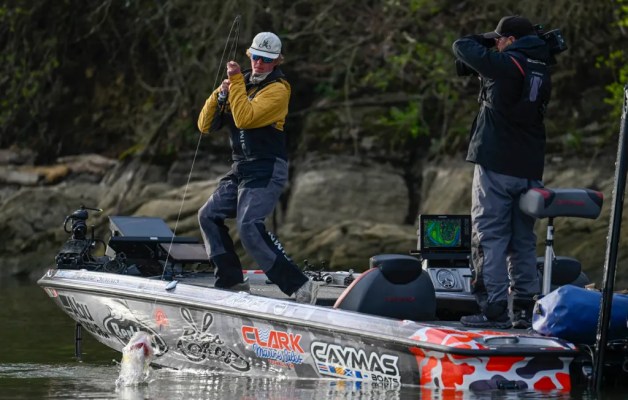
To keep it simple, I recommend a handful of must-have herring baits that cover the water column from the surface all the way to the bottom. When I go to places like Lake Murray, Lake Hartwell or Smith Lake, here are the lures that will always be on the deck.
On the surface
Starting on the surface, there are two types of topwaters needed. One is a bigger, louder, more aggressive spitting or splashing type bait like a Super Spook, Pencil Popper or Shower Blows in a 4 1/2- to 5 1/2-inch size. The other is a more slicing or skimming type topwater with a quieter, more subtle footprint on the surface. Examples include the Lucky Craft Sammy and the Imma Skimmer. They don’t splash as much but rather cut and glide quickly on the surface with minimal walk-the-dog effort.
Both types of topwaters are needed to match the conditions. The louder, rowdier surface splashers are better for windier, choppier or dark overcast conditions. The slinkier surface skimmers are better for calm, sunny days with little wind.
On the topic of topwaters, colors are certainly something to consider. Go with opaque, pearl, and bone colors on the surface in dense overcast or dark, heavy clouds. When the sky is blue and the sun is bright, lean towards chromes, silvers, and even clear colors.
Covering water
The next lure is the king of all herring lures: The Zoom Super Fluke. If I could only have one lure to take to a herring lake, it would be the Zoom Super Fluke, period. To be even more specific, it would be a pearl white Zoom Super Fluke rigged Tex-posed on a 4/0 or 5/0 EWG-style hook. The Super Fluke, simply rigged that way, is the best herring imitator made.
Next, if you’re going to search for a herring bite, you need something you can cover water with fast. Many times, fishing herring lakes means a lot of up-tempo fishing, hopping from point to point, shoal to shoal or point to shoal, all over the lake.
My go-to search engines for covering massive amounts of water are a 1/2-ounce double willow-leaf spinnerbait and a squarebill, like a 1.5-style crankbait. I will also keep a medium-runner, such as DT-6, on the deck as well when probing breaks that are a little deeper.
The object of these moving lures is to find activity zones where bass are feeding. I use them to turn and burn, looking for a bite. Once I get a bite and find a school of bass pushing herring up against a point or shoal, I’ll switch back to the fluke or topwaters to really work on them.
Drag the bottom
Lastly, you need something to drag on the bottom as a cleanup bait after the schooling melee dies. Bass schooling up on herring will sometimes go down and sit on the bottom between passing bait pods. When they hunker down like that, they can be hard to see or track on electronics. At that point, dragging a Carolina rig or a shaky head around can help turn up a lost school that sucked down to the bottom.
My go-to draggers are a Carolina-rigged midsized Zoom Brush Hog or a Trick Worm on a shaky head. Good colors for dragging include green pumpkin, anything watermelon-ish and occasionally red bug for a Trick Worm.
When I fish for fun on herring lakes, I will experiment with various glidebaits, jointed swimmers, and wake baits. But when it’s game time on a herring lake, I clear the deck of distractions and have the baits I mentioned locked and loaded on the deck. Over time, they have proven to be the tried-and-true performers for finding and catching bass feeding on herring.