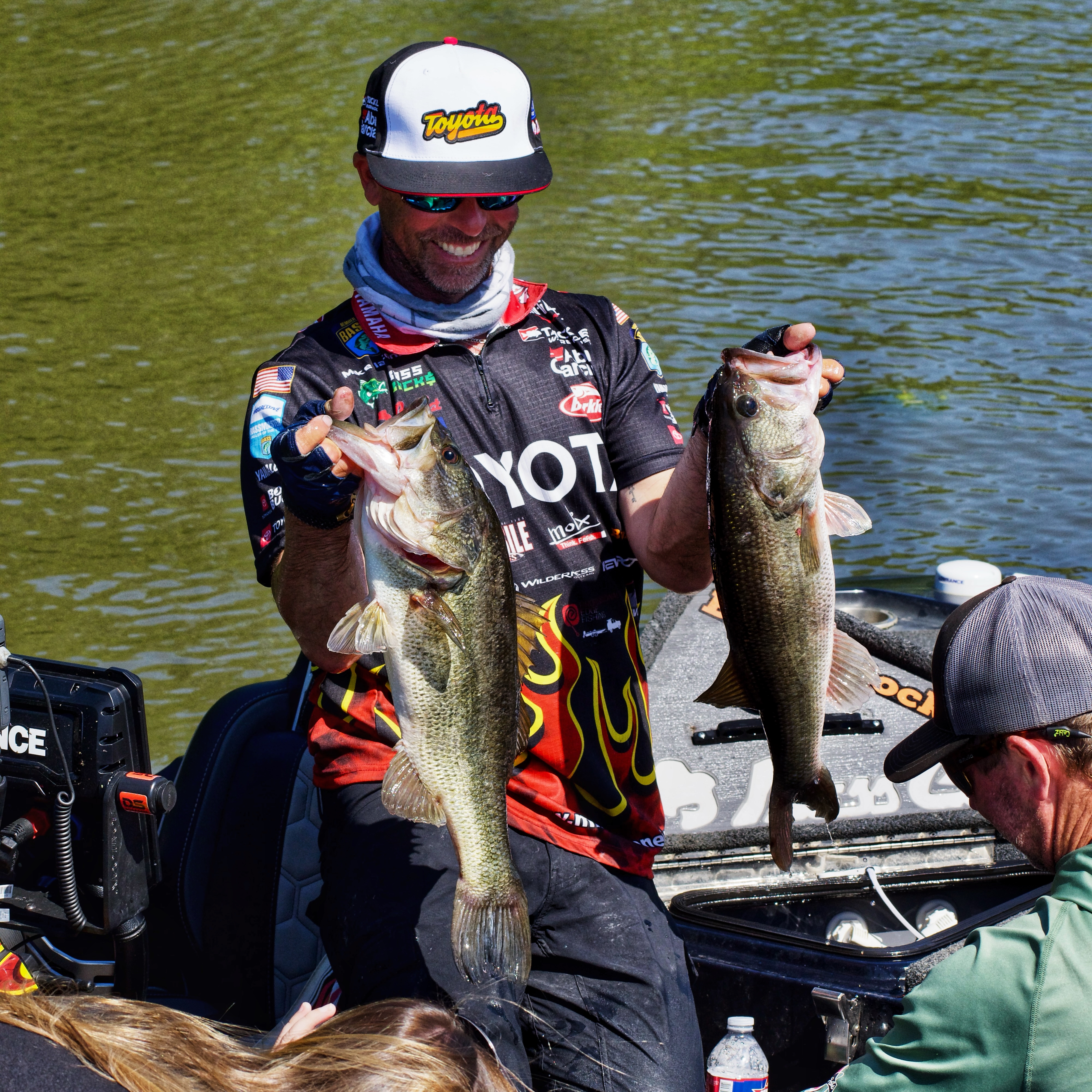
I had a great time fishing the recent Yokohama Bassmaster Elite at Santee Cooper Lakes, and I notched a respectable 35th-place finish. What really got me pumped at the event was I was able to use lures to pinpoint sweet spots instead of sonar. Advancements in sonar technology have made this something of a lost art.
Santee Cooper was one of the Elite events that did not permit the use of forward-facing sonar. I don’t want to get into the pros and cons of FFS, other than to say that not allowing it dramatically changes the dynamics of any bass tournament.
It was nice to fish a more traditional tournament where I didn’t have to use FFS or worry about competing against anglers who dominate with it.
I came to Santee Cooper thinking about what most of the bass should be doing given the time of year, the weather and the water temperature. Every consideration led me to believe 75% of the bass were in a postspawn scenario. There was still some spawning going on, but it was the last wave.
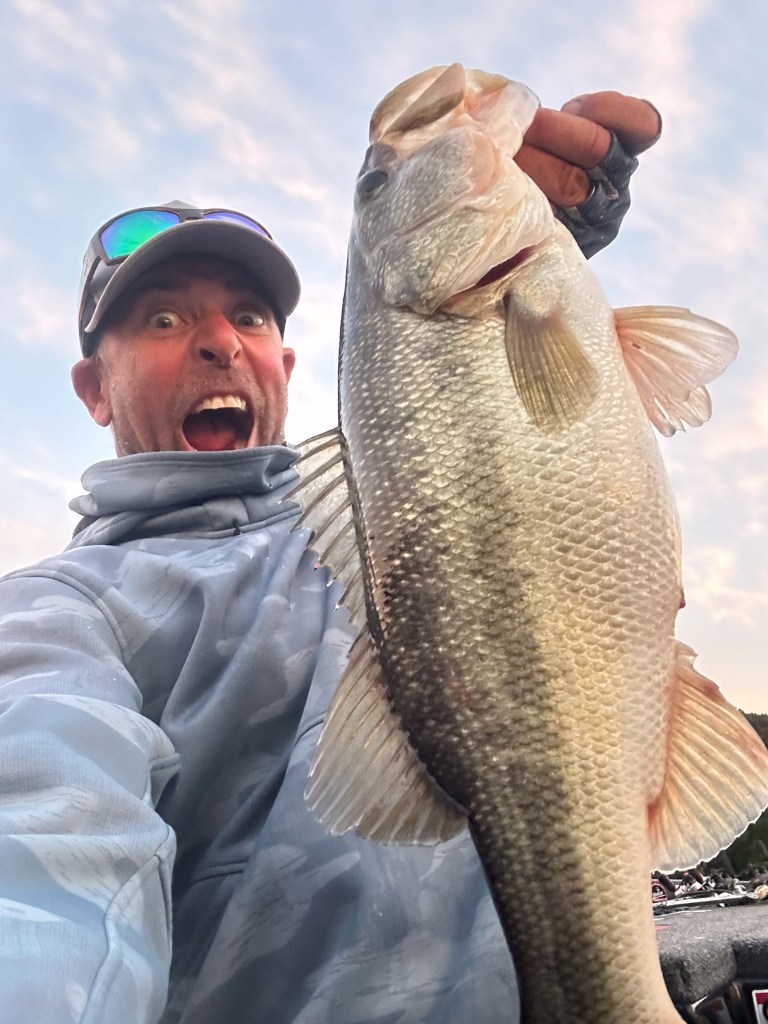
From years of fishing for postspawn bass, I knew they would be exiting spawning areas and transitioning to their deeper, main lake, summertime haunts. They typically stop along the way at hard-bottom staging areas to feed and recuperate before completing their journey.
I love the challenge of finding these little, needle-in-a-haystack places. My sweet spots in the tournament ranged from the size of a truck’s hood to the length of one or two bass boats. All of them were on secondary points coming out of spawning pockets, creeks and coves.
Step 1
Thanks to the C-MAPs that come on my Lowrance HDS 12 units, secondary points were easy to locate. I first dissected each point by idling over it with my SideScan sonar set at an 80- to 100-foot range. A shorter range didn’t cover enough area and anything farther lost too much detail.
I looked for bass and baitfish and for things like stumps, brush and grass. But the real juice I wanted to see was a hard bottom. Whenever the display showed a lighter, brighter bottom, my heart pumped a little faster.
Step 2: The lost art
As amazing as SideScan is, it doesn’t reveal every detail of what’s down there. When you use a lure as a transmitter, it tells you exactly what’s on the bottom.
I use three lures to help me “feel” the bottom: a 1/2- or 3/4-ounce Missile Head Banger football jig, a Carolina rig with a sensitive 1/2- or 3/4-ounce tungsten weight and a crankbait, which proved the most effective.
The crankbait must dive a little deeper than the bottom to provide the necessary feedback. I was fishing mainly depths from 4 to 6 feet and a few places as deep as 10 feet. The Berkley Dime crankbait in 4, 6 and 10 sizes got the job done.
I would fancast over promising areas on the point I had marked with SideScan, spacing my casts 2 feet apart. When my crankbait ground over a soft bottom, the feedback was mushy. The feedback was sharp and distinct when it dug into a hard bottom.
When it started repeatedly halting and popping free, I knew I had found the holy grail of hard spots – a cluster of mussel shellbeds. Whenever I felt that, I slowed my retrieve because I knew a strike was coming.
I found most of my sweet spots with Dime crankbaits and caught nearly every bass I weighed in with them. Using lures to find the shellbeds is bass fishing. It felt good to employ this lost art to catch them at Santee Cooper.
You can learn more about how I fish for bass wherever I happen to be at www.mikeiaconelli.com or www.youtube.com/c/goingike.