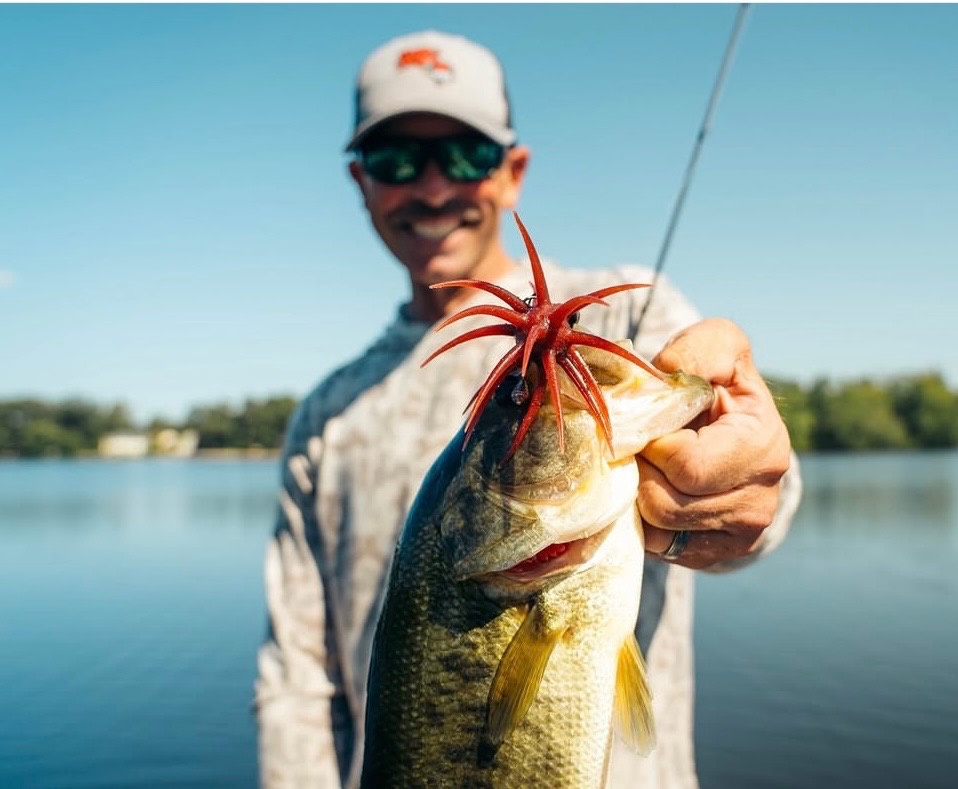

Hairy ball, urchin, Coike or whatever you call this bait, it resembles nothing I’ve seen in freshwater that swims. I’m big on matching the hatch, but this bait doesn’t mimic anything bass normally eat. It looks like a prank.
The anglers who first employed this type of bait have proven it to be the real deal. I believe it’s one of those special lures that show up every 15 years or so.
That happened with the Slug-Go, which initiated the fluke style craze. The Senko started the soft stickbait phenomenon. When those lures first hit the water, bass couldn’t resist them.
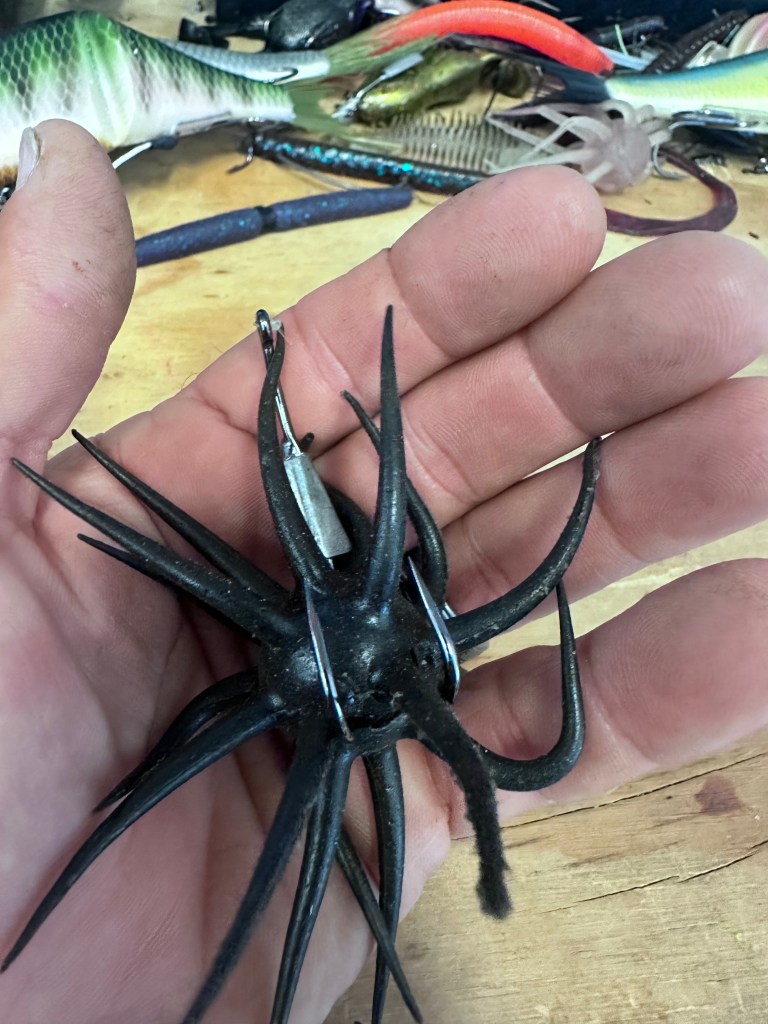
Hairy ball baits range from dime to half dollar size. Some float, some sink and they all have multiple plastic tentacles radiating from a solid ball. For whatever reason, they provoke violent strikes.
And not just from suspended fish you see with forward-facing sonar. They dupe bass in deep water, in a foot of water, around docks and over vegetation. Wherever you throw one of these baits, bass eagerly snap it up.
I heard a biologist claim that ball baits remind bass of the phytoplankton and alga they fed on when they were fry to minnow size. He believes it is an infant feeding response.
That may be true, but I think a ball bait’s shape and action is what’s driving bass crazy. I’ve messed with these baits in a swimming pool to see what they do more clearly.
They have an unbelievable action, especially the bigger sizes. All those tentacles give the bait a big profile. When you jerk or pull the bait through the water, it generates a tremendous amount of resistance. The bass feel that pressure wave and are drawn to the bait.
When you kill the bait, every one of those tentacles shake and vibrate as the lure sinks slowly on a semi-slack line. That movement prompts a bass to attack with abandon.
It’s like fishing a suspended jerkbait. A hard single pull followed by a pause usually does the job. On some days, the bass may respond better to two jerks and a longer pause. About 90% of the bites happen during a pause.
These baits catch largemouth, smallmouth and spotted bass, and they work in clear water, dirty water, in reservoirs, natural lakes and rivers.
Rigging hairy balls
Since this bait is in its infancy, new ways to rig it are showing up on social media every day. I basically go with two rigs.
I opt for a treble hook rig when I’m fishing open water or in sparce cover. My go-to ball bait is Berkely’s Maxscent Moeba, which sinks slowly without any added weight.
I twist a corkscrew into the Moeba until the eye pulls into the plastic. Then I run a treble hook into the plastic, through the eye and back out. That locks the hook in place with all three points exposed.
When I need a faster sink rate, I add a 1/32- to 3/16-ounce closed eye drop-shot weight to the treble hook’s eye with a small split ring. You don’t want the bait to sink too fast.
Thick Cover Rig
I avoid snagging in thick cover by rigging the Moeba with a 4/0 or 5/0 Berkley Fusion19 Frog Hook. I use the unweighted version for shallow water and the weighted one for deep water.
I remove the corkscrew that comes attached to the Fusion19 hook and save it for my treble hook rig. All the ball baits I’ve seen have a hole through the middle of them for proper packaging.
I push the frog hook all the way through that hole until the double hooks wrap around the ball like they wrap around the end of a hollow frog bait. That protects the hooks from getting snagged and gives you a good hookup ratio.