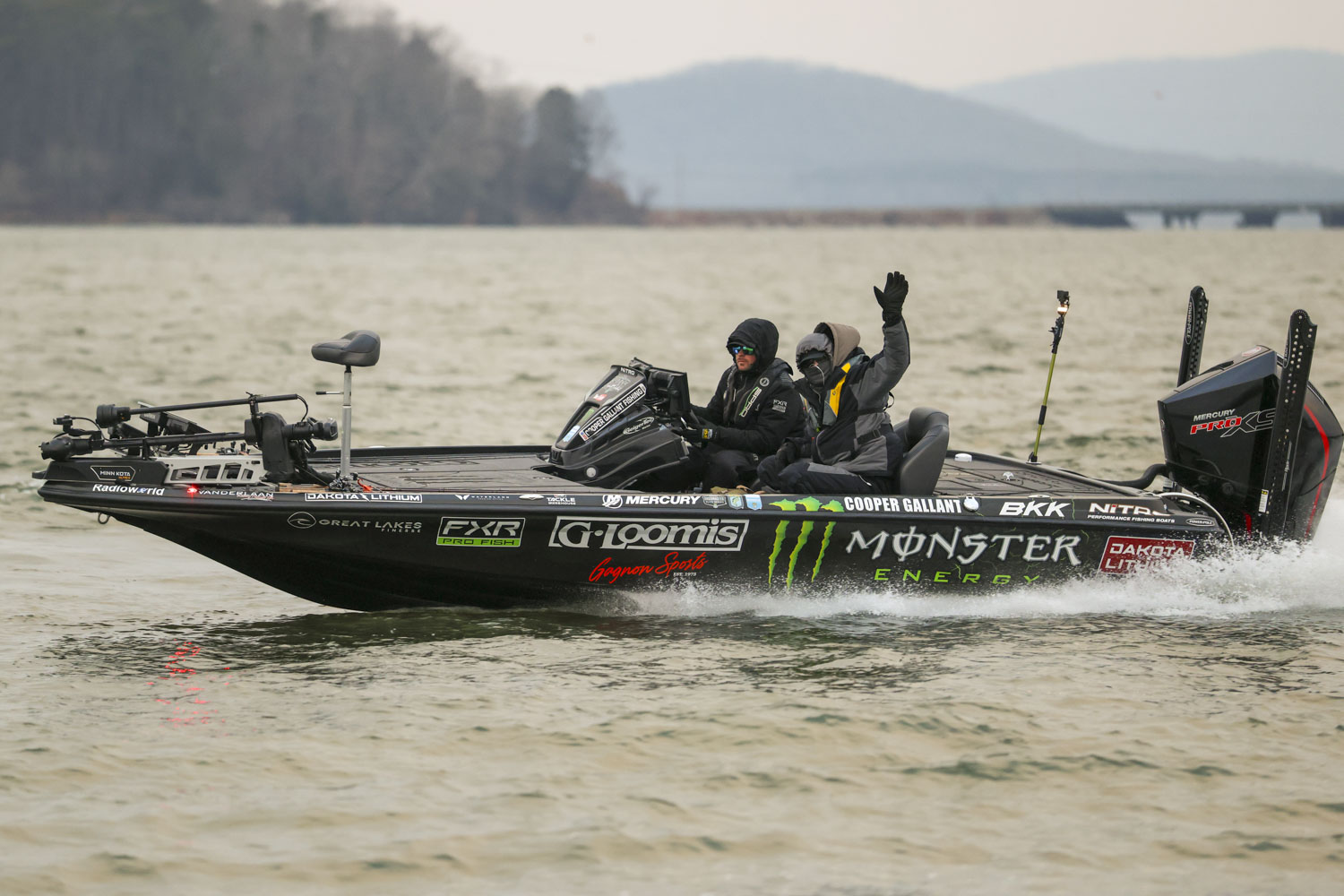
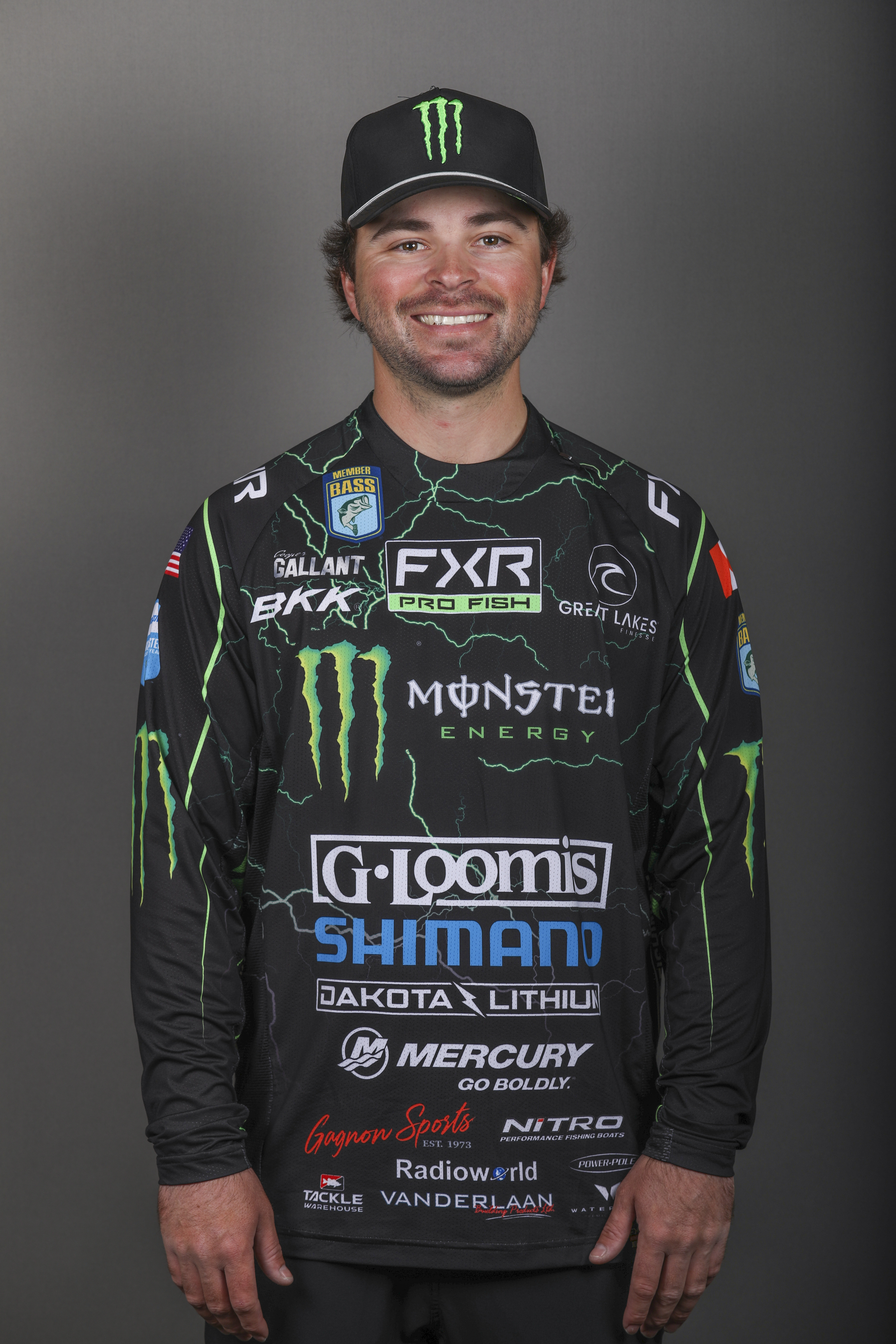
After finishing 30th at Lake Guntersville and 22nd at Lake Martin, I’m 13th in the Progressive Bassmaster Angler of the Year points. It’s a lot easier to keep the momentum going than to climb out of a hole after subpar performances.
My finishes in both tournaments make me look way better on paper than while I was competing in those events. Both tournaments were a grind. They were full of ups and downs and last-minute catches.
I hadn’t been to Guntersville in eight or nine years, but I felt super comfortable going there because I love fishing grass lakes.
All the bays were frozen over when practice started. For the first couple of days, ice formed in the rod guides after every third cast. It got warmer as the week went on. I don’t think the cold bugs the bass as much as we think it does. At the end of the day, they have to eat.
I kept it simple and tried not to overthink things. Every bass I weighed in was caught from a mix of hydrilla and eelgrass in 1 to 4 feet of water.
Grass fishing is all about irregularities in the vegetation. I picked the key spots apart with a ChatterBait and a Booyah One Knocker lipless crankbait in red craw, which is a staple color for winter and early spring.
The ChatterBait accounted for 90% of my bass. I kept my head down and camped in one area all week, casting, winding with a medium retrieve and ripping the bait through the grass. I had only seven or eight bites on the first day for 17 1/2 pounds.
At 2 o’clock the next day, I had only 10 pounds in my livewell. In the final hour of fishing, I caught 23 pounds of bass, including an 8 1/4-pounder I hooked in the final two minutes. It was crazy.
That bass was the big fish of the tournament. Without it, I would not have made the Top 50 cut.
My last-minute heroics continued at Lake Martin. I didn’t catch my weight until the last two hours on all three of the days I fished. Every good spot I fished in practice let me down during the tournament. I had to figure it out on the fly each day.
In practice, I usually break a body of water down into four sections. I fish them all and focus on the most productive section during the tournament. At Lake Martin, I started practice near takeoff and decided to put all my eggs in one basket and hunker down in that section of the lake.
It’s insane how many small spotted bass swim in Lake Martin. A 2 1/2-pound bass there goes a long way.
I caught 90% of my fish on a Neko-rigged green pumpkin YUM finesse worm. I inserted a 1/4-ounce tungsten nail weight into the head of the worm to make it sink fast.
I like a quicker fall with the Neko rig, especially when I’m fishing for spotted bass. When the bait zips past the nose of a bass, it triggers a reflex action. The bass follows it down and eats the bait when it hits bottom. If a bait sinks slowly, a bass has too much time to look at it.
I targeted pea gravel and clay banks, laydowns and brushpiles. Most of my bigger bass came off the wood. I somehow scrounged up enough fish to compete on Day 3.
Right now, I’m practice fishing at the Tombigbee River. From here, I’ll head to Oklahoma and pre-fish the Arkansas River. After that, I’ll make my way toward Knoxville. I plan to relax for a week and catch up on editing my videos before the Bassmaster Classic on the Tennessee River.
It’s hard to believe the Classic is just around the corner. I fished my first Classic on the Tennessee River in 2023. It was my worst tournament ever. I’m hoping for redemption.