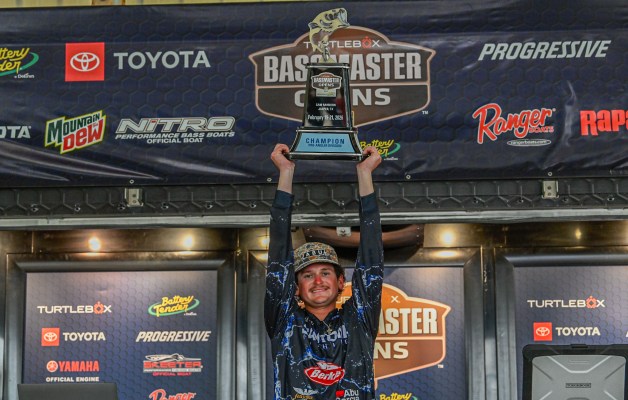
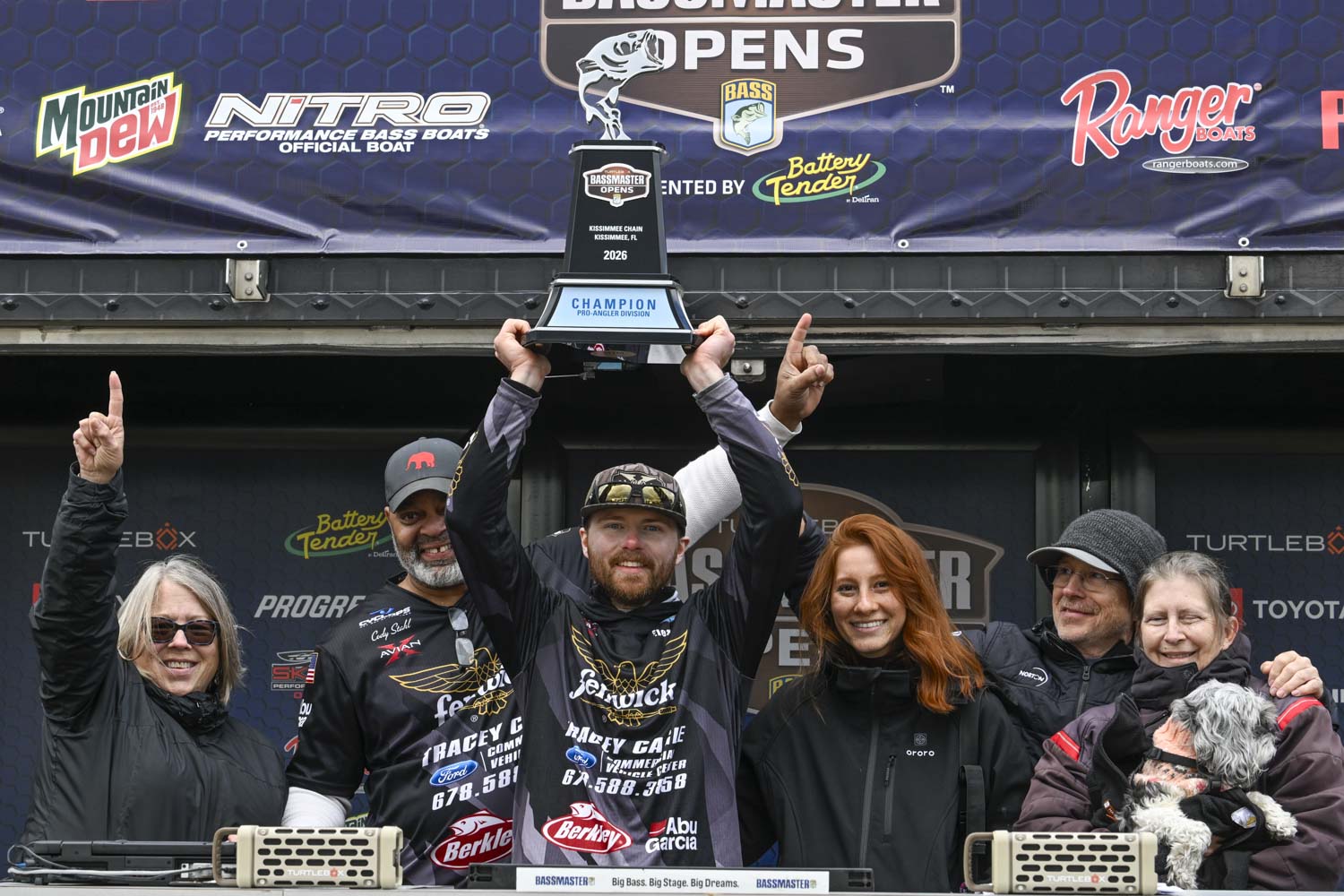

Winning the 2026 Turtlebox Bassmaster Open at Kissimmee Chain presented by Battery Tender and qualifying for the 2027 Bassmaster Classic was honestly such a relief. After fishing at Lake Ray Roberts in 2025, I have been champing at the bit to get some redemption and have a better experience.
In Fort Worth, I was super wound up and super stressed out. I was trying to take in everything I needed to, but at the same time, I’m super competitive and wanted to win. I was trying to tune out a lot of things so I could stay focused on what I needed to do on the water, but it took away from the experience.
A lot of people told me to enjoy the experience, but my mindset at the 2025 Classic was trying to figure out how to perform at my best. I wanted to win. This go-round, I’m going to take a different approach with this Classic. I’m prepared for it mentally, and I know what it is going to be like. My nerves should be a little bit better. This time, I’m not going to tune anything out, and I’m going to enjoy it all.
Similarly to what I did at the Kissimmee Chain, I’m just going to go fishing and let the conditions tell me what to do.
I went into this Open constantly thinking about my past Florida experiences. Every time I went to Florida, I went and fished for spawners and staging fish up shallow, and every time I would find them, but a cold front would come through and burn me. All those other times, I would try to force it.
I was getting better at getting bit up shallow and knowing how to catch those bass when they shut down. But I also finally learned that when those cold fronts come through, those shallow bass are not the winning fish. So, I took all that experience and went into this tournament knowing I would be fishing offshore.
The Kissimmee Chain is one of the last few places you can catch them how you are supposed to. This was my third time there, so I had a good idea of the places to go to do what I needed to do. I knew the bass in that region of Lake Toho use those offshore grass flats to stage before moving up to spawn.
There was a highway somewhere in there where the bass that were still winterizing would use to go up to the bank and spawn. You just have to figure out the intersection they’ll stop at, and that’s what I did. Without forward-facing sonar in this event, it is a lot harder to find those places.
When I was looking for that, I graphed a lot using my Lowrance side scan trying to find irregularities where the bass might stop. With the 1075 kHz side scan, it has a crisp picture and if you know what you are looking at, you can see those bass in the grass and then wolf packing around the grass.
I found those bass in the last hour of the first day of practice. It was exactly what I was looking for. It was a secondary staging zone leading into a spawning bay with winterizing holes out in front of it. In my first three casts, I caught three 1-pounders and stopped fishing. At that point, I knew that was the wave of bucks. On the first day of practice, there was already a wave of fish on the bank as the full moon got closer, but I knew right behind them would be the second wave that would be staging on the full moon. I was targeting that second wave, and those bucks were the very beginning of the second wave, and I knew the females should be right behind them.
On top of that, the cold front gave us several nights in the 30s, and that was going to push the females that were up shallow wanting to spawn out to the closest secondary staging areas.
The timing of the tournament, the full moon, the cold front: It was the perfect storm.
After practice, I had so much confidence in my game plan and in my thought process that I could really just go fishing. It was a weird feeling going into Day 1. Everything worked out. It was one of those tournaments that was meant to be.
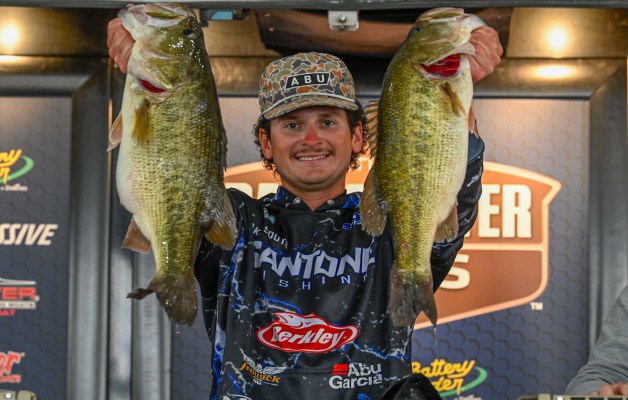
I caught 28-9 on Day 1 and 28-0 on Day 2, and I was really surprised by how many bass I caught on the second day. I wasn’t surprised I caught the same quality there, based on the conditions. The weather stabilized and there was no real reason for the bass to move.
On Day 1, I only had eight bites. I saw more fish roaming around, so I knew there were going to be more. But Day 2, that was the day both waves of females came together. Whenever you can catch 27 pounds in the first hour and then cull up to 28 pounds 45 minutes later, that’s incredible. I caught a 9-6 and an 8-14 .
Even though I was 20 pounds ahead going into the final day, I was full throttle. I wanted to catch another 8-pounder and the biggest bag I possibly could. If I’m fishing in a tournament, I’m fishing to catch the biggest weight possible. But I did know I sealed it after my morning flurry. I had caught a decent bag and when they shut down for me, I figured it would be difficult for everyone else to catch them too.
I fished very clean for throwing a 3/4-ounce lipless crankbait. I only lost two bass the whole time that were fully hooked, one wouldn’t have helped and the other was probably a 4 1/2-pounder that would have only given me a couple ounces. It really is amazing to fish that clean with that bait, and I feel my setup was incredibly important.
My rod for the week was a Fenwick World Class 7-foot, 5-inch extra-heavy, extra fast casting rod paired with a Abu Garcia STX 8:1:1 gear ratio with 20-pound fluorocarbon. That rod has a really stiff backbone so you can snap the bait out of the grass and clean it off effectively. You have to keep your bait clean in that grass. A super limber rod will dig that bait deeper into the grass. With this rod, you can just give it a twitch, and it will cut the grass.
More importantly, it is a parabolic rod that loads up really nicely, so when you are fighting those bass, the whole rod is giving so you can keep the tension out of your line when they come up, jump and shake.
It is certainly a week I will never forget, but I have plenty more goals to accomplish this season. I can’t wait to get back after it at Lake Eufaula.