I’ve thoroughly enjoyed spending time with my family over the winter months. We did something different this year and vacationed in Florida for the Christmas holidays. Now we’re back home to freezing temperatures in Idaho.
I’ve been putting in a lot of time lately organizing my tackle for the Elite season. I made a list of the baits and terminal tackle I need and just spent a fortune at tacklewarehouse.com to order them.
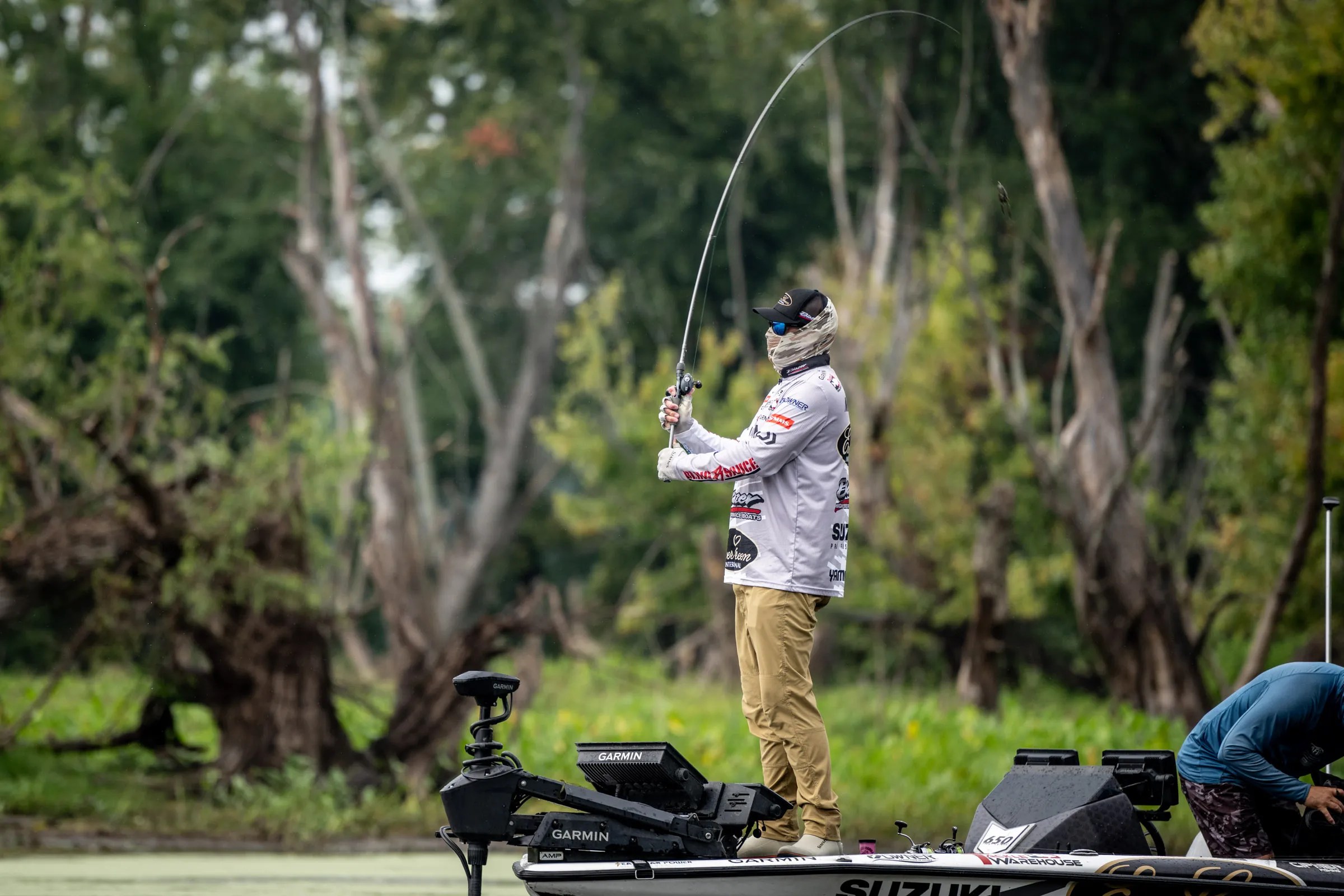
Something I’ve had to do during the offseason over the past several years is make regular visits to a physical therapist to treat my tennis elbow. I didn’t get this affliction from playing tennis. Fishing with spinning tackle caused it.
I grew up fishing clear water on the West Coast for pressured bass. That dictated finesse tactics and spinning tackle. I had a spinning rod in my grip hour after hour whenever I went fishing, which was incessantly.
The repetitive stress of holding a spinning rod overworks the top of my forearm and causes the muscles to tighten into ball that puts a painful strain on my tendons. My aunt discovered this in 2014 at a Thanksgiving gathering.
After I mentioned my pain to her, she grabbed my arm and put pressure on the balled-up muscles. That hurt so much it nearly brought tears to my eyes.
I go to a physical therapist in Idaho during the winter. She breaks down my balled-up muscles with her thumbs and then flattens them with a metal bar. This allows the muscles to regrow straight like they’re supposed to be.
In most years, this carries me through the tournament season before the pain gets so bad that it hinders my fishing. However, I once fished a tournament on New York’s Cayuga Lake where I had a major flare-up.
The bass at Cayuga couldn’t resist the drop-shot baits I pitched into the grass with spinning tackle. I was catching so many bass in a row that I overworked my forearm. By the end of the second day, I couldn’t even hold my spinning rod. I switched to a baitcaster in my other hand to survive the third day of the tournament.
I’m trying to eat better and be more health-conscious, but I’ve never really exercised in the offseason. That’s sadly apparent in the first tournament of the season. I suddenly remember how tiring it is to stand up fishing all day and to stay focused.
After the first Elite tournament of the season, my body is exhausted from practicing and fishing several days in a row. It’s mentally draining as well. You’re so stressed about finding and catching bass that you don’t drink enough water or eat enough while fishing to maintain your energy.
It takes two tournaments for me to get back in peak fishing form. In a few days, I’m heading to California with the goal of getting my body and mind ready to compete before the first Elite event of the year at Guntersville.
It will be nostalgic because I’ll be casting into lakes I fished growing up. My first stop will be Clear Lake, one of the best bass waters in the country. It doesn’t have current like Guntersville, but both lakes have grass and big bass.
At Clear Lake, I will be throwing the same baits I’ll rely on at Guntersville: Evergreen JackHammers, lipless cranks, shallow cranks and jerkbaits. I won’t be using forward-facing sonar at Clear Lake because this technology is not allowed at the Guntersville tournament.
It will be nice to get into my casting rhythm and renew my senses for feeling light bites. When you’re rusty, it’s hard to distinguish a weed from a bass.
From Clear Lake I’ll head to Lake Oroville, which is deep, clear and full of spotted bass. The baits I’ll use there will also work at Lake Martin, the second event on the Elite schedule.
I need to be sharp when the season starts.