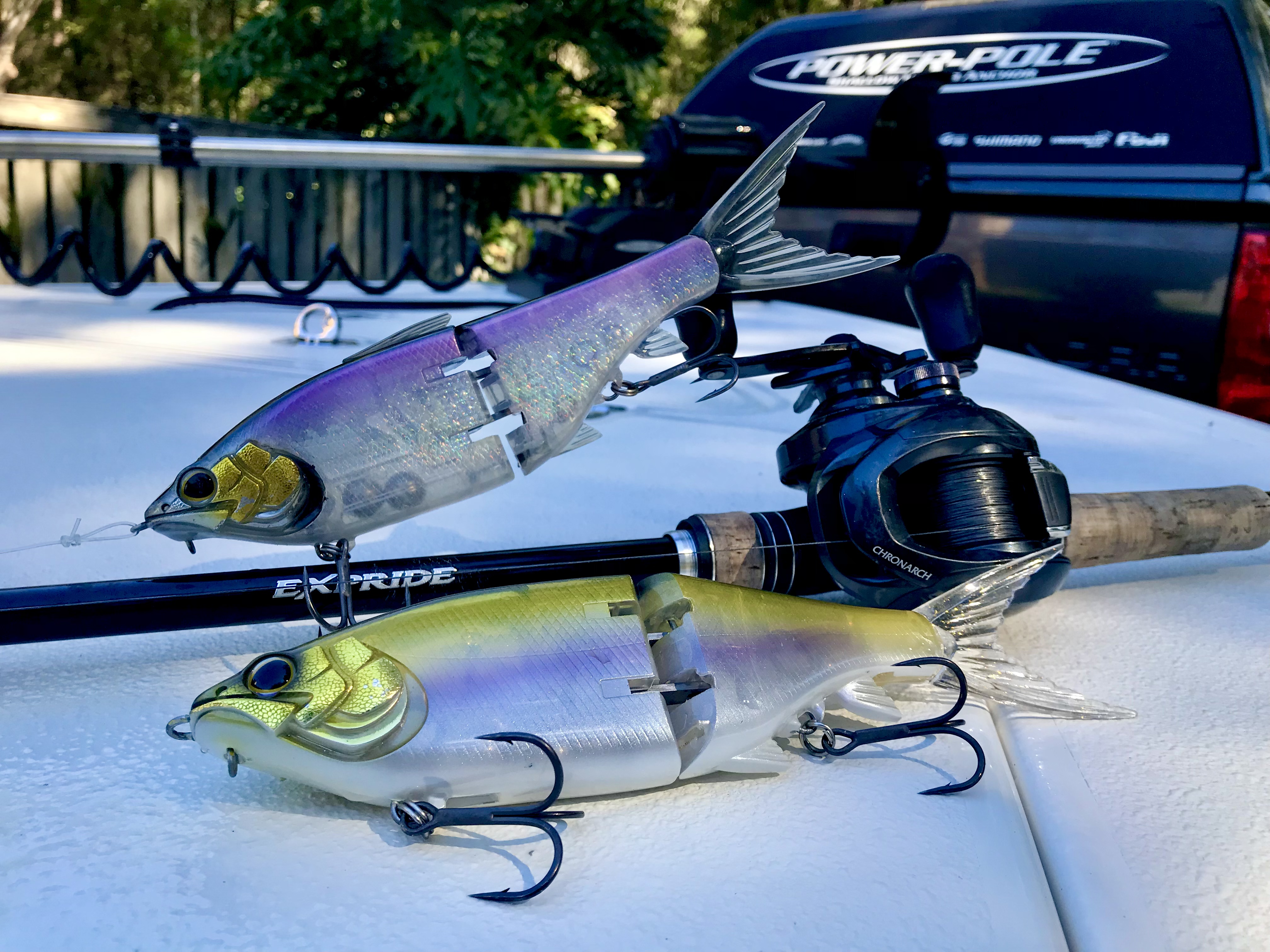
Ever since big swimbaits were introduced, I’ve had a love/hate relationship with them. While they’re cool and they obviously attract fish — especially big fish — I never developed enough confidence to use them with any consistency in tournaments.
I guess I experienced too many “followers” that wouldn’t commit to the bait, or lost too many of the fish that did.
The same was true for glidebaits.
But after being sidelined in multiple events by other competitors proficient with these big baitfish imitators, I decided to spend more time with them this offseason … and I’m glad I did!
My proving grounds
Fortunately, I live in a 12-month fishery. Even when it’s blistering cold, there’s somewhere to fish in Florida.
Near my home in the northern part of the state, we have dozens of lakes and ponds, and a number of rivers … and most hold good numbers of fish. On those rare occasions when it’s brutally cold, I can always drive farther south to a more agreeable climate.
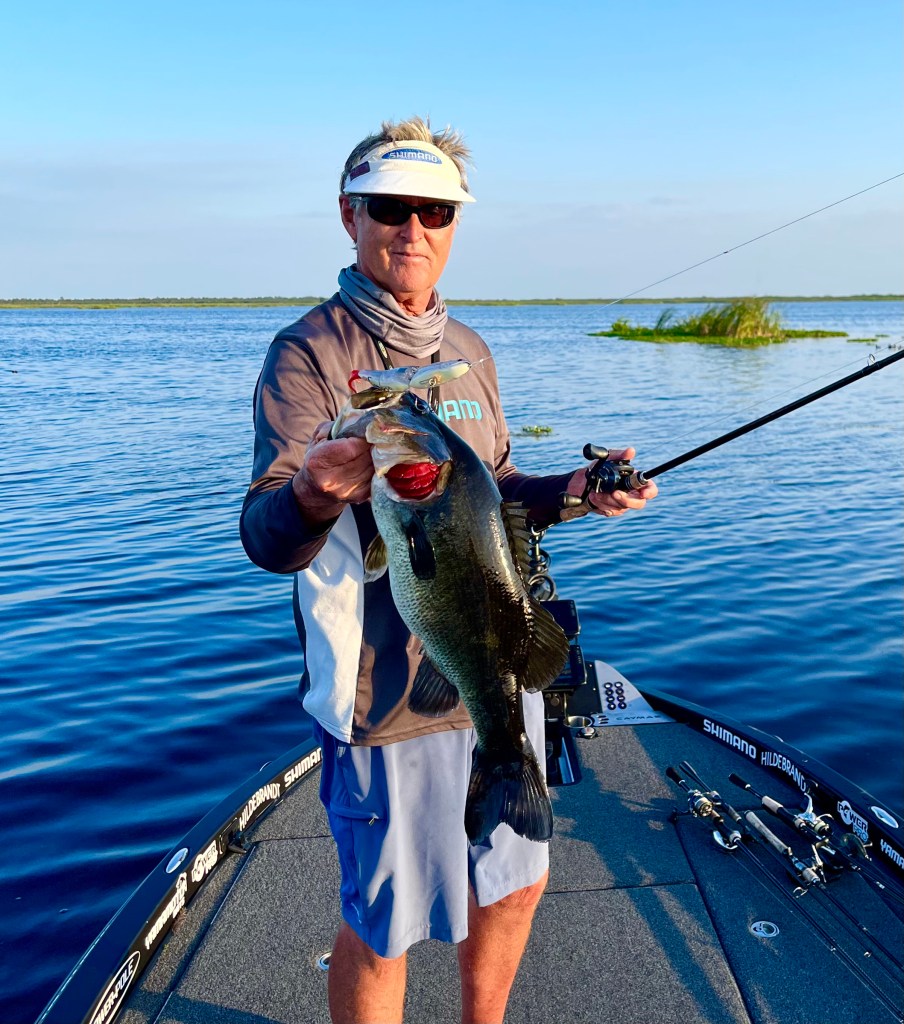
Regardless of the conditions, to find consistent action with big swimbaits and glidebaits, you need to be where the bass are large and plentiful enough. Some of our better bodies of water include Orange Lake, Rodman Reservoir, Lake Rousseau, Lake Seminole, St. Johns Headwaters, Okeechobee and the Kissimmee Chain. Obviously there are others, but these rank highly among my favorites.
Whichever body of water I choose, timing always seems to factor in. That and how the fish are positioned. Are they holding on docks, brush, grass, shellbeds, cypress trees, or are they free swimming?
Normally this time of year, our fish are working their way into spawning areas. That could include canals, kicker trails or voids between the shoreline and any adjacent grassbeds.
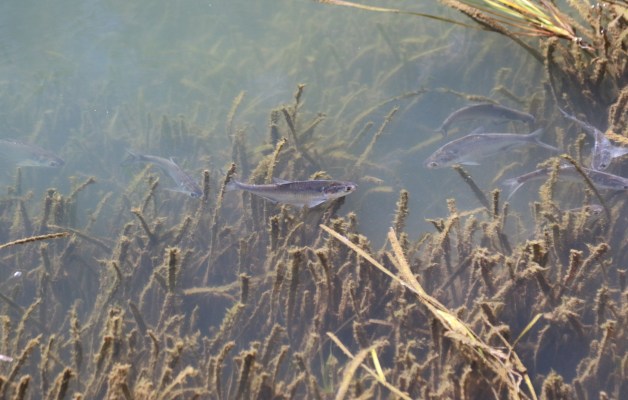
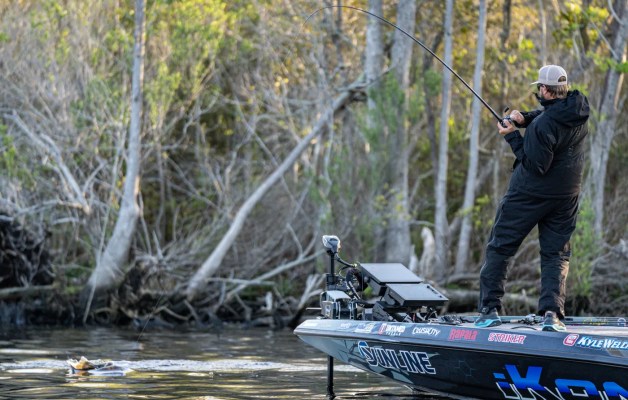
However, my best success of late has been along deeper grasslines and in clear streams feeding our lakes and rivers. Florida is peppered with countless springs, and black bass seem to migrate to them in the cooler months. But because those waters are so clear, fooling the fish isn’t easy — especially with bigger baits. To have any chance at all, I make extra-long casts, keeping some distance between me and the fish or the targets I think they are holding on. Then it’s a matter of giving the lure a seductive look during the retrieve.
For swimbaits, this time of year it seems a slow, rhythmic swimming motion works best. For glidebaits, a more exaggerated, side-to-side movement tends to produce. But with that, I usually include a pause every couple of yards … and it’s that pause that seems to provoke the strike.
Tidewater tactics
Along Florida’s coastline are numerous tidal rivers, especially on the western side of the state. And they, too, can create opportunities for big swimbaits and glidebaits … not only for black bass, but certain saltwater species as well.
The Big Bend region on Florida’s Gulf Coast features numerous tidal rivers with springheads that keep the water much warmer in the wintertime. Snook, tarpon and redfish migrate into these cold weather sanctuaries, where they can be caught.
On a recent trip with my son, we connected with numerous big snook using glidebaits — fish we normally fool with jerkbaits, flukes or smaller soft-plastic swimbaits. Wanting to try out the new Shimano Outlier swimbait rod, he tied on a Shimano Gravitator glidebait and immediately hooked up. Not wanting to miss out, I followed suit and caught several myself.
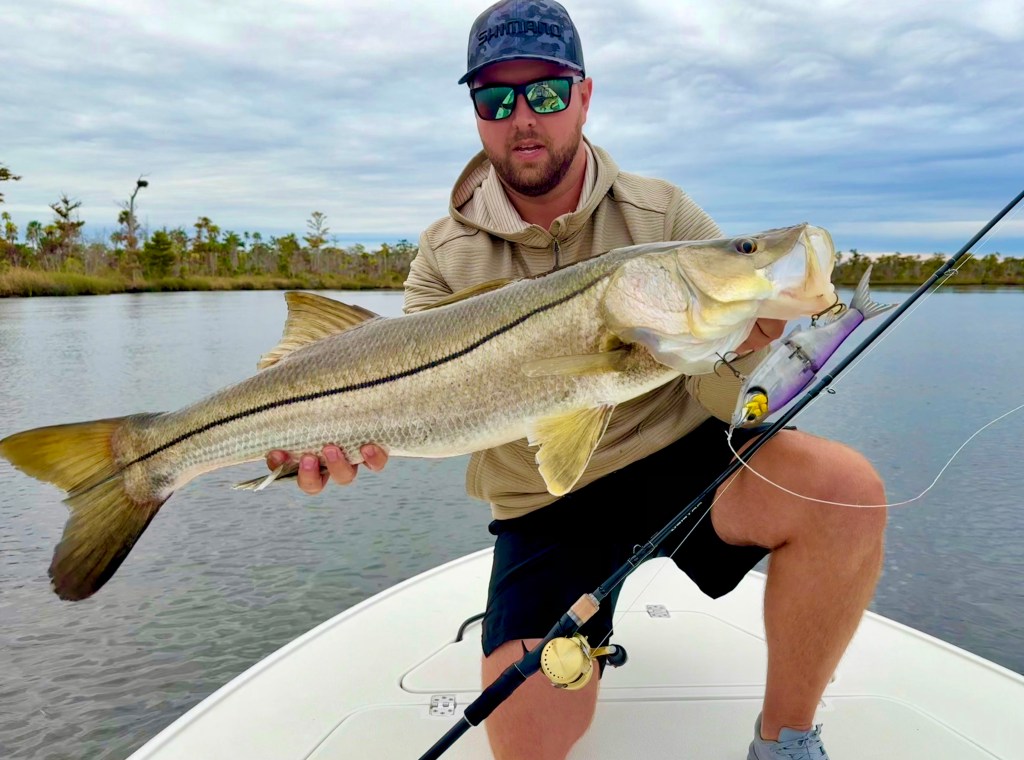
Our best results came using a “choppy” retrieve — whereby the rod is pointed in the general direction of the lure and the action is imparted by sharp, half or full turns of the reel handle. This forces the lure to swing wide from side to side with less forward progression. And nearly all of our strikes occurred between pulls, when the lure was paused at the end of its glide pattern.
When strikes occurred, they were vicious … no guesswork involved. In fact, the snook hit with so much force, you would think they’re about to take the rod out of your hands.
Tackle specifications
While there are a number of reels suitable for the technique, I like Shimano’s Antares HGB, Tranx 300 or Calcutta Conquest MD. I pair them with either an 8-foot, extra-heavy Expride (model EXC80XXHB) casting rod or Outlier (model OUC711H). Designed specifically for big swim and glidebaits, these rods can handle lures up to 10 ounces in weight.
Depending on the situation, I either spool with 40-pound Power Pro Super8Slick braid or 20- to 25-pound fluorocarbon. If I’m using braid, I always tip it with a fluoro leader — 30 to 40 pounds if I’m after big snook, 60 for tarpon.
This balance of tackle is ideally suited for the technique, and it provides the power to land big fish … which is key.
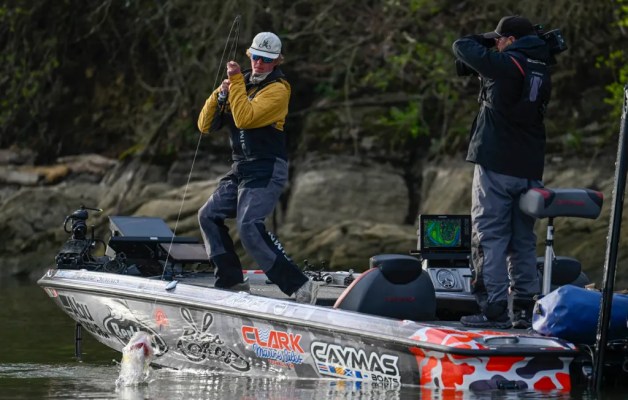
Once I hook and play a big fish down, I want it to or in the boat as soon as possible. Big, heavy baits can work in the fish’s favor during battle, so getting them to the boat quickly is important. If it’s a bass, I try using their momentum as they rise to the surface, to swing them aboard. Obviously, there are exceptions, but the longer a big fish is in the water, the greater its chances to escape.
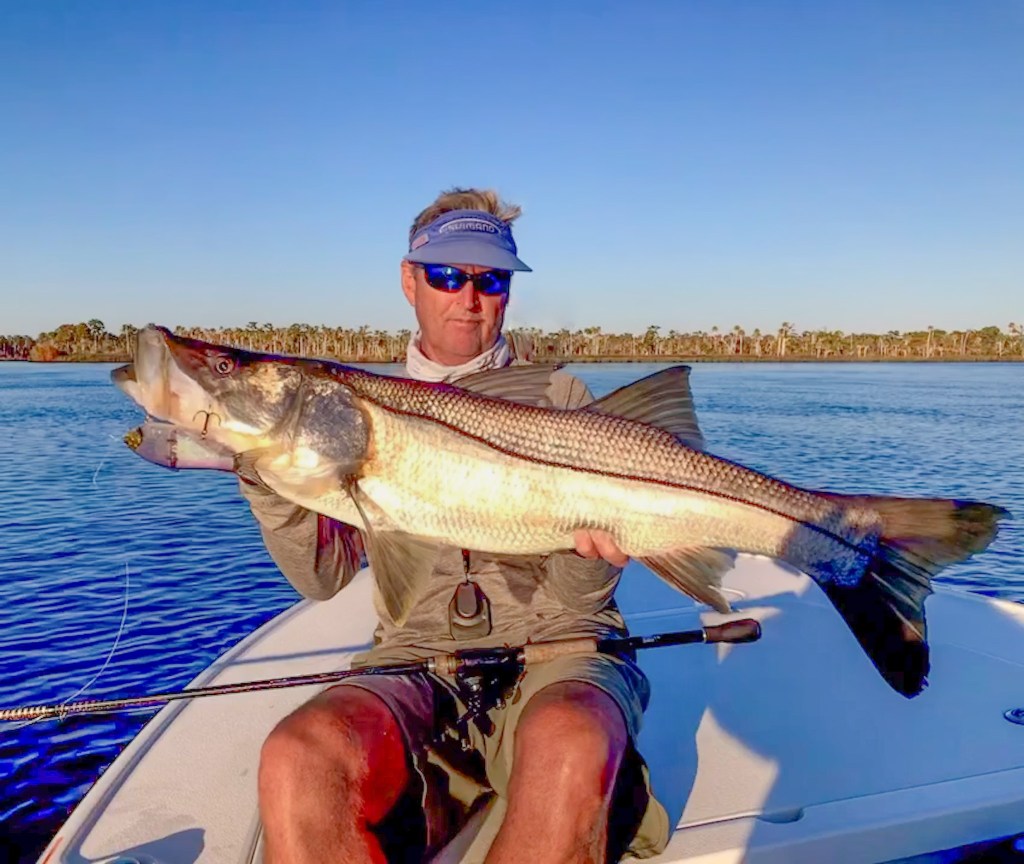
In the context of snook or tarpon, they’re pulled to the gunnel and either released immediately or lifted for a quick photo, then released.
Big bait wrap up
Large swimbaits and glidebaits aren’t for everybody. Fishing them can be fatiguing and sometimes monotonous. But when they work, there’s a chance at catching the biggest fish in the body of water you’re on.
I hope the time I dedicated to these lures in the offseason pays off in this year’s tournaments. If not, at least I had a good time improving my skills.
Follow Bernie Schultz on Instagram, Facebook or through his website.