A lot of people don’t like fishing rivers like the Tombigbee and the Arkansas, which are on the Progressive Bassmaster Elite Series schedule this year. The same can be said for the Sabine River, the site of several past Elite events.
It’s hard to consistently sack a limit of bass on tough rivers like these — even for the pros. We all love fishing a Guntersville-style slugfest where everybody lugs a heavy bag of bass up on stage. Personally, I enjoy tough river tournaments.
It doesn’t take a lot of weight to do well when you fish a tough river system, but it’s hard to get anything going. You must lower your expectations, dial into what’s in front of you and grind for every bite.
I just fished Lake Martin, where guys were catching bass anywhere from 3 to 60 feet deep. Many different baits and techniques were in play. At events like that, I typically have eight rods on deck and another eight rigged with other stuff I might need in the rod locker.
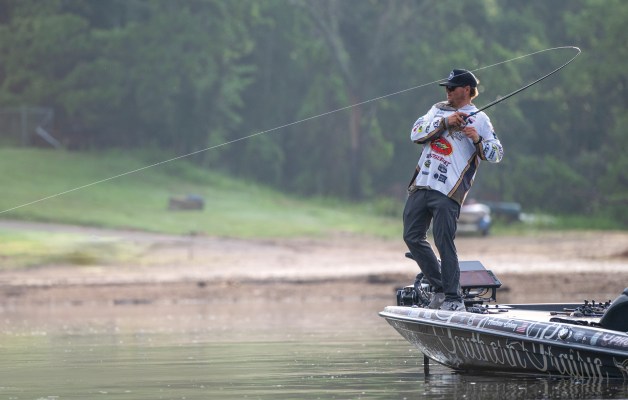
When I’m fishing a river, I’ll have only three to five rods on deck and that’s it. I rely heavily on a ChatterBait, a squarebill and something to flip with. The biggest thing is keeping your line wet, making as many high-percentage casts as you can and capitalizing when you get bit.
I make sure my rods, reels, lines and hooks are on point when I fish a river. When you’re getting only five to seven bites a day, losing a single bass can cost you big time.
I keep things as simple as I can and focus on finding clues that will lead me in the right direction. Water willow could be the thing of the day. Or it might be cypress trees or riprap.
Switching from a flat-sided squarebill to a round-body squarebill or going with a different color could be the difference between a Top 10 finish and a lackluster showing. Bass love red crankbaits in most rivers from prespawn into the summer. Chartreuse with a black back is always a good bet in dirty water, which is commonplace in most rivers. In clean water, straight white may be the way to go.
River fish always leave breadcrumbs that tell you what to do. Say, they’re only eating the back hook on a crankbait. They may be telling you that if you change colors, they’ll choke the whole bait.
Bass in rivers typically stay shallow, but even a subtle change in the depth you’re fishing can be huge. When I fished the Elite tournament on the Sabine River last year, I got six keeper bites the first day. I caught them by picking cover apart in 2 feet of water.
On the second day, I figured out the bass I caught the first day had moved up from channel swings that were 3 to 5 feet deep. That’s where most of the bass were hanging. By backing out only 15 feet and fishing a little deeper, I started getting 12 bites a day.
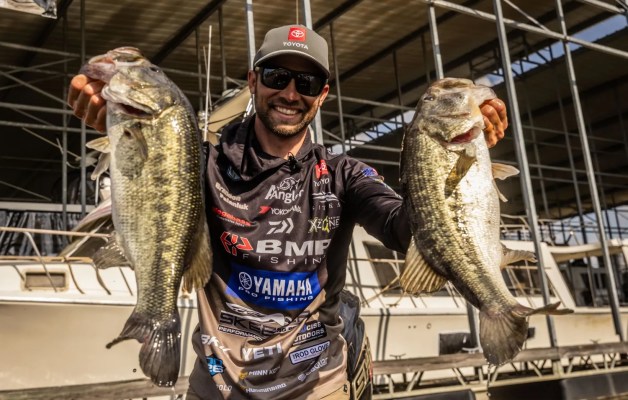
Those bass were suckers for a Texas-rigged Z-Man black and blue Palmetto Bug. One of those fish was a 4-pounder that carried me into the Top 10. One minor adjustment in depth doubled my catches from the first day.
Some rivers are tougher than others. A lot of guys call the Sabine River a gar hole. But the Sabine actually has a lot of bass in it. Those of us who have clued in there have had some really fun days.
That’s not the case with a place like the Arkansas River. It doesn’t have as many bass swimming in it as the Sabine does. You always have to grind there to get a limit, whereas you can cull on the Sabine if you figure it out.
If I can figure it out at the Arkansas River, I might not catch 10 bass a day, but I’ll have a good shot at grinding out seven a day.