
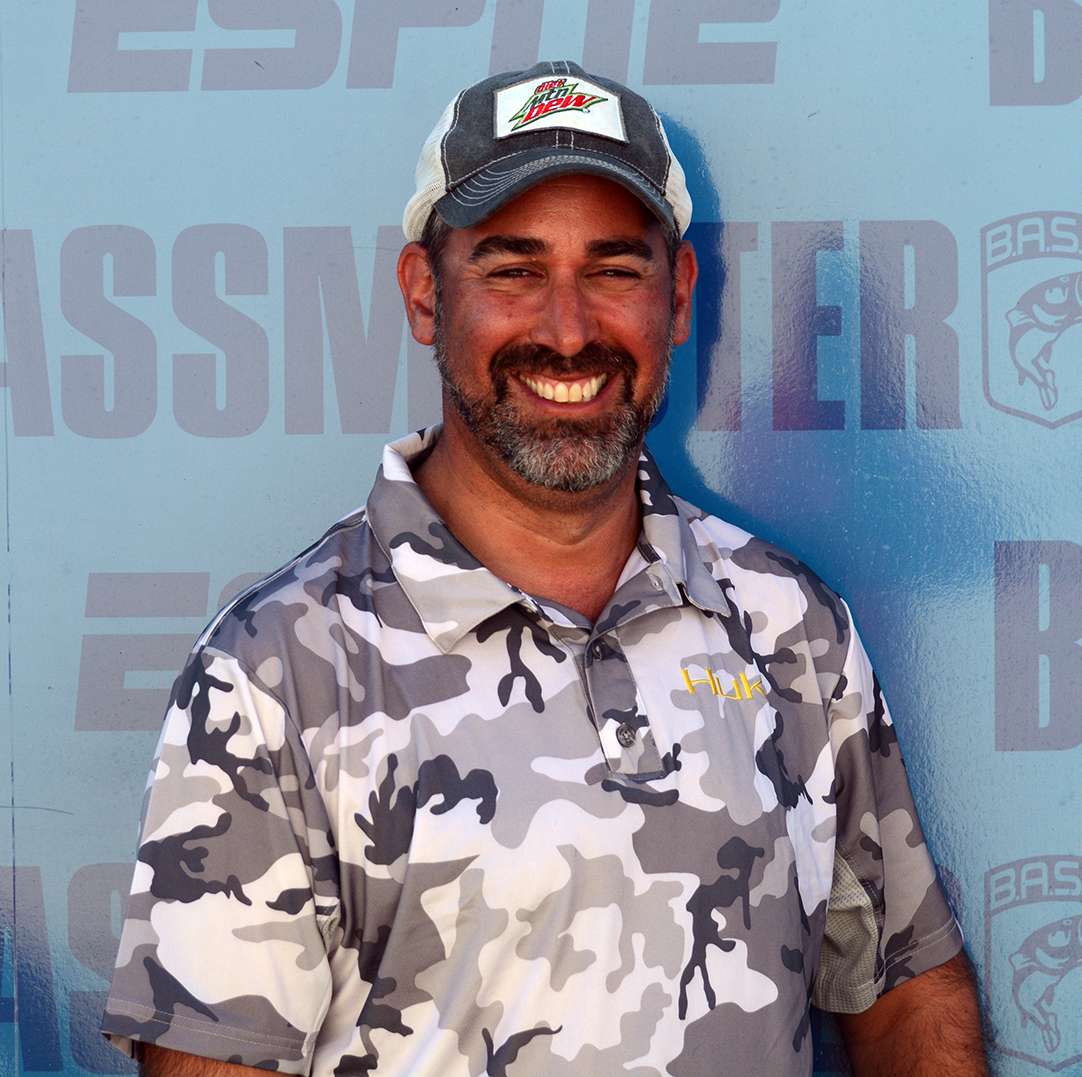

Jeff Gustafson won the 2023 Bassmaster Classic on the Tennessee River in Knoxville, Tenn., on a diet of 12 jumbo smallmouth bass. In just three short years, many things have changed about the fishery and the field. First and foremost, perhaps, Gussy won’t be fishing the 2026 Classic, but he’s convinced that his recipe would still prevail.
“If anyone can find untouched schools of smallmouth that are easy to catch, that’s the recipe over three days of competition,” he said.
The key word in that sentence, however, is “if.” Finding those untapped schools is never easy, and since Gussy showed the world their potential there are more anglers looking. His alleged winning spot has been combed over by a million Smeltinator jigheads and other lures of their ilk, but the champ knows that it’s not the only game in town.
“I only caught one fish out of the canal in the Classic,” he said of the spot that had produced all his fish in a 2021 regular season Elite Series tournament. “It got obliterated. Most guys were respectful, but several guys came in on me, too. But I also had two schools in Tellico.”
One factor that’s changed since 2023 is the Classic’s minimum size. Back then it was 18 inches, and Gussy had several 17-inch-plus smallmouth that he couldn’t weigh in. He said his two-fish catch on Day 3 “looked worse on paper than it was.” However, that size restriction also alleviated pressure on his schools.
“As much as I hated it, it probably made it better for me,” he said. “Other guys couldn’t do it. After the Elite Series tournament, I was all-in on it.”
Now the minimum size has been reduced to 15 inches, which should make for greater catches across the board, but also more pressure on those smallmouth.
Cooper Gallant, who finished 52nd in 2023, says he’s “angry at that river,” and the best redemption will come with multiple bags of big smallmouth, perhaps anchored by a giant largemouth or two.
“If the size limit had been 15 inches in 2023, Gussy would have won by a landslide,” Gallant said. “I think you can still win with all smallmouth, or possibly a mixed big. We’re going to have bigger weights. I’d guess 18 pounds a day to win.”
Like Gustafson, he doesn’t think there’s a single spot that can maintain the pressure of three days of fishing, even with a field that’s smaller than the full Elite group, so he’s committed to spending his practice looking for the magical schools that might produce a victory. Since the 2023 Classic, he’s competed in two more and believes he has a better understanding of how to approach a winner-takes-all event.
Bryan Schmitt came in second to Gussy in 2023 on three limits of largemouth. He entered the final day nearly 6 pounds behind the leader and eventual winner, but when Gustafson stumbled on Sunday, Schmitt’s 11 pounds 1 ounce — his lightest weight of the tournament — pulled him within almost a pound and a half of a life-changing win.
“The Classic is a tournament where the stars all must align,” Schmitt said. “And that means you must be fishing on the final day just to have a shot.”
“I’m not sure there’s enough smallmouth in that system for everybody to have a limit of 16- to 20-inch smallmouth. We all know that history is both a blessing and a curse, but that place fluctuates so much – up, down, dirty, clear – that you must keep an open mind just like I did the last time.”
Will those fresh eyes, attached to the face of one of the greatest grass anglers of his generation, consider the smallmouth?
“A limit of 17-inch smallmouth would do you pretty good,” he responded. “I’m in a mentally good place, which means I’m not going to ignore anything.”
Local Robert Gee, who tried desperately to get into his hometown Classic but came up just a bit short, doesn’t rule out the possibility that the winner’s bags will consist entirely of brown fish, but he believes there will be a tipping point where targeting them exclusively will become counterproductive.
“Converging on the smallmouth might leave the door open for largemouth,” he said. “That smallmouth bite might cannibalize itself. If you’re chasing largemouth, you’re less likely to run out of fish. Those smallmouth are more fickle, too. They can turn on you.”
He also noted the largemouth simply have the potential to grow bigger.
“There have been sevens, eights and even 10s weighed in over the past year,” he said. “It’s much better than it has been.”
Of course, conditions may also play into the competitors’ choices and their outcomes. Gee said if the water stays colder and clearer, that will boost the smallmouth opportunities, while heavy current and dirtier water will play into the hands of those preferring largemouth.
Gustafson said that the biggest threat to the smallmouth bite is warm weather leading into the tournament. This time around it’s almost two weeks earlier, but this is a tricky and inconsistent time of year, so anything could happen.
“Last time it was cold the week before and the tournament days were nice,” he said. “They hung in there just long enough. But if it gets warm sooner, it’ll suck them up to the bank and smallmouth will become a needle in a haystack.”
While Schmitt noted he knows “scoping of some sort” will play a role in the win, both he and Gustafson stated that the techniques in play – especially for smallmouth – have yet to be determined.
“They’ll probably have to employ a little more finesse than I did,” Gussy said. “I don’t think those fish had been fished for. That’s obviously different now. But these guys continue to blow my mind with the ways they find and catch these fish.”