Winning a Bassmaster Classic means climbing the sport-fishing industry’s tallest mountain. Take a look at the past decade’s Classic fields and you’ll see an army of straight-up sticks who’ve never lifted the trophy — and that’s no slight to any Classic competitor.
Rather, it speaks to 22-year-old Dylan Nutt’s amazing feat of winning the Bassmaster Classic in his first appearance. (Only the ninth in the Classic’s 56-year history.)
Vast Classic coverage has highlighted Nutt’s hard work, intense fishery study and sound game plan that included prudent positioning and situational adjustments. Competitors often say that only first place matters in the Classic, but while that’s accurate in the sense of a true life-changing experience, there’s often more to the story.
Fact is, several competitors that made the final top-25 cut shared insights that can help anglers of all experience levels better understand important bass fishing variables.
Clarity
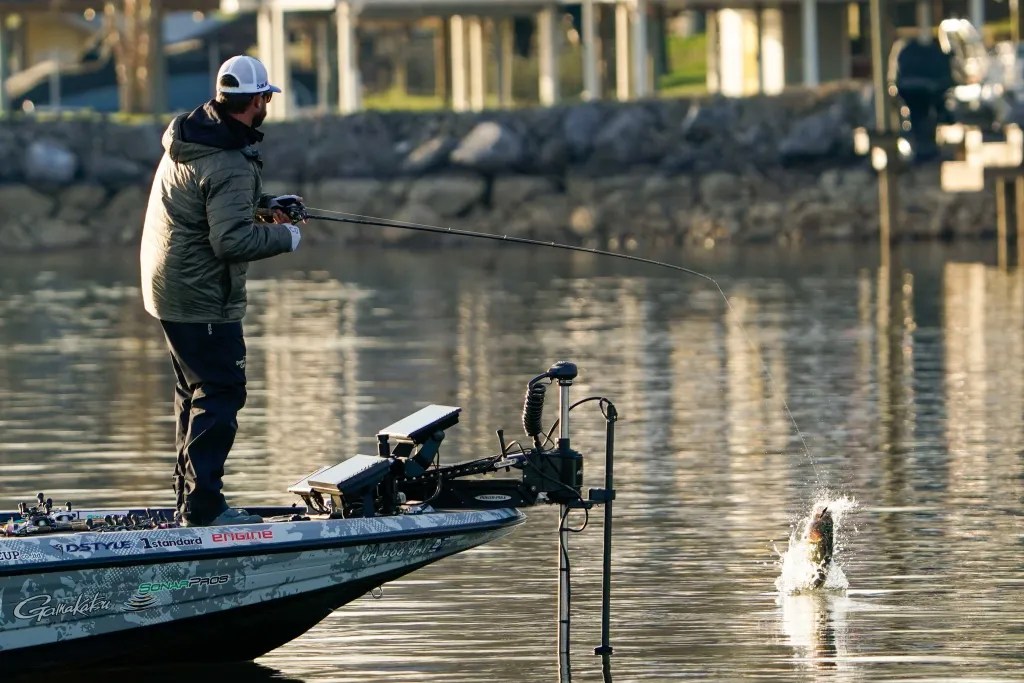
This year’s Classic waters comprised Fort Loudoun and Tellico lakes. As the first in a string of nine Tennessee River impoundments, the former is shallower and dingier, while the latter’s deeper waters are usually pretty clear. (Tellico connects to Fort Loudoun through a navigational canal.)
Big rains the Wednesday before the event’s Friday start send muddy runoff plumes through many creeks and drains. That’s a good news-bad news scenario, largely based on timing and intensity.
What that means: For one thing, high visibility makes fish wary and harder to catch, whereas diminished clarity — from rain runoff or strong wind breaking up the surface — puts them at ease. Also, as seventh-place Drew Cook noted, muddy water typically moves fish closer to the bank and puts them on predictable targets like rocks and laydowns.
However, too much mud can shut down an area, especially when cleaner water is only a short swim from the fish’s location. Drew Cook said this truth forced him to relocate from one of the key areas he’d found during practice.
Weather Woes
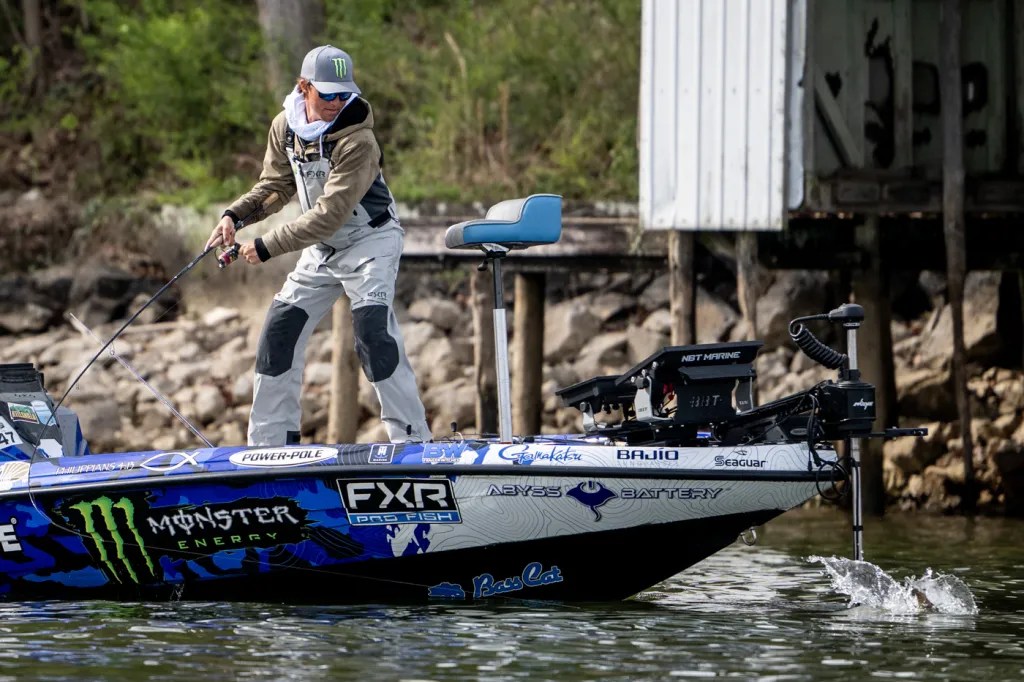
Classic anglers enjoyed warm stable conditions through most of their practice, but the pleasant early spring conditions would be short-lived. Wednesday night, that rain arrived compliments of an approaching cold front that brought windy conditions, chilly rain and an overall dreary complexion that lasted through midday on Thursday.
The cold front mostly affected the largemouth bass, which are generally more weather-sensitive than smallmouth. For clarity, southern smallmouth are less hardy than the northern fish, which endure considerably harsher winter conditions, but that’s nowhere near the fickleness that largemouth in any scenario exhibit.
What that means: Second-place Trey McKinney said he tried to capitalize on how the fish reacted to the week’s changing weather.
“Day 1 was cold, so that helped my (offshore smallmouth bite) because there was kind of a prespawn scenario and it pulled some fish out that were already up shallower; it pulled them back to where they were before they moved up,” McKinney said. “The second day warmed up and there were fewer fish offshore, so I said, ‘Let’s go fish for largemouth that have pulled up.
“Sure enough, they were on laydowns and trees where they stage to get ready to spawn. The third day, I fished a current-related bite and those fish were hungry!”
Current Events
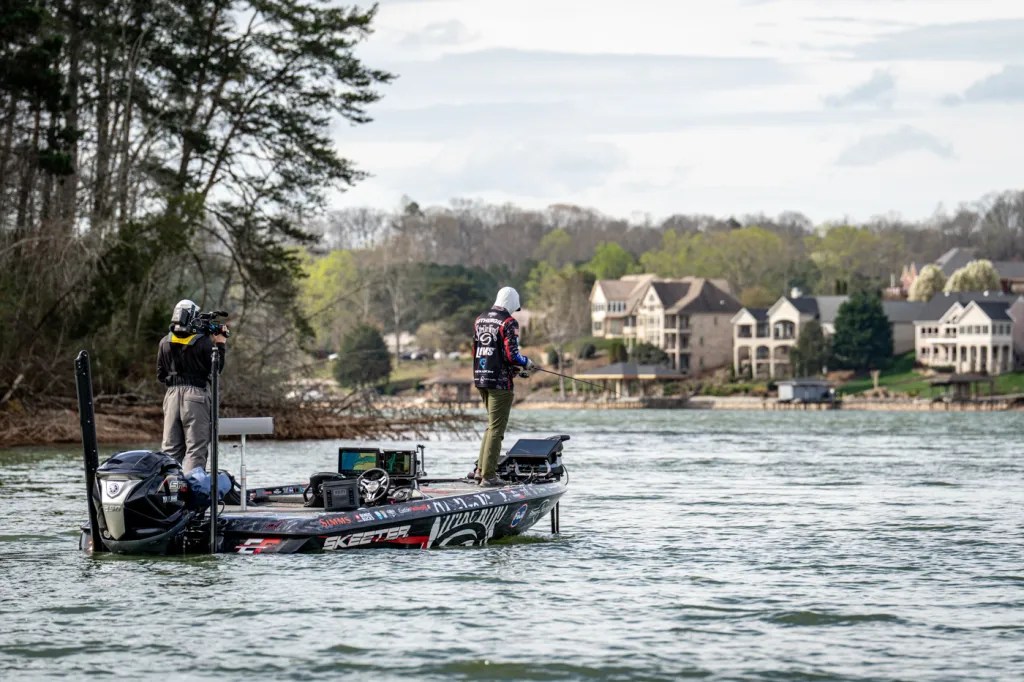
It’s basic hydrology; multiple rainwater inflow points increase water volume and elevate current levels. With about two inches of rain drenching the upper Tennessee River region, fourth-place Easton Fothergill found the recent runoff created too much current on Day 1.
By the tournament’s second day, the sudden influx had mostly worked its way through the system. That may sound like an improvement, but Fothergill had established enough traction with his current-related presentation that he wanted to continue.
What that means: On Day 1, Fothergill was unable to effectively fish his jig head minnow higher in the water column, so he went to a heavier, bottom-oriented presentation. (More on that in a moment.)
Once the rain-related current started to subside, Fothergill leveraged topography to his benefit. Essentially, he started targeting channel swings and narrowing “neck down” areas where physical features restrict or redirect water flow and thereby increase its velocity.
What a drag
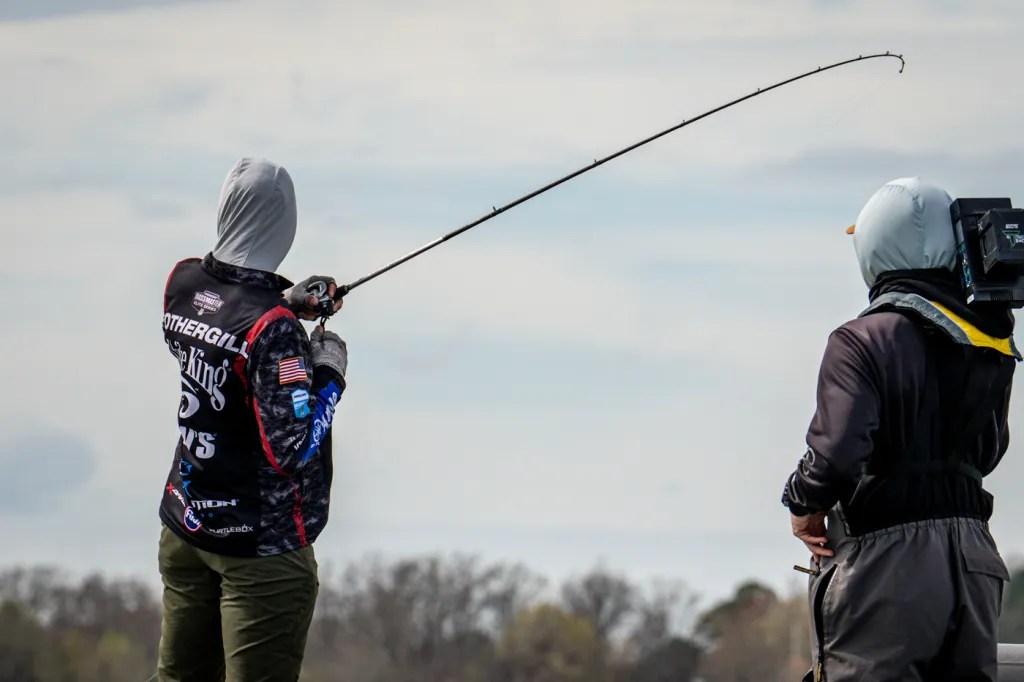
Day 1 brought strong winds, which combined with the heavy current to create a doubly tough fishing scenario. That’s why Fothergill turned to the Carolina rig, a highly effective setup that facilitates long casts and holds a bait close to the bottom for a dragging retrieve that runs under the current’s impact.
Fothergill’s setup kept with basic Carolina rigging. Slipping a 3/4-ounce sinker flanked by plastic beads onto his 20-pound fluorocarbon main line, he tied to one side of a barrel swivel. To the swivel’s other side, he tied a 3-foot, 15-pound fluorocarbon leader ending with a 4-inch minnow bait on a 4/0 hook.
What that means: “There was lots of current in my areas and the fish were really tight to the bottom, so I thought that would be one of the most natural presentations,” Fothergill said. “I could throw it super far, so my bait was natural all the way to the boat.”
The Carolina rig allowed me to present that minnow in a vulnerable position right off the bottom, so I thought that would be a much better presentation, given the situation,” Fothergill said. “That thing stays extremely natural in the toughest conditions.”
To beginning anglers considering this presentation, Fothergill said: “The Carolina rig is one of the most effective (rigs) ever created. I caught 60% of my fish on that rig.”
A different role
One of the most interesting strategy points to come from this year’s Classic was fifth-place J.T. Thompkins’ jerkbait presentations. Typically, he would work his Megabas Vision 110 through the water column with a cadence of twitches and pauses. During his competition days, Thompkins aggressively fished his jerkbait on the bottom, same as he would a crankbait.
The natural question: Why not simply uses a crankbait?
“I was cranking and I had a lot of fish follow the bait up to the boat, but there was no way to get those fish to commit,” Thompkins said. “They’ll follow a crankbait all the way up, but then it just dies out and there’s nothing you can do.
“I switched to a jerkbait and got bit when I was digging it in the dirt, and then the few fish that would follow the bait to the boat, I could snap the bait, I could work it up, I could work it back down and do a few extra things to trigger those bites.”
What that means: As Thompkins explained, selecting a bait with two different dimensions provided the versatility he needed to close the deal. This, he said, should encourage anglers to experiment with different actions and presentation. Reach beyond the norms, think outside the box and you’ll often find unexpected opportunities that keep the rod bent.